The best leash for small dogs is one that suits the individual dog, fits the intended attachment and is practical for the handler to use. Compare the complete lead’s weight, clip, strap feel, usable length and format. Check actual product details and a suitable sample rather than treating a small label, a material name or a fixed weight threshold as the answer.
Begin with the walking setup you already use. Note what is inconvenient before looking for a replacement: perhaps the clip is bulky, the handle is awkward, or the available slack does not suit the route. This gives you a useful comparison without inventing one ideal leash for every small dog or puppy.
Check the total weight of the finished lead
Compare the finished lead, including its clip, handle, adjusters and any added components. The strap alone does not tell you how bulky or manageable the complete product will be.
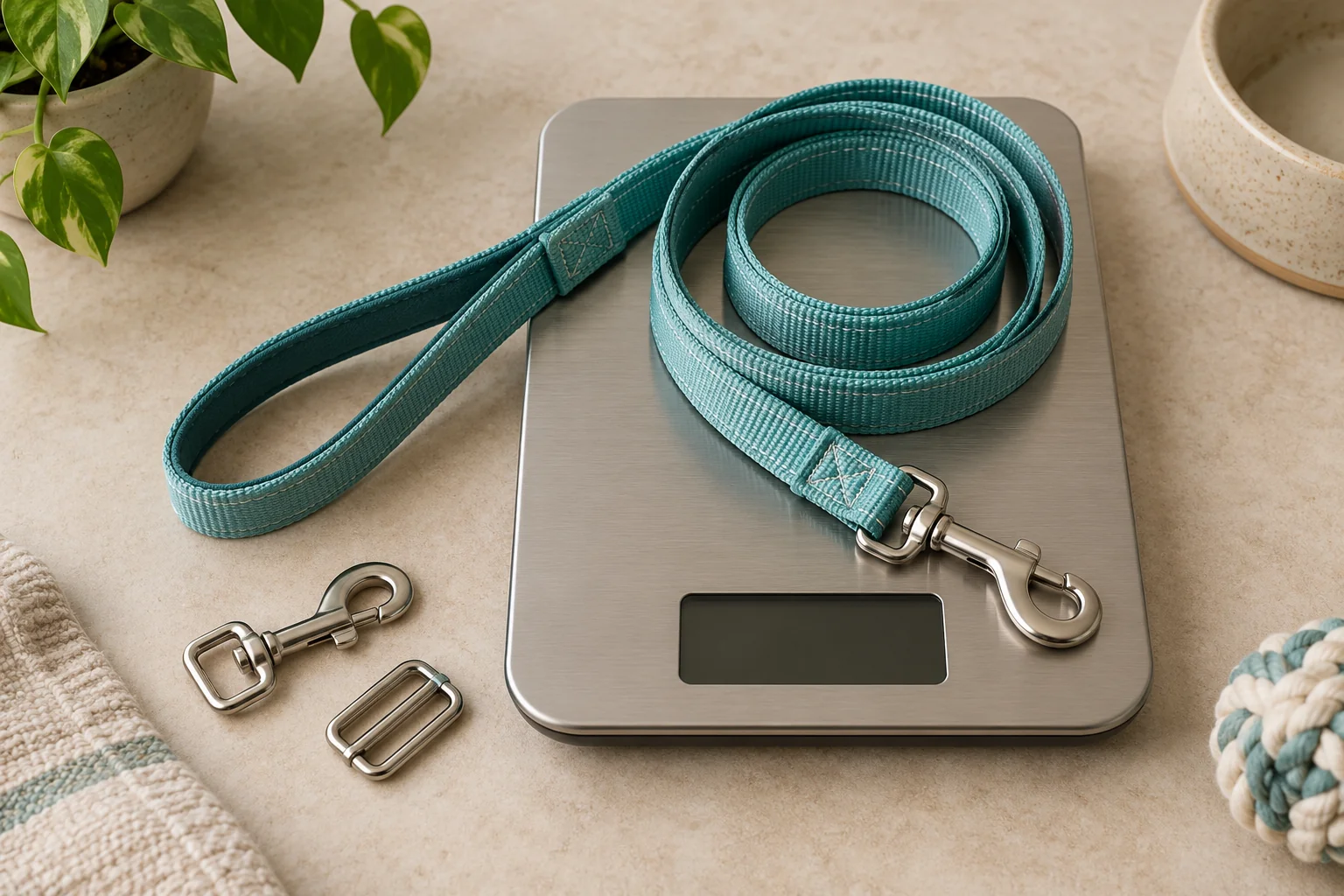
If a listing gives a weight, check which version and configuration it describes. A different length, connector or handle can change the item you receive. If the information is missing, ask about the actual model rather than estimating its weight from a photograph.
Use your current suitable setup as a reference where possible. Place the alternatives side by side and note what differs. Does one have extra metal parts? Is the clip much larger? Is there padding or an adjustment arrangement that changes how you manage the lead?
There is no need to turn that comparison into a universal maximum number of grams. A single threshold cannot establish fit, comfort or strength for every dog. Keep the observed dimensions and product details together, and evaluate the particular combination you intend to use.
During an ordinary, calm fit check, observe how the attached lead sits and moves. If the arrangement appears awkward, stop and review the connection and equipment instructions. Do not use a change in walking behavior as a diagnosis of a medical problem or assume that a lighter product will resolve it.
Match the clip to the actual attachment
Check whether the clip works with the ring on the particular collar or harness. A small clip is useful only if the complete connection is suitable and can be operated as intended.
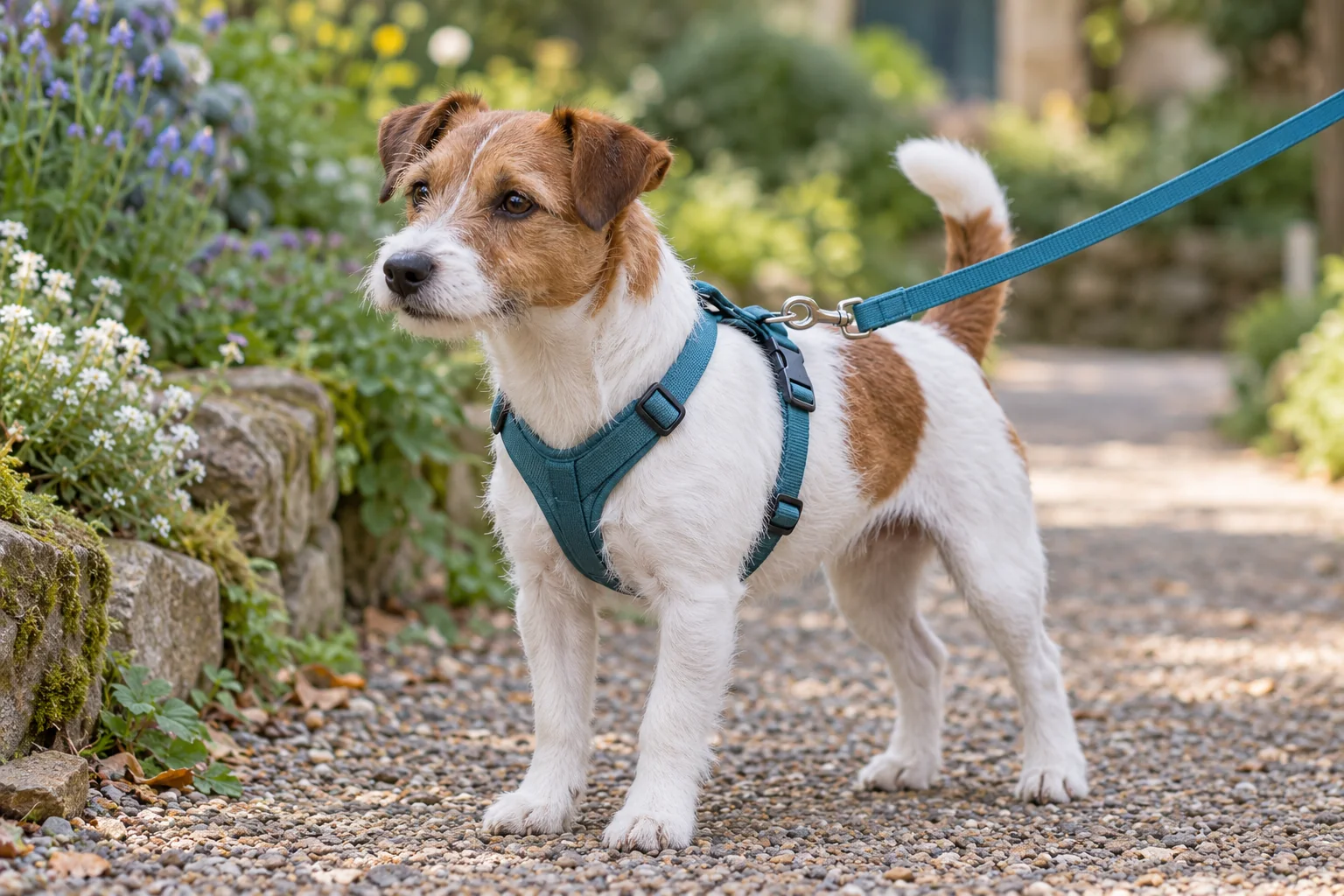
Read the instructions for both pieces of equipment. Look at the gate opening, the way the clip sits after attachment and whether the connection can be checked without forcing the parts together. A product photograph cannot confirm compatibility with a ring you already own.
Do not select hardware solely by a metal name, decorative finish or a claim that it is premium. Ask for the model and the manufacturer’s suitability information for the actual assembled lead. A compact appearance does not establish a load rating.
Keep the leash choice separate from selecting a collar or harness. If you are changing the attachment equipment, confirm its fit and intended use as well. This article’s leash comparison cannot establish a medical benefit from a particular harness shape or clip position.
If your dog has discomfort or a health concern, ask a veterinarian about the walking arrangement. Avoid choosing a product because its advertising promises to protect the throat, cure coughing or prevent an injury. Those claims need evidence beyond the leash’s size and appearance.
Try the strap and handle in your hand
Choose a handle you can comfortably use and a body you can manage. A narrow strap, a padded handle and a rope lead can feel different even when the listings describe all of them as lightweight.
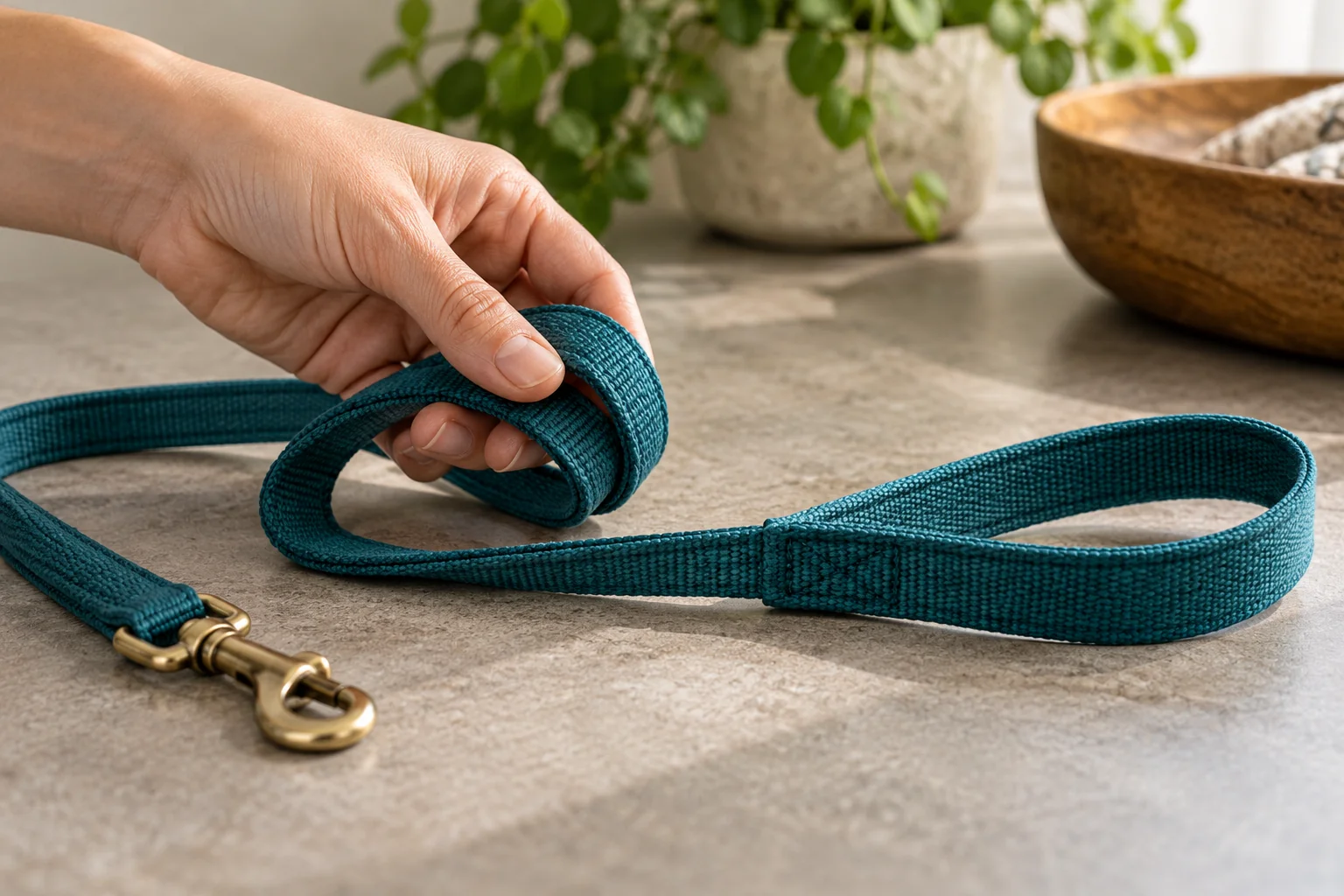
Hold a suitable sample using its intended handle. Check the opening and any lining or seams. Note whether the handle is awkward for your usual grip or whether gathering loose material leaves an inconvenient bundle in your hand.
Compare thickness and flexibility alongside width. If a new lead differs in several features, record them rather than assuming that width caused every change in feel. For rope, use the stated diameter; do not compare it as if it were a flat strap of the same width.
Material and care information should also refer to the actual product. Follow its instructions instead of assuming that all nylon, coated webbing, rope or leather leads tolerate the same cleaning method. A material category does not establish a particular product’s performance.
For puppies and extra-small dogs, review the complete assembly rather than relying on an extra-small label. Ask whether the proposed product is suitable for the intended dog and use. Introduce new equipment with appropriate supervision and guidance; do not select an outdoor walking arrangement from age or breed alone.
Check usable length during ordinary walking
Look at the distance between your hand and the actual attachment point, then assess the slack available during ordinary movement. A small dog’s height is a reason to check that setup, not a formula for prescribing a particular length.
Compare the dog standing beside you, moving a little ahead and pausing in a familiar setting. Does the line stay tight? Is loose material difficult to manage? Can you use the handle without moving your arm into an awkward position?
A fixed lead and an adjustable one should be compared in the arrangement you will use. Ask how the finished length is measured and which configurations are available. A listing’s maximum length does not establish the usable length in every configuration.
Keep the route in view. Check pet access and leash rules for the places you visit, and consider the space shared with other people and animals. More available line is not automatically the better choice for a small dog.
If your dog pulls, a product change alone does not answer the training question. Get guidance for the behavior and choose equipment suitable for that plan. Do not assume that a wider strap, a front attachment or a retractable mechanism guarantees a particular result.
Compare formats and prepare a sample brief
Assess a specialized format against the activity you need it for. Hands-free arrangements, couplers and long lines change the setup; they should not be selected solely because a listing says small dog.
Hands-free arrangements and two-dog couplers
For a hands-free product, read how it attaches and adjusts, the stated intended use and any operating limitations. Check the complete setup before assuming that it is suitable for running or for a dog that pulls. A stretch section does not establish a universal amount of resistance or a medical benefit.
For two dogs, assess the connection for each dog and how the combined arrangement is managed. Consider different walking paces and whether you need independent control. A swivel or adjustable branch does not guarantee that a coupler will remain untangled or suit every pair.
Longer lines for a defined activity
Choose a longer line only for an appropriate, permitted setting and a defined handling plan. Review the actual instructions and seek guidance if you are unfamiliar with managing it. The words training or decompression do not make a product suitable for every route or dog.
If you intend to use different formats, keep separate notes for their configurations. The clip, handle position, adjustment and available slack may change. Do not treat one successful fit check as approval for every arrangement.
Document the actual sample
A practical comparison records observations and questions, not unsupported safety scores.
| Item | Record for the actual version | Question to resolve |
|---|---|---|
| Complete lead | Model, configuration and stated weight | What is included in the weight? |
| Clip | Component reference and connection | Does it fit the intended attachment? |
| Body and handle | Width or diameter, thickness and handle arrangement | Is the actual sample practical in your hand? |
| Length | Finished measurement and adjustment options | Which configuration will you use? |
| Intended activity | Route or supervised practice setting | Do the instructions and destination rules allow it? |
For a collection inquiry, start with the standard dog leash specifications. Confirm the selected construction and available options before assuming that every small-dog format can be supplied.
Discuss product-specific requirements in the relevant pet product manufacturing context. A general service page does not prove a particular test, certification, material grade or finished-product performance. Identify those requirements separately in the sample brief.
FAQ
What is the best leash for a small dog that pulls?
Choose a complete lead and connection suitable for your dog and the walking plan, then seek help with the pulling behavior. A material, width or attachment label cannot guarantee that the behavior will change. Check the actual product guidance rather than relying on a no-pull claim.
Are hands-free leashes good for dogs that pull?
Suitability depends on the actual dog, handler and product. Check the intended use and handling requirements before choosing a hands-free arrangement. If managing the dog is already difficult, get guidance before changing how the lead connects to you.
Are double dog leashes good?
They can be an option for a suitable pair and handler, but assess each connection and the combined arrangement. Different paces or a need for separate handling may make independent leads more practical. A central swivel is not proof that the setup will suit both dogs.
What is the best lead to take on a puppy’s first walk?
Choose an appropriate, manageable lead with a compatible attachment and follow the equipment instructions. Ask your veterinarian about when and where the puppy can walk outdoors, and get help introducing the equipment if needed. A puppy’s age alone does not determine a universal leash width or weight.
Conclusion
Keep the actual dog, handler and walking setup at the center of the comparison. Check the complete weight, connection, handle, usable length and intended format, then record the sample that meets those needs.
For a small-dog collection, review the relevant custom pet accessory options and send the proposed construction and sample requirements. Confirm the specific options before approving the product brief.