Choose a dog leash width you can comfortably handle, then check the actual lead’s thickness, handle, clip and stated suitability for your dog. To answer “how wide should a dog leash be?”, compare the complete lead. Width alone does not establish its strength or a universal dog-weight rating.
A wider strap can feel quite different from a narrow one without being the better choice for every setup. The material, construction and handle can also change how the lead feels in your hand. Use a sample or the actual product details to assess those differences before selecting a width.
Measure width and thickness separately
For a flat lead, width is the measurement across the strap. Thickness is a separate measurement through it. For a round rope lead, record the diameter rather than calling that measurement flat-webbing width.
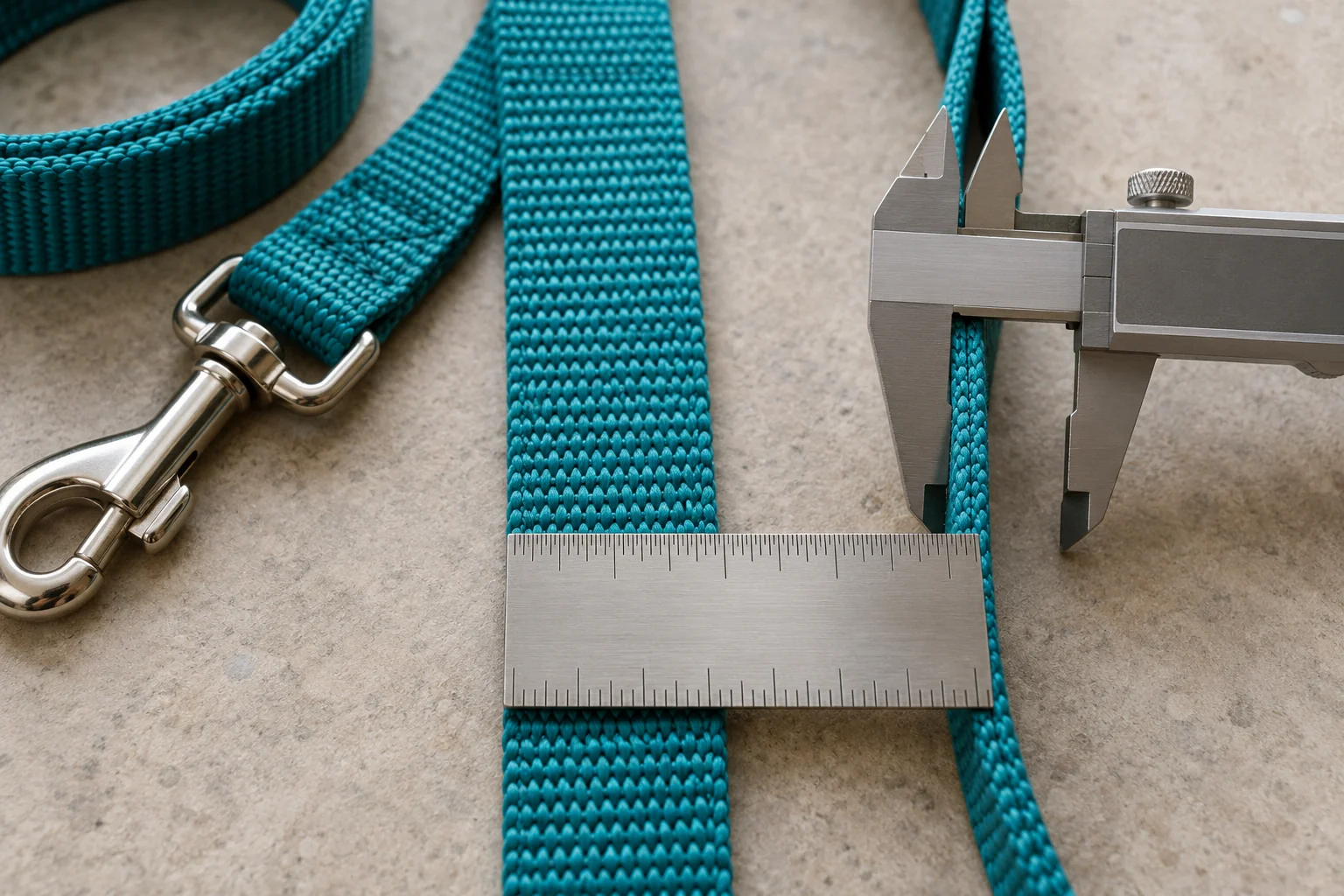
Read the listing carefully before comparing numbers. A measurement can refer to the body, the handle or another part of the product. Ask which part was measured if the description does not say. A padded handle may have a different width or thickness from the strap leading to the dog.
When documenting a sample, place the flat strap without a twist and identify the section you measured. Follow an agreed measurement method for the particular construction. Do not pull, compress or stretch it in an improvised way and then treat the result as directly comparable with a supplier’s specification.
Keep units together with every dimension. If one listing gives millimeters and another gives inches, convert the same type of measurement before comparing them. A nominal width may also need an agreed acceptance range, but that range belongs to the particular specification, not to all dog leashes.
You can organize a comparison around these distinct details without turning them into a dog-weight chart.
| Detail | What to record | What to confirm |
|---|---|---|
| Flat strap width | Dimension across the identified strap section | Whether the listing refers to the body or handle |
| Strap thickness | Dimension through that section | The agreed method for the actual construction |
| Rope diameter | Diameter of the rope body | That it is not a flat-width measurement |
| Handle dimensions | Opening, construction and any lining | Whether your usual grip is practical |
| Connector details | Clip model, opening and attachment arrangement | Compatibility with the intended connection |
Try the strap and handle in your hand
Check the handle as well as the body of the lead. A width that looks suitable on a screen may feel bulky, stiff or difficult to gather in the particular construction you receive.
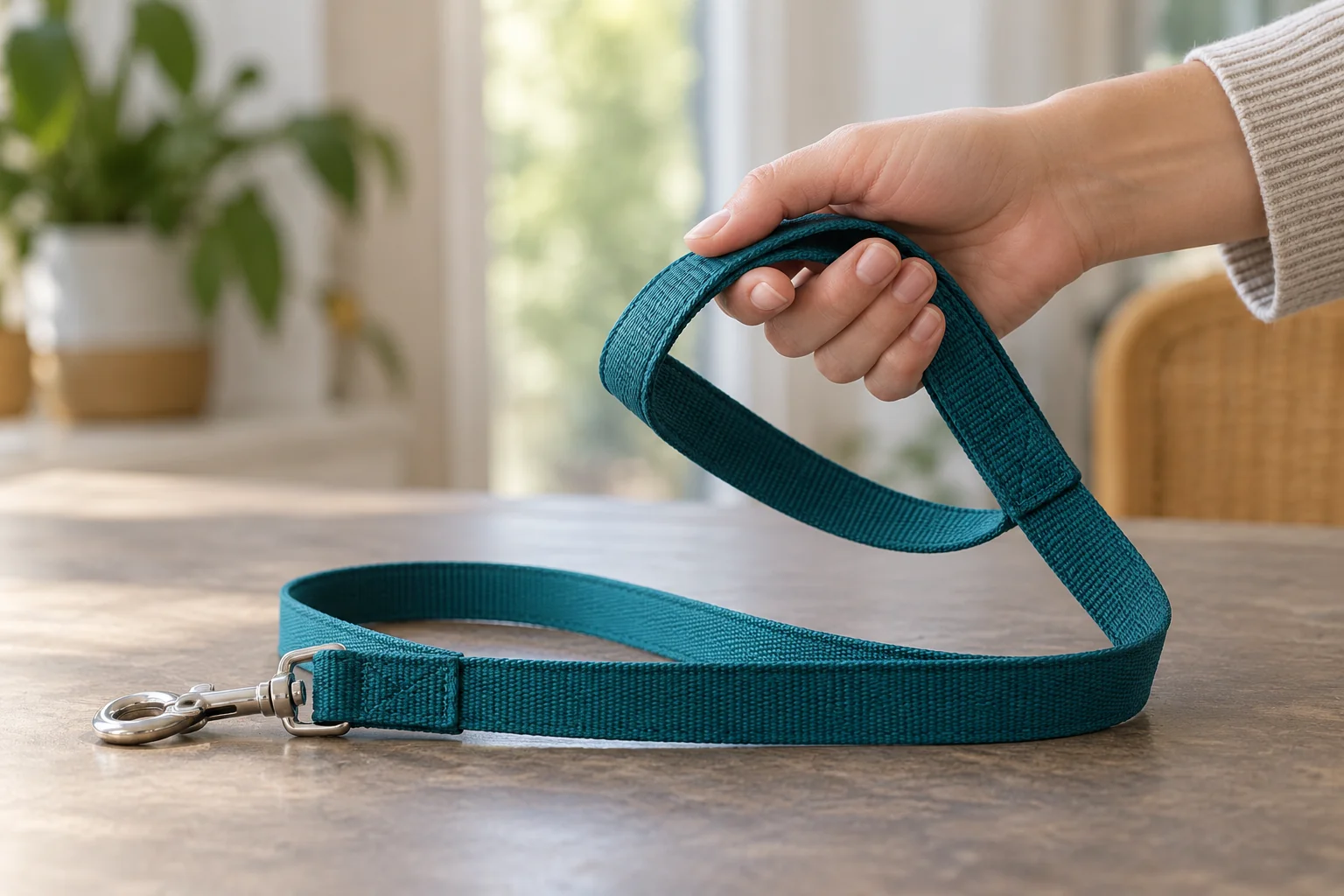
If you can examine a sample, hold the handle as intended and look at the opening, seams and lining. Does the opening fit your hand without requiring an awkward position? Can you gather the loose line without a large bundle getting in the way? These observations describe your use of that sample; they are not proof of a product’s load capacity.
Compare similar constructions when trying different widths. Otherwise, you may attribute a change in feel to width when the material, thickness, padding or handle design also changed. A narrower lined handle and a wider unlined handle are not a controlled comparison of width alone.
Round rope and flat strap are also different formats. Try how each actual handle sits in your hand and how the loose body is managed. Do not infer grip comfort or resistance to tangling solely from the shape of the cross-section.
Use the product’s handling instructions. A sample check is not an invitation to wrap the lead around your wrist or perform a pulling experiment. If you need help managing a lead during ordinary walking, get guidance for that situation rather than expecting a width change to solve it.
Check the clip and its attachment
Assess the clip, strap and dog’s actual attachment point together. Strap width does not tell you the connector’s weight, gate opening, operation or product rating.
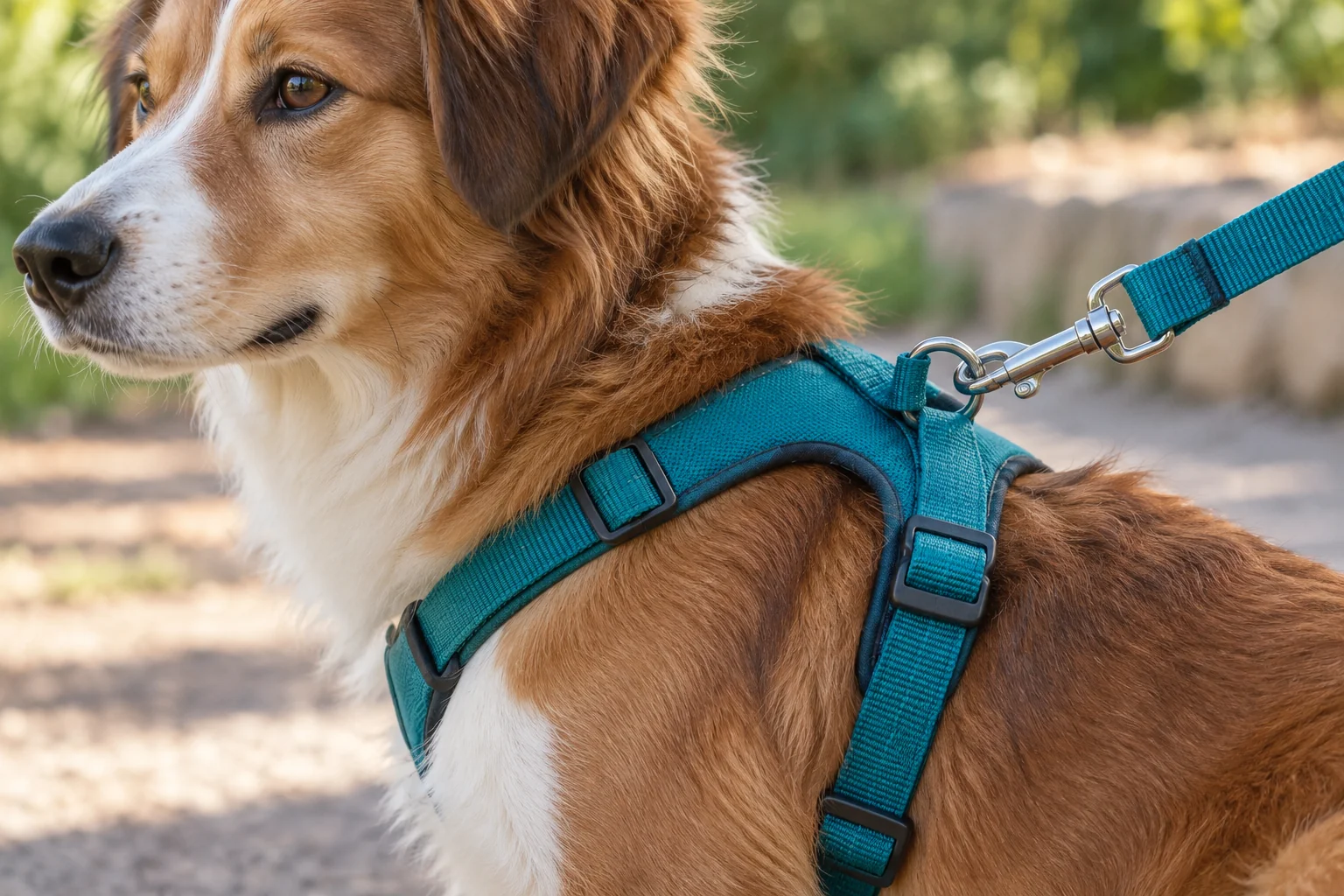
Look at how the clip connects to the intended collar or harness ring. Confirm compatibility under the equipment instructions. A clip that looks proportionate in a photograph may be awkward to operate or may sit differently on the actual ring.
For a small dog, include connector bulk and complete lead weight in the comparison. A narrow strap can still have a bulky clip. Conversely, a broad strap does not prove that its hardware has an appropriate rating for a larger dog. Check what the manufacturer states for that exact assembled product.
If you are reviewing samples for a collection, identify the proposed clip instead of relying on descriptions such as small, premium or heavy duty. A photograph or component reference helps distinguish alternatives. Record any change to the connector alongside changes to the strap.
At the strap-to-hardware connection, inspect how the assembled parts sit. Note bunching, twisting or other visible fit concerns and ask the supplier to review them. Do not assign a universal clearance, stitch pattern or metal grade without a product-specific requirement and supporting verification.
Keep width separate from product ratings
A width measurement describes a dimension. It does not establish how much force the finished leash can withstand, whether a claimed dog-weight range is valid, or whether a product has passed a specified test.
Two leads with the same nominal width can have different bodies, joints, handles and connectors. Ask for the exact product information behind any strength or suitability claim. A statement about a piece of webbing or a separate clip does not automatically establish the rating of the assembled lead.
Where a product has a documented rating, identify which model and construction it applies to. Check that the actual supplied item matches that record. If the strap, stitching, connector or assembly changes, ask how the proposed claim will be verified for the changed version.
Do not convert a dog’s weight directly into a width recommendation. Weight alone does not describe the walking situation or prove a load on the lead. Similarly, material names and labels such as tactical do not supply missing evidence.
For a buyer, the useful outcome is a documented specification and a confirmed claim scope. Ask what verification is needed for the intended product and market. Avoid a table that assigns an unsupported strength or safety score to each width.
Prepare a clear width specification for samples
Send the dimension, unit and measurement location together when requesting a sample. Include thickness or rope diameter where relevant, and define the handle and connector so the supplier can review a complete proposal.
For example, if a listing offers several widths, ask whether those versions use the same material, handle and clip. Do not assume that selecting a different width changes only one part. Review the proposed version as its own assembled product.
A simple drawing can show the body, handle opening and hardware connection. A reference sample can show the intended feel, but it should be accompanied by written details. Agree on how dimensions will be checked and which features must match the approved sample.
The standard dog leash specification page is a relevant place to begin that discussion. Confirm the actual construction and options before treating a request as a manufacturing commitment.
If your brief needs a particular material or assembly route, discuss it within the pet product manufacturing information. A general service description is not confirmation of a laboratory test, specific machine, inspection tolerance or guaranteed performance for your proposed lead.
Keep the sample identifier and proposed specification together. If a width, handle or connector is changed during review, update the record and compare the changed sample. This is more useful than approving a size name that leaves the physical construction undefined.
FAQ
Which width and hardware details should I include in a leash RFQ?
Include the strap width and unit, thickness or rope diameter where relevant, the measurement location, handle arrangement and intended clip. Add a drawing or reference sample and identify any product claim that needs verification. Ask the supplier to confirm the proposed combination before sample approval.
Can I put a dog-weight rating on a leash because of its width?
No. Width alone is not evidence for a dog-weight or strength claim. The exact product, claim and verification method need to be confirmed before such wording is used on packaging.
Conclusion
Compare the complete lead: record its dimensions, try its handle, check connector compatibility and read the information for the actual product. Choose a width through that comparison and keep any strength claim separate from the dimension.
For a collection brief, review the relevant custom pet accessory options and send the proposed strap, handle and connector details. Confirm the sample and measurement method together before approving the width specification.