Choose a dog leash length that lets you manage the space between you and your dog during the activity you plan. When answering “how long should a dog leash be?”, compare your walking route, the distance from your hand to the attachment point, and the slack you can handle. Check the destination’s pet rules before choosing a longer lead.
Four- and six-foot fixed leads are useful options to compare for ordinary walking. Neither measurement guarantees a suitable fit for every dog and handler. A longer line serves a different purpose, and its advertised length tells you little about whether you can manage it on your usual route. Start with the actual lead, dog and setting rather than a breed chart.
Match the length to your walking routine
Choose the amount of room you can manage on the route you actually use. A busy sidewalk, a narrow entrance and an open walking area create different limits, even within the same outing.
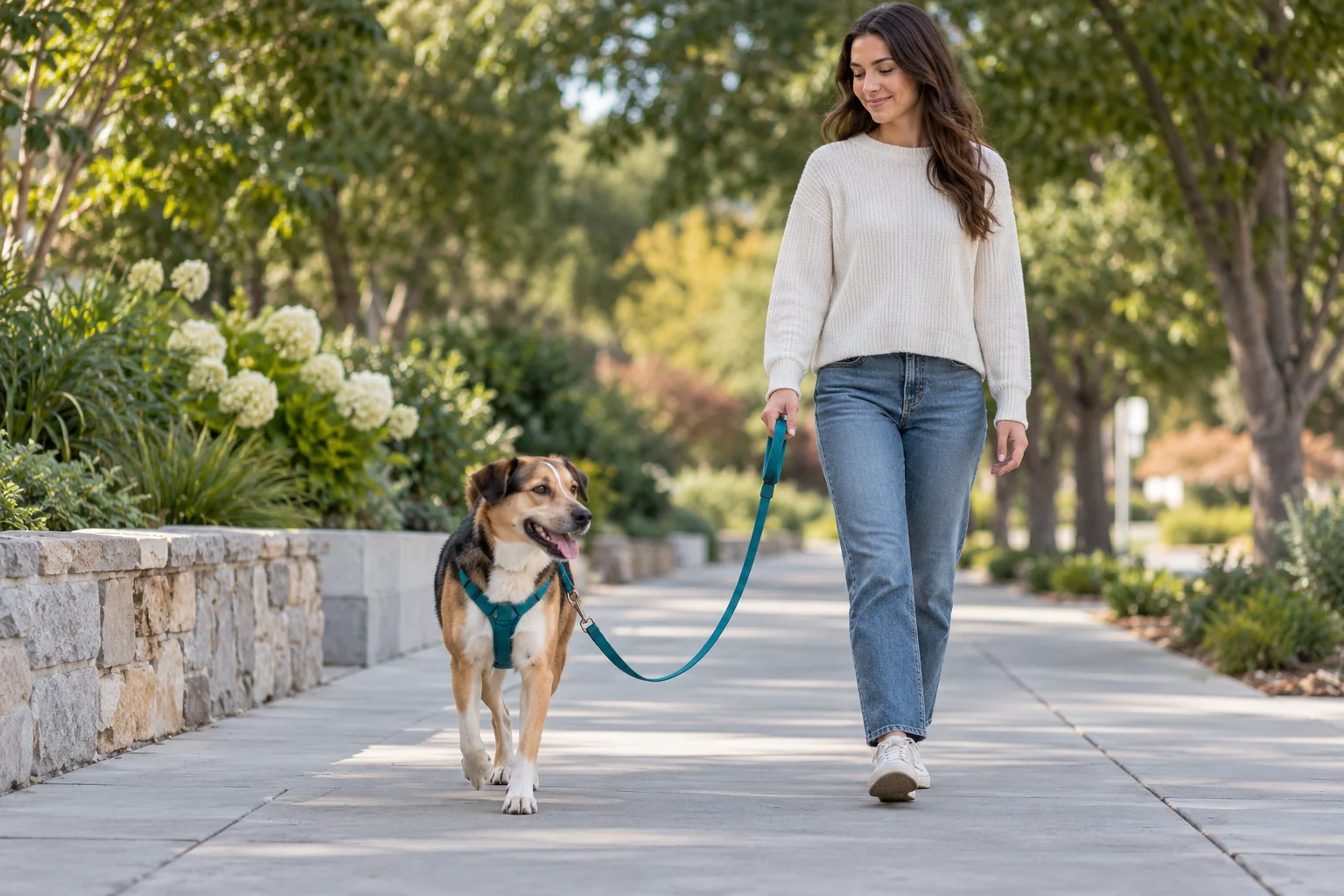
Think through your walk before comparing products. Where do you pass people? Where does the dog pause? Are there corners, gates or crossings where you need less space between you? These details help you decide whether a fixed lead is convenient or whether an adjustable lead deserves a closer look.
If the options are a four-foot and a six-foot lead, compare both with your normal hand position and the dog’s actual attachment point. The shorter option offers less total line to manage. The longer option gives you more available slack, but you still need to manage that slack as the surroundings change. These are differences in length, not promises of control or safety.
A useful comparison records what changes in the setup rather than assigning every dog one recommended number.
| Situation | What to check | What the check tells you |
|---|---|---|
| Passing through a narrow entrance | The space available beside you | Whether the usual length is convenient at that point |
| Walking on a shared sidewalk | Passing room and loose line | How much slack you need to manage |
| Pausing for the dog to investigate nearby ground | Reach from your hand to the attachment | Whether the dog has room without constant tension |
| Using an open practice area | Permission, line space and your handling plan | Whether a longer line belongs in that setting |
| Comparing an adjustable lead | The actual configurations and adjustment method | Which finished lengths are available in use |
Check the distance from your hand to the dog
Assess length with your hand in its ordinary position and the lead attached as intended. Part of the available length spans that distance; it is not all horizontal room for the dog to move away from you.
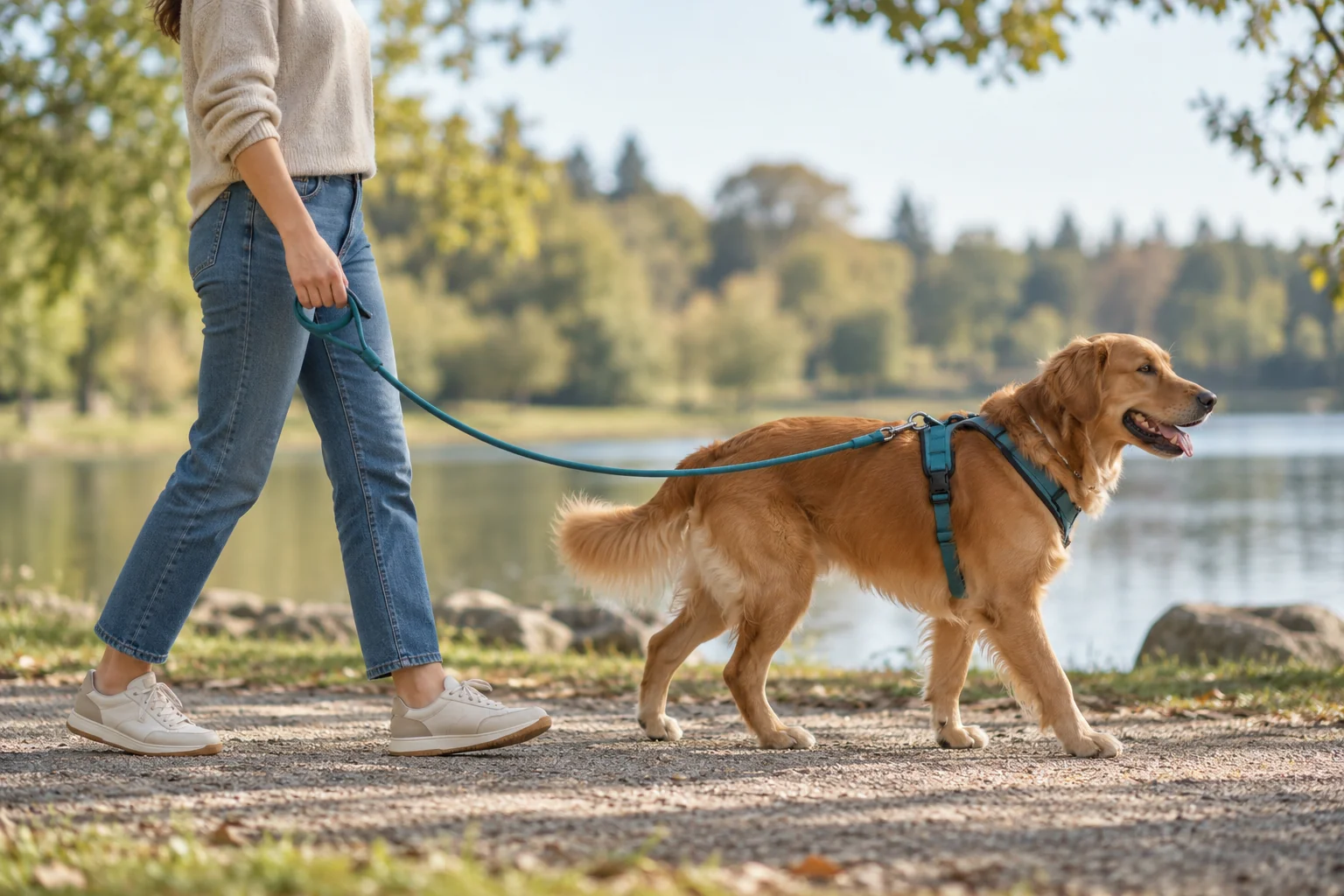
This matters when comparing setups with different handler heights or attachment locations. A lead that feels roomy in one combination can feel tight in another. A small dog being close to the ground does not give you a universal formula, but it does make the actual hand-to-attachment distance worth checking.
Use a calm, familiar setting for the initial fit check. Look at the line when the dog stands beside you, moves a little ahead and pauses. Does it stay tight during ordinary movement? Does loose material repeatedly reach the ground? Can you manage the handle without holding your arm in an awkward position?
Record the observation rather than treating a single moment as the whole answer. Note where the line feels inconvenient and whether that came from the selected length, how you held it, or the attachment arrangement. A length label cannot distinguish those causes.
For an adjustable model, repeat the check in each configuration you intend to use. The length shown in a listing may describe the longest arrangement. Ask how the other configurations are measured and whether changing them changes the position of the handle or connector.
Width, weight and handle feel can affect the overall experience, but keep the length comparison clear. Compare similar constructions where possible so you know what changed when you switched leads.
Separate routine leads from distance-training lines
A long line gives you more material and more space to manage than a routine walking lead. Consider it for a defined practice setting rather than assuming that more length improves every walk.
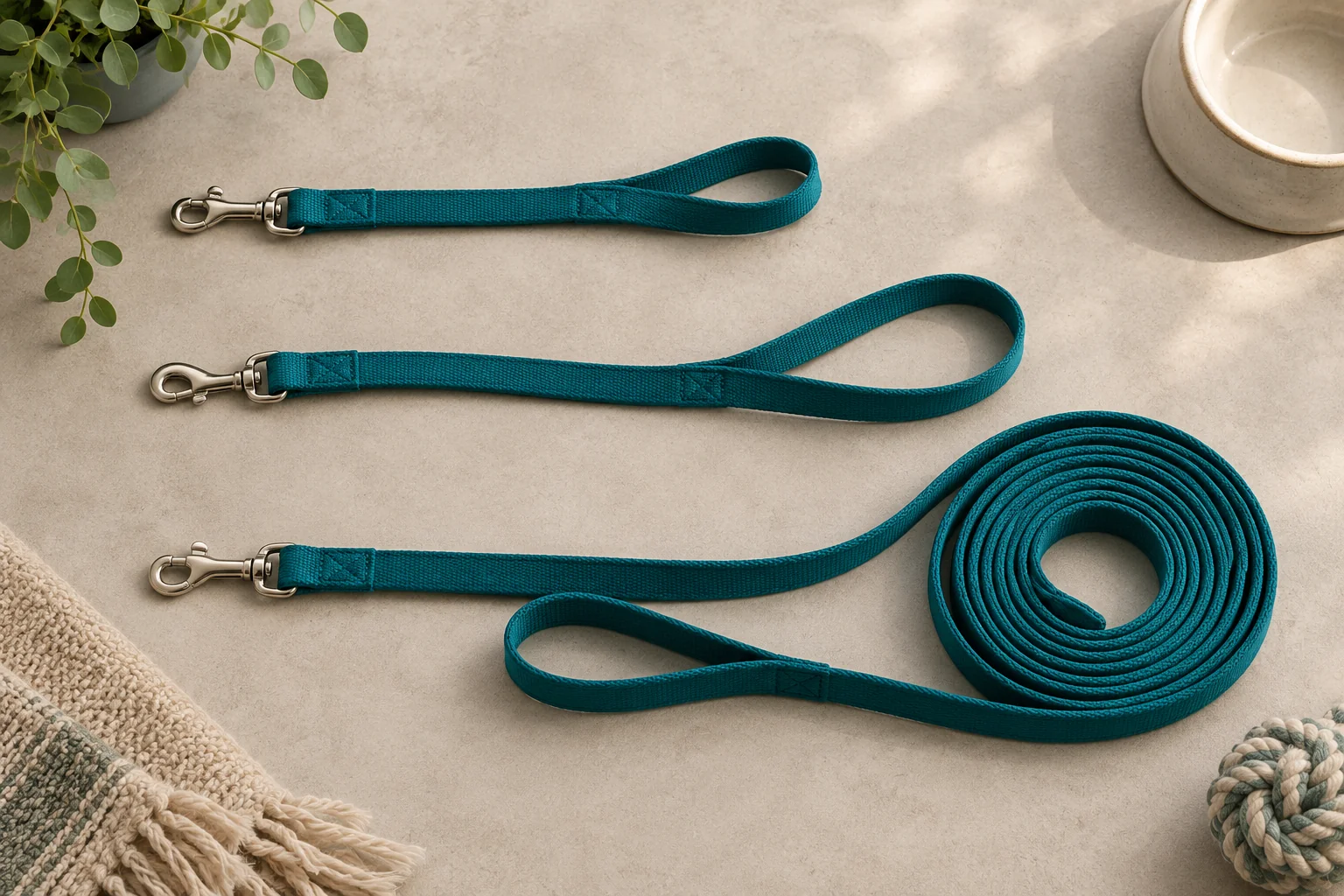
For a class or a guided training session, check the trainer’s equipment requirements first. The appropriate line depends on what you are practicing, the space available and how the session is supervised. A product described as a training leash is not a complete handling plan.
Keep ordinary walking and distance work separate in your comparison. A lead that is convenient beside you on a sidewalk may not provide the range intended for a distance exercise. A line bought for that exercise may be inconvenient when you pass through a narrow gate or share a busy path.
Before using a longer line, identify where loose material can go and who else uses the area. Check the actual product instructions and get guidance if the line-management method is unfamiliar. Do not choose a technique from the line length alone or use a marketing description as evidence of your ability to manage the setup.
For daily use, examine the line and its connections as well as its length. If the lead is damaged, a different way of holding it does not resolve that condition. Follow the product’s care and replacement guidance. A longer or shorter replacement should still be selected for the activity and fit you need.
Verify the rules for the place you will visit
Read the current pet policy for the actual park, trail or facility. Check where dogs are allowed and whether the location sets a maximum leash length. An open-looking area is not proof that long lines or off-leash activity are permitted.
Keep the authority and place together when you read a rule. A requirement for one park or city does not establish the rules for every US public space. Likewise, a retail description calling a product standard does not make its length a legal standard.
Check the route, not just the broad destination name. A park can have designated pet areas and other areas where pets cannot go. An off-leash area, if one exists, does not tell you what applies between the parking area and that entrance.
If a policy gives a maximum length, compare it with the actual product and permitted configuration. If the wording is unclear about an adjustable or extendable model, ask the site operator before relying on an assumption. Carry the equipment required for the places you will pass through.
For a planned collection or retail range, avoid a blanket claim that one lead complies with all public-park rules. A length specification and the customer’s destination rules are separate checks. Keep any place-specific information current and within its stated scope.
Define the finished length before ordering a sample
Specify how the finished lead will be measured before comparing samples or quotations. State the endpoints and whether the handle and connector are included. Do not assume that every listing or supplier uses the same method.
A cut piece of strap and an assembled lead are different objects. If you are comparing a reference sample with a proposed product, ask for the finished measurement using the same endpoints. For an adjustable design, record the configurations you need rather than listing only its longest arrangement.
Prepare a simple drawing or annotated reference showing the handle, body and connector. Keep the units consistent. Agree on the measurement method and any acceptance limits for that particular product; do not import a generic inspection tension or dimensional tolerance from an unrelated item.
For a sourcing discussion, the standard dog leash specification page provides a relevant starting point. Confirm the proposed construction and available options before treating a request as an approved product specification.
When comparing quotations, list the same length definition, handle arrangement, connector requirement and packaging information for each proposed style. Discuss the particular construction in the pet product manufacturing context without assuming that a general service page confirms a specific test, material grade or result.
Label the sample and its specification together. If a supplier proposes a different finished length or adjustment arrangement, review that change explicitly. This gives you a traceable comparison instead of two products that share a size name but use different measurements.
FAQ
Is a five-foot leash too short?
It depends on the actual dog, handler and activity. Compare the available slack with your normal hand position and attachment point. A five-foot label alone cannot tell you whether the lead stays tight or is convenient on your route.
Is a ten-foot leash too long?
It can be more line than you want to manage in a shared or confined space. Check the destination’s rules and your line-management plan before using it. Permission to bring a dog does not automatically mean that a ten-foot lead is allowed.
Is a longer leash better for dogs?
More length gives you more available line, not a general improvement in fit. Compare the extra room with the space and handling demands of the intended activity. An adjustable option also needs to be checked in the configuration you will actually use.
What length leash should I use for dog training?
Start with the trainer’s requirements for the particular exercise. A routine walking class and distance recall practice can call for different setups. Confirm the location, equipment instructions and handling method rather than selecting a long line solely because its label says training.
Conclusion
Compare the actual lead in the setting where you need it: check usable slack, your hand position, the dog’s attachment and the route’s rules. For a sample order, write down the finished-length endpoints and adjustment configurations so the product can be checked against the same brief.
If you are developing a walking range, review the relevant custom pet accessory options and send your length and construction requirements for discussion. Confirm the proposed sample before approving the specification.