When asking “how wide should a cat bowl be?”, compare its clear inner opening with the space your cat uses to reach the food. Check the usable bottom, rim shape and actual meal as well. A single diameter cannot establish the fit for every cat. These five checks help you compare real bowls without relying on a universal size chart.
Measure the clear inner diameter
Measure the opening inside the rim before comparing bowl widths. A listing’s overall diameter may include an outward flange or a thick edge that does not add feeding space.
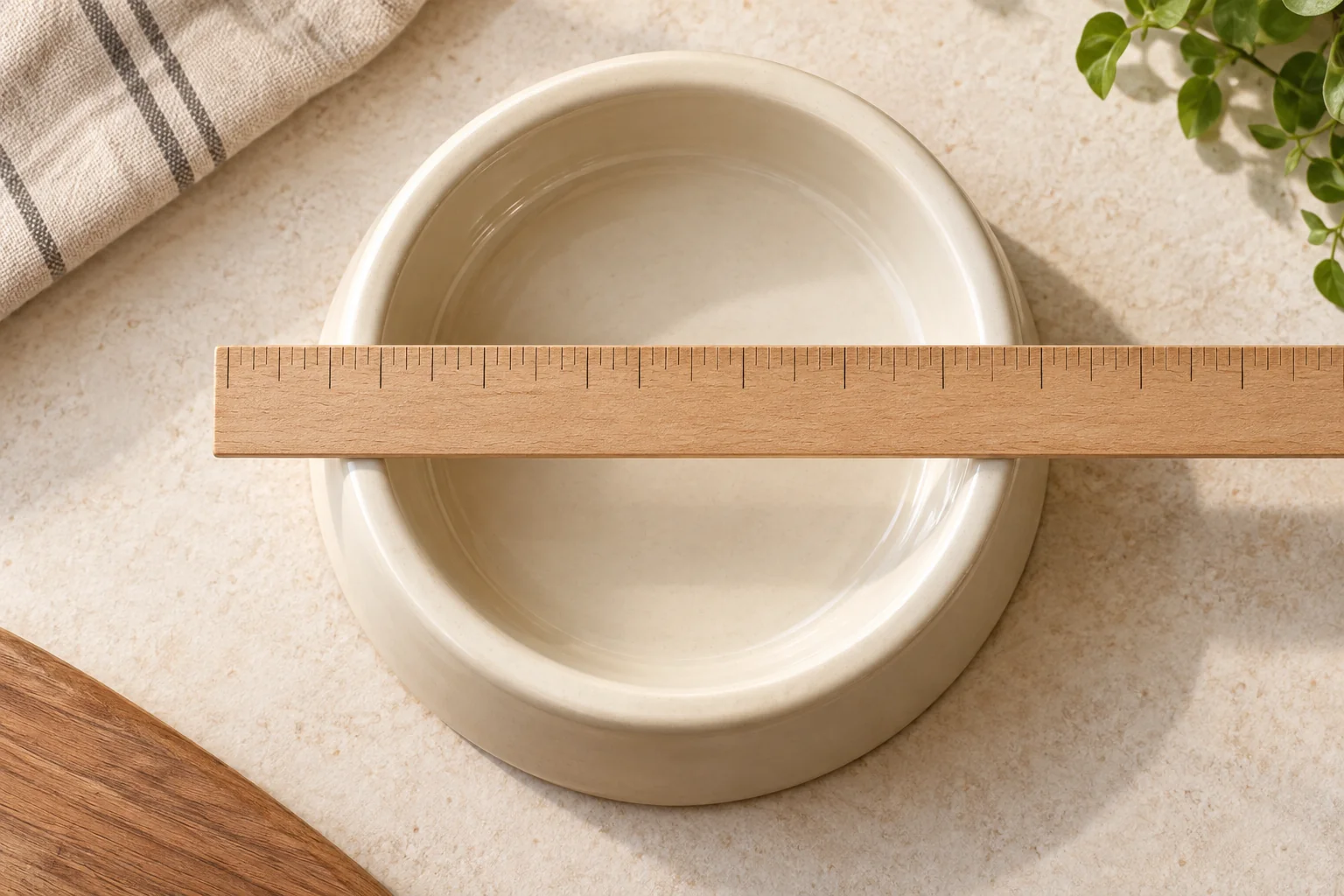
Set the empty bowl on a level surface and measure across the inner opening. For an oval or rectangular dish, record both interior length and width. Then inspect the usable bottom: a wide mouth with steeply sloping walls can leave a much smaller area for the meal.
Use the same definitions for every sample. If a listing provides only overall width, ask for the inner opening and a side-view drawing or photograph. That gives you a clearer comparison than assuming the advertised measurement describes the food area.
| Feature | Measurement or observation | Why it belongs in the comparison |
|---|---|---|
| Inner opening | Clear distance across the inside of the rim | Describes the entrance to the food area |
| Usable bottom | Interior width where the food rests | Shows how much space the meal actually occupies |
| Outer width | Widest distance across the whole bowl | Helps check the mat, shelf or stand fit |
| Rim profile | Thick, rolled, flared or inward-projecting edge | Shows how the opening differs from the outer outline |
| Meal footprint | Space occupied by the unchanged portion | Makes the comparison relevant to actual use |
Keep a record of a familiar bowl that already works reasonably well. Its measurements provide a useful reference when comparing a new shape. If the existing bowl has an access problem, note the specific location of that problem instead of simply ordering the next size up.
How wide should a cat bowl be for clear food access?
Choose width by checking how your cat approaches and reaches the meal in ordinary use. Look at the rim and sides around the face and whiskers, without holding the cat in place or pressing measuring tools against it.
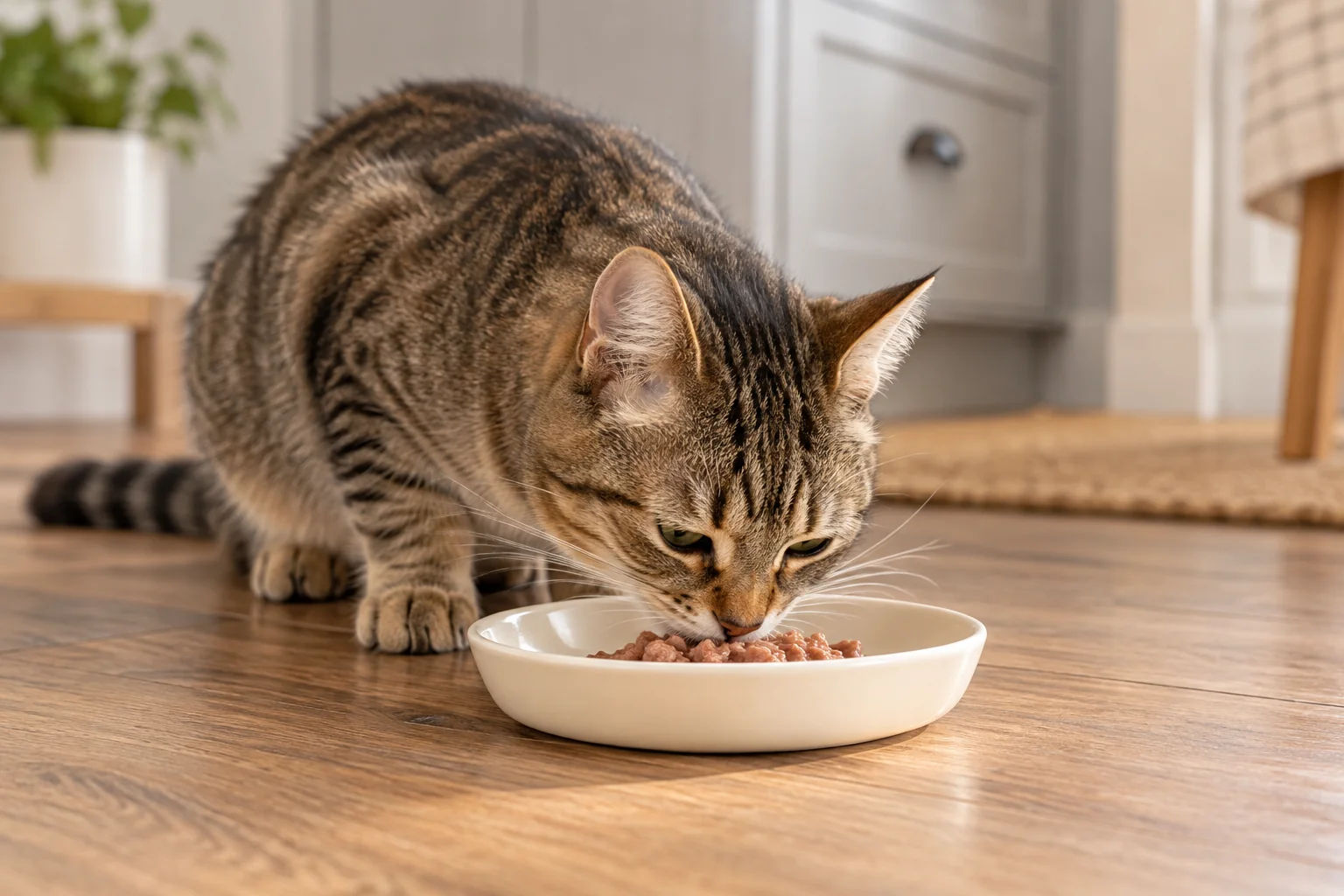
Place the familiar portion in the bowl and observe voluntary use in the usual feeding area. Notice whether the cat can reach food at the center and around the sides. If food remains in a particular part of the bowl, check that area of the shape before attributing the behavior to a single cause.
You can compare a suitable shallow dish with the current bowl while keeping the food, portion and location consistent. Record what changes and what stays the same. If the cat chooses one dish, that is information about this comparison; it does not establish an ideal diameter for other cats.
Treat terms such as whisker-friendly as descriptions to investigate. Check the actual opening and contact points instead of assuming the label proves a medical benefit. Whisker contact, pawing at food or leaving pieces behind does not, by itself, identify a condition or show that width is the cause.
A bowl change should also remain separate from concerns about appetite or health. If the cat’s eating habits change, discuss the change with a veterinarian rather than continuing to resize dishes as a diagnosis.
Inspect depth and rim shape alongside width
Depth and rim shape determine where the opening sits relative to the food. Keep them in the width comparison, even though you are not choosing stand height here.
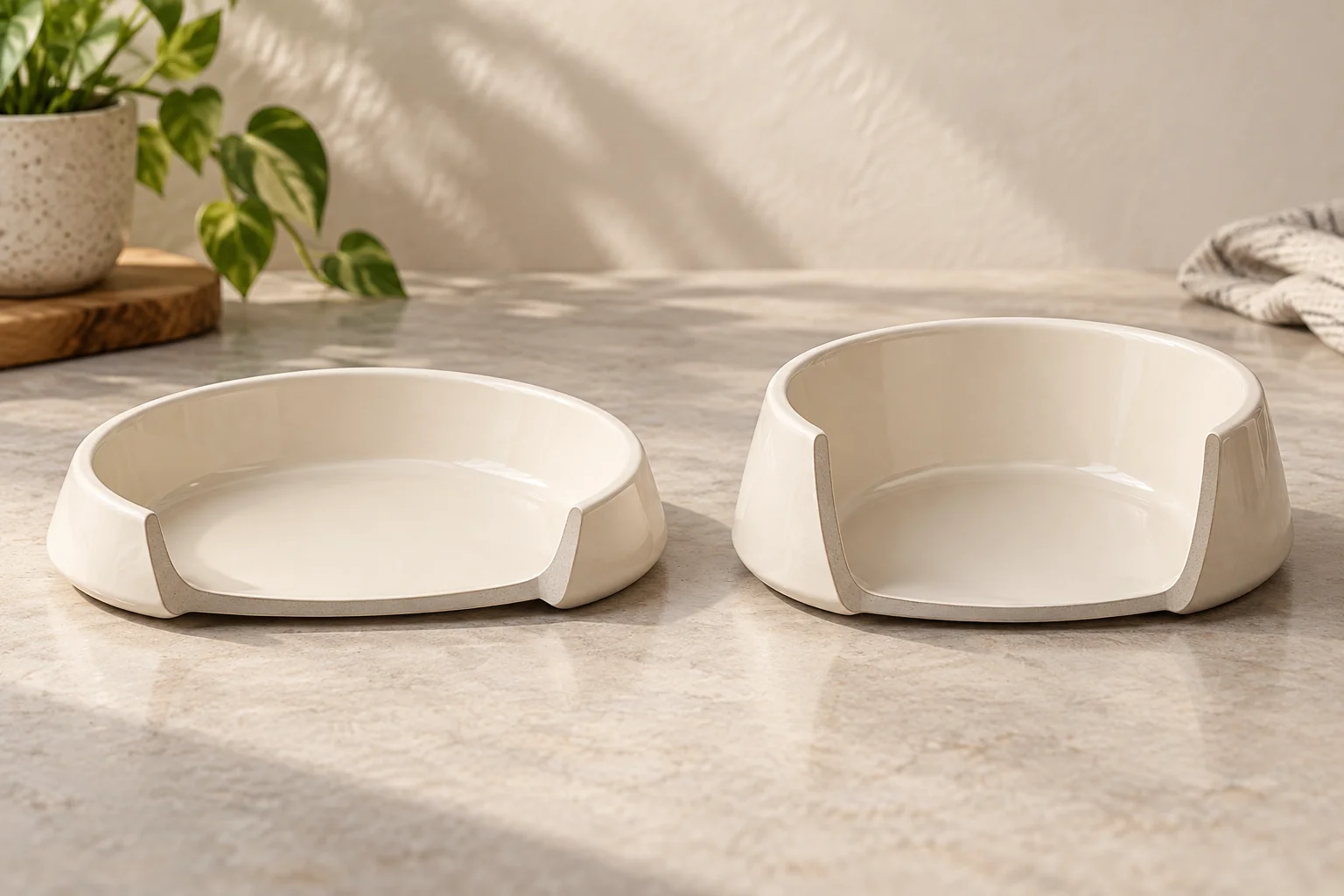
Look across the rim from the side, then inspect the transition between the wall and bottom. A wide top does not reveal whether the meal lies in an open area or in a narrower recess. With the intended portion in place, check the remaining access to food along the edges.
Do not assume the shallowest dish will suit every portion and routine. Compare containment and access with the food you actually use. A dish that spreads the meal broadly may need more space on the mat; a deeper shape may offer capacity but should still be checked at its lower interior.
Ask whether dimensions describe the empty interior or the complete exterior. A thick base can change overall height without adding internal depth. A flared edge can change overall width without enlarging the bottom. Keep those features separate in your notes so that a new sample can be compared accurately.
Check the food and water layouts separately
Check a food dish with the actual meal, and check a water bowl with its intended fill level. Matching outer widths do not establish that the two bowls are equally suitable for their different uses.
For food, look at the spread of the existing portion and the access around it. For water, record the inner opening, depth and fill level as separate details. Keep water clean and fresh, and check that the cat can approach the bowl in the chosen location.
Consider separate locations for food and water rather than assuming they must fit into one paired holder. Plan individual food bowls for cats in a multi-cat household. A larger shared dish does not replace looking at each cat’s access to its own feeding space.
When planning the area, measure the whole footprint: the bowl, mat or holder and the space needed to remove it. Check that the bowl is accessible for both use and cleaning. Avoid choosing a wider dish that fits the shelf on paper but is difficult to lift out in practice.
Compare stand fit and the purchasing specification
For a bowl held by its rim, check the body and rim against the intended stand as a complete configuration. A listed diameter alone cannot establish compatibility.
Request the maker’s fitting information and compare it with an actual sample. Check how the rim is supported, whether the bowl seats as intended and whether it can be removed for cleaning. Do not select a stand using a generic gap or flange-overhang rule.
For a retail or private-label brief, include the interior measurements alongside the exterior ones. State which measurement appears on the listing and how capacity is measured. Include the intended meal use and any holder that must be compatible.
Keep sample observations separate from production promises. A drawing can specify an opening; it does not prove a medical effect, a cat’s acceptance or a shipping saving. Ask for confirmation of the proposed sample and specification before treating them as settled purchasing details.
The custom pet bowl page is a place to begin a bowl inquiry. For related configurations, review custom pet accessories; pet product manufacturing information can help frame questions about the proposed project. Confirm the particular bowl and holder rather than inferring availability from general service information.
FAQ
Do cats prefer deep or shallow bowls?
Compare suitable samples with your individual cat rather than assuming one preference for all cats. Keep the food and portion consistent, then check access to the bottom and sides. A shallow dish is an option to assess, not proof that every deep bowl is unsuitable.
What is the best size bowl for a cat?
Start with the clear inner opening, usable bottom and the space occupied by the usual meal. If shopping online, ask which diameter the listing gives and request the missing interior dimensions. A small, medium or large label is not enough to compare fit between different shapes.
Should food and water bowls go next to each other?
Allow separate locations when planning the feeding area, rather than treating a paired stand as essential. Keep fresh water available in a location the cat can access. Check each location and bowl separately; width alone does not determine where the cat will choose to eat or drink.
Conclusion
Compare the inside opening and usable bottom before moving to a wider size. Check the actual meal and the complete feeding setup, then document the sample that works for the intended use. For a sourcing inquiry, send the interior dimensions, rim details and holder requirements so the discussion starts with a defined fit.