Choose cat scratching post replacement material by matching the existing covering, the area it covers, and the attachment method specified for that product. Check the post, base, and connections before ordering. A new rope wrap, textile panel, or insert replaces a worn surface; it does not repair a damaged support or establish that the whole scratcher is suitable for continued use.
Begin with the product name, photographs, and any repair instructions. A replacement supplied for the same model gives you a clearer starting point than an unidentified roll of cord. If the maker does not support replacing the covering, ask about a complete replacement component before taking the post apart.
Check the Post Before Replacing Its Covering
Inspect the complete scratcher first and distinguish surface wear from damage to the support. Loose rope or worn fabric is a different problem from a cracked column, damaged base, or connection that will not secure as instructed. Stop using a damaged or unstable product while you decide what can be replaced.
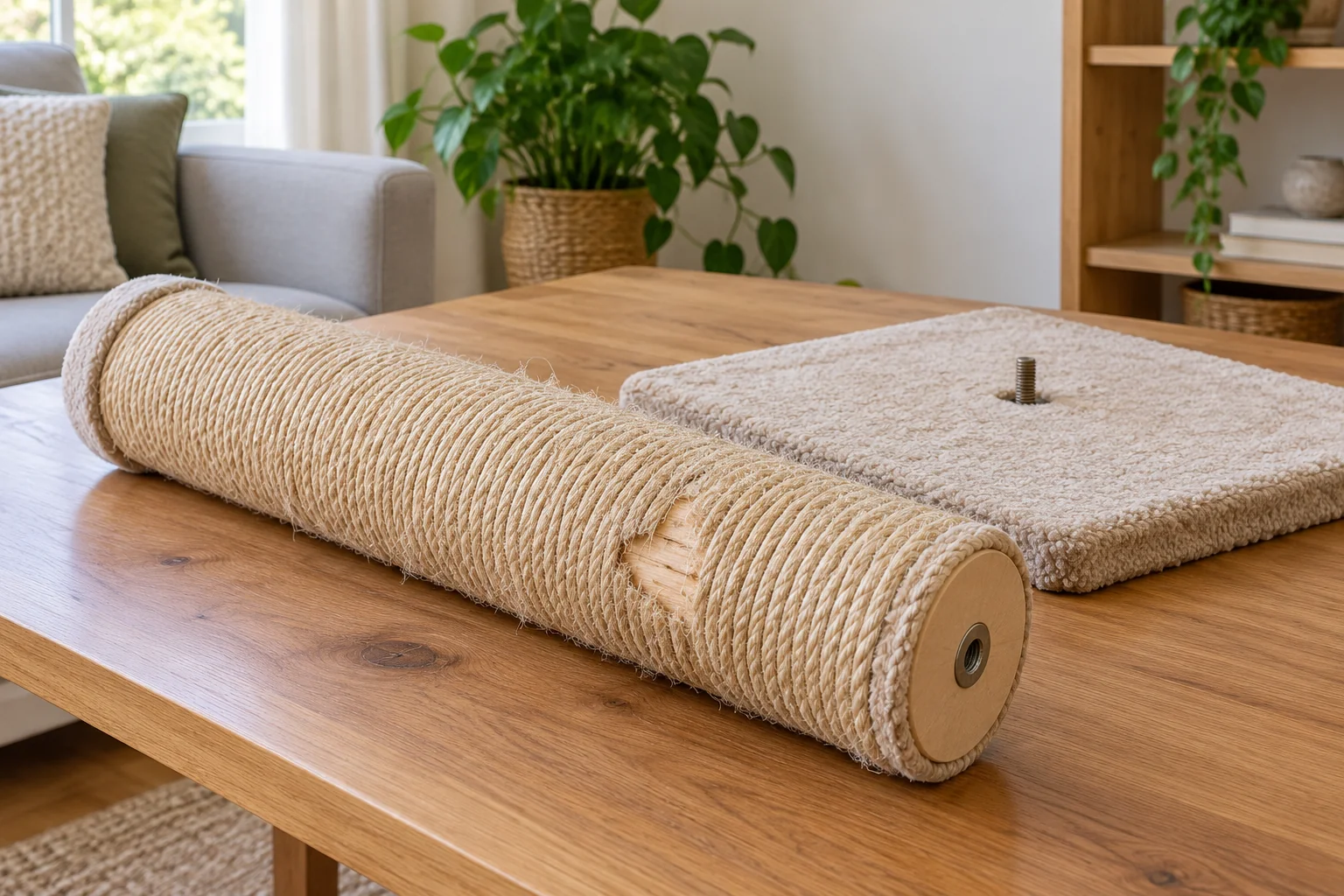
Review the product instructions
Look for a model reference, assembly sheet, care information, and available spare parts. Check whether the maker describes replacing a wrap, a panel, an insert, or the entire column. A replaceable post component is not necessarily designed for home removal of its covering.
Photograph the assembled item and the affected area. If a support or connection is concealed, do not assume that it is sound from the outside. Contact the maker with those photographs when the problem or repair scope is unclear.
Separate covering wear from structural damage
Look for loose covering, detached edges, gaps, and wear through to the support. Also check for visible cracking, crushing, moisture damage, loose connections, or a base that rocks. Those observations identify questions to resolve; they do not prove the cause or a repair method.
Do not cover a defect with fresh rope and treat it as fixed. Follow the maker’s advice on a replacement component or complete product. If you cannot confirm how the support is intended to be repaired, keep it out of use rather than testing an improvised repair with the cat.
Choose a Matching Replacement Format
Match the replacement to the original surface and the product’s repair instructions. Rope, woven fabric, carpet, and cardboard inserts have different shapes and fitting requirements. Changing from one format to another needs confirmation that the support and attachment can accommodate it.
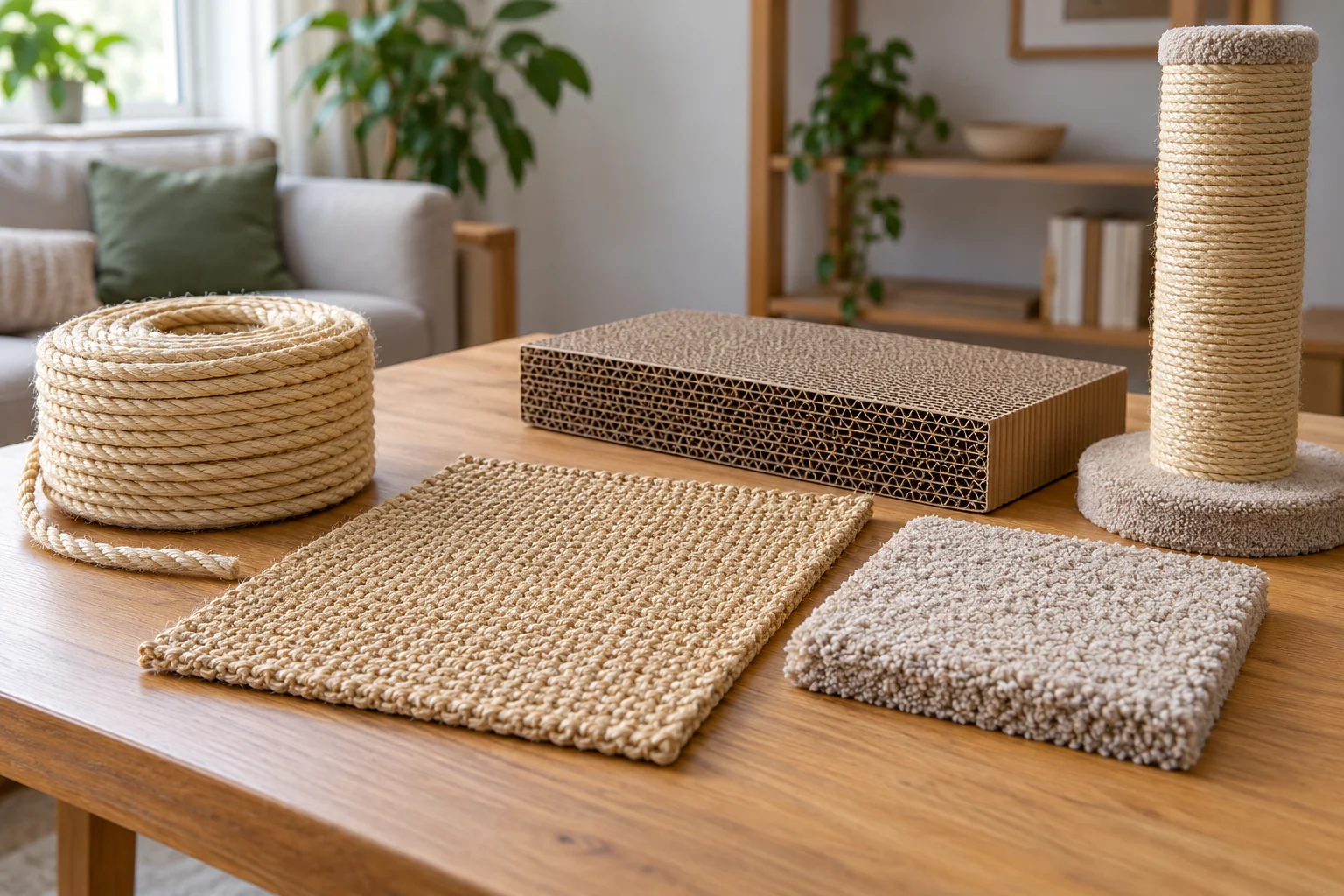
| Existing format | Replacement information to collect | Fit or attachment question |
|---|---|---|
| Rope-wrapped column | Original cord description, thickness, and covered area | Is this rope and fastening method supported for this post? |
| Woven panel or wrap | Finished panel dimensions, backing, and edge details | Will the panel fit the mounting or seam arrangement? |
| Carpet covering | Textile description, pile, backing, and finished size | Is the covering intended for scratching, and how are its edges secured? |
| Cardboard insert | Model reference and insert length, width, depth, and shape | Does the maker identify this insert as compatible with the holder? |
| Replaceable column | Model, overall dimensions, and connection details | Is the complete part approved for the existing base or cat tree? |
For cat tree and scratching-post projects, keep the replacement component tied to the finished product reference. A material swatch alone does not establish that it fits the assembly.
Rope and woven replacements
Use the original rope specification when it is available. Otherwise, ask the maker or material supplier about the intended replacement. Cord diameter is useful for matching the wrap, but “thicker” does not automatically mean more suitable or more durable.
A woven sheet may look like a convenient alternative to rope, yet introduces different edges, seams, and attachment requirements. Confirm that conversion before buying fabric by the yard. Keep the original format if an alternative cannot be supported by the product instructions.
Carpet and cardboard replacements
For carpet, inspect the pile and avoid loose yarn or loops that may catch claws. A remnant selected for appearance may have an unsuitable backing or an unresolved attachment method. Confirm the intended use rather than relying on “commercial grade” as an approval.
For a cardboard refill, use the holder’s matching insert reference where possible. Do not force a pad into a frame or improvise spacers to make an incompatible insert fit. If the frame is damaged, address that before fitting a new insert.
Measure the Area and Confirm the Quantity
Measure the section being replaced and confirm the finished part or material quantity with its supplier. Distinguish the bare support from the outside of the old covering. Rope thickness, fabric overlap, edges, and attachment arrangements can affect the amount required.
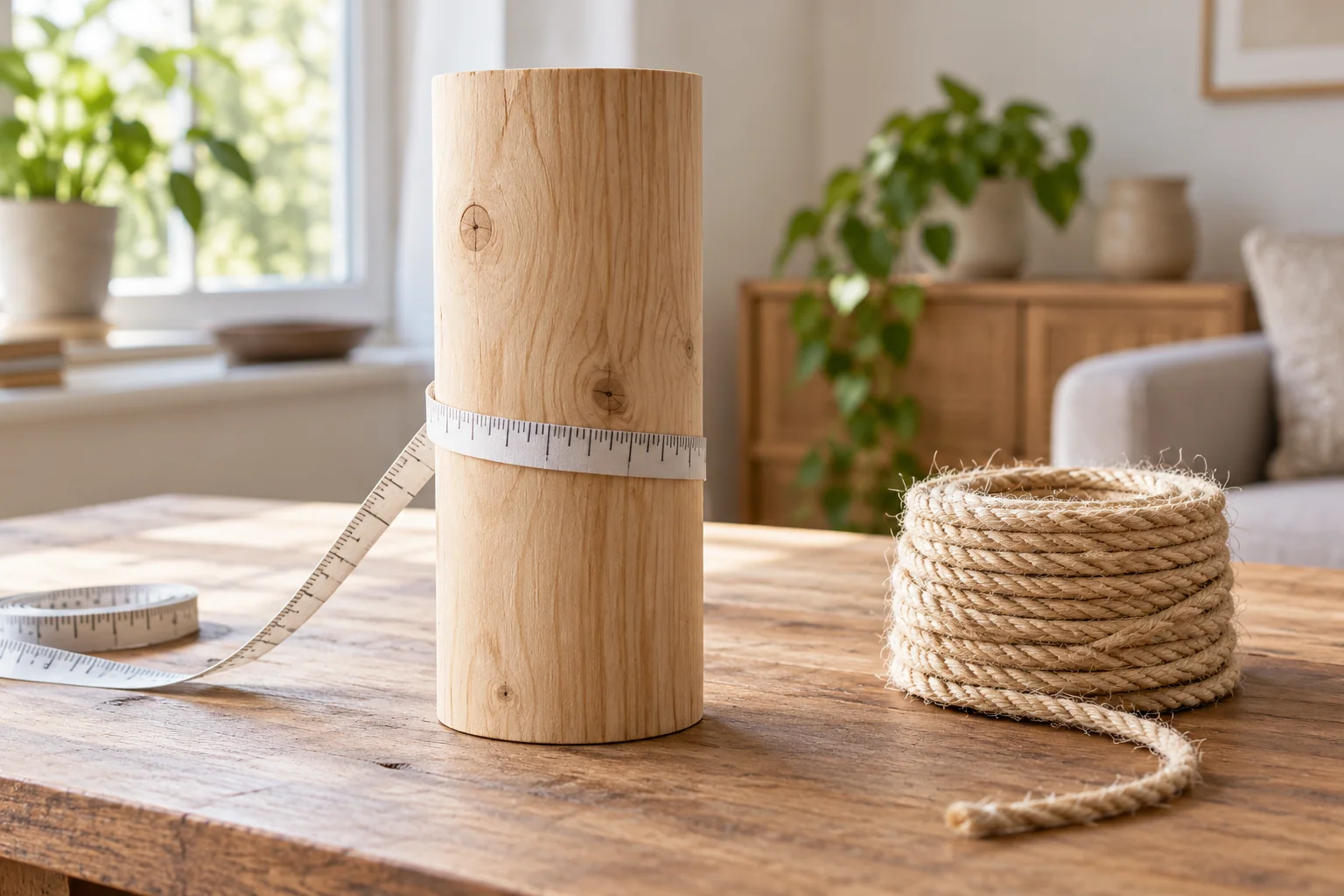
Record the actual geometry
For a column, note its shape and the length of the covered area. For a sheet, record the area to be covered and the seam or edge arrangement in the repair instructions. For a refill, record the holder and the matching insert rather than just the size of a worn pad.
Use a flexible tape where appropriate, and label what you measured. A circumference measured over an old rope wrap is different from one measured on a bare core. If dismantling is not supported, ask the maker for the required dimensions instead of removing parts to obtain them.
Treat rope estimates as approximate
A rough rope estimate combines the expected number of turns with the distance around each turn. The result depends on actual cord thickness, the winding path, and how the turns sit. It is an ordering aid, not an exact installation quantity or a reason to impose one fixed spare percentage.
Give the supplier your measurements, photographs, and the intended wrapping instructions. Ask what allowance the specific repair needs for its ends and attachment. An old wrap can provide another reference if it can be removed intact through the approved repair process, but missing or stretched sections limit that comparison.
For fabric, confirm roll width, cut direction, finished edges, and any seam allowance with the supplier. Ordering by area alone can leave you with a piece that does not fit the intended orientation. Keep the approved cutting or part dimensions with your order.
Confirm Attachment and Adhesive Instructions
Use the attachment method specified for the product and replacement material. There is no generic staple size, glue type, or curing time that approves every scratching-post repair. If the method is unclear, ask the maker before proceeding.
Check the support and fasteners
Confirm what the support is made from and which fastening method it permits. A technique shown for a solid wooden tutorial post may not apply to a hollow tube or a different connection. Do not copy a nail or staple arrangement without checking that distinction.
Inspect for protruding hardware, sharp edges, unsecured ends, and loose covering before return to use. Do not run bare fingers over suspect sharp areas as a test. Resolve defects using the supported method; covering exposed hardware does not establish that it will stay contained during use.
Ask product-specific adhesive questions
If the repair requires adhesive, confirm compatibility with the covering and support, application instructions, curing conditions, and restrictions for the intended use. Review the adhesive documentation and the maker’s repair guidance together.
Descriptions such as “water based,” “non-toxic,” or “odorless” are not sufficient to approve a bond for this application. Neither an absence of smell nor a fixed overnight wait proves that a repair is ready. Follow the documented requirements and ask the manufacturer when suitability remains unresolved.
Keep cats away from tools, loose cord, offcuts, fasteners, and adhesive during the work. Clean the work area and account for removed parts before bringing the product back. This is a basic work-area precaution, not a guarantee about the finished repair.
Follow a Product-Specific Replacement Process
Use the maker’s replacement sequence rather than a universal re-wrapping recipe. Different products retain their coverings and connect to their bases in different ways. If the necessary instructions are unavailable, consider an approved complete component instead of improvising a repair.
- Identify the model and confirm which replacement is supported.
- Check the post and base, and resolve structural questions first.
- Record the required dimensions, material, and attachment instructions.
- Obtain the compatible component or the specified material and supplies.
- Carry out only the documented replacement steps and curing requirements.
- Reassemble and inspect according to the product instructions before use.
If the work reveals an unexpected support, hidden damage, or a connection different from the instructions, pause. Photograph the discrepancy and ask the maker how to proceed. A neat-looking outer wrap does not settle a concealed structural problem.
For a refillable holder, remove and replace the insert only as instructed. Confirm its orientation and seating without forcing it. For a textile panel, check the intended edge and mounting arrangement; the visible face is only part of the fit.
Inspect the Finished Repair and Record the Part
Check assembly, covering attachment, and the surrounding area before returning the product. Confirm that documented curing requirements have been met. If the support rocks, the covering moves, or hardware is exposed, keep the scratcher out of use and resolve the issue.
Let the cat explore voluntarily when the product is ready. Keep its familiar location if appropriate, and observe how it responds to the new surface. A change in texture may affect use; avoid assuming that a repaired scratcher will immediately be accepted.
Record the component reference, material order, repair date, and instructions used. Inspect later according to the product’s care guidance. These records are more useful for the next replacement than a general claim that the repair will last for years.
Buyers planning custom pet accessories can request compatible spare-part information alongside the main specification. For a pet product manufacturing inquiry, include the interface dimensions, intended covering, and questions about repair documentation. Describe requirements rather than assuming that a replacement service or particular material is available.
FAQ
What size sisal rope should I buy for a replacement?
Use the original specification or the maker’s supported alternative. Measure the cord and covered area when the repair process allows it, then confirm the match with the supplier. No single diameter fits every post, and a thicker cord can change the wrapping quantity and fit.
What can I use as replacement cord for a scratching post?
Choose the original cord specification or an alternative supported by the maker. Confirm the material, diameter, and attachment before buying. An unidentified decorative cord is not an approved substitute just because it looks similar.
What glue is suitable for a scratching-post repair?
Ask the post maker and adhesive manufacturer about the specific covering, support, and intended use. Follow their application and curing instructions. A general craft-glue category or a “non-toxic” label does not by itself approve the finished repair.
What replacement parts should I look for?
Ask whether the model has a compatible covering, insert, panel, or complete column. Check the component reference and connection details rather than ordering by appearance alone. If the maker offers a complete part instead of a loose covering, follow that replacement route.
Can every cat scratching post be rewrapped?
Check whether the maker supports replacing the covering on that model. Consider a complete replacement when the support, base, or connections are damaged and an approved component repair is unavailable. Fresh covering cannot establish the condition of a concealed support or correct an unresolved assembly problem.
Conclusion
Identify the supported replacement before ordering material or removing the old surface. Keep the component reference, dimensions, attachment instructions, and any unresolved questions together so you can check the completed work against them.
For a product project, prepare photographs and the proposed replacement specification. You can contact us to discuss those requirements.