Cat toy materials include fabric, filling, plastic, paper, cardboard and the parts that connect them. Compare those materials through the finished toy: what your cat does with it, which surfaces it can reach, and how the whole item can be cleaned. A soft cover, a recycled label or a crinkle sound gives you only part of that information.
How Play Style Should Guide Material Choice
Watch which part of a toy interests your cat. A cat that carries a fabric mouse is using it differently from one that pulls at its tail, while a cat that bats a ball needs an object it can move. Those observations help you choose a format before comparing its construction.
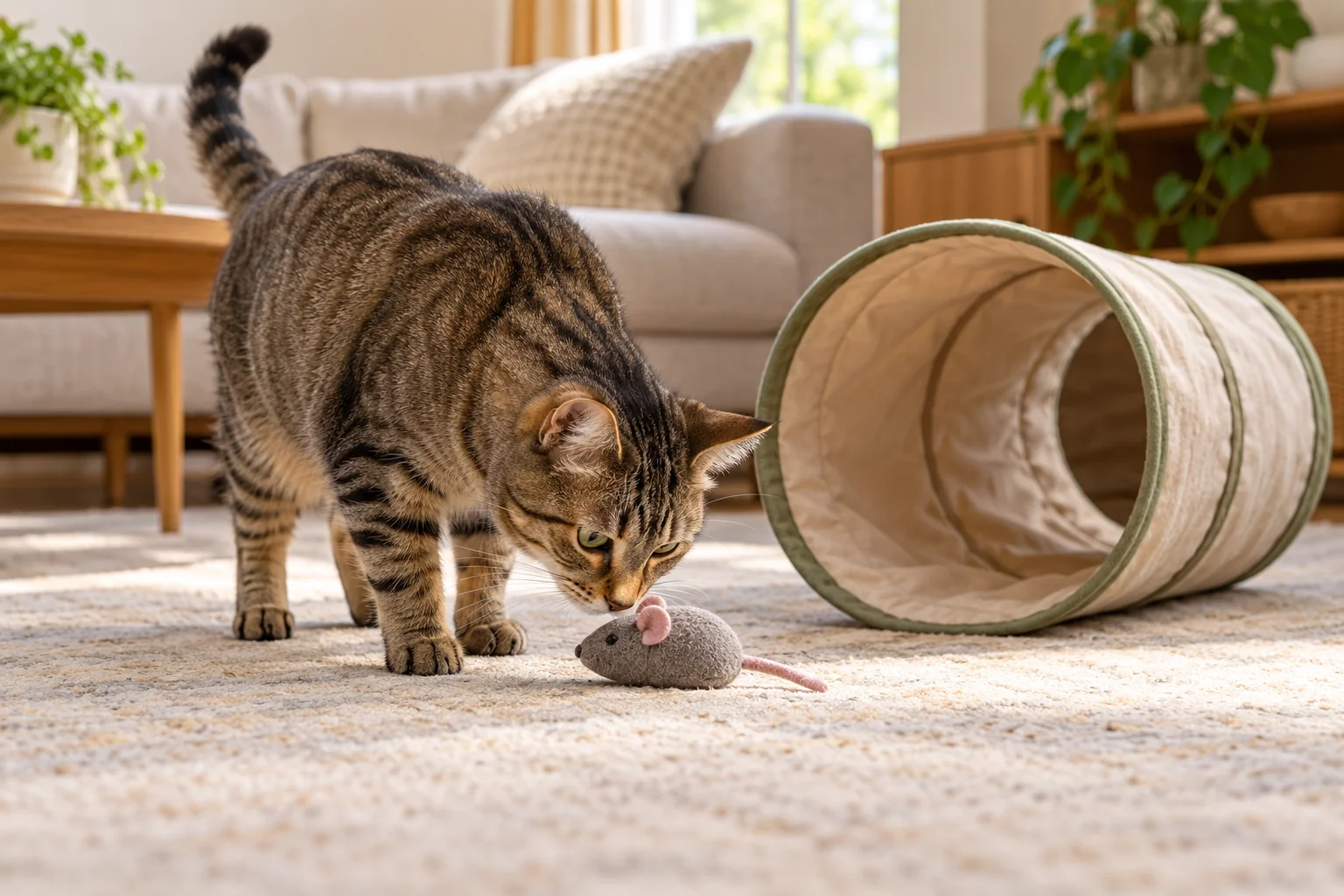
Use the examples below to compare the parts involved in each activity.
| Activity | Toy formats to compare | Useful product details |
|---|---|---|
| Carrying or kicking | Fabric mice, soft shapes, kickers | Finished size, filling and attached parts |
| Batting or chasing | Balls, rolling shapes, enclosed tracks | Weight, movement and access to internal components |
| Person-guided play | Teaser wands and their attachments | Handle, connector and attachment instructions |
| Hiding and pouncing | Boxes, paper structures, fabric tunnels | Openings, supports and enclosed edges |
| Scratching | Cardboard or sisal surfaces | Surface construction and replacement guidance |
A cat may enjoy several of these activities. Add a format that offers something different from its existing toys, then compare the materials used in that design.
For a larger hiding structure, the cat tunnel and teaser collection shows the components used to specify those product formats. A tunnel’s textile, supports and openings need consideration together; a description of its fabric alone leaves much of the structure unexplained.
Fabric, Stuffing and Seams in Soft Toys
Read the outer fabric and the filling as separate parts of a soft toy. Cotton, polyester fabric, fleece and wool appear in cat toys, but a material name does not tell you the finished item’s washability, shedding or resistance to damage.
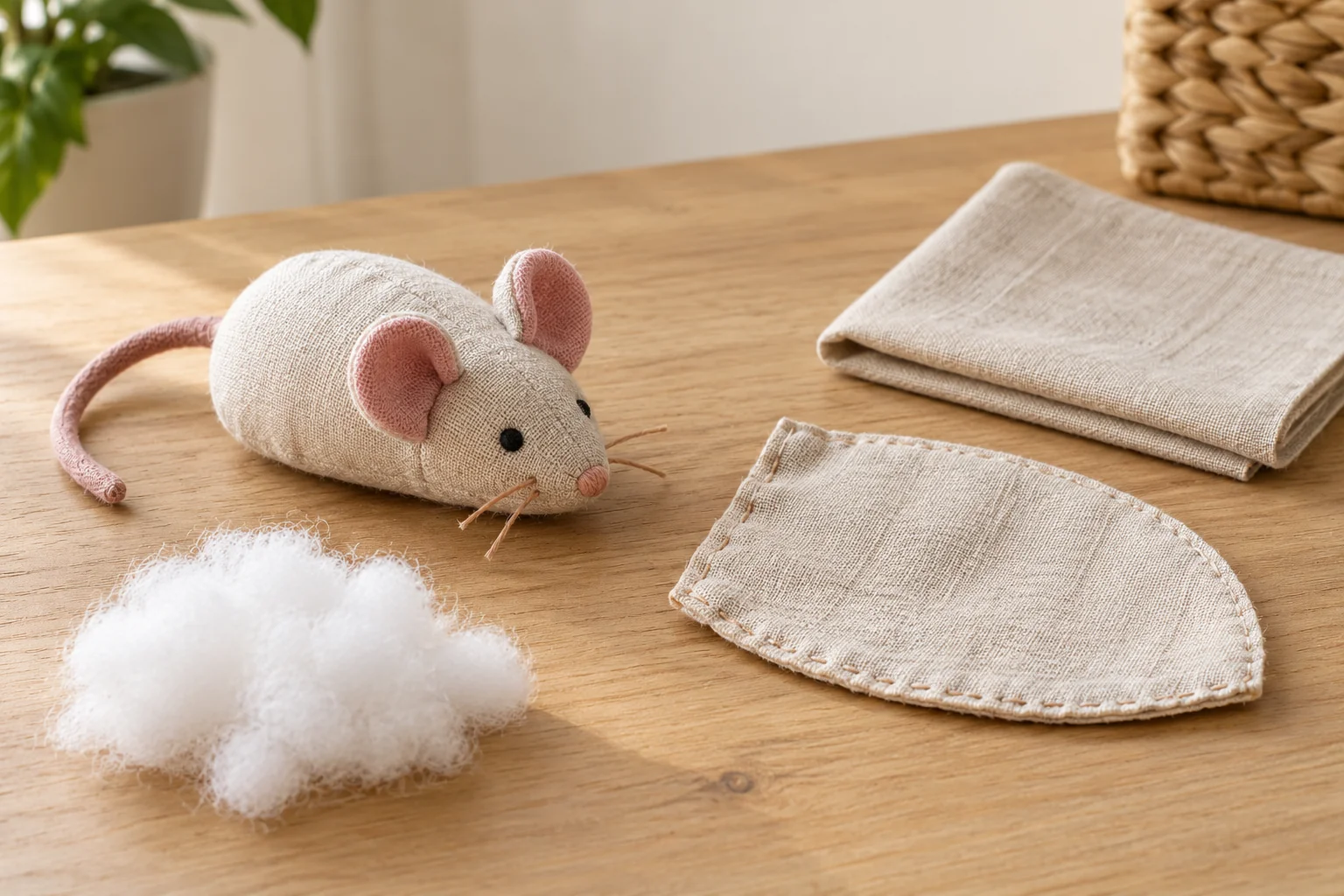
A fabric mouse can contain loose filling, a scent pouch, a sound component or a combination of inserts. Its specification should describe those contents alongside the cover, so you can compare two otherwise similar-looking toys.
Seams show how panels and parts join. Look at the closing seam as well as the decorative stitching, especially around a tail, ear or other attachment. Record how each part connects; any claim about attachment strength needs evidence for that construction.
A useful soft-toy description answers three practical questions:
- What is the outer fabric, and what fills the toy?
- Which features are separate attachments, and how are they connected?
- Which cleaning method applies to the complete toy, including its inserts?
Include attachments in the care information you retain with the toy. A detachable scent pouch, for example, needs its own removal and replacement instructions.
What Makes the Crinkle Sound in Cat Toys
A crinkle toy can contain a flexible insert that makes noise as it moves. The term “crinkle material” describes that function; it does not identify an exact plastic, coating or finished-product specification.
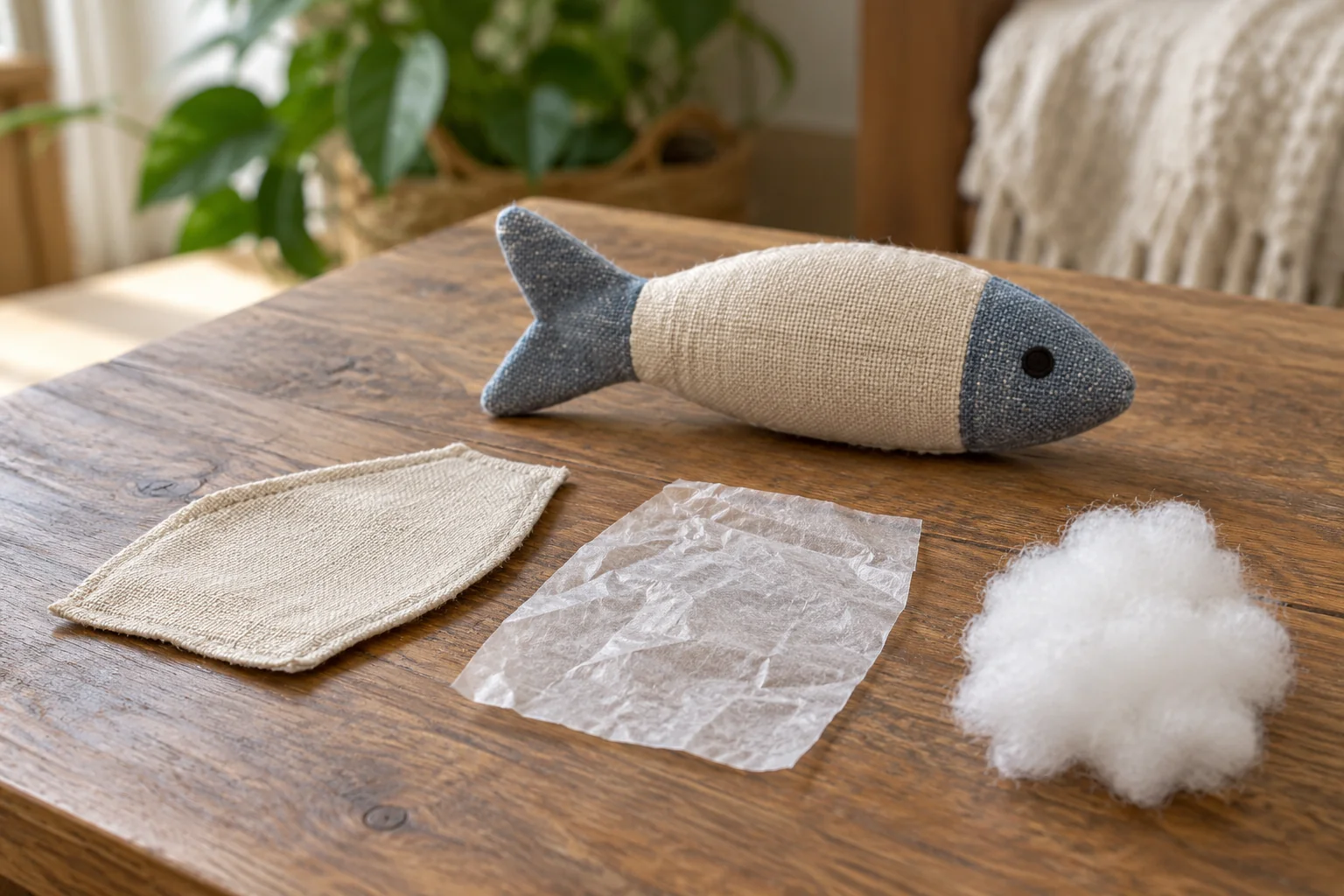
In a fabric toy, the insert may sit between the cover and filling. A supplier should be able to distinguish those layers in the component description. If a listing calls the insert “crinkle paper,” establish whether it means paper, plastic film or another material rather than identifying it by its sound.
Craft tutorials sometimes use repurposed packaging as an insert. A tutorial can show the assembly method while leaving the packaging composition and suitability unresolved. For a purchased toy, request a replacement specified by its maker instead of substituting a snack wrapper.
For a purchased crinkle toy, obtain care instructions covering both the fabric and the internal layer. Put the toy away if the insert becomes exposed. The sound-making function is useful information about play, while the component specification answers the material question.
Plastic, Wood and Sisal Parts
Compare rigid and textured parts by their role in the toy. A molded ball, a wooden rolling shape and a sisal-wrapped surface present different constructions, even if all appear in the same toy category.
With a ball or track, consider the whole object and any accessible internal component. Openings and joins matter alongside overall size. A bell described as internal still needs to remain inaccessible during the intended use; the description alone does not show that it will stay enclosed after damage.
For a wooden component, examine the surface, edges and any applied finish. Pair that visual inspection with the named finish and care information in the product description.
Sisal can provide a textured scratching surface. Compare how it attaches to the base, where its ends sit and how the scratching section can be replaced. Those details serve a different purpose from the filling or seams in a soft toy.
Cardboard and Paper Toys
Paper and cardboard offer forms such as balls, boxes and scratching surfaces. Select the form for the activity, then examine what else is attached to it. Tape, staples, handles, windows and coatings can make two similar-looking paper products quite different.
For paper bags used with cats, remove the handles. Cardboard boxes and paper play objects also need assessment against the individual cat’s behavior, including whether it tears off and eats pieces. A familiar household material does not make every household item an appropriate toy.
Cleaning can be a reason to choose another construction. If a paper or cardboard item becomes wet, soiled or damaged, use the maker’s replacement or disposal guidance. Do not assume it can be washed because another toy of the same shape is washable.
Likewise, “cardboard” is not enough information to decide the disposal route for a finished product. Ask about coatings and other attached materials, then use the relevant local recycling instructions. Keep disposal claims specific to the item.
Recycled and Natural Materials: Identify the Actual Claim
Find out which component a recycled-material statement covers. It may refer to the outer textile, filling, a cardboard section or the packaging. Those are different claims, and a description of one component does not describe the entire toy.
For cat toys made from recycled materials, useful documentation identifies the component, the material and the basis of the claim. Where a percentage is stated, it should be clear what that percentage measures. Retain any supporting document with the matching product reference rather than applying it across a whole range.
“Natural” also needs a material description. Wool, cotton, wood and sisal have different uses, while the finished toy can contain additional thread, adhesive, coatings or plastic parts. A natural outer surface does not identify all those components.
When a label and specification disagree, ask the seller for a corrected component record. Touch and appearance can describe the sample, but they cannot verify its fiber composition.
Recycled content, suitability for the cat, care requirements and end-of-life handling are separate questions. A recycled-content claim alone does not establish that the finished toy is safer, cheaper or environmentally preferable to another product.
Cleaning, Wear and Replacement Checks
Use cleaning instructions for the complete product. A fabric-and-film toy, a filled toy and a plain fabric cover may require different handling even when their outer textiles look alike. Look for washing, drying and any removable-part instructions before purchase.
If the method is unclear, ask about that exact model. Do not infer machine-washability from the word “cotton,” or prescribe soaking because the outer surface is plastic. Check the toy again after cleaning before returning it to play.
Focus a condition check on places where materials meet: the closing seam, an attachment, an opening around a sound component or the edge of a support. Look for accessible filling, emerging inserts, loose pieces, cracks or damaged surfaces. These observations identify a change in condition; they are not a home durability test.
Set aside a damaged toy and follow the replacement guidance. Keep a small range of suitable activities available without using a fixed rotation schedule as a promise of longer product life.
What Buyers Should Record in a Material Specification
A buyer’s component list should let a supplier distinguish the cover, filling, insert and attachments. Name the part, record the requested material and show its location on a drawing or reference sample. Mark anything still undecided.
For a fabric toy, include the filling and any scent or sound component alongside the outer textile. For a tunnel, record the support structure and openings as well as the panels. Describe the connection at each attached part without turning a preferred joining method into an unverified strength claim.
The manufacturing and materials overview can help organize those component and process questions. Confirm the selected product’s available options separately; a general capability page does not establish a particular film, recycled-content claim or certification.
Keep the agreed material record, sample reference and care instructions together. Resolve a change to an insert or attachment before approving the finished configuration, including any documentation needed for the claims you intend to print.
FAQ
What material is best for cat toys?
Choose a finished format your cat can use as intended, then compare its components and care instructions. A material preference can narrow the search, but it cannot answer questions about filling, attached parts or product size.
What is the crinkle material in cat toys?
It is the sound-making component, often described as an insert or film. The trade description does not establish its exact composition. Ask for the named material if that information is missing from the product specification.
Are crinkle toys safe for cats?
The complete toy needs its own assessment. Consider the intended use, accessible parts and your cat’s behavior; supervision and an enclosed insert do not guarantee suitability. Put away a toy if your cat opens the cover or exposes its contents.
What is the best fabric to use for cat toys?
Compare fabrics within the particular design you want to make or buy. Establish the cover, filling, attachment method and complete-product cleaning requirements together. A fabric’s general description does not validate a finished homemade toy.
Are cat toys made from recycled materials better for the environment?
A recycled-content claim alone cannot establish the finished product’s overall environmental impact. Identify what the claim covers and what supports it, then consider the complete construction and its local disposal options.
Conclusion
Take one toy your cat enjoys and identify its cover, contents and attachments. When comparing a replacement, bring the unanswered component or care question to the seller. A clear description of that particular toy gives you something concrete to compare before choosing another material.