In a cat tree vs cat condo comparison, a tree usually emphasizes climbing levels and open perches, while a condo emphasizes an enclosed resting space. The labels overlap: one piece of furniture can include both. Compare the usable platforms, cubby, routes, and room space before deciding which name describes the better purchase.
A tree with an inaccessible top bed may offer less useful climbing space than its height suggests. A condo with a narrow entrance may leave much of its outer volume unavailable to your cat. The details below help you judge those features from product measurements and your cat’s existing habits.
Terminology and Functional Overlap: Trees, Condos, and Towers
“Tree,” “condo,” and “tower” are retail descriptions, not consistent size or layout standards. A seller may call a multilevel unit a condo because it has a hideaway, while another calls a similar unit a tree.
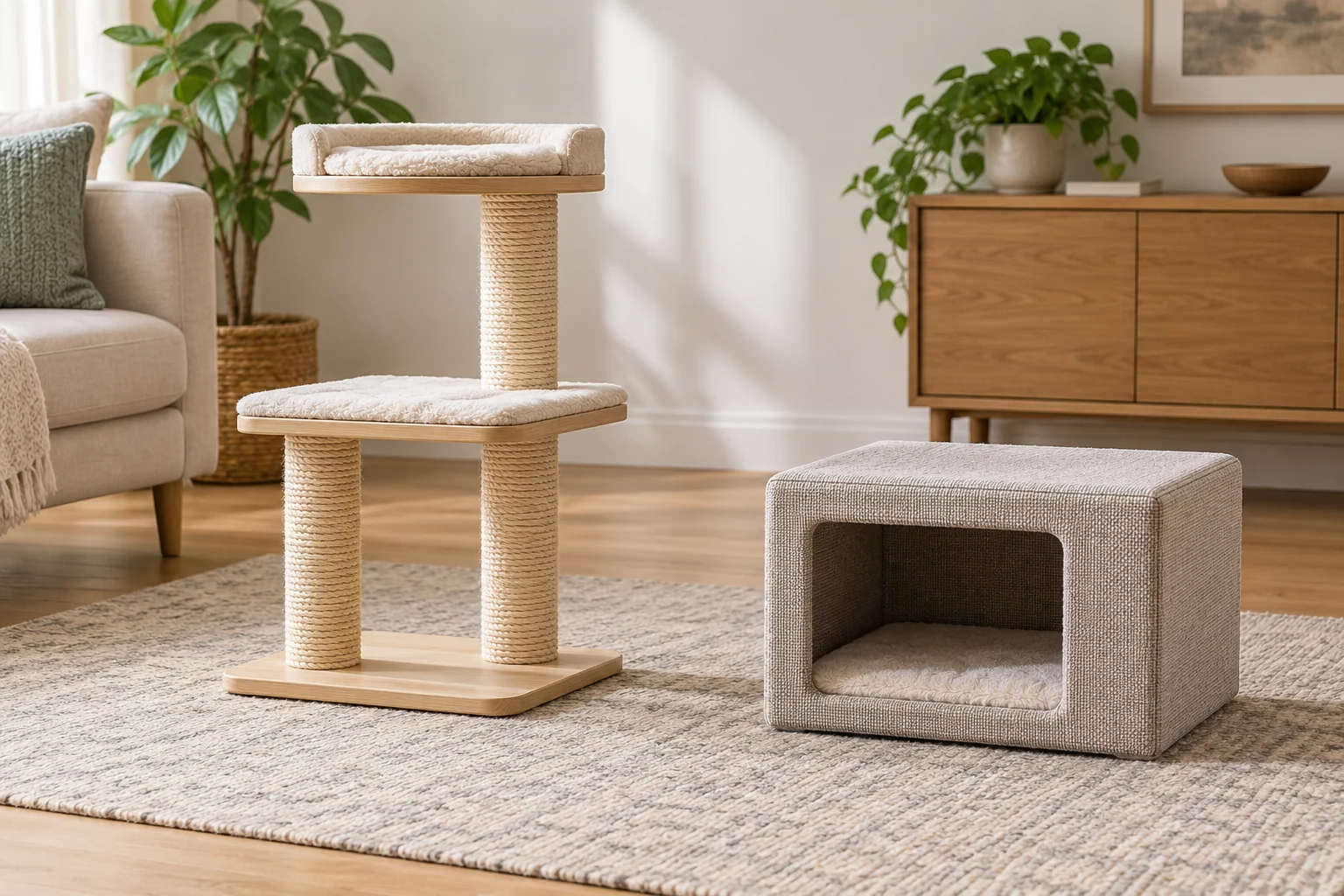
A cat tree generally offers platforms connected by posts or other supports. A cat condo usually includes a roofed or enclosed cubby. “Tower” often emphasizes a vertical arrangement, but it does not guarantee a narrow footprint or a particular route between levels. A cat tree vs cat tower search may therefore lead to very similar products.
Use the names to find candidates, then compare the features that exist on each one:
- Open resting platforms and their usable surface area.
- Enclosed cubbies, their entrances, and their interior dimensions.
- Routes between resting spots, including intermediate steps or ramps.
- Scratching areas and room to approach them.
- The assembled outline and access for cleaning.
A hybrid tree with an open perch and an enclosed cubby can offer both resting options. That is useful only if the cat can reach and fit the spaces. Counting features in a listing does not resolve those two questions.
Enclosed Resting Chambers vs. Open Lounging Platforms
An enclosed cubby has sides and a roof around the resting area; an open platform leaves more of the surrounding room visible. Neither arrangement is the right choice for every nap or every cat.
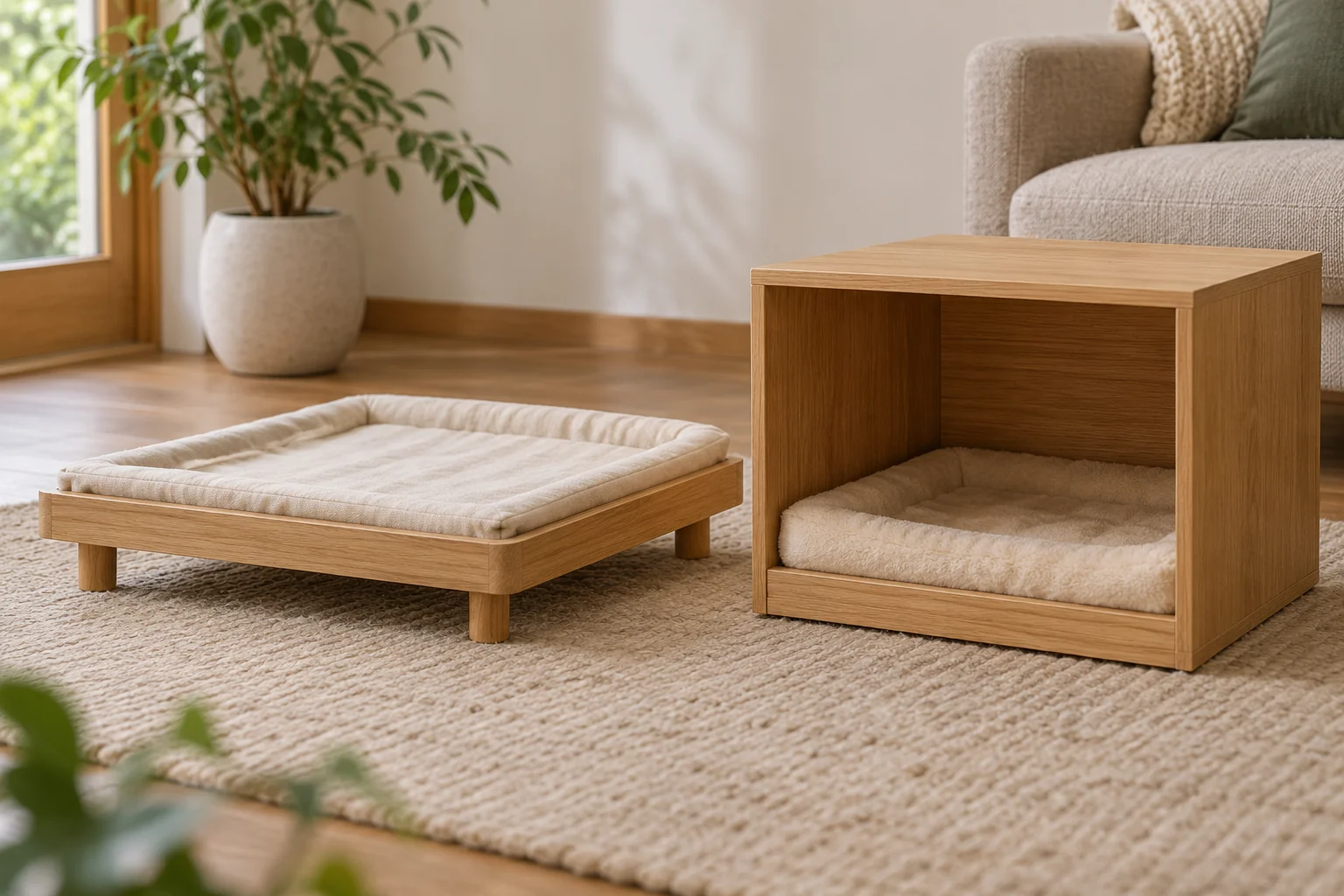
A cubby the cat can actually use
The entrance and interior are separate measurements. A large box can have a small opening, while an easy entrance can lead into a cramped interior. Use the clear opening dimensions and the space left after any cushion or lining is installed.
Compare that space with a resting spot your cat already uses. Allow room for its usual curled or stretched position and for entering, turning, and leaving. There is no universal entry-hole diameter or cubby width that suits every cat. Exterior box dimensions alone are insufficient.
An open perch with a usable bed
The relevant measurement is the resting surface inside any raised rim, not just the platform’s widest outer edge. A round bed, shallow tray, and hammock may have different usable shapes even when their listed widths are similar.
An open perch can suit a cat that spends time watching from a window seat or another raised spot. That observation is more useful than deciding it has a permanent “tree cat” personality. A cat may use an open bed during the day and a sheltered cubby at another time.
Exit access in a shared household
In a home with several cats, a desirable bed can still be difficult to use if another cat blocks the approach. Look at the way into and out of each resting area, including whether a cubby has another exit. More than one opening does not guarantee peaceful sharing, but the layout is worth comparing with the routes available in the room.
Provide separate resting choices rather than expect every cat to share one unit. A multi-cubby listing is not a promise that the cats will use it together.
Climbing Routes, Jump Spacing, and Vertical Mobility
The route to a perch matters as much as the perch itself. Follow it from the floor on the product diagram: where does the cat first step, where can it land next, and how can it return?
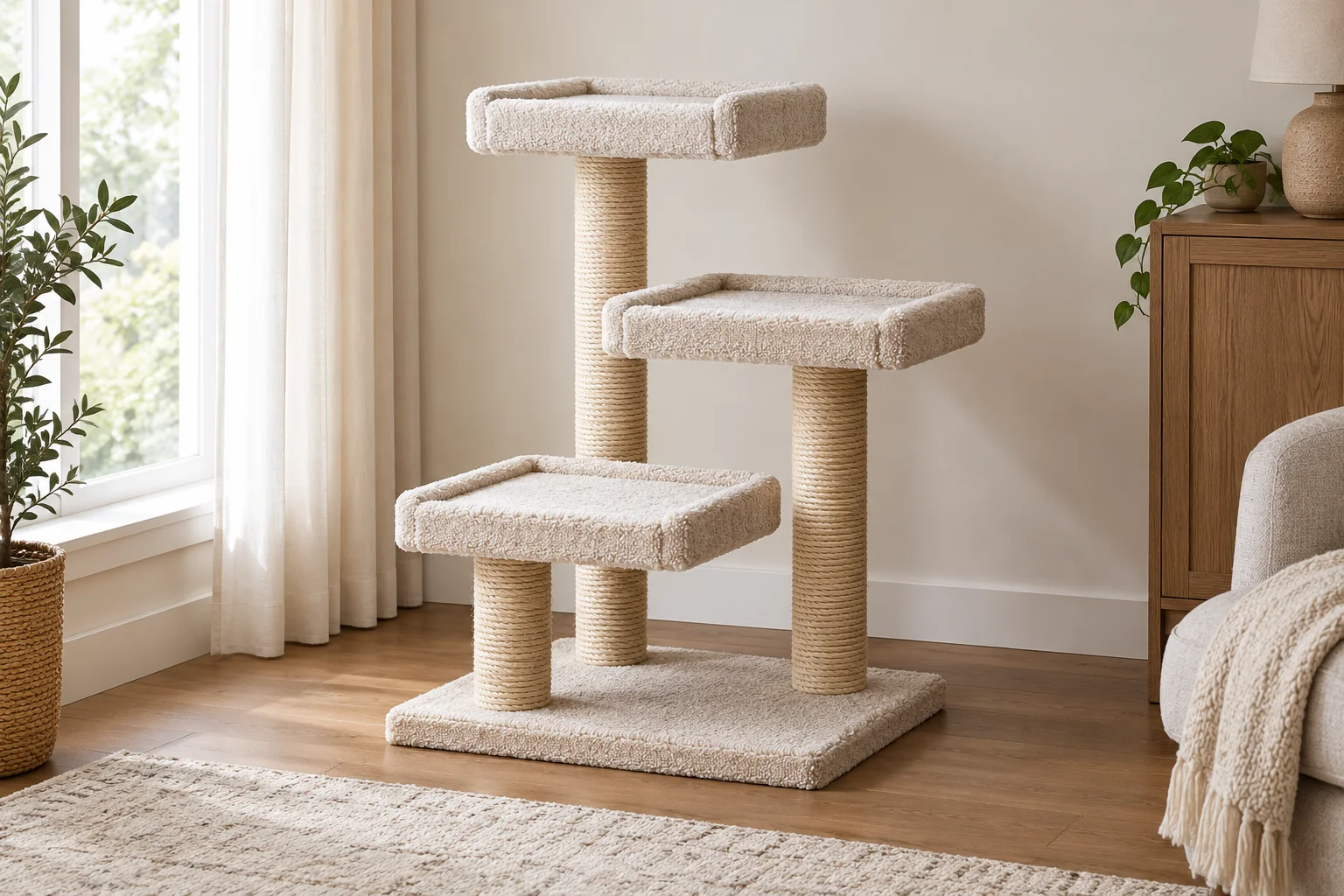
Staggered platforms can provide intermediate landings. A straight column with a top bed may offer fewer stops, even if it occupies a similar amount of floor space. A low cubby may require little climbing, while a cubby set high in a tree needs its own approach route.
Compare the proposed gaps and landing areas with movements your cat already makes comfortably at home. The position of a platform also matters: a bed directly over a cubby roof may obstruct the approach to the entrance below it. Product photos taken only from the front can hide that overlap.
For a cat that uses short steps, prioritize accessible intermediate levels or an appropriate ramp rather than adding height for its own sake. Do not force a cat onto a perch to prove that it can use the route. A new difficulty with movement is a separate concern for a veterinarian, not a reason to rely on a furniture label.
Room Footprint: Measure the Whole Assembled Outline
The base measurement can understate how much room a tree needs. Beds, hammocks, ramps, or cubbies may extend beyond it. Mark the widest assembled outline in the intended location, then leave room for the cat’s approach and for people to move past.
| Layout | Space detail to compare | A question for the intended location |
|---|---|---|
| Tree with branching platforms | Widest platform or hammock overhang | Does it extend into a walkway or doorway? |
| Unit with an enclosed cubby | Entrance direction and cubby projection | Is there a clear approach to the opening? |
| Vertically arranged tower | Full outline, including its upper bed | Can the cat reach the top without nearby furniture blocking the route? |
| Hybrid tree and condo | All platforms, cubbies, and access steps | Are both the perch and hideaway usable in this position? |
The labels do not establish standard footprints. A low condo can be wider than a tree, and a tower’s top bed may project far beyond its base. Compare actual assembled dimensions rather than a size chart based only on product type.
The location changes the comparison too. A tree beside a window needs clearance for window use and the nearby path. A condo facing a wall may lose easy entrance access. Try the outline in the room before choosing extra beds or a taller arrangement that will be awkward to place.
Scratching Areas and Everyday Access
A tree and a condo may both include scratchers. Count the areas the cat can reach, not just the rope-covered posts shown in the feature list. A short wrapped section hidden beneath a platform offers a different approach from a clear post beside the main route.
Look for room in front of the surface and enough clearance for the way your cat already scratches. A horizontal panel on a cubby and a vertical post are different options; the label on the whole unit does not tell you which is present.
Scratching access is one part of the choice. It does not make an enclosed cubby spacious or an upper bed reachable. Keep those features separate when comparing a tree with several functions against a simpler unit.
Cleaning an Open Deck and an Enclosed Cubby
Open platforms are easier to see and reach than the back corners of a closed cubby. That difference becomes more relevant when the lining is fixed or the entrance is small.
An interior cushion may lift out while the wall covering remains attached. Examine both in the product information. A removable pad is not automatically machine-washable; its care label determines the method. The surrounding panels and fixed fabric may need different treatment.
For a cubby, consider whether your hand or cleaning attachment can reach the corners through the opening. For an open bed, consider whether its pad lifts away and whether the recess beneath it remains accessible. Replacement availability also matters if a heavily used bed or scratching section wears before the rest of the unit.
Follow the model’s assembly and care instructions. A loose connection or damaged part needs to be resolved before continued use. This applies to either layout; a “tree,” “tower,” or “condo” name does not establish its stability or maintenance needs.
Comparing Products or Preparing a Buyer Brief
For a household shortlist, start with a missing function: an accessible raised bed, an enclosed retreat, or both. Then remove candidates that will not fit the cat’s usual resting position, its route, or the intended room location. This prevents an impressive feature count from deciding the purchase.
For a sourcing brief, describe the arrangement instead of asking only for a “cat condo.” Specify the number and location of open platforms, whether the design includes a cubby, its clear opening and usable interior, the route between levels, scratching areas, and cleaning access. Include assembled dimensions and a drawing showing projections beyond the base.
Assembly instructions, supplied fittings, replaceable parts, and packaging belong in the model’s specification as well. These details describe what you want supplied; they do not substitute for evidence supporting a load claim, certification, or other performance statement.
Send a sketch and the usable-space requirements with your product inquiry so that a supplier can respond to the arrangement rather than guess what you mean by “condo.”
FAQ
What is a cat tree condo?
It usually means a cat tree that includes an enclosed resting cubby. The term may also be used more broadly by sellers. Read the platform and cubby details to see which functions the model actually offers.
What is the difference between a cat tree and a cat condo?
A tree usually emphasizes platforms and climbing routes; a condo usually emphasizes an enclosed resting space. A hybrid can provide both. The terms do not define fixed dimensions, so compare the actual layout and usable spaces.
How does a cat tower differ from a cat tree?
“Tower” often describes a vertical arrangement, while “tree” may suggest several platforms branching from posts. Sellers use the names differently. Neither name guarantees a small footprint, a particular height, or an easy route to the top.
Will my cat actually use a cat tree?
No furniture choice guarantees use. Start with the resting positions and routes your cat already chooses, then offer accessible spaces in a suitable location without forcing it onto them. A cat that ignores an upper bed might still use the cubby or lower platform.
Do cats prefer taller cat trees?
Some cats regularly choose elevated resting spots, but height alone does not make a tree suitable. The route, usable bed area, and location also matter. Compare those with your cat’s habits rather than selecting the tallest model by default.
Conclusion
Identify one resting spot your cat already chooses and what makes it usable: the open view, enclosed space, approach, and room to lie down. Use that as the first comparison for a perch or cubby, then mark the candidate’s full outline in your room. If you want both functions, choose a hybrid only when both spaces and the routes to them work in that location.