To stop dog leash pulling, reward walking near you and pause forward movement as the line begins to tighten. Start somewhere quiet, make the desired behavior easy to practice and add distractions gradually. Equipment supports that work, but learning depends on what happens during the walk rather than a no-pull label.
Begin with one situation you can manage. A dog that pulls toward every smell needs a different starting point from one that lunges when another dog appears. Notice what happens before the pull and choose a practice setting where your dog can still respond to you. If the behavior is difficult to manage or includes distress, get professional guidance.
Start Where Your Dog Can Pay Attention
Choose a familiar place with room to move and few distractions, then reward your dog for standing or walking near you. You are giving the dog an achievable starting point before asking for the same behavior on a busy route.
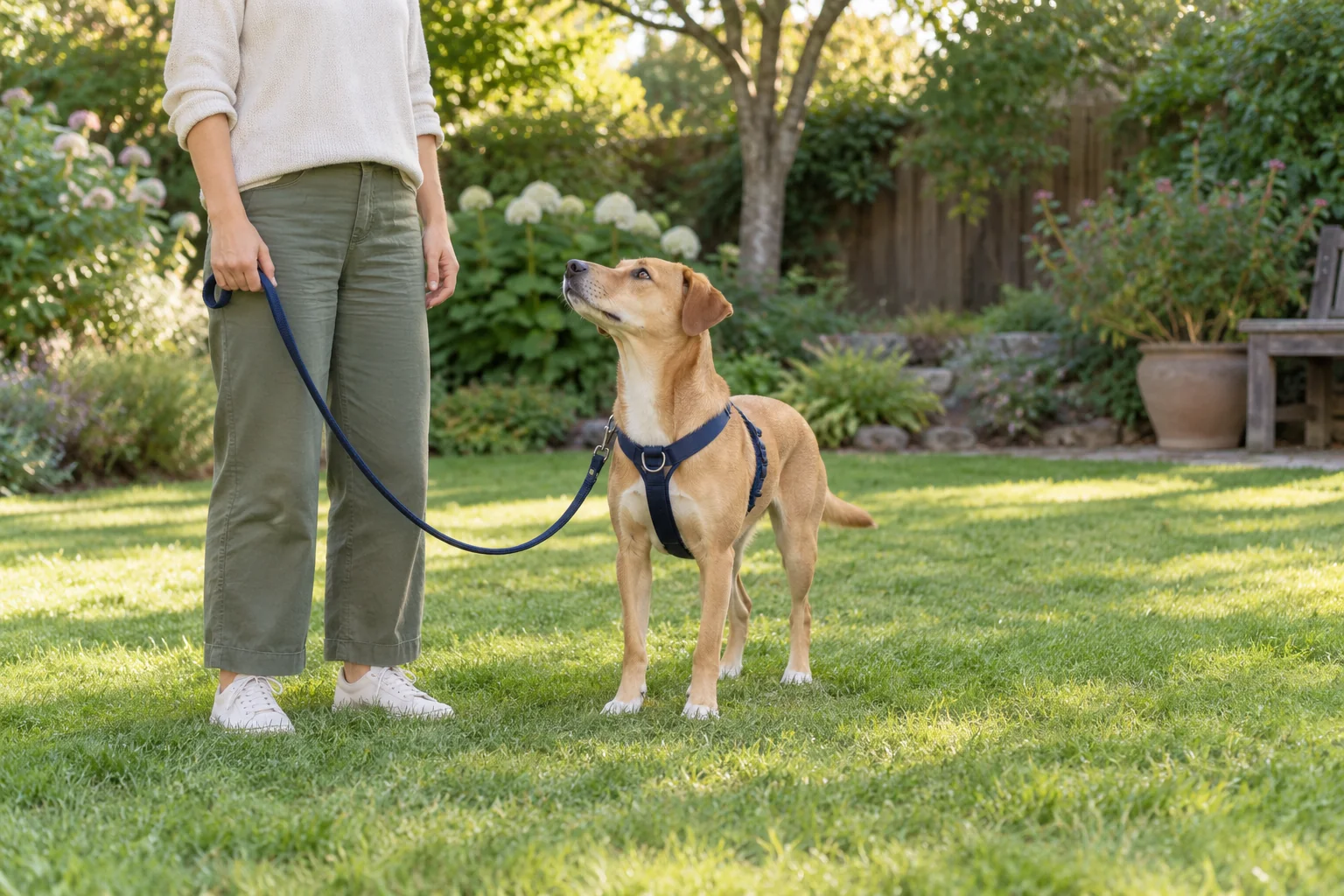
Pulling can work for a dog: it may bring a smell, person or destination closer when the handler follows. Excitement, frustration and fear can also affect what happens on the leash. Those possibilities help frame your observations, but a single pull cannot diagnose the dog’s motivation.
Bring suitable walking equipment and rewards your dog is willing to take. For the leash, assess the usable length for the walking setting with your hand position, attachment and available space. A longer line can involve more material to manage; no single advertised length fits every exercise or route.
Before moving off, allow the dog to notice you and reward that attention. Then make the first movement small enough that staying near you remains achievable. If the dog is already straining toward a distraction, choose an easier place rather than starting a prolonged contest at the end of the line.
Keep practice short enough that you can stay patient and observant. You do not need a fixed session length or a promised completion date. An easy stretch of walking gives you something useful to repeat and gradually build on.
How to Stop Dog Leash Pulling in Five Steps
Reward the behavior you want while it is happening, and make forward progress depend on manageable slack. The following steps describe a basic practice sequence; adjust its difficulty to the dog in front of you.
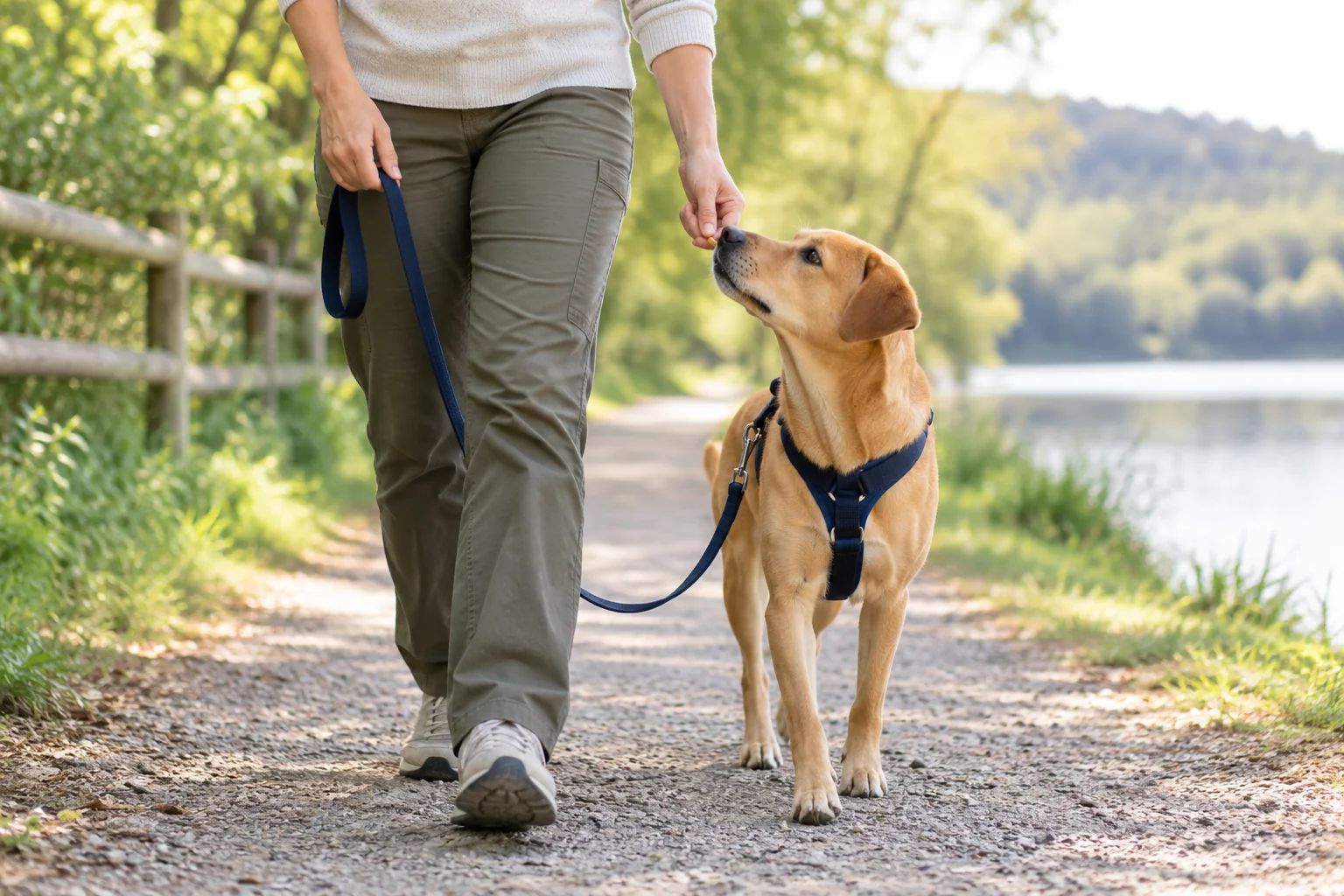
1. Reward a position near you
Start with your dog standing or sitting beside you. Praise and reward attention or a position you want to carry into the walk. Decide which side is practical for your setup so the reward location is clear.
Deliver the reward near that position rather than repeatedly reaching far ahead. There is no universal distance from your hip that every dog must occupy. The aim is to make being near you worthwhile while leaving enough room for comfortable movement.
2. Add a little movement
Move a short distance and reward the dog for staying near you with a loose line. At first, keep the task easy enough that you can notice and reward a successful moment promptly.
A verbal marker or clicker can identify that moment if your dog has learned what it means. Follow it with the reward. Timing matters more than making the marker sound impressive or repeating it while the dog is doing something else.
3. Pause as the leash starts to tighten
When the dog moves too far ahead and the line begins to tighten, pause rather than following toward the destination. Stay calm, avoid jerking the leash and allow the dog to turn attention back or move closer.
Reward the return to a manageable position and resume when there is slack. In a quiet practice area, this helps make the difference between pulling and walking near you clearer. If the situation is unsafe or the dog is distressed, move out of it rather than treating standing still as an absolute rule.
4. Change direction when a reset helps
If the dog keeps moving ahead without re-engaging, a calm change of direction can give you another opportunity to reward walking together. Invite the dog to follow and use available space; make the turn without snapping the line tight.
Reward the dog when it returns to the position you are practicing. The change is a reset, not a surprise correction. If repeated turns produce more frustration or you cannot carry them out comfortably, lower the difficulty or ask a reward-based trainer to help with the sequence.
5. Build distance and distractions gradually
As staying near you becomes more consistent in that setting, increase the distance between rewards gradually. Then try an easier outdoor setting before moving to a busier route. More distance, a new place and another dog can each change the task.
If the dog starts struggling, return to a stage where it was successful. The next step is based on the response you observe, not on how many days have passed or whether a breed chart says the dog should already be ready.
Make Room When Other Dogs Appear
Create distance before the encounter becomes difficult to manage. Pulling, barking or lunging toward another dog can involve fear or frustration, and the appropriate plan may require more than ordinary loose-leash practice.
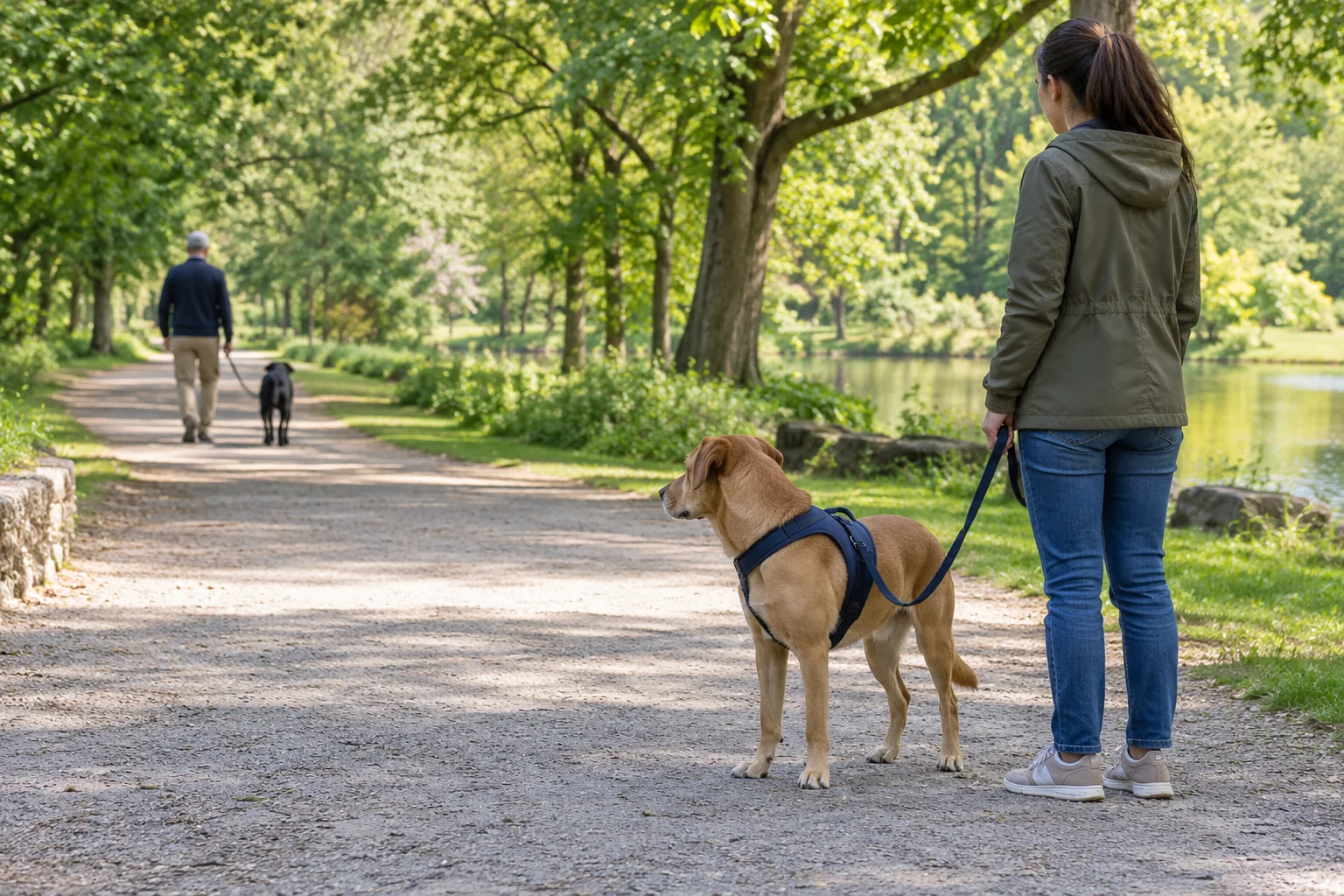
Choose a route or time that reduces unexpected close encounters while you work on the behavior. When another dog appears, use a safe place to turn away or give more room. You do not need to complete a greeting or pass closely to prove that the practice is working.
A useful starting distance is one at which your dog can notice the other dog and still respond to you. That distance varies. A fixed number of feet cannot tell you whether the present encounter is manageable.
Reward a response your plan calls for, such as turning attention back to you. If the dog is already reacting intensely, focus on moving away safely. Repeatedly asking for attention at close range can leave you practicing a task the dog cannot manage in that moment.
For repeated lunging, marked fear or bite concerns, involve a qualified reward-based professional and your veterinarian as appropriate. Describe the setting and what happens before, during and after an encounter. A written guide cannot assess the individual cause or replace a behavior plan.
Adjust the Practice When Progress Stalls
Change the part that is making the exercise too difficult rather than repeating the same unsuccessful stretch. A brief note after the walk can show whether the difficulty involved the setting, reward timing or handling arrangement.
| What you observe | A useful adjustment |
|---|---|
| Walking near you works indoors but breaks down outside | Return to an easier outdoor location and build from there |
| The dog takes a reward, then immediately surges ahead | Reward additional moments of walking near you before increasing distance |
| The dog repeatedly fixates on an approaching animal | Make room sooner and seek help if reactions remain difficult to manage |
| Different walkers respond differently when the line tightens | Agree on the practice sequence and reward location |
| You cannot manage the line or the dog’s movement comfortably | Resolve equipment or handling questions with qualified help before increasing difficulty |
Use observations you can describe. “The line tightened at the corner when another dog appeared” is more useful than “my dog was being stubborn.” It gives you a situation to change or discuss with a trainer.
Some walks also have practical demands that differ from a dedicated practice session. Pick opportunities where you can respond consistently, rather than starting a difficult session when you are rushed. Plan ordinary outings and focused practice with the dog’s current abilities in view.
Use Equipment to Support the Training
Choose a comfortable, appropriate walking setup you can operate. A harness, collar, fixed lead or adjustable arrangement needs its own fit and use assessment; a product description cannot guarantee a behavior change.
For the leash, identify the finished length, handle and connector on the complete item. The available standard dog leash options show different construction details to compare. Product-specific suitability remains separate from the training sequence.
A front attachment may change how you handle the line, but it does not automatically teach loose-leash walking. Introduce new equipment gradually and use its intended attachment points. If a dog has a health concern, ask your veterinarian about the arrangement rather than selecting from a general equipment ranking.
Avoid sharp leash corrections and training tools that rely on pain or fear. If you are struggling to regain attention, make the setting easier or get help. Do not turn an ordinary leash into an improvised tightening wrap around the dog’s body. Use equipment designed for its stated purpose.
For buyers preparing a walking-gear brief
Describe the intended use, finished length, handle, connector and instructions for the proposed item. The pet product manufacturing process is a relevant place to organize specification and sample-approval questions, but it does not establish a clinical benefit or no-pull result.
Any requested load claim, material grade or test must cover the actual product. When the reference and quantity are defined, send the leash specification for review. Confirm available options before treating a proposed construction as an approved product.
FAQ
How long does it take to train a dog to stop pulling on the leash?
There is no reliable universal timetable. Progress depends on the dog, practice and setting. Look for repeatable improvement in an achievable situation before increasing difficulty; seek guidance if practice stays frustrating or the behavior becomes harder to manage.
Do dogs grow out of leash pulling?
Do not rely on age alone to teach the walking behavior you want. Give the dog opportunities to practice loose-leash walking and reward it. If pulling changes suddenly or comes with other concerns, discuss the change with your veterinarian or trainer.
Will a no-pull harness automatically stop pulling?
No equipment label guarantees that result. A suitable setup may help you manage practice, but the dog still needs to learn what to do during the walk. Choose the equipment and training plan for the individual dog rather than relying on an attachment name.
Is it safe to wrap a leash around a dog’s waist to stop pulling?
Use the leash in the configuration its manufacturer intends, rather than improvising a tightening body wrap. If pulling persists, ask a qualified reward-based professional to assess the handling setup and training plan.
Conclusion
Choose one manageable place for the next practice and reward a short stretch of walking near you with slack in the line. Build from the response you see there. If encounters with other dogs keep interrupting that practice, arrange help with the encounters before making the route more demanding.