A harness is the piece your dog wears; a leash is the line you hold and attach to it. A dog harness vs leash comparison starts with those separate jobs, then looks at how the complete setup fits and works during a walk. Choose the wearable equipment, connection and usable length together. Changing equipment still leaves loose-leash training as a separate task.
If the problem is a lead that stays tight, a harness that shifts or a clip that is awkward to attach, identify that problem before replacing everything. Each part needs a different assessment. The equipment you choose should suit the individual dog, the handler and the place where it will be used.
How a Harness and Leash Work Together
The harness supplies a body-worn attachment point. The leash connects that point to your hand and limits the available distance between you and your dog. You normally use them together when walking a dog in a harness.
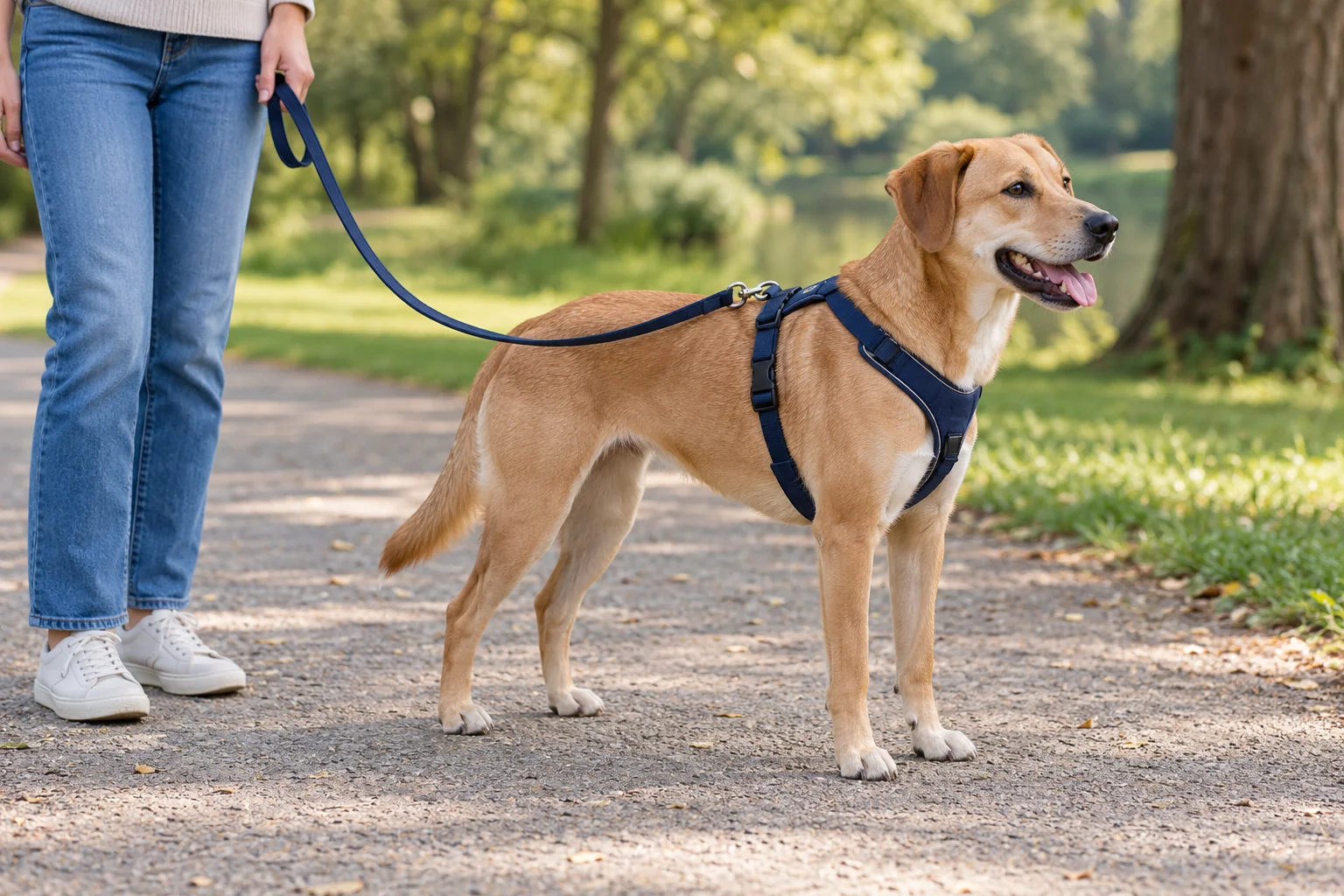
A leash can also attach to a suitable collar. That makes collar versus harness a choice of wearable attachment, while harness versus leash compares two different parts of the setup. Keep the distinction clear when reading product listings: a harness listing may include no leash, and a walking set may include several separate items.
On the leash itself, identify the handle, the line and the connector. These parts are visible across different standard dog leash options. A description such as webbing, rope or adjustable tells you something about the format, but the finished item and its instructions determine how you use it.
The available line also changes with your hand position and the harness attachment. Part of the leash spans that distance rather than providing horizontal room for the dog. When deciding how much slack you need, compare leash length for the walking setting with the route and the actual configuration.
This separates two questions that are easy to mix up. A poorly fitting harness needs attention to the wearable piece. An inconvenient amount of loose line calls for a look at the leash and how you manage it. One replacement does not necessarily resolve both.
Choose the Attachment Point for the Actual Setup
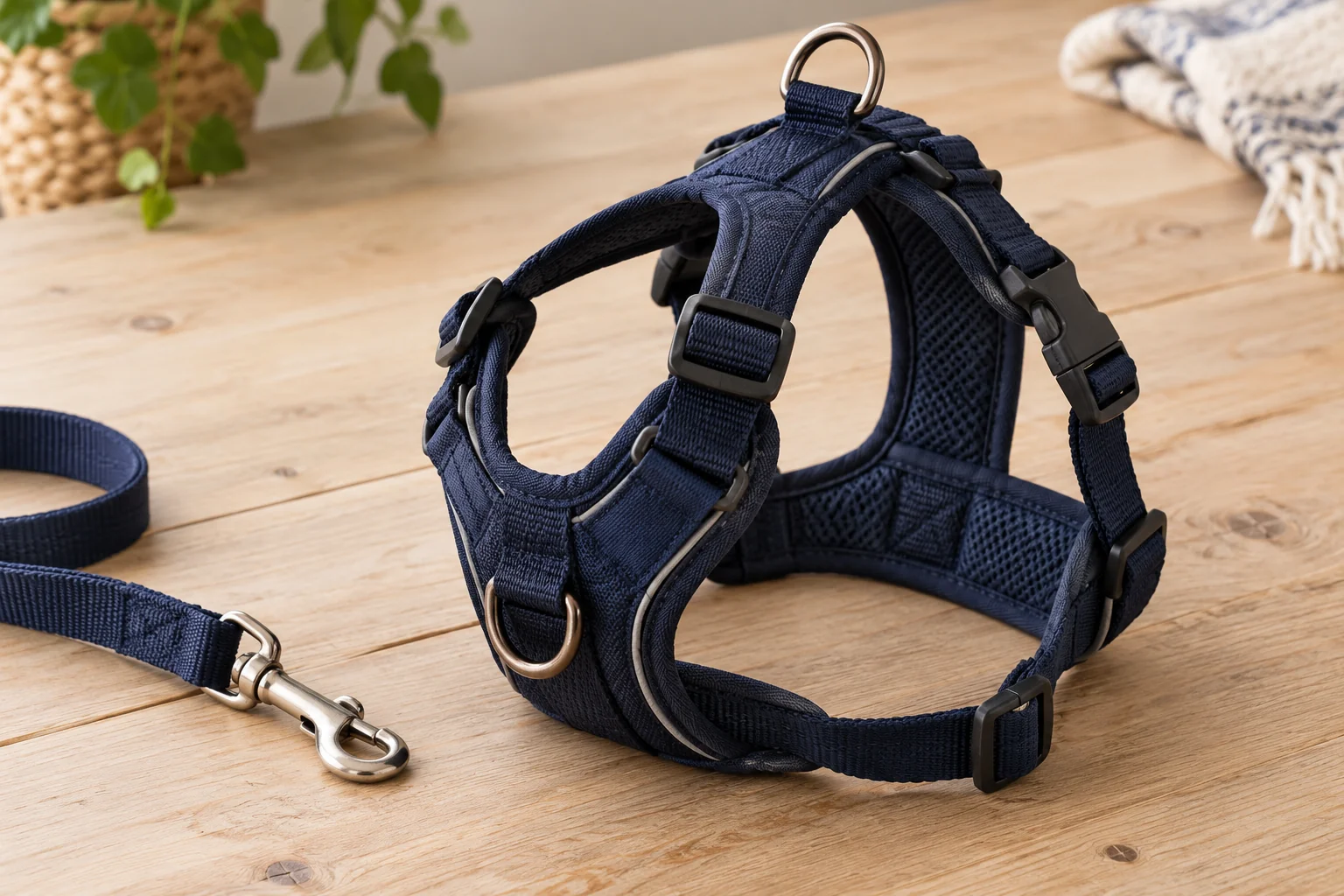
Use an attachment point intended for the particular harness and walking arrangement. Front, back and dual attachments change where the leash connects; their labels alone cannot establish suitability for your dog or a training result.
| Harness arrangement | What it changes | What to resolve before use |
|---|---|---|
| Back attachment | The line connects on the upper part of the harness | Intended use, fit and how the line sits during movement |
| Front attachment | The line connects at the front of the body | Intended handling method and whether the line interferes with the legs |
| Front and back attachments | More than one designated connection may be available | Which points to use and whether a compatible single- or double-ended lead is required |
Back attachments
A back attachment places the connector away from the front chest area. The ring’s location varies between designs, so use the actual instructions rather than assuming that every upper ring has the same purpose. Notice how the attached line lies when the dog stands beside you and turns.
Front attachments
A front attachment brings the connection toward the chest. This can change how the handler manages the line, including where it passes as the dog changes direction. Introduce the arrangement in a calm setting and seek guidance if the handling method is unfamiliar. A front ring is not proof that the harness will stop pulling or suit every dog.
Dual attachments
Some harnesses offer both positions. A double-ended leash may be part of the intended arrangement, but two rings do not automatically mean that both should be connected at once. Follow the specified setup and identify how each end is attached before using it outdoors.
Avoid treating an attachment position as a medical recommendation. If your dog has a health concern, ask your veterinarian about the individual walking arrangement rather than choosing from a general comparison table.
Fit the Harness Before Changing the Leash
Assess the harness against its own measuring and adjustment instructions, then observe it while your dog moves. The size name and a photograph cannot tell you whether that particular wearable piece fits.
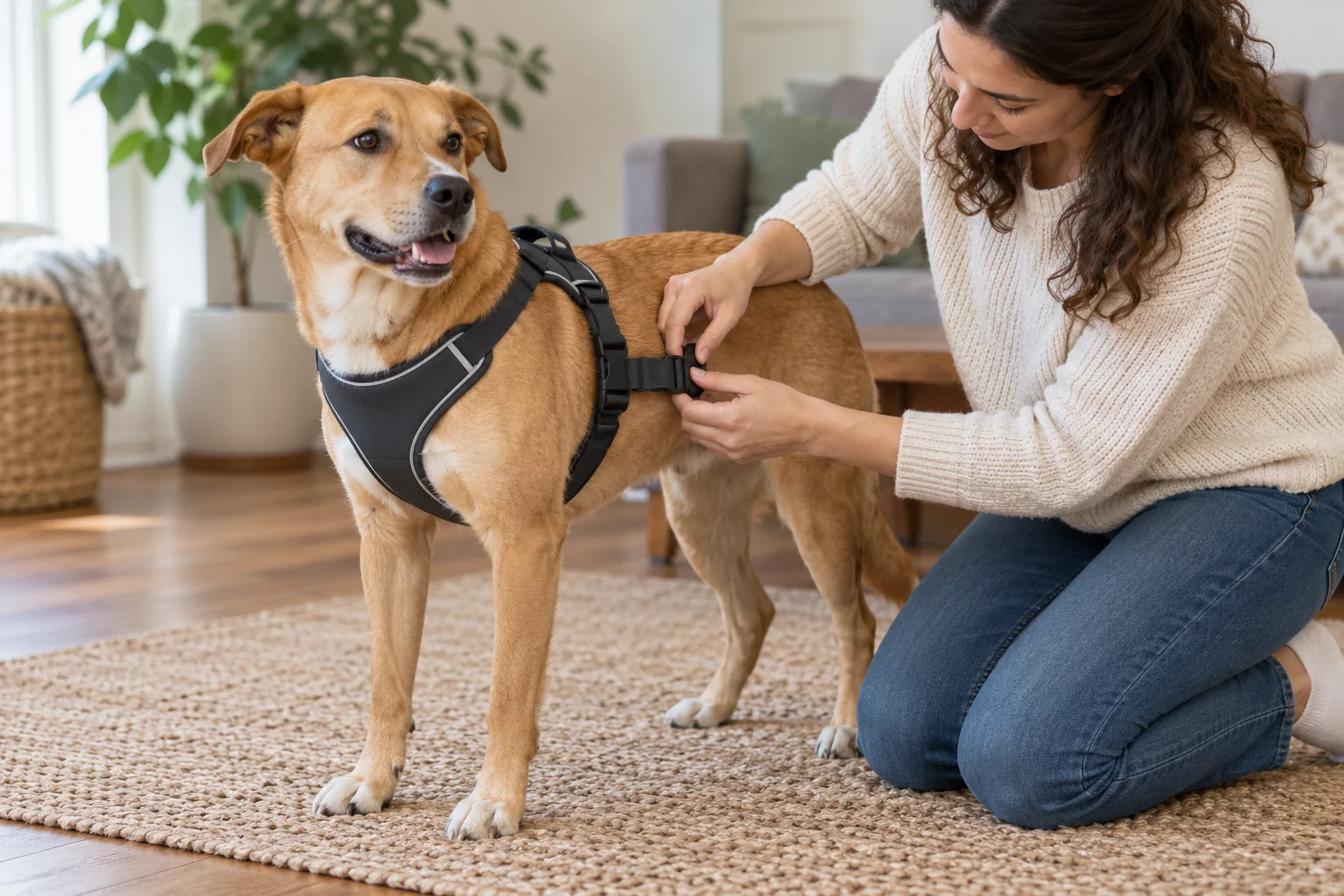
Measure at the locations the maker specifies and record the units. Different designs use different openings and adjustment ranges. If the dog falls between sizes, use the maker’s guidance rather than applying a universal finger rule or selecting solely by breed.
After fitting, look at the strap positions, closures and designated attachment. Observe whether the harness shifts, whether a strap or edge appears to interfere with movement, and whether the dog seems uncomfortable. Pause use and resolve an awkward fit rather than trying to compensate by pulling the leash tighter.
Shape descriptions such as Y-front or non-restrictive are starting points for comparison. They do not prove that a design leaves every dog’s movement unchanged. The strap positions and adjustment on the actual dog still matter. Nor does a harness name guarantee that a dog cannot slip out of it.
Introduce unfamiliar equipment gradually. Let the dog investigate it, reward comfortable participation and proceed at the dog’s pace. If putting it on causes concern, return to an easier stage instead of forcing the next step. Once it is fitted, begin with ordinary movement in a familiar place.
Keep health concerns separate from a routine fit assessment. Coughing, pain or a marked change in movement deserves veterinary advice; a new strap arrangement is not a diagnosis or a treatment plan.
Match the Leash to Your Dog and Walking Route
Compare the complete leash with the attachment you will use. The clip must connect as intended, the handle must be practical in your hand, and the available line must suit the activity and shared space.
For a small dog, include the connector and any adjusters when considering the complete item’s bulk. Our guide to leash choices for small dogs covers that comparison in more detail. A compact clip still needs to be compatible with the actual attachment; its appearance or metal name does not establish suitability.
On the sample, try opening and closing the connector as instructed. Notice how it sits on the designated ring and whether it can be attached without forcing the parts. For an adjustable lead, compare the configuration you intend to use, including the handle position and extra hardware.
A fixed lead, an adjustable lead and a retractable model involve different operating arrangements. Read the actual product guidance and choose a format you can manage. More length is not automatically more useful on a narrow path, and a product called a training leash is not a complete training plan.
Leash width, cord diameter, thickness and material can all change the item you handle. Compare like constructions when evaluating one feature. There is no need to assign a universal width, clip alloy or strength value to each dog-weight category in order to make a useful choice.
Destination rules are another part of planning the walk. Read the current requirements for the place you will visit; an equipment label does not establish what a park or facility permits.
What Changes When Your Dog Pulls
Pulling introduces a training question as well as an equipment question. A harness may change the attachment arrangement, but it does not teach the dog which walking behavior you want.
Consider when the line tightens: leaving the house, reaching a smell or encountering another dog can present different situations. Use reward-based training suited to that situation, and get help if you cannot manage it comfortably. This comparison explains the equipment roles; a complete loose-leash training plan needs its own practice and progression.
Avoid choosing a product because it promises an instant cure. Likewise, equipment that appears to reduce pulling is not proof that it fits well or is comfortable. If the dog is distressed, repeatedly lunges or is difficult to control, seek qualified help with the behavior and walking setup.
Prepare a Clear Walking-Set Specification
For a retail collection or sample inquiry, describe each item separately and show how the proposed set connects. A set name alone leaves the wearable fit, leash dimensions and hardware arrangement undefined.
| Item | Include in the brief | Resolve on the proposed sample |
|---|---|---|
| Wearable piece | Design reference, size range and designated attachments | Measuring method, adjustment and instructions |
| Leash | Finished length, width or diameter, handle and configuration | Measurement endpoints and intended use |
| Connector | Component reference and intended attachment | Compatibility and operation |
| Pack | Contents, quantities, artwork and instructions | Which items are actually included |
Use the relevant pet product manufacturing process to prepare the construction and approval questions. A general manufacturing page cannot confirm a particular harness, material grade, load rating or test result. List any requested verification separately and make it specific to the proposed product.
When the reference and quantities are ready, send the leash and set requirements for discussion. Confirm which items and options can be supplied together before approving the sample brief.
FAQ
Is a dog harness better than a leash?
They perform separate jobs. The harness is worn on the body and the leash is the connecting line. A harness used for a leashed walk still needs a compatible lead, so compare the complete arrangement rather than ranking one part above the other.
Why do some trainers prefer collars over harnesses?
Preferences vary with the dog, activity and training approach. Ask what the trainer proposes for your dog and why. A preference for one attachment does not establish that all harnesses encourage pulling or that all collars suit the same needs.
Do veterinarians recommend collars or harnesses?
An individual recommendation depends on the dog and any health concern. Describe the current equipment and the problem you have observed to your veterinarian. There is no universal design recommendation in this comparison.
What are the disadvantages of a dog harness?
Putting it on, adjusting it and finding a suitable shape can take more preparation than attaching a lead to an existing collar. Some dogs also need a gradual introduction. An awkward fit or inconvenient attachment should be resolved on the actual setup, not dismissed because the size label appears correct.
Conclusion
Choose the wearable piece and connecting lead as a pair, then try the intended arrangement in a familiar setting. If it shifts, catches or leaves an inconvenient amount of line, identify the part responsible before replacing the set. Take an unresolved fit or health concern to the appropriate professional before the next walk.