A pet groomer kit should cover the care you actually plan to do: coat brushing, nail care, oral care or a combination of tasks. Start with that list, then compare the included tools. A large set can still leave you needing a different brush, while a smaller set may duplicate tools you already own.
The first useful comparison is between the contents lists, not the number printed on the box. Separate working tools from comb attachments, storage accessories and replacement parts. Next, match those tools to your pet and your own experience. Here is how to work through that choice without buying equipment for a routine you do not intend to perform.
What a Pet Groomer Kit Actually Includes
A brush-and-comb set, a clipper set and a grooming vacuum bundle can all appear under the same kit label. They solve different problems. Open the contents list before comparing their prices or deciding that one is more complete.
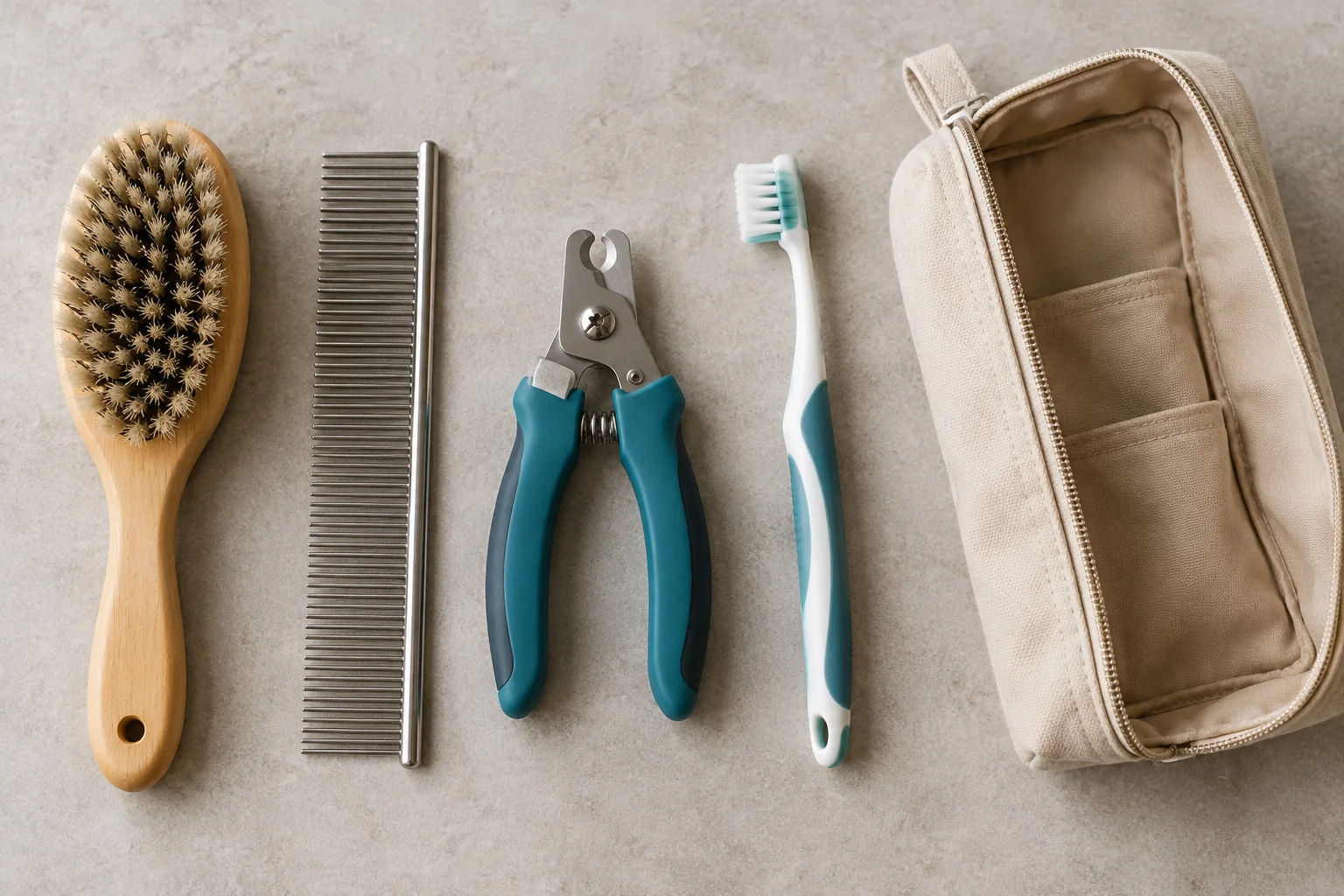
For a manual set, manual pet grooming tools can be grouped by coat, nail, oral and bathing tasks. That gives you a useful way to organize a shopping list or a proposed retail assortment. Powered equipment belongs in a separate comparison; its presence is not a requirement for a useful manual kit.
| Task | Items to look for | Detail that affects the choice |
|---|---|---|
| Coat brushing or combing | Brush, comb or both | Working-head size, tooth or bristle arrangement and intended coat |
| Nail care | Manual nail clippers or a separately specified grinder | Tool size, operating method and instructions |
| Oral care | Pet toothbrush in a stated format | Head size, handle and intended pet |
| Bathing assistance | Grooming glove or another listed tool | Glove fit, working surface and whether the pack contains one or a pair |
| Hair cutting | Clippers and their listed attachments | Intended task, included cutting equipment and maintenance requirements |
| Storage | Case, organizer or bag | Space for the actual contents and separation of working parts |
These are possible contents, not a minimum shopping list. If you only need coat care, nail and oral tools add little value unless you intend to use them. A case and several attachments may count toward the advertised piece total without adding another care task.
Match the Kit to the Animal and Coat
Begin with the pet the tools are intended for and the coat task you need help with. Brushing a short coat, combing a longer coat and cutting hair are different jobs. A product photograph showing a dog or cat is less useful than an item description that identifies the tool, its size and its intended use.
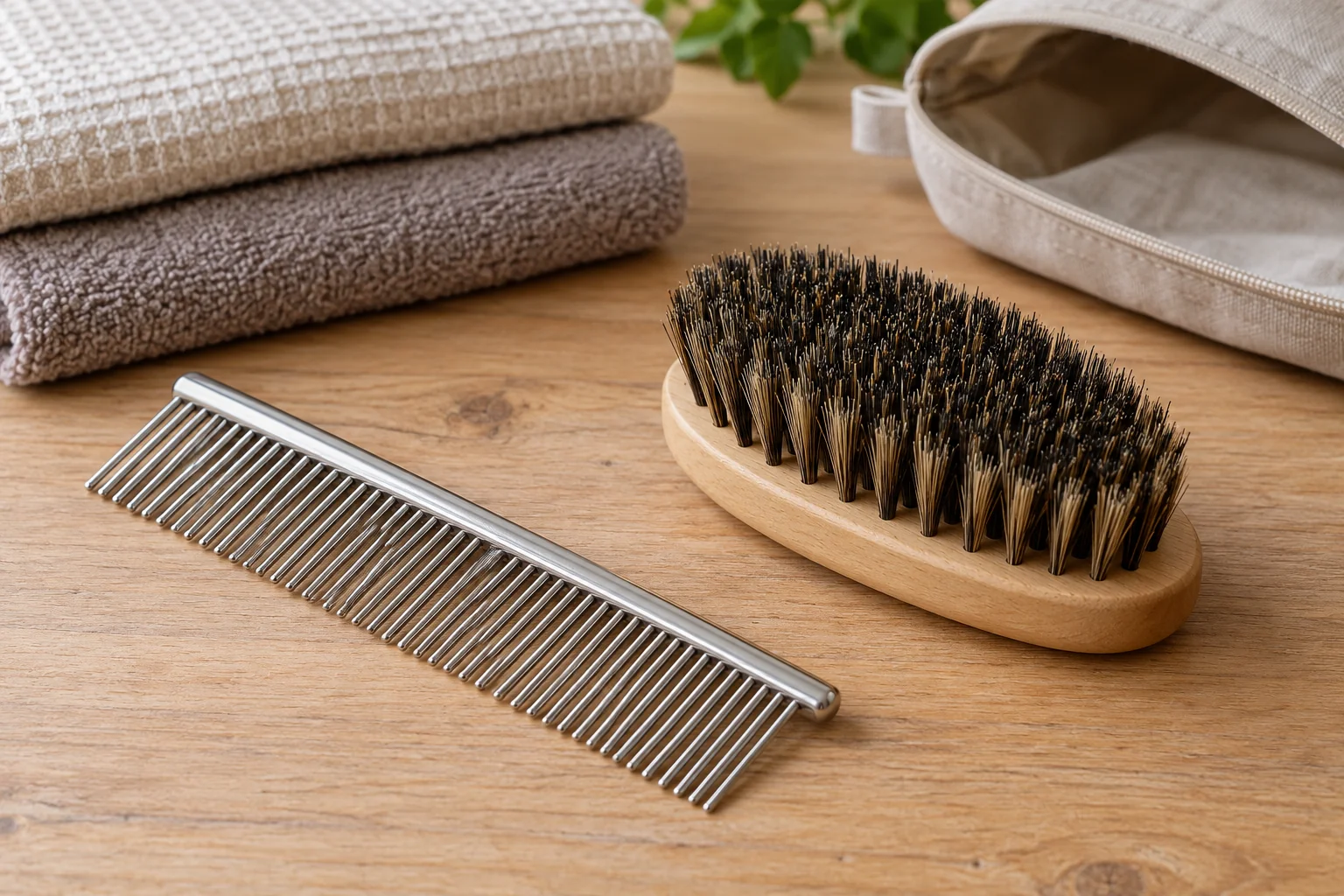
Coat type affects brushing needs. Instead of buying a bundle because its packaging names a breed, look at the included brush or comb and the care advice you already have for your pet. If your groomer has recommended a particular tool type, compare that tool with the actual item in the set. A similar handle color or head shape does not establish that they are equivalent.
A mixed cat-and-dog household also needs more than a general “pet” label. The two animals may need different working-head sizes or coat tools. They might also use some of the same tool formats. Decide item by item rather than assuming either a single universal set or two entirely separate kits are necessary.
For an unfamiliar coat or a task you have not done before, ask a groomer which tool and instruction you need before ordering. This is especially useful when a set includes cutting or dematting equipment. Having that equipment in the case does not make the task suitable for a beginner. Leave specialist work out of the kit you are assembling until you have appropriate guidance.
Manual Tools or Powered Options
Manual brushes, combs and clippers need no power supply. Powered hair clippers, nail grinders and vacuum bundles add different equipment requirements. Compare them by the task you want to add, rather than treating “powered” as a general upgrade.
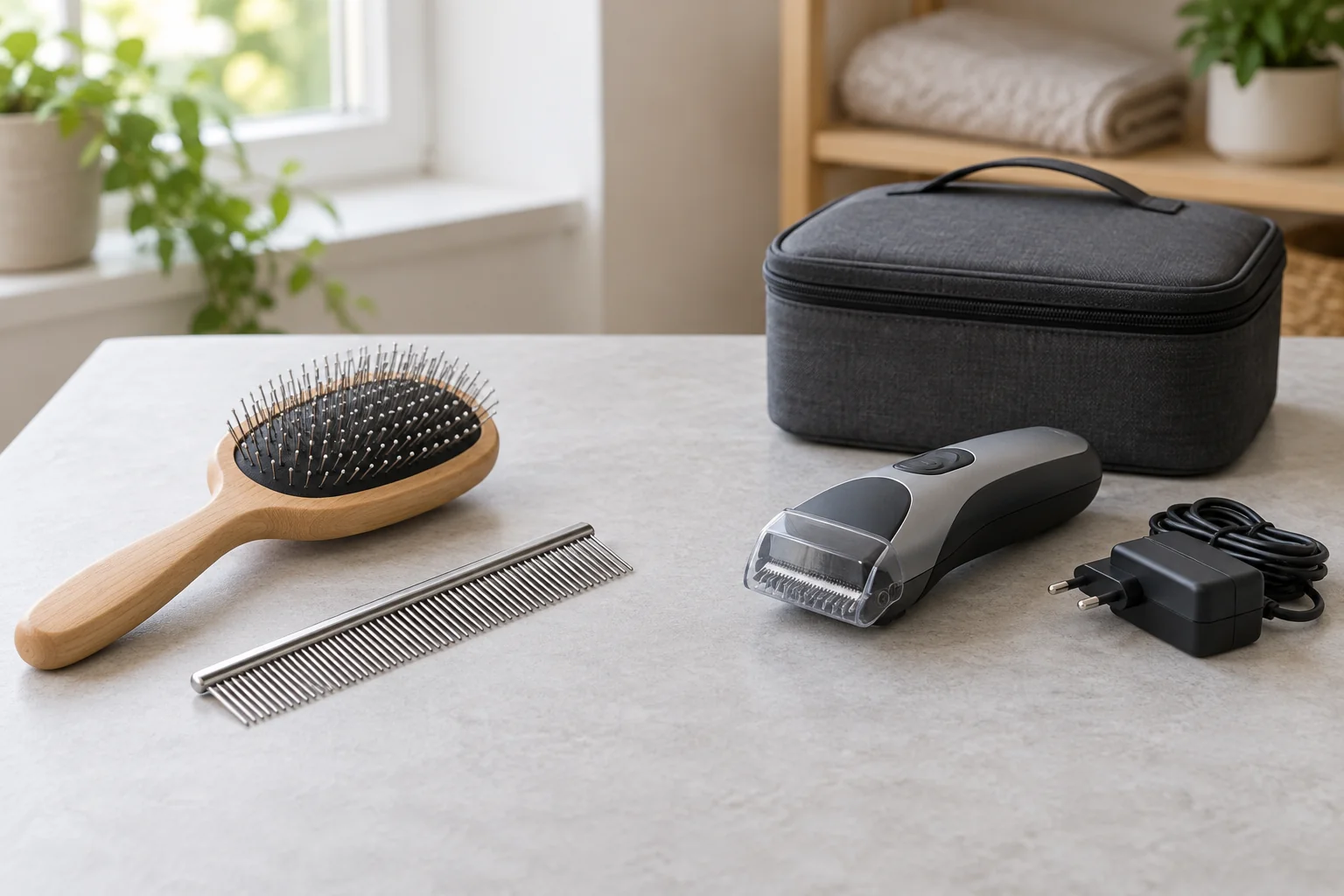
A grooming vacuum bundle may combine a collection unit with brushes, a hose or cutting attachments. Its listed attachments determine what the bundle can do. A brush attachment does not mean a hair clipper is included, and a collection unit does not establish how much loose hair it will capture in your room. Read the model’s contents and operating instructions together.
The room matters too. Think about where the unit will stand, where its cable or hose will run and where you will empty and store it. For cordless equipment, include the charger or required batteries in the comparison. For corded equipment, the location of the socket is a practical constraint that a product’s piece count tells you nothing about.
Sound is another reason to consider a powered option separately. Your pet’s response to one device does not establish its response to another. A noise claim on a listing also cannot tell you how the animal will respond during grooming. Introduction and use should follow suitable guidance for that pet, rather than a quick trial with an unrelated household appliance.
The linked manual-tool range covers brushes, combs, nail clippers, toothbrushes, bath gloves, scoops and care kits. Electric nail grinders and powered grooming equipment are outside that confirmed range. A kit comparison can discuss those alternatives without implying that every supplier offers them.
Nail Tools Inside a Kit
A manual nail clipper cuts; a grinder removes nail material with a rotating abrasive head. That difference is enough to separate the two entries on a kit checklist. It does not establish which tool will be suitable for your dog or how much nail to remove.
For a bundled clipper, look for its size, opening arrangement and operating instructions. For a grinder, add the power supply, head or band type, replacement-part details and maintenance information. A spare abrasive band is a consumable, not a second complete nail tool.
If nail care is a task you already have covered, a duplicate tool need not decide the whole purchase. You might choose a coat-care set and keep your existing nail equipment. If you are unfamiliar with nail care, obtain guidance before using either type. A guard or a “beginner” label does not replace knowing how to use the particular tool.
Storage, Cleaning and Maintenance
A fitted case can make missing items easier to notice, but it also fixes the space available for replacement tools. A loose organizer offers a different tradeoff: room to rearrange the kit, with less separation unless it has suitable compartments. Consider the open case as well as its closed size if you intend to use it on a small work surface.
Cleaning instructions belong to each tool. A washable glove, a brush and a powered clipper may need different treatment. Keep the relevant instructions with the kit, particularly when its items come from more than one source. “Grooming kit” is not a shared washing instruction.
After use, remove collected hair and follow the specified cleaning and drying method before storage. Keep cutting and moving parts protected as directed, with the kit out of reach of children and pets. A pouch is useful for carrying tools; it is not evidence that every damp item can be sealed inside it immediately.
Replacement information is worth keeping alongside the original contents list. Record the exact tool or part name where compatibility matters. This makes a later purchase more precise than searching for a comb, blade or attachment that merely looks similar.
Buying a Kit vs. Buying Individual Tools
Compare the proposed kit with the tools you already use. Mark each included item as needed, duplicated or outside your routine. Then price the missing tools individually if those options are available. This reveals whether the bundle offers a useful combination without assuming that sets always cost less.
An item that you would not buy separately is not automatically a reason to reject the set. It may be an incidental accessory in a package that otherwise meets your needs. The important question is whether the bundle still makes sense after you identify those extras, including the storage space and any consumables they require.
For a retail or private-label kit, turn that comparison into an item-by-item pack list. State tool types, quantities, dimensions, colors and included accessories. Distinguish individual tools from pairs, replacement parts and attachments so the quoted contents can be compared with the assembled sample.
Also decide how replacements will be supplied. A coordinated appearance may be useful for a range, but it does not resolve what happens when one item is missing or needs replacing. Keep the approved pack list and instructions together; neither a matching color nor a “professional” label establishes the working performance of every tool.
FAQ
What is the best dog grooming kit for home use?
Choose a set that matches the care tasks you intend to perform and the tools recommended for your dog’s coat. Compare its contents with what you already own. A powered bundle or a large accessory count is not necessary if your current need is a suitable brush and comb.
Are professional grooming kits suitable for home use?
The label alone does not answer that. Look at the included tools and the work they are intended for. A home user may need only part of the set, while cutting equipment may require guidance or experience they do not yet have.
Does every grooming kit include nail clippers?
No shared contents list follows from the word “kit.” Some sets focus on brushes; others center on powered equipment. Read the individual item list and distinguish a complete nail tool from an attachment or spare part before ordering.
Do cats and dogs need different grooming kits?
They may need different tools or sizes, but that decision belongs to the individual animals and tasks. Compare intended species, coat use and dimensions for each item. A general pet label does not show that every tool in the case suits both animals.
Conclusion
Open the contents list for the kit you are considering and cross out the tools you already have or will not use. The remaining items show what you are actually buying. If the brush or comb you need is still missing, resolve that choice before paying for the rest of the bundle.