The manufacturer’s cost of a quality cat toy depends on the specified product, its components, production work, packaging and order conditions. A buyer normally receives a supplier quotation rather than the factory’s internal cost record. To obtain a useful figure, define the product and ask what the quoted price includes. A price attached to a different design or order basis cannot answer the same question.
Start with a Defined Product and Price Basis
Identify the exact item being priced before collecting figures. “Cat toy” could mean a single filled shape, a wand with an attachment, or a retail pack containing several items. The unit on the quotation needs to match the unit you plan to buy and sell.
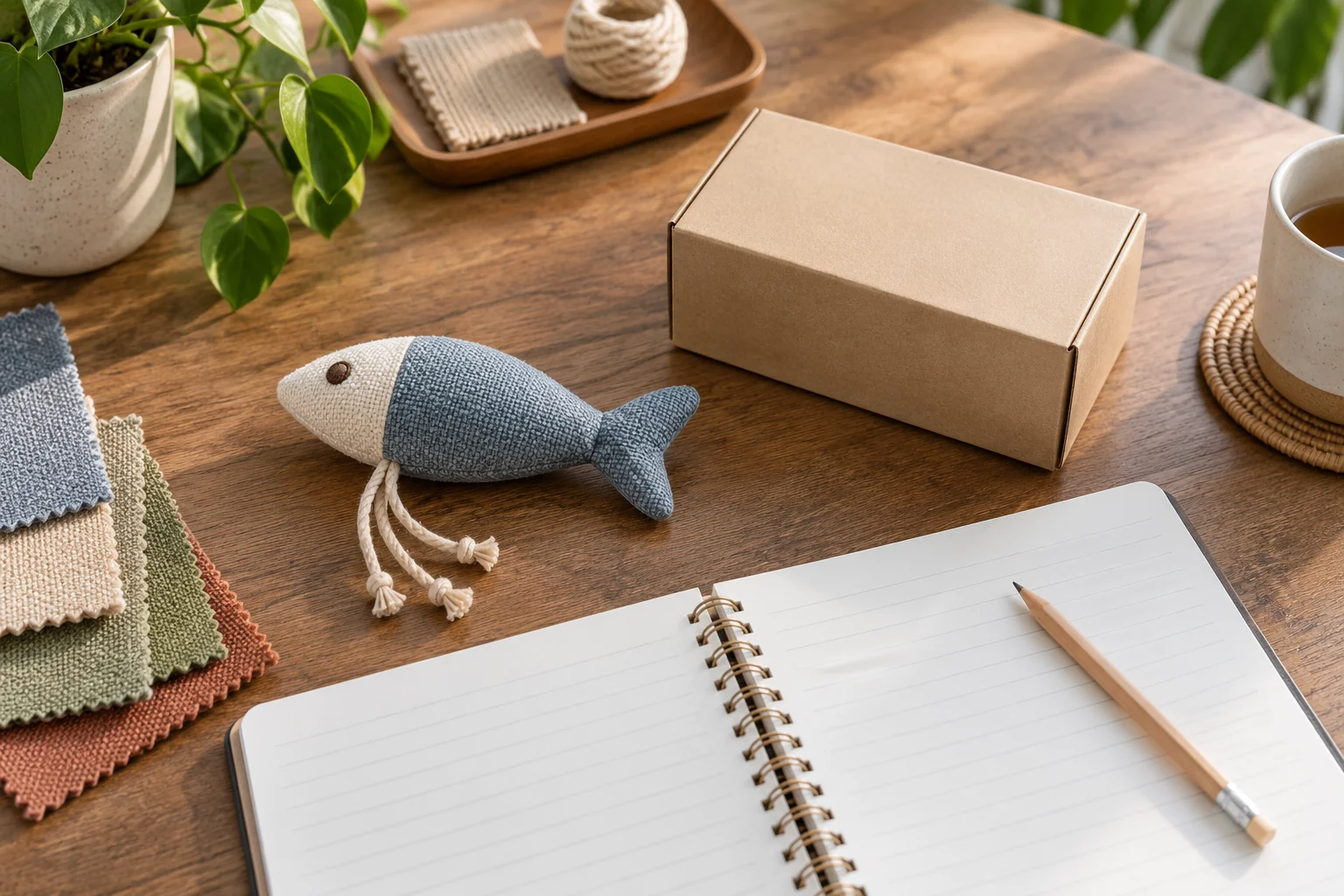
Record the product reference, specification version, requested quantity and pieces per pack. Keep the order quantity separate from the number of pieces inside each pack. An apparently lower unit price may describe a different sale unit or a different set of included components.
Also identify which price you are looking at:
- A manufacturing cost describes the producer’s cost basis, which is not necessarily disclosed to a buyer.
- A supplier quotation states a proposed price and commercial terms for your request.
- A wholesale or retail listing belongs to a particular sale offer and may use another quantity or packaging basis.
- A delivered or landed-cost calculation adds the agreed expenses needed to reach a stated destination; establish that scope separately.
A directory listing can help identify potential suppliers. Before using its displayed figure in a budget, obtain the matching product, quantity, packaging and delivery terms. The displayed price alone is not a verified account of what the factory spends making the item.
Define Quality Through the Requested Specification
Turn “quality cat toy” into observable requirements. Specify the finished dimensions, outer material, filling, components and joining details, followed by the condition in which you expect the finished product to arrive.
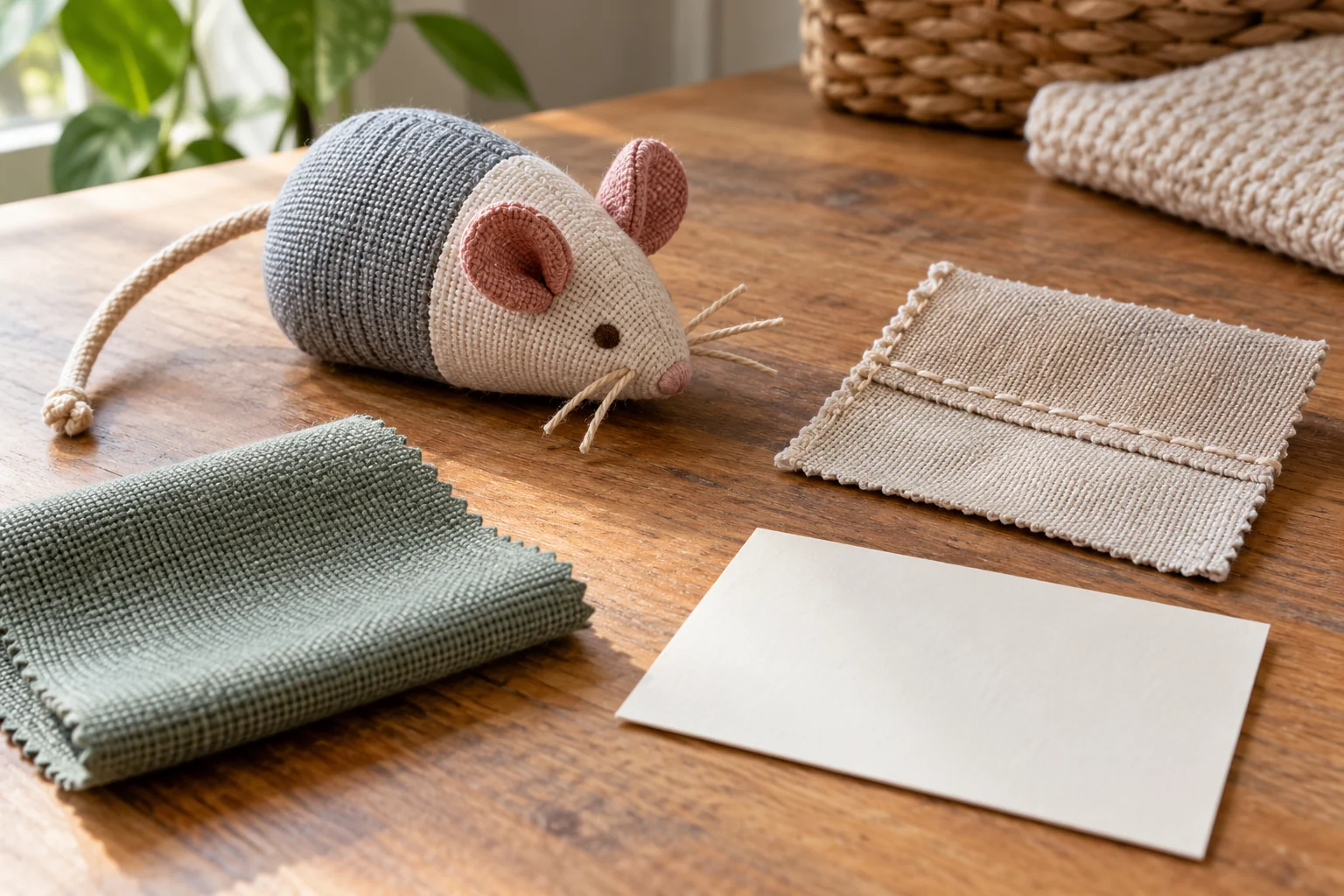
A reference photograph can show shape and appearance, but it may not identify what is inside a soft toy or how an attachment is fixed. Use a component list or drawing to make those details clear. Mark an undecided feature explicitly so it does not become an unrecorded assumption in the quote.
For example, a filled toy brief can distinguish its shell, filling, scent component and any sound insert. A wand brief can identify the handle, connector and attachment. Each description gives the supplier a more specific item to assess than “premium materials” or “strong construction.”
Agree how the sample and finished goods will be reviewed. State the workmanship criteria, the documents you need and any requested inspection or testing scope. Ask who will provide each item and how its charge is handled. A supplier’s marketing claim is not a substitute for the evidence required for your intended public statement.
Use the manufacturing and materials overview to organize component and process questions, then request the available options and quotation for your selected product.
The Cost Fields to Clarify in a Cat Toy Quote
Use a cost-field checklist to establish the quotation’s coverage. A supplier may provide a combined unit price rather than disclose an internal breakdown. In either case, you can ask what is included and which requested items remain separate.
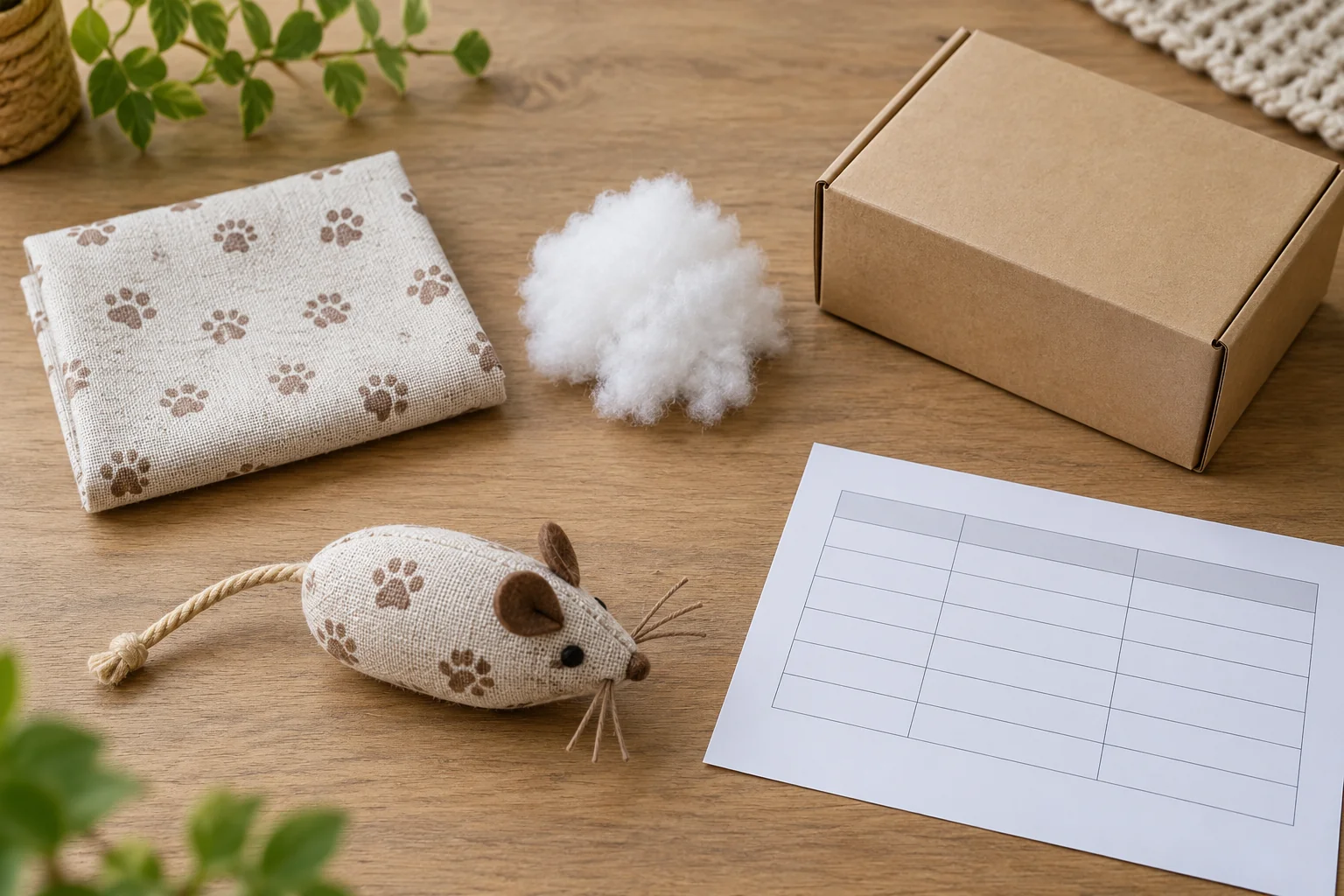
| Field | Information to provide | What to clarify in the reply |
|---|---|---|
| Materials and components | Named cover, filling, inserts and attached parts | Whether the quoted configuration matches the current component list |
| Assembly and finishing | Construction reference and requested details | Which assembly or finishing work is covered |
| Development and tooling | Stock design, modification or new structure | Separate charges, ownership or reuse terms where relevant |
| Checks and documentation | Agreed sample review, inspection and document requests | Included scope, separate fees and responsible party |
| Packaging | Pieces per pack, pack format, artwork and labels | Product price versus pack materials and packing work |
| Order and delivery basis | Quantity, shipment destination and requested terms | Currency, sale unit, delivery scope and quotation validity |
Leave unknown charges marked as open rather than entering an estimated figure without a basis. If a supplier cannot separate its internal labor or material costs, record that limitation and compare the offered configuration and total commercial scope.
Development fees deserve explicit treatment. Ask whether a quoted sample, pattern or tooling charge is separate, included in the unit price, refundable or subject to another agreed arrangement. Record the actual reply; none of those charging methods should be presumed for an unfamiliar supplier.
Keep a record of revisions. If the price changes, identify whether the cause is a revised specification, quantity, packaging arrangement or commercial term. That gives you a defined question to resolve without asking the supplier to expose its entire internal cost structure.
How Product Structure Changes the Inquiry
A soft toy, a teaser and a tunnel require different component descriptions. Comparing them can help decide which product to develop, but their quotations should not be treated as prices for equivalent goods.
For a filled fabric shape, specify the shell and its pattern, the filling, the closure and any added component. An embroidered feature and a separate attached piece describe different requested work. Ask the supplier to price the version on the current drawing rather than infer the preferred detail from a photograph.
For a wand or teaser, list the handle, connection and attachment separately. Identify whether replacement attachments are included in the pack, sold separately or outside the request. This prevents an item-count difference from appearing to be a manufacturing-price difference.
For a fabric tunnel, record the panels, support arrangement, openings and packed form. The cat tunnel and teaser collection shows how those product formats are specified. Use the actual selected category to develop your inquiry; it does not provide an internal factory-cost benchmark for every type of cat toy.
When changing a design, mark the added, removed or replaced component on the reference. Request a revised price for that version so the cost discussion stays tied to the actual change.
How Order Quantity and MOQ Enter the Comparison
Ask the supplier to state the minimum order quantity for the requested configuration. Clarify whether it applies per design, color, packaging version or combined order. A general website baseline may not describe the particular assortment in your inquiry.
When considering another quantity, request a separate quotation row with the product specification held constant. If the supplier also changes a material, pack format or included service, record that change alongside the new price.
Useful quantity questions include:
- Does this quantity use the same component and packaging specification?
- Are development charges treated the same way at this order level?
- Does the proposed assortment satisfy the stated minimum for each item?
- Which charges remain separate from the unit price?
Compare total commitments as well as unit figures. A lower price per piece at a larger order quantity can still require a larger purchase. Add the applicable storage and delivery expenses to your own order plan using actual figures when they are available.
Keep lead time as a separate statement with its stated starting conditions. Ask what must be approved before the schedule begins, and distinguish production timing from shipment timing. Do not infer either from the order quantity alone.
Collect and Review Comparable Supplier Quotations
Send the same current product brief to each supplier you want to compare. Include the requested quantity, packaging, delivery scope and the questions still unresolved. That makes differences in the replies easier to identify.
Use a comparison record with a row for each supplier response. Record the date, currency, unit definition, quantity, specification reference, quoted amount, separate charges and exclusions. Keep any qualification attached to the price rather than transferring only the number into another sheet.
Review an incomplete response before ranking it. If one price includes the retail pack and another does not, obtain the missing information or keep the difference visible. Do the same for samples, development work, requested checks and delivery charges. Add an agreed charge only once when comparing totals.
A low headline figure can remain a useful lead while its scope is unresolved. It should not become the approved budget for a finished item until the outstanding assumptions are addressed. Conversely, a higher figure may cover a different requested scope; ask about the actual difference before changing the design.
Review the sample against the agreed specification before production approval. Record any discrepancy and ask for the resulting specification, price or schedule revision in writing. The sample can establish visible construction and dimensions, while a proposed performance or certification claim needs the appropriate supporting evidence.
For an item in the confirmed product range, contact the team with the specification and open cost questions. Include the item reference, quantity and the particular charge or inclusion you need clarified.
FAQ
What is the average manufacturing cost of a cat toy?
A useful benchmark needs a defined product type, quantity and cost basis. A retail average or a directory’s displayed price does not establish your manufacturer’s internal cost. Use any external figure only within its stated scope, then obtain a quotation for the product you intend to source.
Can a supplier quote show the factory’s actual manufacturing cost?
Only if the supplier explicitly provides information on that basis and explains its scope. A normal sale quotation should be read as an offer with stated terms. Do not reverse-engineer an exact factory cost from the selling price or an assumed margin.
Are sampling, tooling and testing included in the unit price?
Their treatment needs to be stated in the quotation. Ask which requested items are covered, which are separate and whether a particular development charge has agreed reuse or refund terms. Keep an unanswered item open rather than counting it as included.
How should I compare quotes at different quantities?
Keep a separate row for each quantity and record any accompanying specification or term change. Compare the agreed purchase amount and scope as well as the unit figure. Ask the supplier to explain the particular difference instead of applying a standard bulk-discount assumption.
Conclusion
Open the quotation for the cat toy you intend to source and identify one unresolved charge or inclusion. Send that specific question back with the current product reference. Resolving a missing pack, development fee or delivery term is a concrete next step toward a usable budget.