To work out what size dog bowl fits your dog, check the intended food portion or water fill, the inner opening, and the depth together. The bowl should hold what you plan to serve while letting your dog reach it. Start with the current feeding routine and an actual bowl sample; a breed label or advertised capacity leaves too much unanswered.
What size dog bowl holds the intended portion?
Choose food-bowl capacity around the portion you already serve, then check how that portion sits in the bowl. A capacity label describes volume. It does not tell you how much food your dog should eat.
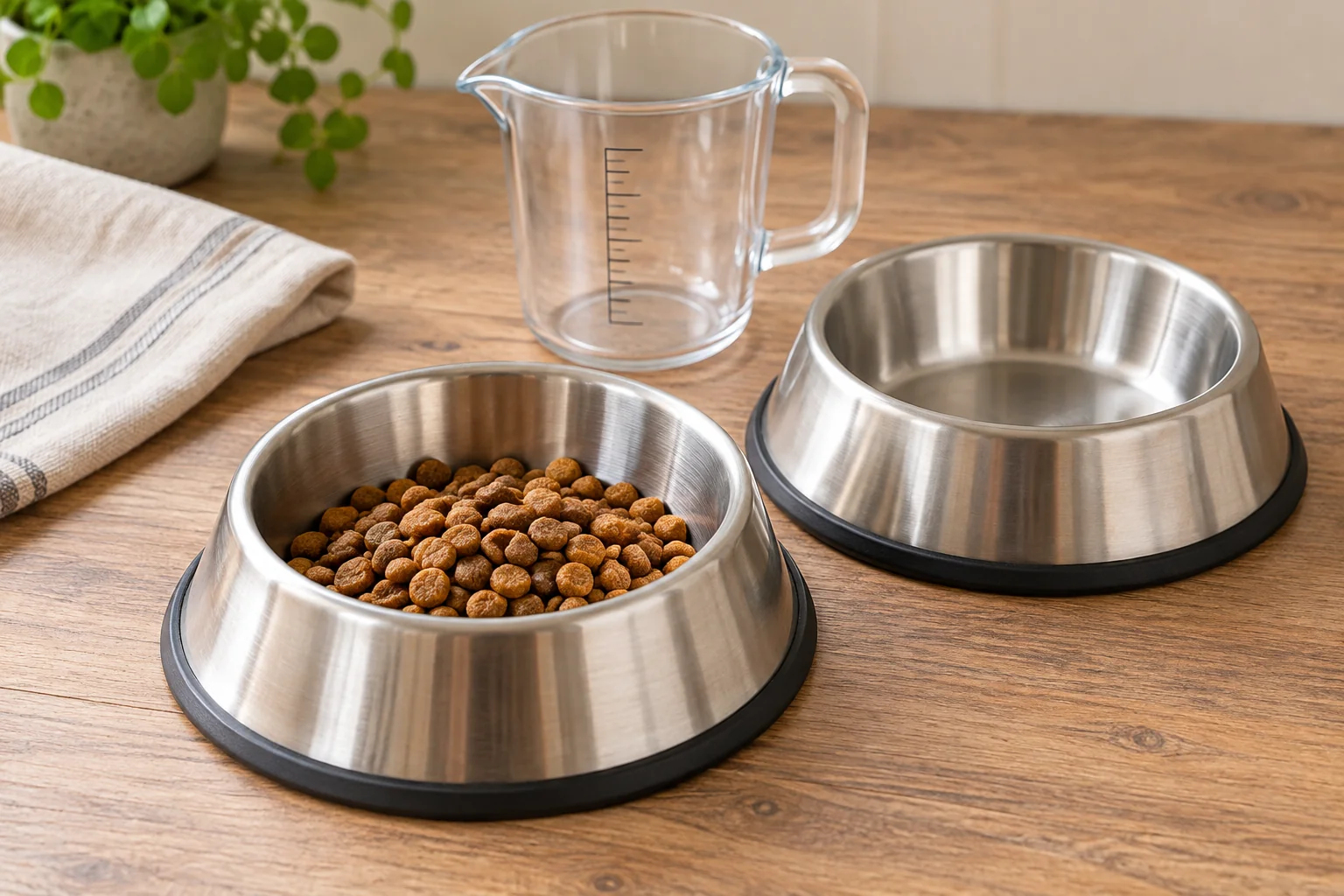
Measure the portion according to the existing feeding plan before putting it in a candidate bowl. Keep that portion unchanged when comparing samples. Look at whether food stays within the sides, whether the rim crowds the meal, and whether the dog can reach the food around the bottom.
Separate the stated capacity from your filling method
Ask how the listed capacity was measured. A brimful measurement fills the vessel to its upper edge; a marked fill line may describe a lower level. Do not assume every supplier uses the same method or deduct a fixed percentage from every bowl.
For your own comparison, place an empty bowl on a level surface and use a measuring jug to record water volume at a chosen fill level. Note that level alongside the result. Empty and dry the bowl before checking the food portion. This creates a repeatable comparison without turning your fill level into a recommendation for every dog.
Keep units clear. Fluid ounces measure volume, while ounces on a food scale measure weight. A weight of kibble cannot be treated as the same number of fluid ounces. When two listings use different units or different fill methods, resolve that difference before comparing their capacities.
Check the opening, bottom and depth together
A bowl needs a usable opening as well as enough volume. Measure across the inside of the rim and inspect the space lower down, where the food actually rests.
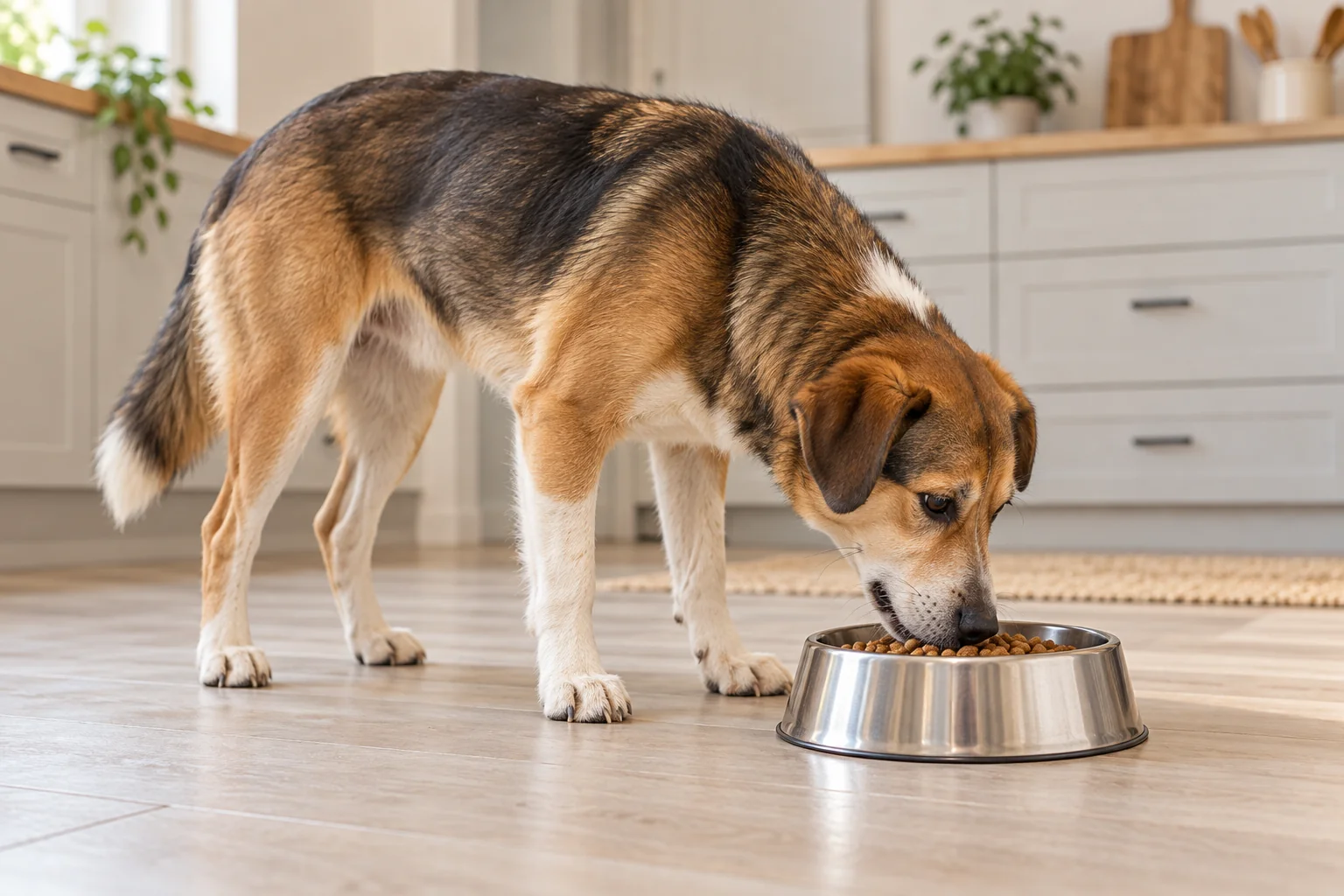
A broad outer flange can make a bowl look wide while leaving a smaller inner opening. Sloping walls can also create a much narrower bottom. Two bowls with similar listed capacity may present food very differently: one spreads it across a broad floor, while another holds it in a deeper, narrower space.
| Measurement | What to record | What to check with the sample |
|---|---|---|
| Inner opening | Clear width inside the rim | Whether the dog can approach and reach the meal |
| Usable bottom | Interior space where food rests | Whether food collects in hard-to-reach edges |
| Internal depth | Bottom-to-rim distance inside the bowl | Whether the dog can reach the final part of the meal |
| Outer dimensions | Widest width and overall height | Whether the bowl fits the intended location |
| Fill volume | Volume and the level used to measure it | Whether comparisons use the same filling method |
Observe the dog using the bowl in its normal feeding position. Notice repeated rim contact, food left along an inaccessible edge, or a bowl that moves during use. These observations help you decide what to check next. They do not diagnose a health problem or prove that every dog with a similar face needs the same dimensions.
For a short muzzle or long ears, check the actual access and contact points rather than assigning a fixed diameter by breed. Avoid pressing a ruler against the dog’s face. A comparison with a familiar bowl and a suitable sample is more useful than a forced measurement of the animal.
Size food and water bowls separately
A food bowl is checked against the intended meal; a water bowl also needs to fit your water-checking and refilling routine. You do not need to buy matching capacities simply because the bowls are sold as a pair.
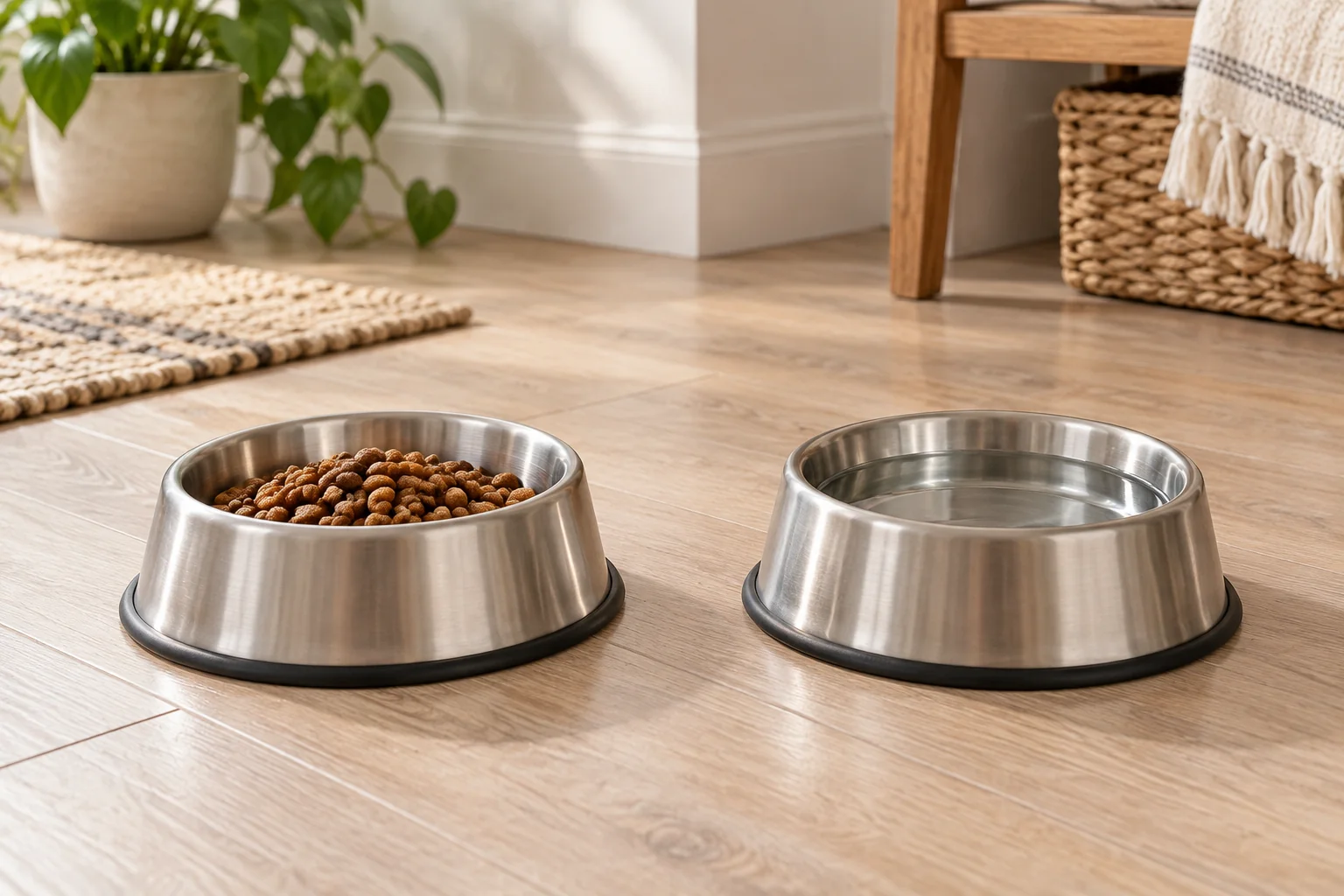
Keep drinking water available and check its condition and level regularly. Use the current routine to assess whether the water bowl repeatedly runs low or is awkward to refill and clean. A larger label alone does not solve poor access, unsuitable placement or a bowl that gets knocked over.
Check the water surface and rim together. Filling right to the edge leaves no space above the waterline, so observe the sample at the level you intend to use. Record that level when comparing bowls. There is no fixed food-to-water capacity ratio that replaces checking the actual setup.
If several dogs use the area, assess their access individually. Do not assume one large vessel automatically meets every dog’s needs. Questions about how much a particular dog should eat or drink belong with the dog’s veterinarian or established feeding advice, rather than a bowl-size chart.
Recheck puppy and large-dog fit as needs change
Choose a puppy’s bowl for the puppy using it now. Check whether the current portion fits and whether the puppy can reach it without the rim obstructing access. An adult-size bowl bought in advance may have a suitable capacity but an unsuitable opening or depth for present use.
Revisit those checks as the puppy grows or the feeding routine changes. Keep notes on the existing bowl’s inner opening, depth and fill level so that the next comparison has a clear starting point. There is no age schedule in this guide that requires switching to a particular capacity.
For a large dog, check the face opening and meal separately. A large body does not specify a single portion size or bowl geometry. A deep bowl may hold the meal but leave a cramped bottom; a wide dish may offer access while taking up more floor space than the feeding area allows.
Start with the part of the current setup that needs changing. If capacity is sufficient but access is awkward, compare shapes. If the meal fits and access works but the bowl does not fit the station, compare outer dimensions and the complete assembly.
Match the bowl to its feeding space or stand
Measure the space the bowl will occupy, including the mat, stand or surrounding furniture. Leave room to place, remove and clean it without trapping the rim against another object. Check the arrangement in its intended location before deciding that a listed diameter will fit.
For a stand-mounted bowl, obtain the maker’s compatibility information. Compare the bowl body, supporting rim and stand opening as separate features. A matching top diameter alone does not establish that the bowl will sit correctly in the stand.
Assemble the intended bowl and stand according to their instructions, initially without the dog present. Check that the bowl seats as intended, that the assembly rests evenly on the floor, and that it can be lifted out for cleaning. Do not add improvised supports or treat a generic clearance figure as a fit guarantee.
Put the measured fit into a purchasing brief
For retail or private-label projects, specify what each dimension means before requesting a size range. Include inner opening, internal depth, outer dimensions and capacity with its measurement method. Add the intended food or water use and any stand that must work with the bowl.
Ask for a sample of the proposed configuration and compare it with the agreed brief. Record differences between the sample, drawing and listing so they can be resolved before an order. A label such as small, medium or large should sit alongside measured specifications rather than replace them.
The custom pet bowl page provides a starting point for a bowl inquiry. For a wider project, review custom pet accessories and pet product manufacturing information. Ask about the proposed configuration; these pages do not establish that an unreviewed dimension, stand or production method is available for your project.
FAQ
How do you measure the size of a dog bowl?
Record the inner opening, internal depth and outer dimensions separately. To compare volume, measure water at a documented fill level with a measuring jug. Keep that result separate from the weight of the food portion and from any capacity claimed on the listing.
What kind of bowl is best for a puppy?
Use the current puppy’s portion and access as the starting point. Compare a suitable sample with the familiar bowl, checking the opening and depth as well as capacity. Recheck the fit as the puppy grows rather than relying on an adult breed-size label.
What size dog bowl should I buy for a 100-pound dog?
Weight alone does not provide enough information to choose a bowl. Check the dog’s existing meal portion, face access and feeding space. If buying online, request interior dimensions and the capacity-measurement method before deciding between sizes.
Should a dog’s water bowl always be full?
Keep water available and check it regularly, but distinguish having water available from filling a vessel to its brim. Check the chosen fill level during normal use and replenish as needed. If the bowl repeatedly runs low, review the capacity and checking routine together.
Do dogs prefer shallow bowls?
A shallow shape is one option to compare, rather than a preference you can assign to every dog. Check whether the individual dog can reach the food across the bowl’s bottom and whether the portion stays contained. Choose using those observations and the intended use.
Conclusion
Take a measured portion, a record of the current bowl and the available feeding space into your next comparison. Check a sample’s opening, depth and documented fill volume together. For a sourcing project, send the dimensions and intended use so the proposed bowl and any stand can be discussed against a clear brief.