Are cat fountains better than bowls? A fountain can be useful for a cat that chooses moving water, provided you can maintain it. A plain bowl offers simpler access and washing. Neither format establishes that a cat is drinking enough, so base the equipment choice on what your cat uses and what you can keep clean.
Compare the complete routine before buying: reaching the water, refilling it, washing the parts, listening to the fountain in its intended room, and keeping water available if the pump stops. Those differences are more useful than a general promise that moving water is healthier.
Are Cat Fountains Better Than Bowls in Daily Use?
A fountain adds a powered water presentation to a drinking container. That may interest your cat, but it also adds parts to maintain. A bowl is a reasonable choice when the cat uses it readily and you can keep the water clean and available.
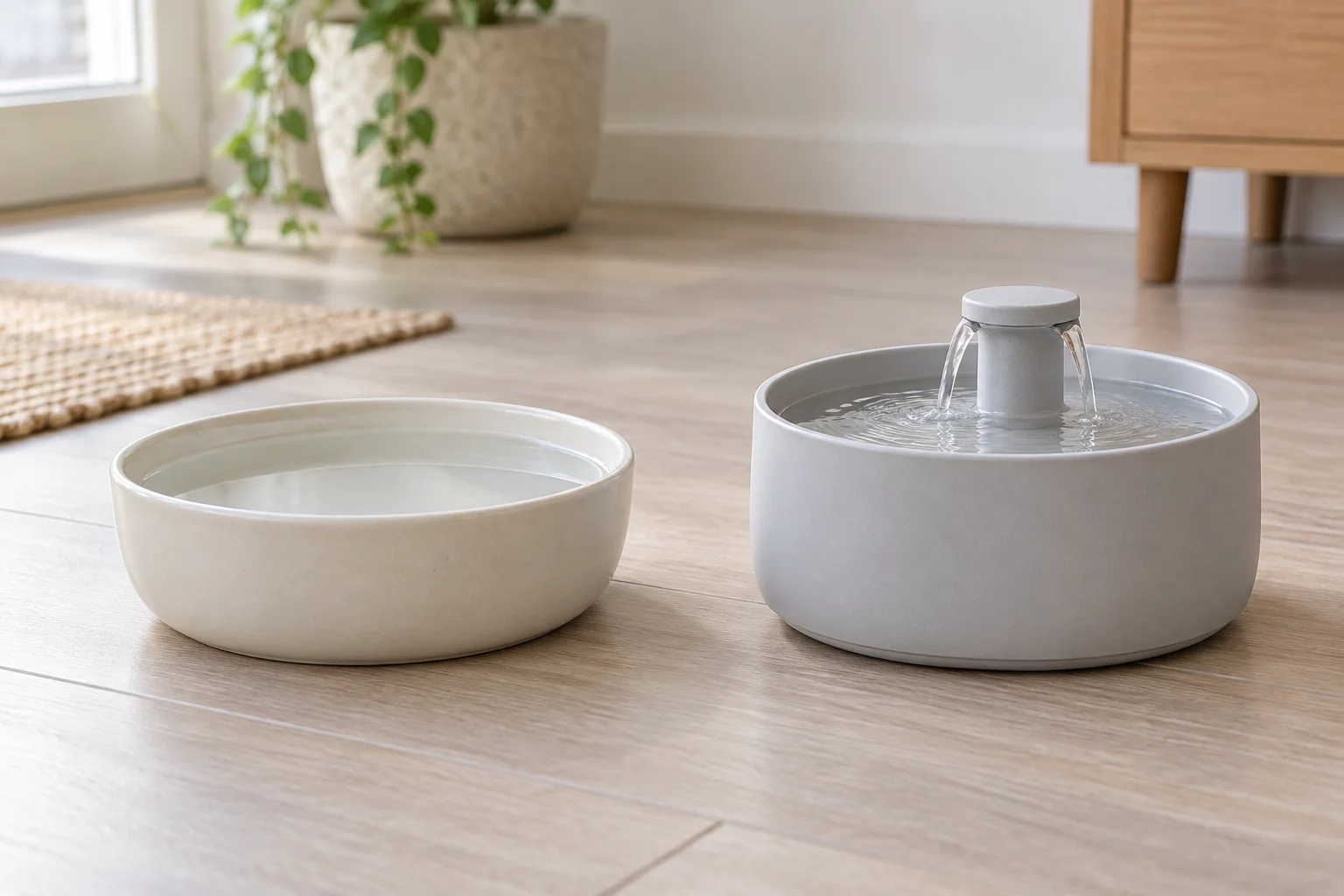
Here are the practical differences to compare before choosing a model.
| Decision | Plain bowl | Powered fountain |
|---|---|---|
| Water presentation | Still water in an open vessel | A circulating or flowing presentation, depending on the design |
| Daily access | Depends on the bowl, fill level and location | Also depends on which drinking surfaces remain accessible |
| Power | No power needed | Needs the model’s specified power supply |
| Washing | The vessel and any separate base | The vessel plus the model’s removable water-contact parts |
| Replacement parts | Usually limited to the bowl or base | May include filters, a pump or other components |
| Acceptance | Observed with the individual cat | Also needs observation; interest in a tap does not guarantee acceptance |
Moving water should not be treated as a health result. Small controlled comparisons do not establish that a fountain will make every cat drink more or meet an individual cat’s medical needs. Keep claims about preference separate from claims about hydration or disease prevention.
If your cat drinks comfortably from a maintained bowl, you do not need to replace it simply because a fountain has more features. If the cat repeatedly chooses a running tap, a fountain is an option to explore while keeping the familiar water source available.
For a multi-cat household, also ask whether the problem is the container or access to it. One large fountain still leaves all the cats approaching one position. Several accessible water locations may be a more useful change than replacing every bowl with the same piece of equipment.
Access and What Your Cat Actually Uses
The drinking opening, fill level and position all matter. A large reservoir tells you how much the unit holds; it does not show how easily a cat reaches the water.
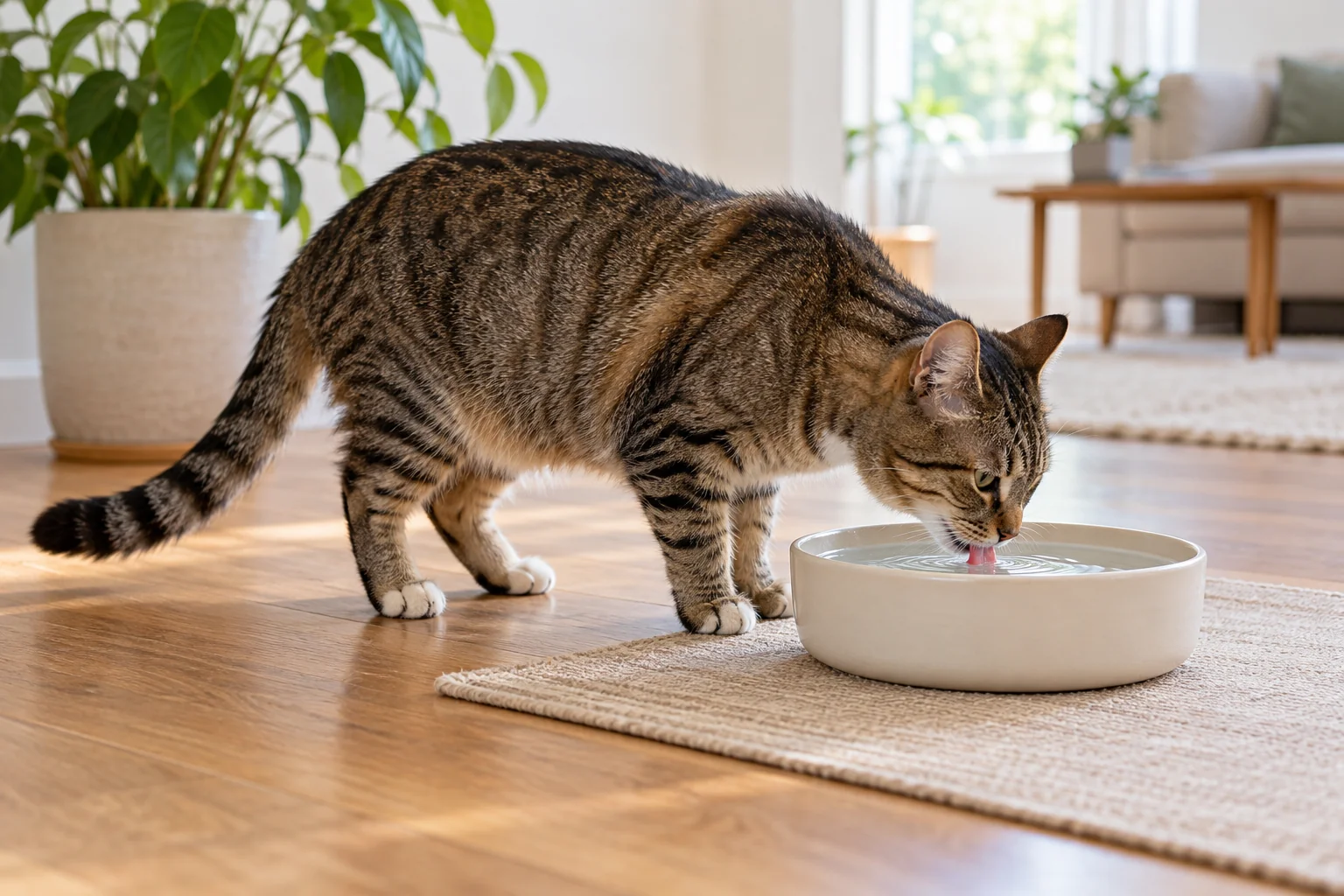
Look at the actual drinking surface. On a bowl, that means the opening, depth and waterline. On a fountain, it may be a basin, a sloping surface or a stream. If the opening and depth are the unresolved details, the guide to cat bowl width and water access explains how to compare the usable interior with the outer dimensions.
Give the cat room to approach and move away. The quietest-looking corner may still be cramped behind furniture or watched by another animal. Keep the familiar bowl in its normal place when introducing a fountain, and give the new unit a position where you can observe voluntary use.
Introduce the unfamiliar object gradually. Let the cat investigate it, then offer water before adding the sound and movement of normal operation, where the design allows that sequence. The pace should follow the cat’s response. There is no need to remove the familiar source to force a choice.
A backup bowl also addresses a practical question that product photos often leave unanswered: can the cat reach water if the pump stops? Some fountain layouts leave an open basin; others may leave much of the stored water out of reach. Examine the actual layout rather than assuming the reservoir stays usable without circulation.
Keep clean, fresh water available throughout the change. Watching which source the cat visits can help you choose equipment, but a few visits are not a measurement of total intake. If you are concerned about a change in drinking, speak with the veterinarian instead of continuing to swap containers as a diagnosis.
Noise, Power and Placement
A bowl has no pump sound or power connection. A fountain adds those considerations to the location choice, even when its footprint resembles a bowl.
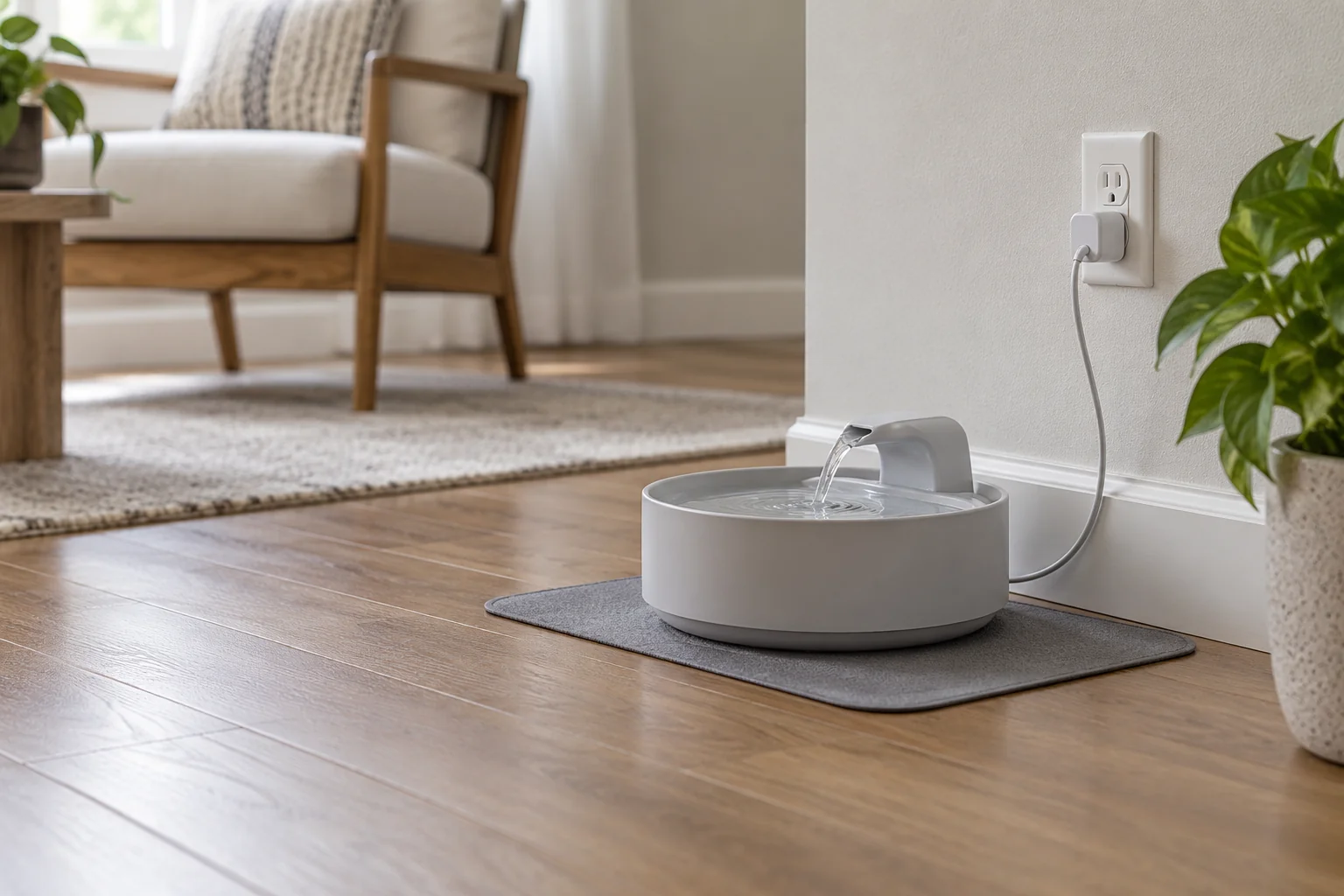
Listen to a fountain in the room where it would actually sit, if you can assess a sample or returnable unit. A sound that fades into a busy kitchen may be noticeable beside a bedroom. Also watch the cat’s response: approaching to investigate and returning to drink are different observations.
Descriptions such as quiet or silent do not provide a universal comparison between models. Pump operation, water movement and the supporting surface can differ. Use the model’s instructions for normal operating conditions and address a change in sound as an equipment issue, rather than assuming every noise means the same fault.
The power connection needs a workable location too. Keep the arrangement within the maker’s installation instructions and leave access for refilling and maintenance. A spot selected only because it is near an outlet may put the drinking surface in a busy route or make the reservoir difficult to remove.
For travel, temporary rooms or places without a suitable power arrangement, a plain bowl removes that installation task. At home, the question is whether the fountain’s water presentation earns the additional setup and care for the cat using it.
Filters, Cleaning and Water Freshness
A filter adds a component to care for; it does not replace washing the drinking container or refreshing the water. Compare the actual filter and cleaning instructions for the model, since fountain designs do not share one replacement schedule.
Before buying, find out how the fountain comes apart. You need access to the surfaces that contact water, including any parts around the pump or spout identified in the manual. A large opening in the reservoir does not tell you whether the rest of the water path is accessible.
The maintenance comparison becomes clearer when you list the jobs:
- Refresh the water and wash the drinking vessel as part of the daily routine.
- Follow the fountain’s instructions for its pump and other components, including preparation before cleaning and correct reassembly.
- Obtain the specified replacement parts and follow their care or replacement requirements.
- Look at the parts during washing rather than relying on water that appears clear from above.
With a plain bowl, most of that work is concentrated in one vessel. A fountain may need several parts set out, cleaned and fitted back together. This is worth assessing before purchase, especially if the unit will be maintained by more than one person. Instructions and replacement parts need to remain accessible to whoever does the job.
Material names do not settle the care question. The bowl or fountain body, base, seals and other parts may have different washing limits. A dishwasher-safe vessel does not establish that every attached component belongs in the dishwasher. Compare the complete instructions and avoid choosing solely on a stainless-steel or ceramic label.
If a unit becomes too awkward to maintain, returning to a bowl is a practical choice. The water source needs to fit the care you can provide consistently, including on busy days.
The Non-Electric Middle Ground
A reservoir-and-basin dispenser is another option when the main problem is refill handling or capacity. Non-electric formats supply a drinking area without a powered circulating pump; the reservoir, connection and basin still need regular attention.
Examine how the selected design releases water and how it separates for washing. A cap, valve or seal may add a care and reassembly task. Avoid assuming that every non-electric unit is gravity-fed, has no moving components or uses the same flow arrangement.
This format addresses a different requirement from a cat’s interest in moving water. A larger reservoir does not establish that the water remains clean, and it does not remove the need to observe the basin and refill the unit. It is useful to compare the full filled assembly with the space and handling routine before choosing extra capacity.
For buyers planning a retail assortment, the non-electric pet water dispenser page covers a separate product category from powered fountains. Define capacity, assembled dimensions, drinking-area access and cleaning openings in that brief. Pumps, sensors and app functions fall outside that page’s confirmed scope, so an inquiry there should describe a non-electric configuration.
FAQ
Do cats prefer water fountains or bowls?
Individual cats differ. Interest in running tap water can be a reason to consider a fountain, but observe whether the cat actually drinks from the proposed unit. Keep a familiar bowl available while making the comparison.
What are the cons of cat water fountains?
They add power, sound and component-care requirements. Depending on the model, you may also need replacement filters or other parts. Assess cleaning access and parts availability before deciding that the water presentation is worth the additional work.
Are cat fountains actually worth it?
A fountain can earn its place when your cat uses it readily and its care fits your routine. If the current bowl works well, a fountain is optional. Needing more capacity is also a separate question; compare reservoir formats without assuming they must be powered.
Will a fountain help my cat’s kidneys or urinary problems?
Do not select a fountain as a treatment or disease-prevention measure. If your cat has a diagnosed condition or a veterinarian has recommended changes to water intake, ask for an individual plan. Container preference alone cannot establish that the plan is being met.
Conclusion
Keep the current bowl while assessing one fountain candidate. Observe whether your cat returns to drink, then take the unit apart as directed and decide whether you can maintain it. Choose on those two results: the cat’s acceptance and the care involved. There is no need to retire a bowl that already works well.