A regular dog leash gives you a set length to manage by hand; a retractable model pays out and takes up line through a housing. For the retractable dog leash vs regular leash choice, start with your route. Close passing calls for short, predictable reach. Open space may allow more line, provided you can watch your dog and manage the controls.
How each design manages length
A retractable leash stores tape or cord on a spool inside its handle. With the brake released, the line can extend as the dog moves away and retract as the dog returns. The brake stops line movement, while a lock keeps the brake engaged. The exact control sequence depends on the model.
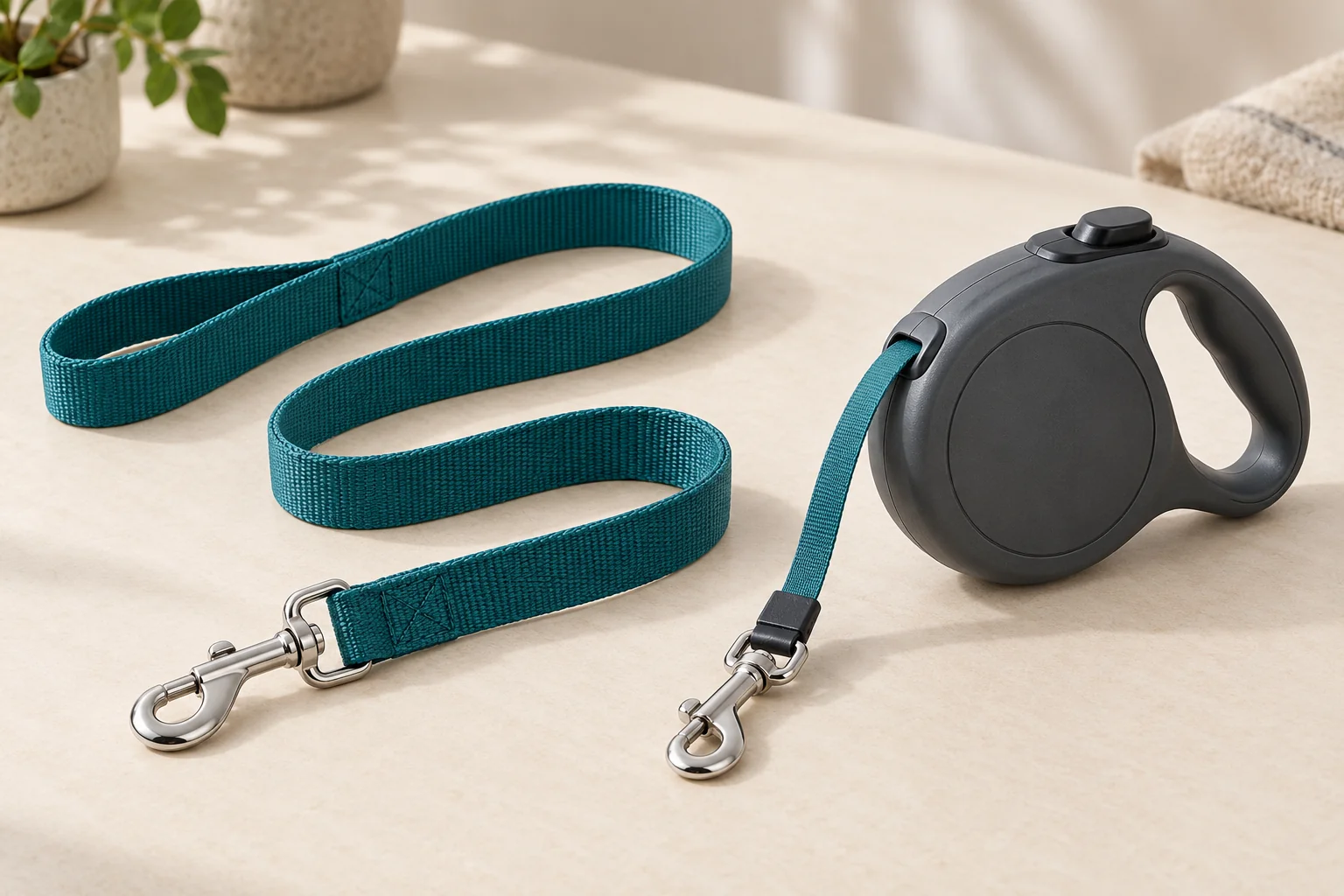
Retraction takes up available slack. It does not winch a pulling dog back toward you. Pressing the brake stops further extension; it does not start reeling the dog in. This distinction is useful when comparing the two designs, because the amount of line already out still matters after you press the button.
A regular leash has a handle, a body and an attachment clip, without an internal retraction mechanism. Its finished length stays the same during a walk. You can hold it shorter, but the spare strap remains outside the handle and needs managing.
Fixed-length leashes also come in longer formats. A long line is a separate option when you want more reach without a retracting housing. The guide to leash length by use covers that decision; extra length is not exclusive to retractable designs.
Control: brake and lock versus gathering the line
A retractable leash puts the brake and lock at your thumb. A regular leash lets you manage the exposed strap directly. With either design, the useful question is how you will keep the dog close before a doorway, crossing or encounter with another walker.
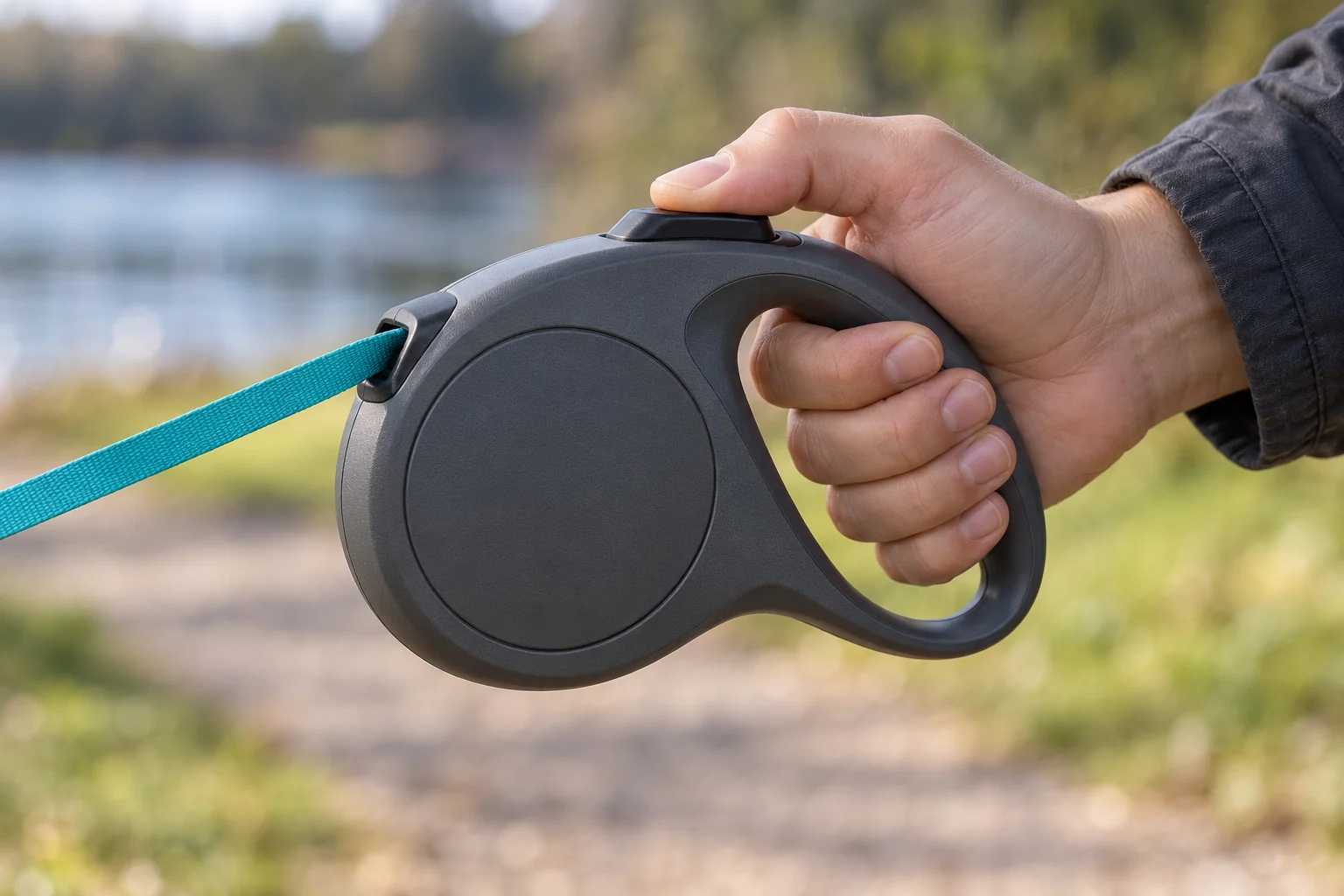
On a retractable model, brake access, handle fit and the transition between free movement and a locked length affect how you operate it. A lock holds the selected setting; shortening the distance requires a separate action following the model’s instructions. Locking a long line does not place the dog beside you.
On a regular leash, a shorter grip reduces the available reach. You still need to manage the spare material without wrapping it around your hand or body. A fixed leash avoids a button sequence, but it does not make a pulling dog easy to handle.
Try the handle and controls before choosing a retractable model. Your fingers should fit the opening, and you should be able to reach and distinguish the controls while maintaining your grip. This is a fit and operation check, not proof of braking strength or suitability for a particular dog.
What sits between your hand and your dog
A regular leash uses a relatively simple arrangement of strap or rope, handle joints and hardware. A retractable leash adds a housing, spool and brake assembly. That changes the parts you inspect and the information you need from the product instructions.
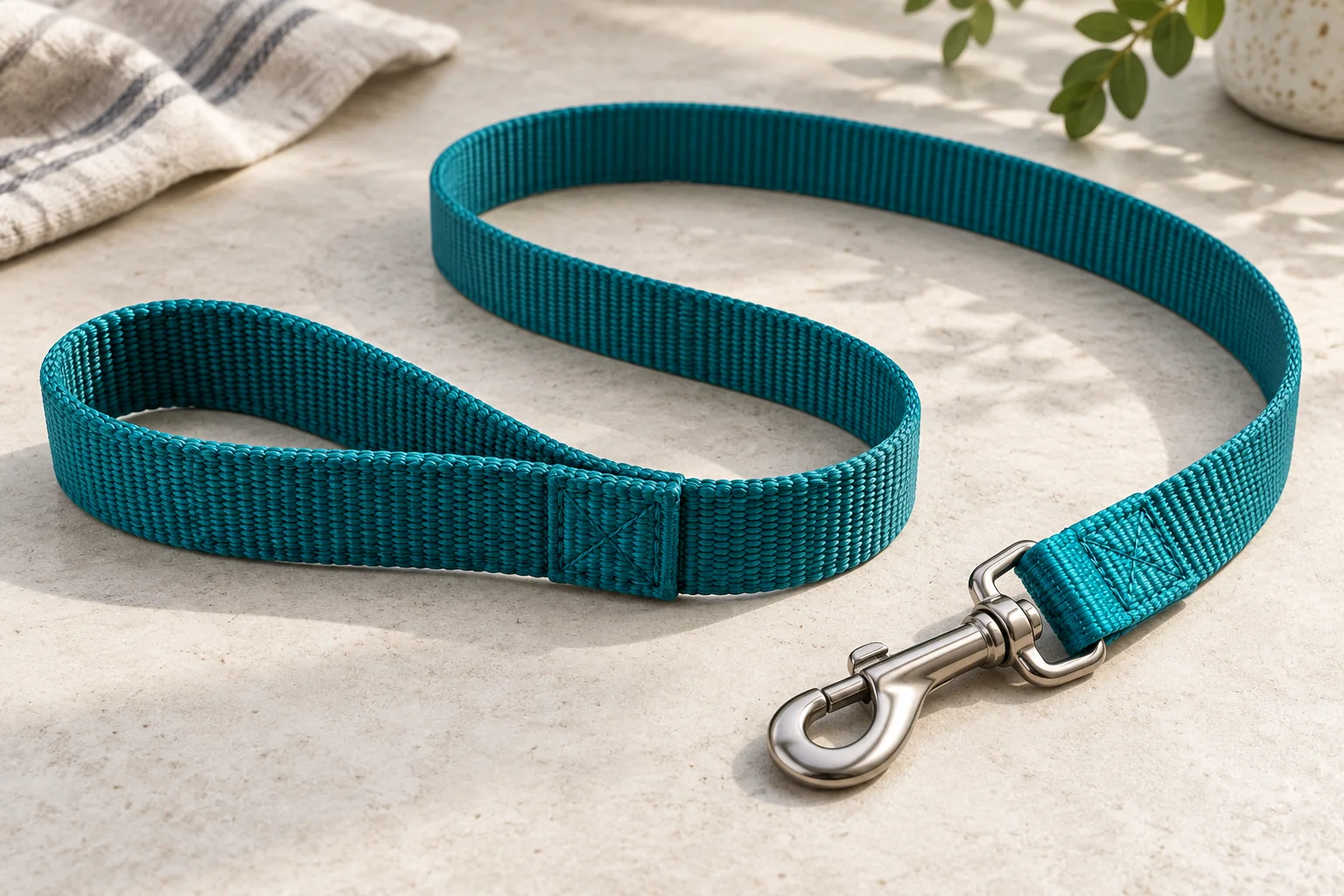
For fixed designs, the standard dog leash construction options show how the body, handle, stitching and clip form one specification. A padded handle or different clip can change the details without changing the basic fixed-length format.
Retractable models use tape or cord. Those names describe the line’s shape, not a strength rating. Look at the actual line, outlet and attachment, along with the manufacturer’s stated use limits. Housing size and appearance cannot establish a pet-weight or pull-strength claim.
Keep hands off a retractable line rather than trying to stop it by grabbing the tape or cord. Hold the designated handle and keep the line clear of people and animals. The model’s instructions govern handling; a wider tape is not permission to grip a moving line.
Where each leash fits the walk
A short fixed-length leash is a practical starting point for sidewalks, queues, vet visits and other places where the dog needs to stay close. The available reach is visible, and you can keep spare strap out of the walking path. Choose the length for the setting rather than assuming one size suits every route.
A retractable leash can offer room to sniff in a clear, open area when the dog responds to you and you can supervise the whole line. That space needs to remain clear as the walk develops. An empty field when you arrive may become a shared space a few minutes later.
Bring the dog close before people or animals approach. Waiting until a long line crosses somebody’s path leaves you with less time to manage the encounter. Near traffic, narrow passages or crowded entrances, choose a setup that keeps the dog beside you from the start.
The differences below concern handling, rather than a safety ranking for every product or dog.
| Setting or task | Regular fixed-length leash | Retractable leash |
|---|---|---|
| Close passing or a busy entrance | Hold at the required short reach and manage spare strap | A long extended line needs shortening before the encounter |
| Clear open space | A longer fixed line is an option, with exposed slack to manage | Offers variable reach through the housing and controls |
| Frequent changes in distance | Adjust the grip and manage the remaining material | Operate the brake and lock as the situation changes |
| Packing for a walk | Inspect the strap, joints and clip | Inspect the line, housing and controls as well as the clip |
What each design asks of your attention
A retractable model makes line length part of an ongoing control task. You need to watch the dog’s position, the space between you and the dog, and anyone entering that space. Giving out more line increases the area you have to watch.
If your dog routinely rushes toward people or pulls ahead, adding reach does not solve that behavior. Work on close walking and responses to your cues before relying on a variable-length setup. A leash comparison can help you choose equipment; it cannot determine a training plan for an individual dog.
A regular leash still needs active handling. Spare loops can hang into the walking path, and a fixed length may be too long for the place you are entering. Its advantage for close walking is the simpler length arrangement, not freedom from supervision.
Consider how often your usual route switches between open and tight spaces. A walk with repeated crossings and passing encounters may offer little opportunity to use an extended line, even if part of the route is open.
Care and upkeep
Inspect either leash before use. On a fixed leash, look at the body material, handle joints and clip. On a retractable model, include the exposed line, outlet, housing and control operation. Stop using damaged equipment and follow the maker’s replacement guidance.
Drying and cleaning a retractable line need the instructions for that model. Some manufacturers specify drying the line extended before storing it in the housing. Avoid applying a detailed care sequence from another brand to a model with different instructions.
Do not open a retractable housing to repair the spring or brake yourself. Keep repair questions with the manufacturer. A line that retracts unevenly or a control that does not work as instructed is a reason to stop use, rather than compensate with a different grip.
For a regular leash, follow care instructions for its material and hardware. The absence of a housing does not establish that the whole leash is machine washable or that its attachments can be repaired.
Comparing models for a retail range
For buyers sourcing leashes, the walking routine becomes a product brief. Identify whether the customer needs a fixed walking length, variable reach in open space, or a range containing separate formats. Keep those formats distinct in quotations and product descriptions.
A standard leash brief can specify the body material, finished length and measurement endpoints, handle and connector. Retractable briefs also need the housing, tape or cord, working length, brake and lock behavior reviewed as one model.
The retractable leash model specifications cover those additional component and assembly questions. Compare samples against an agreed function check. Any proposed load, pet-weight or service-life wording needs evidence for the exact assembly; the presence of a lock or a large housing is not that evidence.
Put the intended walking use alongside the specification. That gives the supplier a more useful starting point than a general request for the “better” leash. You can send the model brief and intended use when the format and sample questions are clear.
FAQ
What are the main downsides of a retractable leash?
It adds brake operation and line-length management to the walk. When more line is out, you have a larger space to monitor, and locking the line does not bring the dog back beside you. Those limitations are particularly relevant when people or other dogs are nearby.
Can a retractable leash be used like a regular leash?
Some models can hold a short length with the brake locked, subject to their instructions. They still have a different handle, line and mechanism. A locked setting does not make their handling or maintenance identical to a fixed strap.
Why might a trainer recommend a regular leash first?
A fixed leash provides a known length for close walking without a brake-and-lock sequence. If a dog is learning to stay near the handler, extra reach can work against the immediate task. Ask a trainer about your dog’s behavior and route rather than treating one recommendation as a verdict on every retractable model.
Does a small dog automatically suit a retractable leash?
No. Size alone does not settle the choice. The model’s stated use limits, your ability to hold and operate it, the dog’s responses and the walking environment all matter. A small dog can still move into another person’s path at the end of an extended line.
Conclusion
Look at the tightest part of your usual walk first: the crossing, doorway or stretch where you need the dog beside you. If close handling dominates the route, start by comparing fixed-length options. If you have a clear open-space use for variable reach, compare specific retractable models on handle fit, controls and their instructions before choosing one.
For a product range, put that intended use in the sample brief and keep standard and retractable specifications separate. Approve the actual length arrangement and control operation before moving on to colors and packaging.