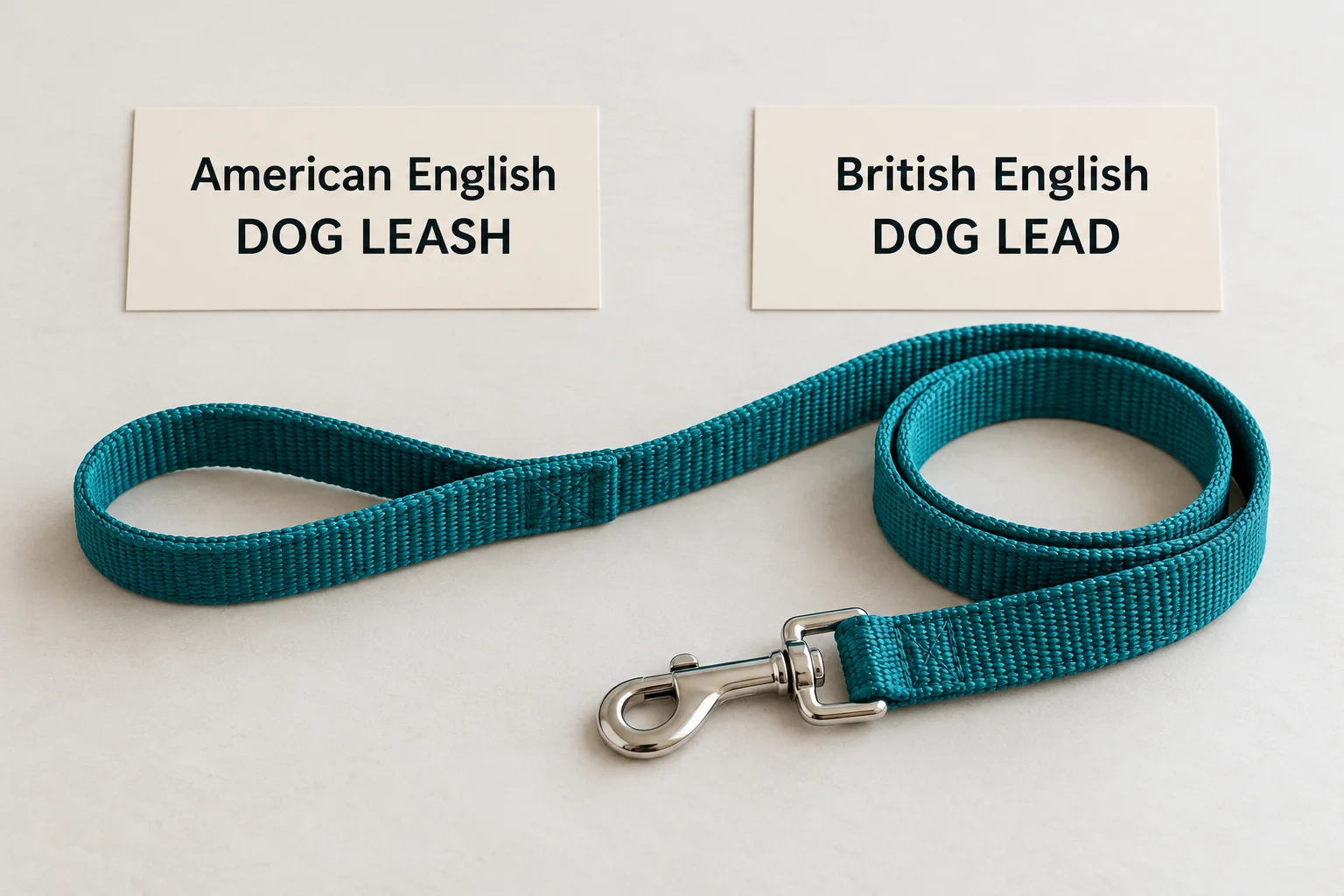
In everyday dog walking, there is usually no difference between dog lead and leash: both name the line connecting a dog to its handler. American English tends to use leash, while British English tends to use lead. The words alone do not tell you the material, length or attachment style. Those details belong in the product description.
What do lead and leash mean?
In the dog-walking sense, lead and leash refer to the same general piece of equipment. It may be a strap or rope attached to a collar or harness. Calling it a lead does not give it a different function from the same item called a leash.
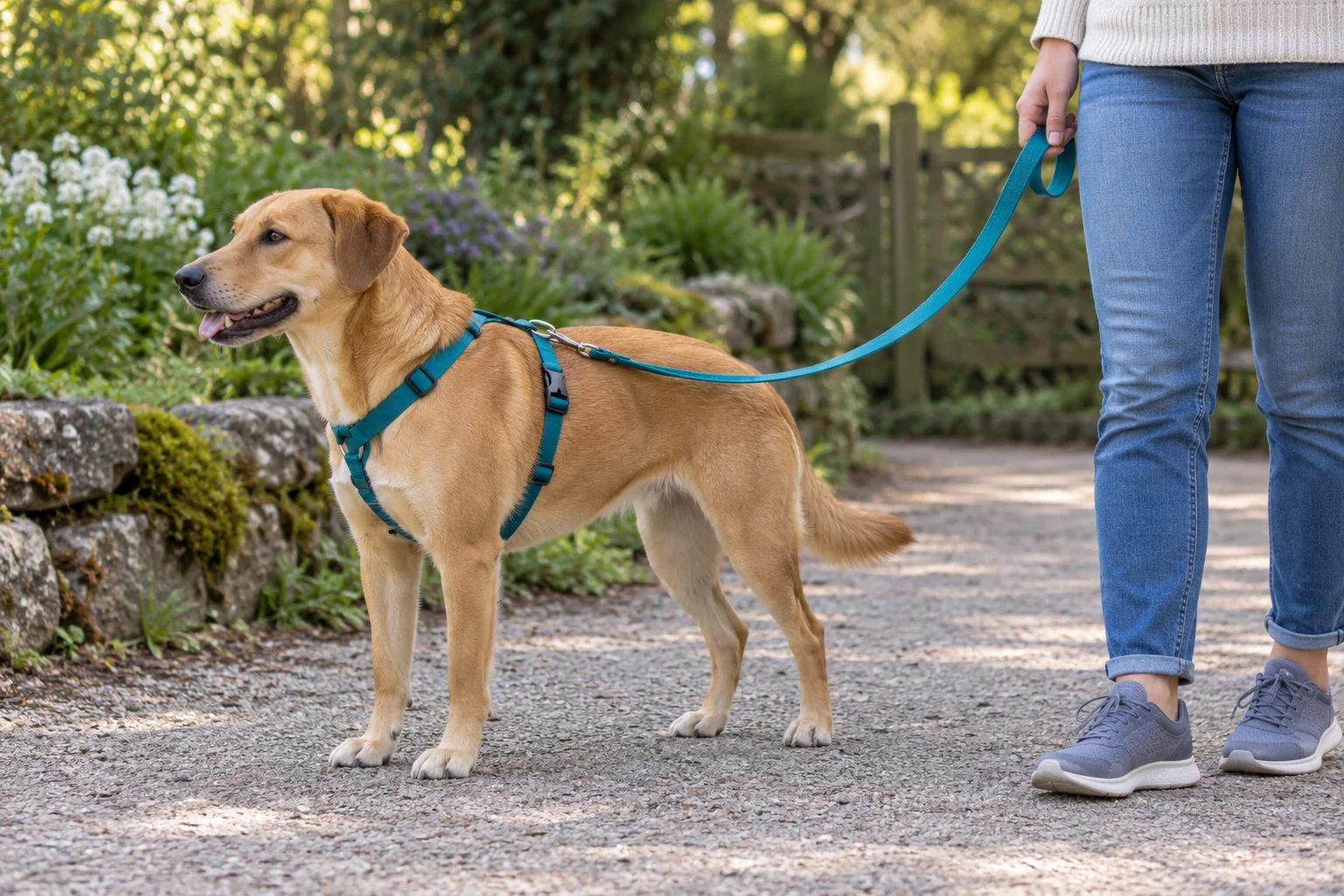
Regional wording explains much of the apparent difference. A dog described as being “on a lead” is attached to walking equipment, just as one described as being “on a leash” is. The noun identifies the connection; it does not specify how the item is made.
A general product name also leaves room for different designs. Two listings can use different nouns for equivalent products, or the same noun for products with different construction. The photograph and specifications settle that comparison.
This is useful when reading a catalog from another market. There is usually no need to search for a different piece of equipment because the heading says lead. Start by seeing whether the format and attachment match what you wanted.
Lead vs leash in American and British English
Leash is the usual starting word for an American audience, and lead is common in British dog-walking language. These are usage tendencies. Neither word belongs exclusively to one country, and specialist product names can appear across markets.
For example, an American listing can use the name slip lead without contradicting its use of leash elsewhere in the catalog. The full phrase carries more information than the regional noun alone.
For product writing, choose a main term that fits the intended audience, then use the other where it helps a reader recognize the item. There is no need to alternate the two words in every paragraph. Once the meaning is clear, consistent wording makes the description easier to follow.
Regional preference also does not establish search demand. A dictionary label can explain a language tendency, but it cannot tell a seller which term receives more searches for a particular product. Keep that separate from the basic vocabulary question.
What the name tells you about the product
Lead and leash tell you the broad category. Modifiers such as fixed-length, retractable or slip describe the format. Material, dimensions and hardware then describe the individual product.
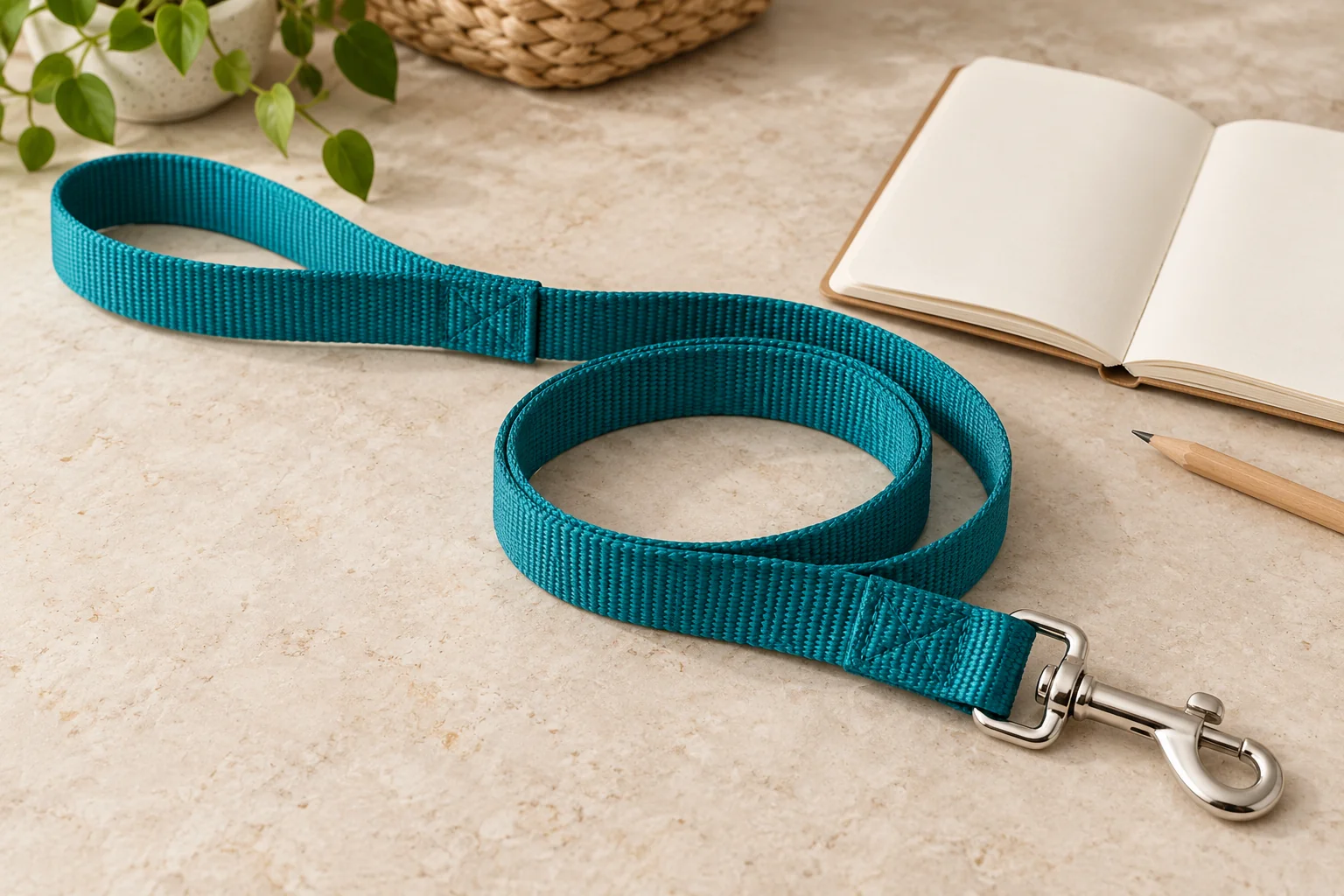
A listing called “dog lead” could therefore describe a flat strap, a rope design or a retractable model. A listing called “dog leash” could use those formats too. Neither word guarantees a separate collar, a certain clip or a particular length.
When comparing two listings, look for matching construction details rather than treating the vocabulary as a feature. The standard dog leash specification page separates the body, finished length, handle and hardware. Those are useful points to compare whether the seller calls the product a lead or a leash.
A product photograph can clarify the arrangement, but the written specification should identify what the image cannot establish. Finished length, measurement endpoints and the connector type are more useful than a general description such as “premium lead.”
| Wording in a listing | What it tells you | What still needs a specification |
|---|---|---|
| Dog lead or dog leash | General walking-equipment category | Format, material, length and attachment |
| Fixed-length lead or leash | No internal variable-length retraction system | Finished length, handle and hardware |
| Retractable lead or leash | Line pays out from and returns to a housing | Working length, controls and model limits |
| Slip lead | A format with a loop that goes around the dog’s neck | Exact construction and appropriate-use instructions |
When a format name adds meaning
A slip lead has a loop that goes around the dog’s neck as part of the lead arrangement. That is a construction distinction. The word lead by itself does not imply this format, and the format name is not a recommendation for every dog or use.
Training lead is a broader label. Read the description to find out whether the product is a long fixed line, an adjustable arrangement or another design. The word training does not establish one standard length or a guaranteed training result.
A long line describes a longer fixed-length format. The name can appear alongside either lead or leash in product descriptions. If the format fits your needs, choosing the leash length for the setting is the next decision.
Keep the full product phrase when translating or comparing a listing. Changing only lead to leash may be harmless; dropping slip or retractable removes information about the construction. Conversely, adding one of those modifiers changes what a buyer expects to receive.
Reading instructions and local requirements
The general equivalence of the words does not establish that every product meets a venue’s requirements. Read the actual instruction or posted rule for the place you intend to visit.
If the wording leaves the required length or permitted format unclear, ask the venue or relevant authority. A regional vocabulary guide cannot settle that question. This keeps a simple language distinction from becoming an unsupported conclusion about permission or compliance.
Using the terms in a product listing
Write the description around the item first. Identify the format, body material, finished length, handle and attachment. Then choose lead or leash as the main noun for the audience.
For an American listing, dog leash is a natural starting phrase. For a British listing, dog lead may fit better. Include the alternative once if it helps, especially in a catalog that serves more than one market. Repeating both words in every line adds little after the connection is clear.
A comparison should also use the same measurement basis. Two products with similar names are difficult to compare if one description counts the handle and clip in its stated length and the other does not explain its endpoints.
For a sourcing inquiry, keep the product format and destination market together in the brief. Specify the construction separately from the preferred wording. You can share the product format and target market so the inquiry identifies both the item and the language intended for its listing.
FAQ
Is a dog lead the same as a dog leash?
Usually, yes. In ordinary dog-walking language they name the same general equipment. A modifier such as slip or retractable can identify a particular format, so read the full name.
Does lead always mean a slip lead?
No. Lead is also a general word for dog-walking equipment. Slip lead is a specific phrase; omitting slip loses the distinction.
Does lead mean a longer leash?
No fixed length follows from the noun. A short lead and a long leash are both possible descriptions. Use the listed dimensions and measurement method to compare products.
Can a product description use both words?
Yes, when the item is the same. Choose one as the main term and introduce the other as a synonym where useful. Keep the format, dimensions and attachment details consistent.
Conclusion
When a listing says lead and another says leash, compare the complete product names and specifications before treating them as different items. Keep any format modifier, then match the material, length and attachment.
If you are preparing a listing, name the format first and choose the regional noun for your audience. The final description should tell the buyer what arrives in the package, whichever word appears in the title.