Choose toys to keep dogs busy by the activity your dog enjoys: carrying, chewing, searching for food, pushing objects, or playing fetch with you. Start with a few different options and watch which ones get used. Size, available space, care requirements, and supervision matter more than a promise of hours of entertainment.
A dog that carries a soft toy around the house needs a different choice from one that pulls it apart. Another may ignore both but spend time nosing food from a dispenser. Those differences give you a useful starting point without buying an entire toy collection.
Match Toys to How Your Dog Actually Plays
Watch what your dog does with a familiar toy before choosing another. Does it carry the toy, work at one seam, roll it across the floor, or bring it back to you? Choose an activity that suits that behavior, then evaluate the particular product.
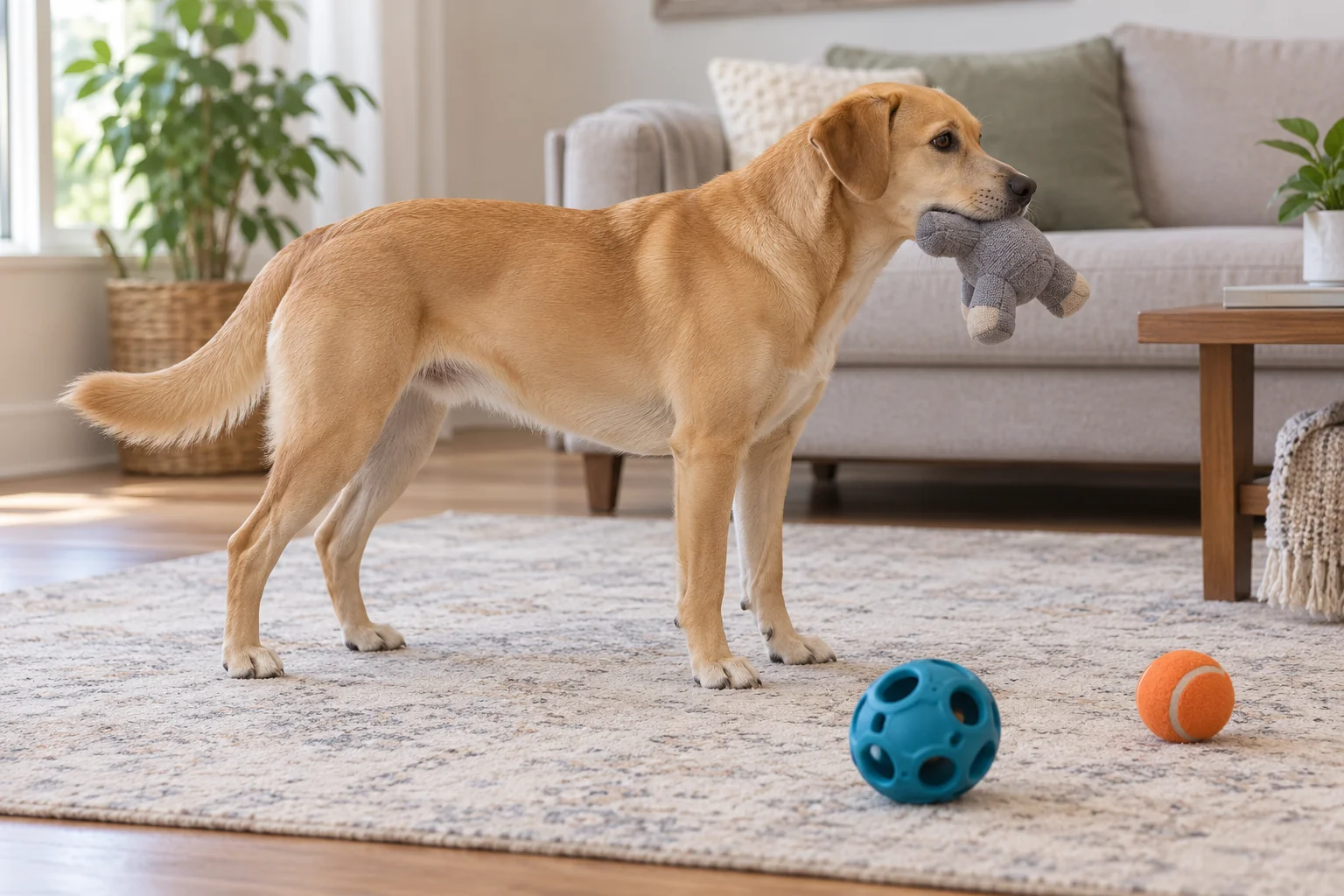
The following comparison can help narrow the options. It describes play formats, rather than ranking their safety or durability.
| What your dog enjoys | A format to consider | What to observe |
|---|---|---|
| Carrying and holding | A dog toy intended for gentle carrying | Whether the dog carries it or starts removing parts |
| Working with its mouth | A size-appropriate food holder or chew toy | How the actual model is used and whether damage appears |
| Searching with its nose | A supervised food-search activity | Whether the dog searches for food or pulls at the equipment |
| Nudging and pushing | A rolling food dispenser | Space to move it, food release, and access for cleaning |
| Bringing a toy to you | A fetch or shared-play toy | The room available and the dog’s interest in playing together |
Add a Different Activity Before Buying a Similar Toy
If a dog already enjoys one food toy, another nearly identical model may add less variety than a simple game with you. Equally, an ignored fetch toy may need your participation rather than replacement.
Try one option from another play group and compare the response. You can note whether the dog approaches willingly, stays interested, leaves calmly, or starts biting at parts that were meant to move. These are observations about that dog and session, not a test that certifies the toy.
For an assortment, distinguish the job of each item. A range organized around carrying, shared play, and food searching is easier to describe than a shelf of products all labeled “boredom busters.” Furrowa’s dog toy categories provide a starting point for discussing confirmed formats. The category page does not establish that every puzzle or electronic toy is available.
Chew Toys and Food Puzzles for Busy Time
Chew toys and food puzzles offer different activities. A chew product is intended for mouth work; a puzzle may ask the dog to lick, roll, nudge, or move a cover. A toy containing food is not automatically intended for chewing.
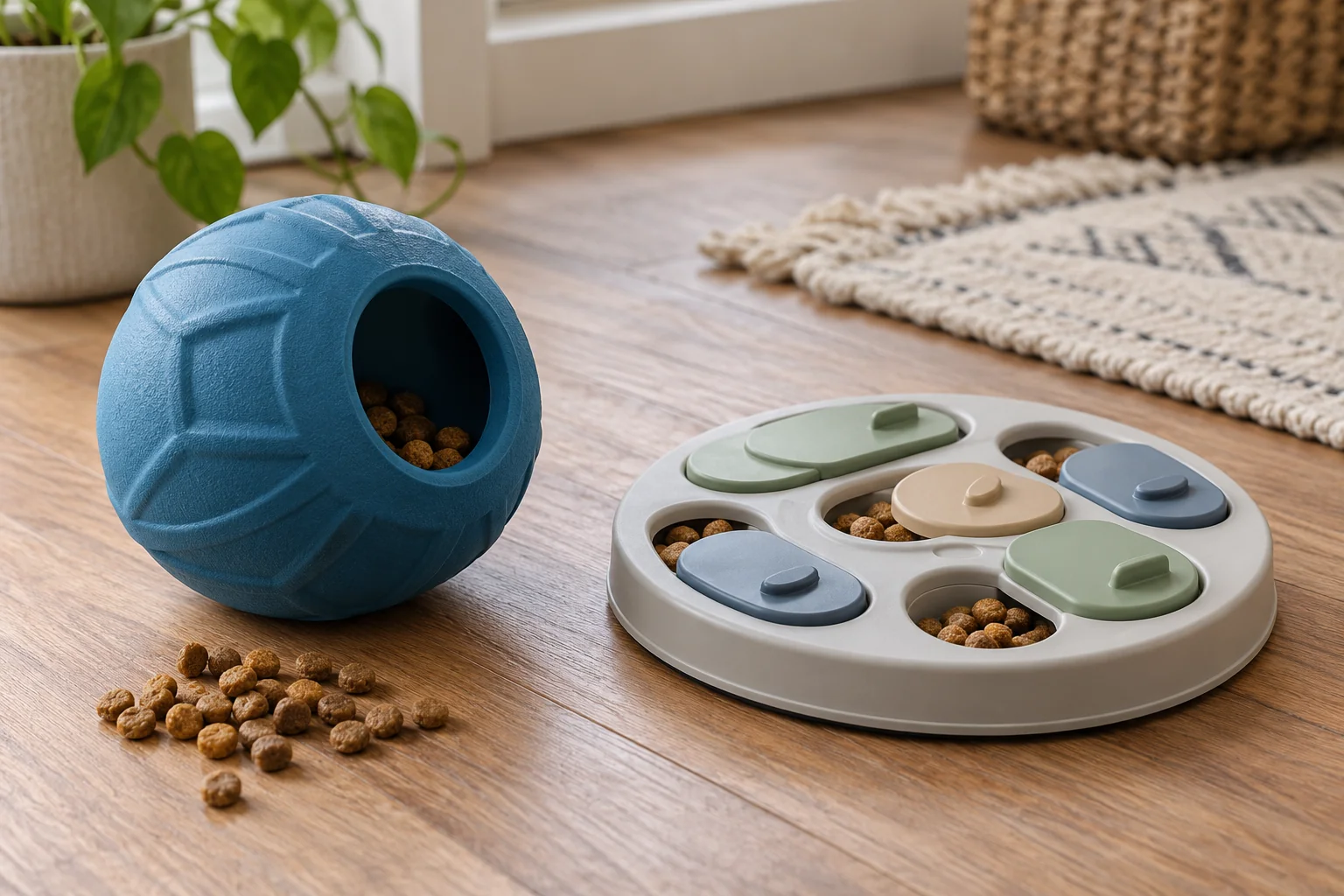
Read the exact model’s size and use guidance before offering it. In the first sessions, stay close enough to observe how the dog handles the body, openings, and any moving parts. Stop the activity if pieces loosen or the dog begins dismantling it.
Choose the Finished Toy, Not Just Its Material
A “rubber” label does not describe the whole product. Openings, joins, attachments, and the way food is reached also affect the choice. The dog toy materials guide explains these component differences if the material description in a listing is unclear.
Keep the comparison practical. A food holder that accepts the dog’s usual food and can be cleaned thoroughly may be easier to use regularly than a complicated design you cannot reach inside.
For a first food puzzle, make the food easy to obtain. Show the dog where it is and allow time to explore. If the dog gives up or starts attacking the mechanism, simplify the task rather than adding another obstacle. Use food compatible with the dog’s diet and include it in the daily food allowance.
Detailed puzzle construction and difficulty comparisons belong to a separate purchase decision. Here, the aim is to find out whether food work deserves a place in your dog’s activity mix.
Sniffing and Foraging Between Walks
A short food-search game is another option when you are at home with your dog. You can place a few pieces of its usual dry food where they are easy to find, then make the search slightly less obvious as the dog learns the activity.
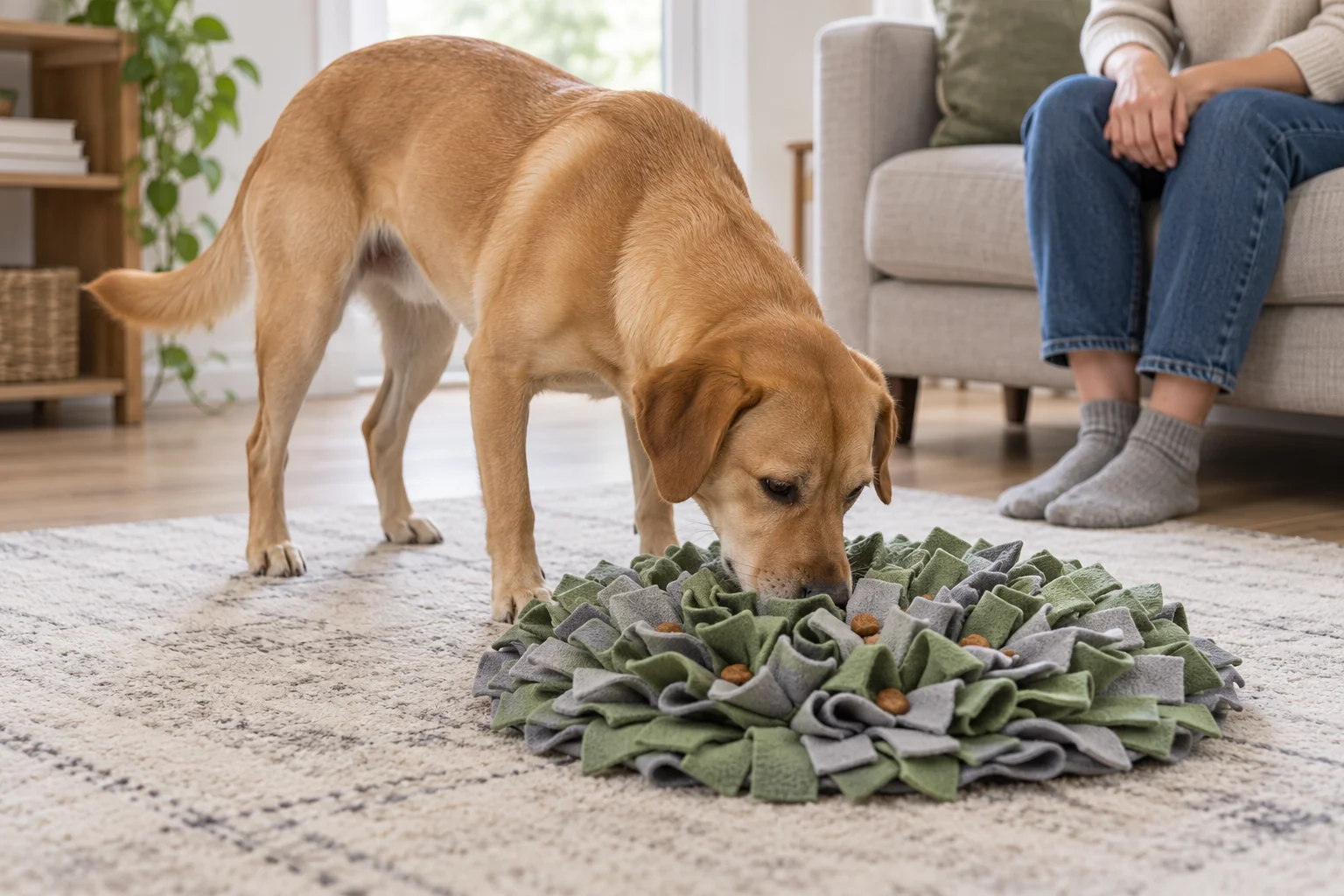
A snuffle mat offers fabric folds or pockets for this purpose. Supervise its use and pick it up after the food is gone. A dog that pulls or eats fabric needs a different activity; a denser mat is not an automatic solution.
Start with food visible on top rather than buried deep inside. The first question is whether the dog wants to search. More pockets and deeper folds are useful only if they suit the dog’s interest and remain manageable to clean.
Simple hiding games can also use a familiar toy. Let the dog see where you place it before trying a less obvious location. Keep the search accessible and avoid asking the dog to climb or squeeze into a space to retrieve the item.
These activities add variety between walks. They do not establish a replacement ratio for exercise, companionship, or the dog’s other daily needs.
Toys for Home-Alone Time and Crate Time
The need to leave home does not make a toy suitable for unattended use. Choose according to the exact product’s restrictions and your dog’s individual behavior; successful supervised sessions do not prove what will happen while you are away.
Keep activities that require active supervision for times when you can participate. That includes fabric foraging, puzzles with accessible parts, and any toy the dog has started to damage. If no suitable unattended option has been identified, plan the absence around appropriate care rather than leaving a new toy as an experiment.
Crate use needs its own assessment. A toy that rolls freely in a room may not work in the crate’s available space, and a new crate routine is a poor moment to introduce an unfamiliar puzzle. Follow the relevant product and crate guidance instead of treating a “crate toy” search label as approval.
If your dog shows distress when left alone, seek qualified help with the absence itself. Buying a more difficult food puzzle is not a substitute for addressing that problem.
Outdoor Toys for Fetch and Chase
Fetch and shared chase games depend on the space and the person using the toy. Pick a setting where you can keep the activity within the area you control, then choose equipment intended for that use.
For a flying disc, diameter, weight, and rim shape affect pickup and handling. The dog frisbee buying guide covers those details without assuming every dog needs the same disc.
Make the game manageable before trying longer throws. An open field and a small yard call for different decisions, and buying a distance-oriented toy does not create more room. A calm pickup or short retrieve can tell you more about the fit than an ambitious first throw.
Outdoor toys also need storage and care. Collect them after the session, remove dirt as directed, and inspect them before the next game. Avoid turning an ordinary toy into hanging equipment or a fixed tug installation without instructions for that exact use.
Rotate Toys and Keep Checking Them
Rotate toys according to interest and condition. Put some away and reintroduce them later, while keeping a familiar favorite available if your dog still enjoys it. There is no requirement to own a particular number or change every item on a fixed day.
Use the swap as a chance to inspect the collection. Look at seams and attachments on fabric toys, the body and openings of food toys, and the ends and connections of rope products. Remove damaged items from use; do not rely on an improvised repair unless the maker provides a suitable repair method.
If a toy keeps being ignored, change one thing at a time. Try offering it during shared play, making the food task easier, or choosing a different activity. Repeatedly buying a tougher version will not resolve a lack of interest.
FAQ
What toys can keep a dog busy?
Options include food holders, rolling dispensers, carrying toys, supervised sniffing activities, and toys for shared fetch or tug. Choose from the activities the dog already enjoys, then evaluate each product’s size, instructions, condition, and use.
What are interactive dog toys?
The term can describe toys used with a person or toys the dog manipulates to obtain a result, such as releasing food. It does not necessarily mean electronic. The product description should explain the actual action involved.
Can toys keep a dog occupied when home alone?
Some products may be intended for particular unattended uses, but there is no general approval for a whole toy category. Follow the exact model’s restrictions and the dog’s individual care plan. Keep supervision-only activities for when someone is present.
How do I introduce a food puzzle?
Begin with food easy to reach and show the dog what happens when the toy is moved or explored. Keep the initial task simple. If the dog disengages or bites at the equipment, reduce the difficulty and reassess the choice.
What can I offer outside besides fetch?
A supervised search for a familiar toy or some of the dog’s usual food can provide a different activity in an appropriate, controlled area. Choose a clean search space and keep the task accessible.
Conclusion
Choose one gap in the activities your dog already enjoys. If the current collection is all mouth work, try an easy supervised search; if everything involves food, try a manageable game together. Keep the option the dog willingly returns to, then add variety only when you know what is missing.