Useful pet feeding station ideas solve a daily problem: bowls blocking a walkway, water spreading across the floor, or food stored too far from where you serve it. Start with a quiet, accessible location, leave room to lift out each bowl, and keep the washing and refilling route clear. A small arrangement that works at every meal is a better starting point than built-in furniture you have to work around.
The station can be as simple as separate bowls on a washable mat. Storage, a holder or a cabinet can come later, once you know the space works for the pet and for the person cleaning it.
Pet Feeding Station Ideas for Different Spaces
Put the bowls outside the main walking route, with an open approach for the pet and a convenient trip to the sink. Include the space occupied by the animal during a meal, rather than measuring only the mat against the wall.
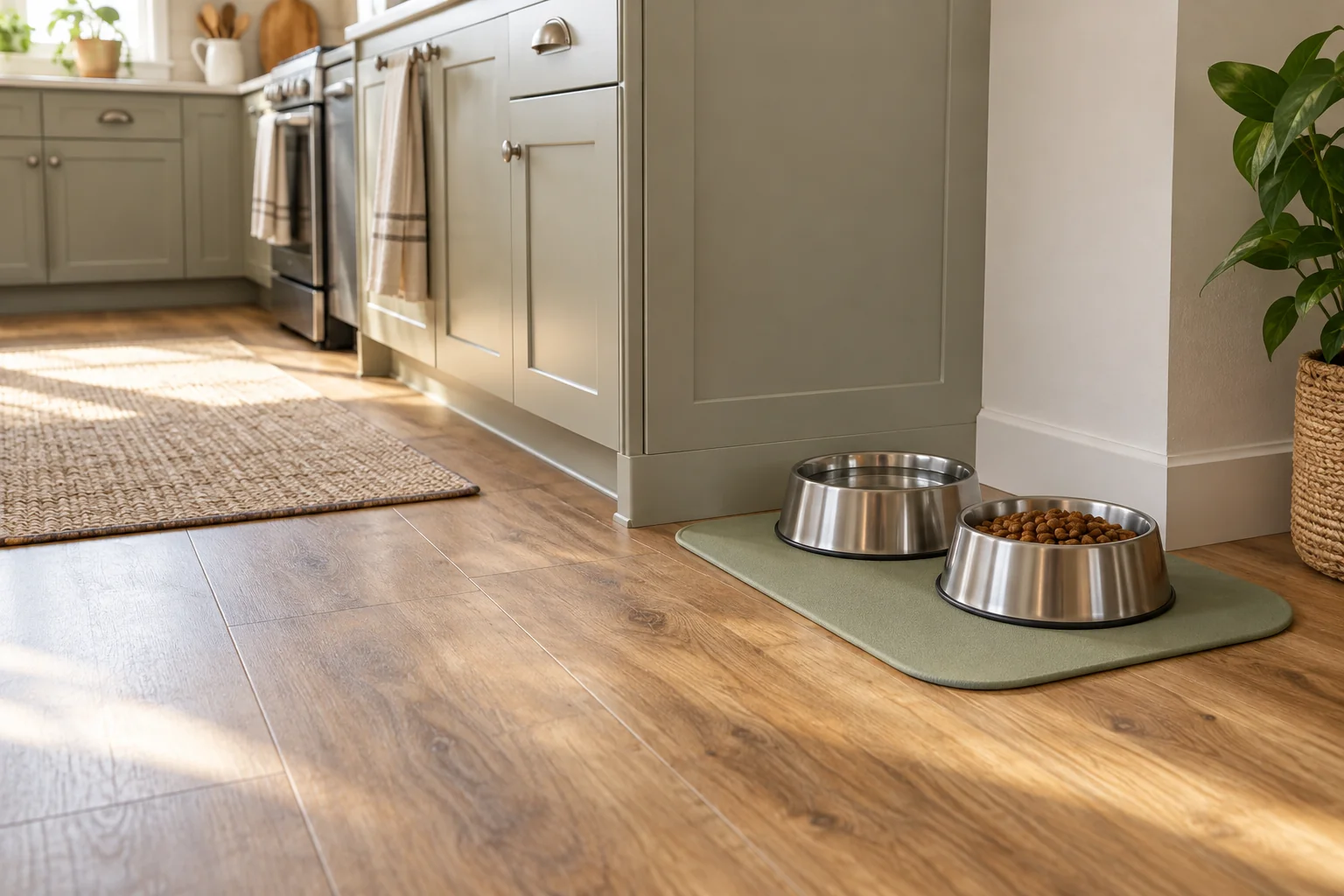
An unused kitchen edge often works better than the gap beside a busy doorway. Stand in the proposed spot while someone opens the nearby refrigerator, dishwasher or cupboard. A bowl may fit with everything closed and become an obstacle as soon as the kitchen is in use. Also leave enough room to carry away a full water bowl without tilting it around furniture.
Different locations solve different space problems:
- Kitchen or utility-room edge. Handy for refilling, provided the bowls stay clear of cooking traffic and appliance doors.
- Open space beneath a counter. Keeps the arrangement beside existing furniture. The pet still needs room to approach, and you need access to lift out the bowls and wipe behind them.
- End of an island. Useful when the end faces a quiet area rather than a passage between rooms.
- Mudroom. Can keep outdoor splashes near the entrance, although a busy doorway may make another location preferable.
- Pantry-side wall. Brings food storage close to serving without putting the bowls inside a cupboard that must stay open.
For cats, noise, passing traffic, other animals and nearby litter boxes can interfere with eating. A tucked-away spot should still leave the cat room to look around and move away. A laundry room is therefore a candidate to assess during an actual wash cycle, rather than an automatic choice because it has a hard floor.
Try the loose bowls and mat in the location before fitting permanent cabinetry. A pull-out tray also needs a practical water arrangement: closing the tray after a meal must not remove the pet’s only drinking source. Keep water available independently of furniture that gets shut.
Set Up Bowls for a Cat, a Dog, or Both
Size the space around the bowls the pet uses, including the room needed to approach and remove them. A matching food-and-water set is optional; the two containers may need different capacities or different locations.
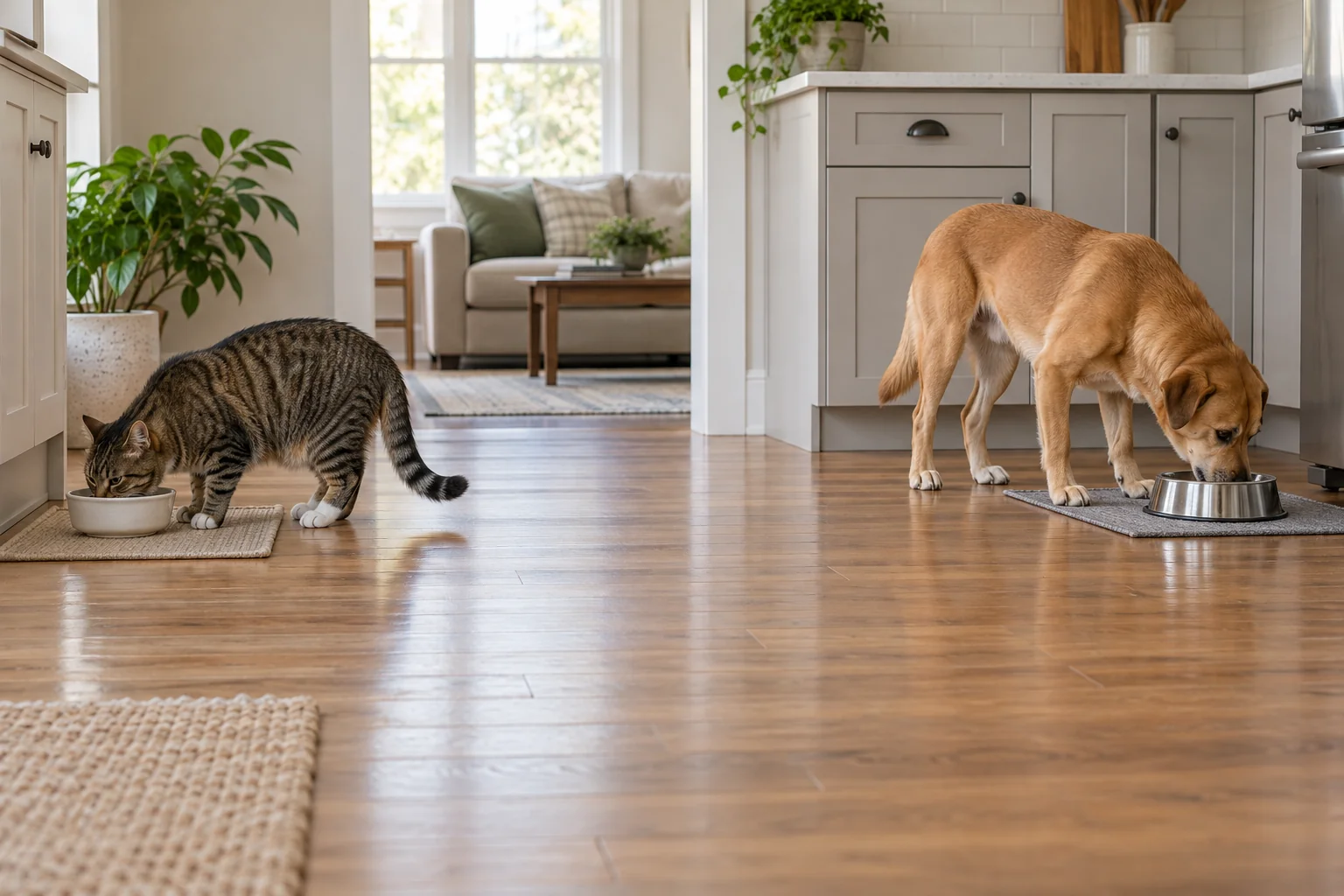
For a cat, compare the clear opening and usable bottom with the usual meal. A wide-looking outer rim can surround a much smaller interior. The guide to how wide a cat bowl should be explains those measurements without assigning one diameter to every cat. Keep food away from the litter box and leave room for a separate water location if the paired arrangement is not working.
For a dog, start with the established meal and the water-refilling routine. Body size alone does not specify bowl capacity or depth. The dog bowl size guide covers the portion, inner opening and fill level as separate measurements. At the station, allow space for the whole bowl base, the mat and your hands when lifting it out. Large dog water bowl ideas need that handling space just as much as a place to set the bowl down.
If a holder is part of the design, compare its assembled height and bowl seating before fixing the layout. A stand changes the rim’s position without changing the bowl’s internal depth. The separate guide to cat bowl height takes that measurement question further.
In a home with both cats and dogs, start with distinct feeding positions. Putting two bowls together does not establish that both animals can use them comfortably. Watch ordinary meals: if one animal waits, leaves or approaches only after the other has gone, more separation is a layout change worth trying. Multi-cat arrangements also need individual food bowls and access to separate feeding spaces.
For a retail assortment, the station footprint becomes part of the bowl brief. Specify the outer dimensions, clear opening, intended fill level and any separate holder. The custom pet bowl page covers stainless-steel and ceramic bowl inquiries; a cabinet or built-in feeding unit needs its own sourcing discussion. A bowl category does not confirm that the surrounding furniture is available.
Keep the Station Clean Without Extra Work
Make the bowls easy to take to the sink and the surface beneath them easy to reach. Storage or decoration that has to be moved at every wash adds work to the routine.
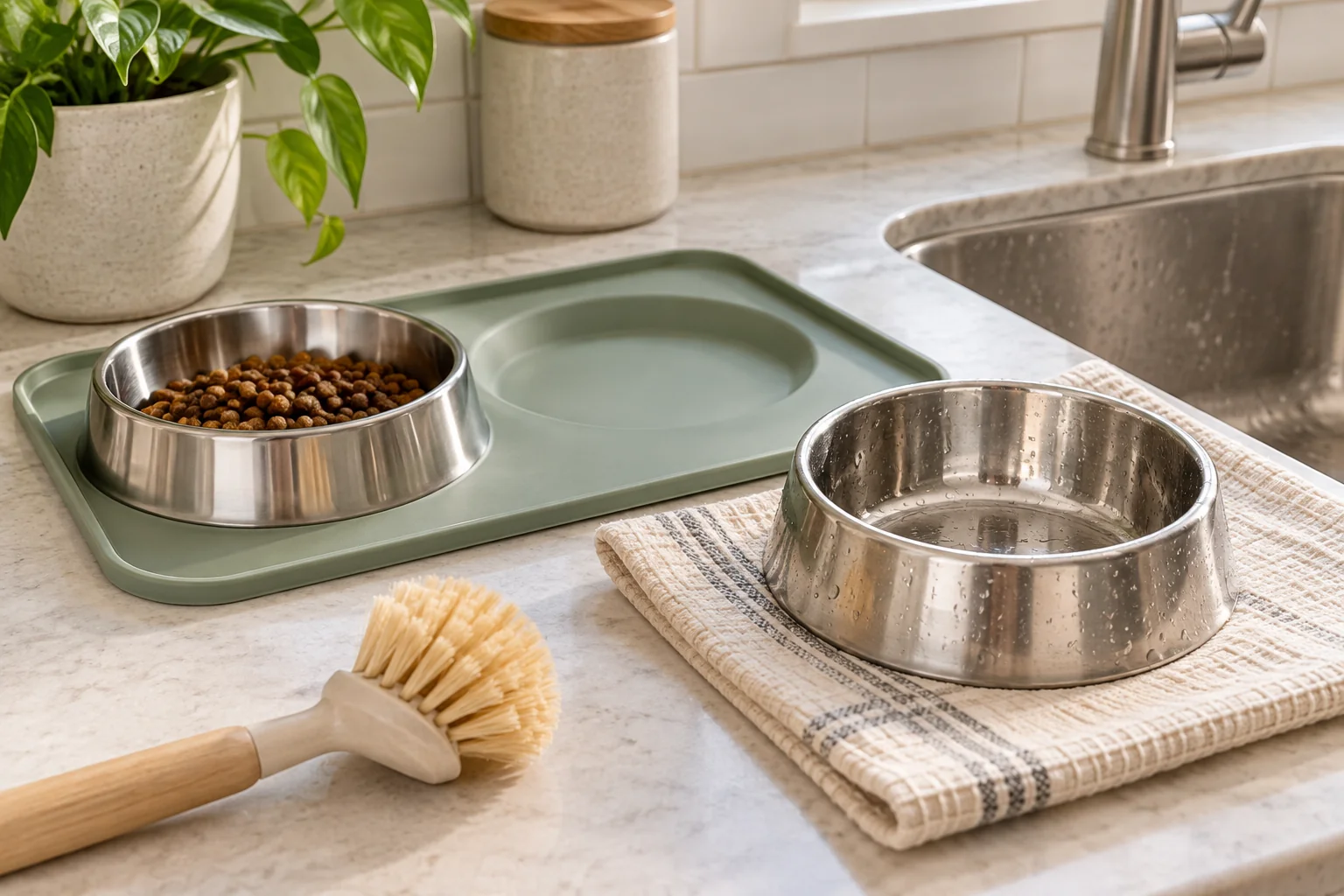
A removable mat can catch splashes and scattered food, but it needs cleaning on both sides. Lift it rather than wiping only the visible top, and dry the floor before putting it back. Choose a mat whose care instructions fit the way you intend to wash it. A raised edge may help contain a spill; it does not make the space underneath maintenance-free.
Wash food bowls and serving utensils with soap and hot water after use. Give the water bowl fresh water and a daily wash rather than repeatedly topping up an unwashed container. Wipe away spilled food and water from the surrounding area. These are separate jobs: a tidy-looking mat does not tell you whether the bowl has been washed.
With bowls, compare access to the entire interior and any removable parts. A seam, base pad or holder may need different care from the vessel. Use a dishwasher only where the particular item is marked suitable, and replace damaged parts instead of hiding them beneath the mat.
A spare clean bowl can make the routine easier. Swap it in while the used one is being washed, so cleaning does not depend on finishing the rest of the dishes. Keep the spare accessible, with enough room to set down a wet bowl while you work.
Dark finishes that hide residue offer no cleaning advantage. Choose a surface you can inspect and wash, rather than one that makes it easier to overlook the next job.
Store Food Where You Fill the Bowls
Keep dry food sealed in its original bag in a cool, dry, secure place. If you use an outer storage bin, choose one that accommodates the bag instead of making decanting essential. Retaining the packaging also keeps the product and batch information with the food.
The most convenient storage position may be beside the station, but a hot appliance or damp corner makes another cupboard preferable. Measure the bag and lid opening as well as the closed bin. A container that fits underneath a counter can still be awkward to refill there.
Keep a dedicated scoop with the serving supplies and wash it after use. The pet’s bowl should not double as the scoop. Opened canned or pouched food belongs covered in the refrigerator promptly, rather than in a decorative jar beside the bowls.
Separate the supplies by how you use them. Daily bowls and the scoop should be easy to reach; spare mats and unopened food can sit farther away. A towel hook is useful if it shortens the cleanup route. Adding more storage only helps when it reduces an actual trip or clears a working surface.
Multi-Pet and Outdoor Setups
Shared floor space does not require a shared feeding point. Separate positions give you a clearer view of which animal reaches which bowl. In a small room, that might mean opposite ends of the available area; in a crowded household, another room may work better than a larger paired stand.
Water needs its own plan. Several accessible locations can be more useful than one oversized vessel that every pet has to approach through the same narrow gap. Keep the arrangements easy to refill and observe them during the household’s normal routine. If conflict around food persists, get individual behavior advice rather than expecting a new station to resolve it.
For outdoor dog water bowl ideas, begin with a shaded, accessible spot you pass often enough to maintain. Keep the bowl out of the doorway and away from garden debris. It should sit securely on the actual surface and be manageable to empty, carry and wash.
Refresh and wash outdoor bowls, with additional attention when dirt, food or leaves get into them. Check the water level during use; a larger container does not remove that task. Hot or freezing conditions can make a chosen location unsuitable, so outdoor water should be part of an attended routine rather than a vessel left to look after itself.
Bring the bowl inside when you finish using that outdoor area. A hose-connected or powered device introduces a different installation and care task; it is not required to create a useful place for a dog to drink.
Should You Raise the Bowls?
A feeding station does not need a raised stand to be complete. Begin with a setup the pet already uses and consider a different height only for a specific access problem or an individual recommendation.
For a dog with health or mobility needs, discuss the feeding arrangement with the veterinarian before changing it. Avoid choosing a stand on a promise that elevation improves digestion or prevents bloat. Bowl height is not a treatment plan, and a breed-size chart cannot settle that decision for an individual animal.
Where a stand is used, the useful layout questions are concrete: does the intended bowl fit, can the pet reach the contents, is the assembly steady on that floor, and can the bowl be lifted out for washing? Those questions belong with the complete setup, not just the advertised height of the holder.
FAQ
How high should a dog feeding station be?
There is no height in this guide that fits every dog. Use the familiar arrangement as a starting point and assess access to the actual bowl. If elevation is being considered for health or mobility reasons, get an individual veterinary recommendation rather than working from a shoulder-height formula.
Should cats have their own food bowl?
Plan individual food bowls and separate feeding spaces in a multi-cat home. Enough physical room for two dishes does not establish that both cats will use them together. Observe whether each cat can approach and eat without another animal blocking the area.
Do cats prefer deep or shallow bowls?
Compare suitable dishes with the individual cat and its usual portion. Opening width, bottom shape and depth all affect the available space. A shallow label alone does not establish the best fit, and a changed appetite needs attention beyond buying another bowl.
Can I leave a water bowl outside for my dog?
Yes, as part of a maintained outdoor setup. Keep it accessible, offer clean water, and check its condition and level while the area is being used. Bring it in for washing and reconsider the location in hot or freezing conditions.
Conclusion
Try the proposed location with your existing bowls before buying a cabinet or stand. Follow one full serving-and-cleaning cycle there: carry in the water, let the pet use the space, then lift out the bowls and mat. The awkward step in that routine tells you what to change next, whether that is the location, handling space or storage position.