Stainless steel is a practical starting choice for an everyday dog bowl: it is easy to handle and wash, and it avoids ceramic’s risk of chipping. A heavier ceramic dish can suit a dog that pushes a lightweight bowl around. Plastic is another option, especially when portability matters, but surface wear deserves attention. The best dog bowl material fits both the feeding routine and the way the finished bowl is made.
Comparing Stainless Steel, Ceramic, and Plastic Dog Bowls
For stainless steel and ceramic dog bowls, the main trade-off is easy handling versus a heavier dish. Plastic adds a lightweight option, with scratches and chewing damage to watch for. Base design, surface condition, and care instructions help distinguish individual bowls within each material.
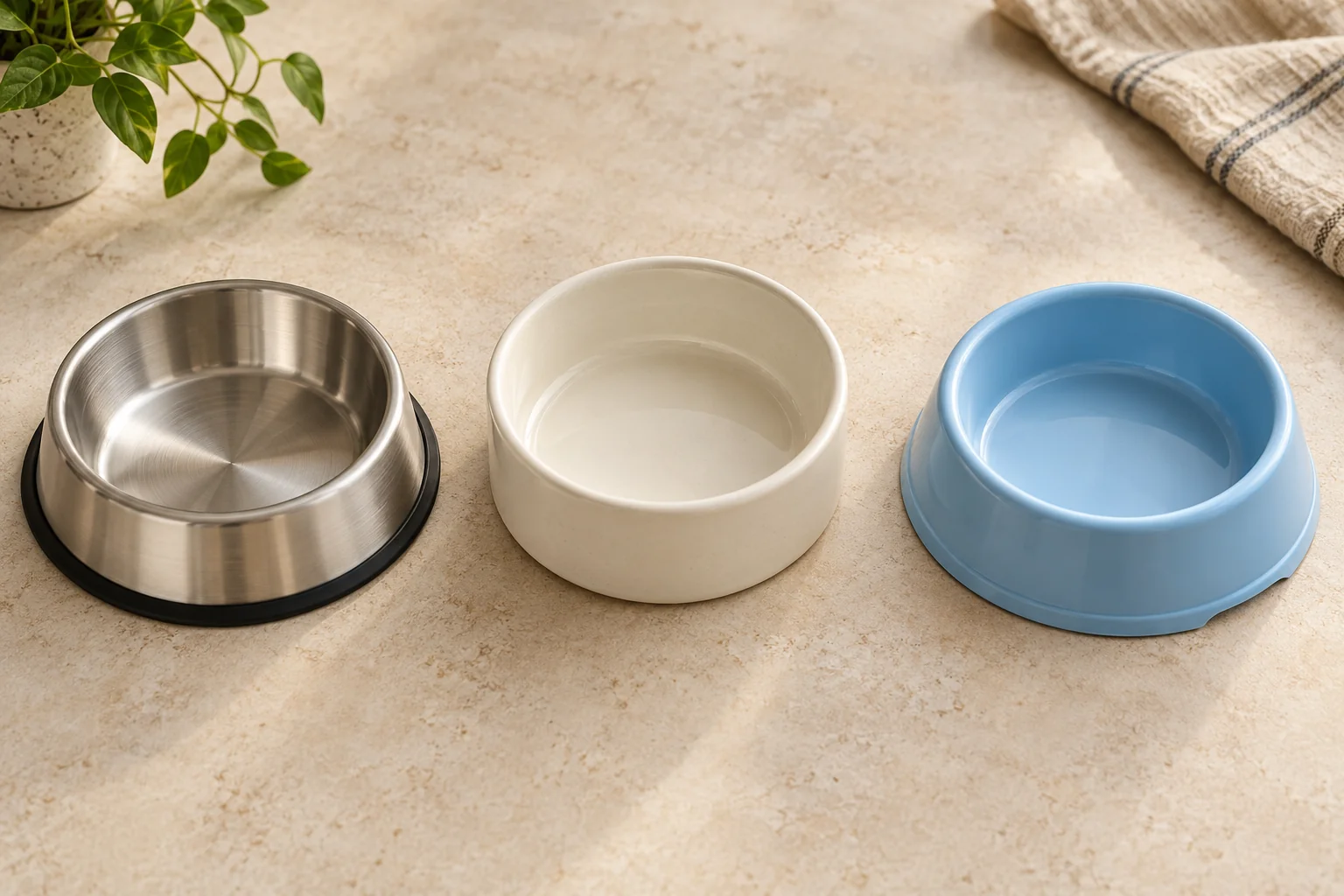
| Decision | Stainless steel | Ceramic or stoneware | Plastic |
|---|---|---|---|
| Carrying and refilling | Often easy to lift; weight varies with construction | A heavier dish can be less convenient to carry when full | A lightweight choice for packing and carrying |
| Staying in place | A broad base, fitted ring, mat, or holder can help | Weight can help, alongside the shape of the base | A lightweight dish may need a mat or holder |
| Damage to look for | Rough edges, dents affecting use, or damaged attachments | Chips, cracks, and damage to the glazed interior | Scratches, tooth marks, splits, or distortion |
| Machine washing | Use a model labeled dishwasher-safe | Some are dishwasher-safe; others require hand washing | Washing method and rack position depend on the product |
| A useful reason to shortlist it | Frequent handling and straightforward washing | A substantial bowl for a fixed feeding spot | Portability or a lightweight setup |
A bowl that stays in place but is awkward to wash may be a poor match for daily meals. Conversely, a light dish that is easy to carry may need a better base rather than a different material. Compare the whole bowl, including any removable liner or ring.
Material choice does not determine the amount of water a bowl holds or the space available around the muzzle. The dog bowl measuring and capacity guide covers those sizing decisions. Use it to compare capacity and access separately from the material shortlist.
Stainless Steel for Everyday Handling and Cleaning
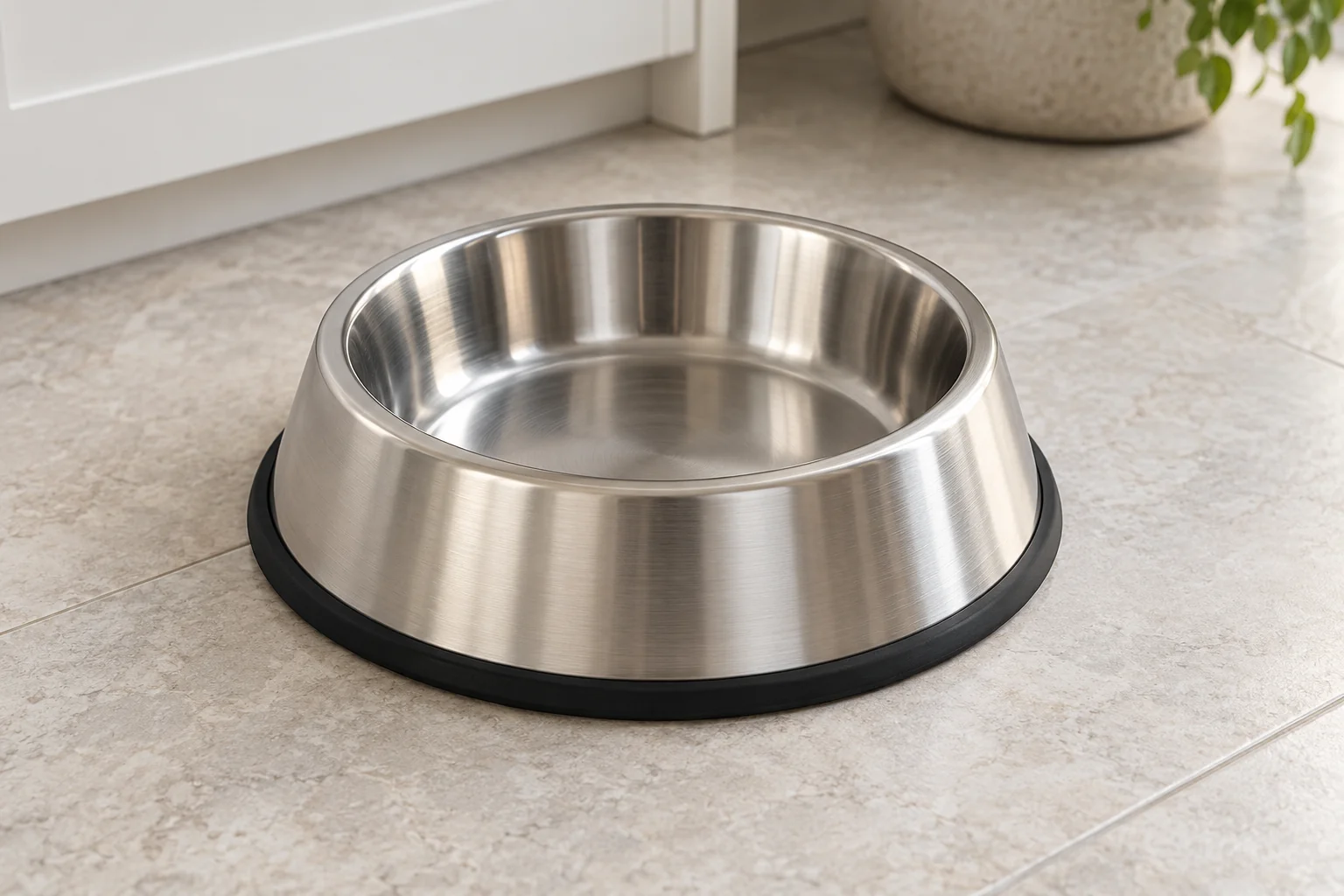
A smooth stainless steel bowl is an uncomplicated option for repeated meals and refills. Its interior is easy to inspect, and many models allow machine washing. The rim, underside, and base attachment are still part of the purchase decision; a polished interior alone does not tell you how the whole bowl will work.
Movement and Noise at the Feeding Spot
A light metal bowl can move as a dog eats. A fitted holder or nonslip base is worth considering if the dish repeatedly travels across the floor. Compare how the base sits on the actual feeding surface: a narrow ring, a broad mat, and a stand each support the dish differently.
Tags may also tap against a metal rim. If that noise bothers your dog, observe whether the bowl opening and feeding position bring the tags into contact with it. A different bowl shape or supported setup may be more useful than choosing a heavier dish solely for appearance.
The Interior and Removable Parts
Look for a smooth food-contact surface and a rim without rough edges. Where a rubber or silicone ring is removable, the space underneath should be accessible for washing and drying. A ring that hides trapped residue creates another cleaning task.
When a Heavy Ceramic Bowl Makes Sense
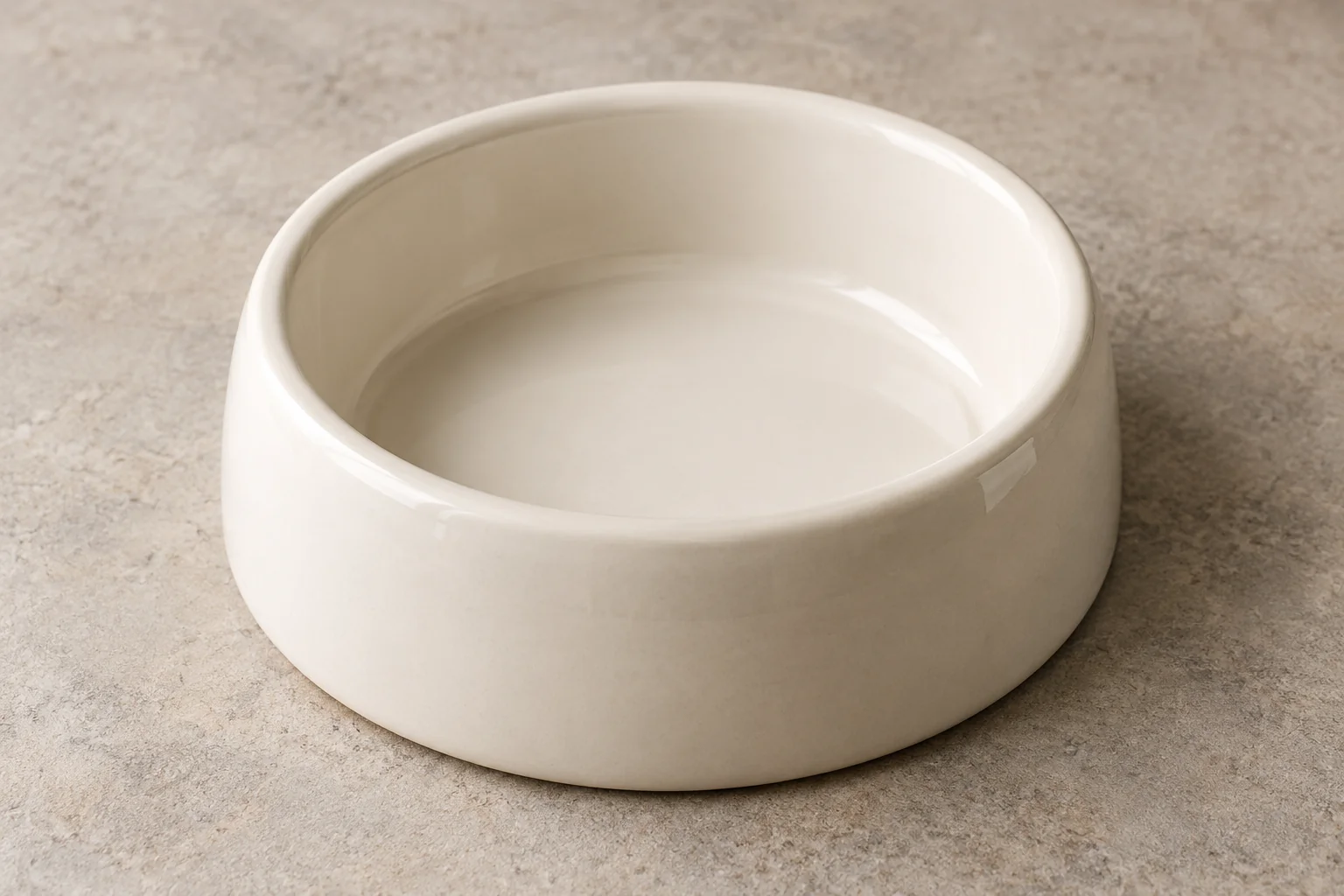
Ceramic can suit a feeding spot where a substantial dish is easier to keep in place. The trade-off is handling: a full water bowl may be awkward to lift, and a dropped dish can chip or break. Compare its empty weight, grip around the outside, and base before choosing it for a dog that nudges bowls.
Chips, Cracks, and Glaze Condition
Inspect the rim and glazed interior while washing. Retire a bowl with chipped edges, cracks, or damaged food-contact surfaces. Place it where it is less likely to be knocked from a counter or struck by another hard dish.
Fine lines in a glaze are sometimes called crazing. Include those lines when examining the feeding surface for damage, rather than looking only for large chips.
Food Use and Decorative Finishes
Choose a dish identified for food use. An ornamental vessel is not a substitute simply because it has a smooth glaze or looks like a pet bowl. Decorative pottery can contain lead, and washing does not resolve that concern.
For a sourcing project, obtain documentation for the exact glaze and decoration used on the ordered bowl. This separates food-use verification from color and styling decisions without assuming that all ceramic dishes present the same risk.
Plastic Bowls and Surface Wear
Plastic can be convenient when you want a light dish to carry or pack. Its useful life depends on the product and how it is used. There is no reliable universal replacement interval based only on the word “plastic.”
Scratches and tooth marks are the practical concerns. During washing, look for damaged areas, rough edges, or changes in shape. Replace a damaged bowl rather than keeping it in service because it has not reached a particular age.
For a dog that chews the dish, remove the bowl when chewing begins. Choosing a heavier version does not settle whether the dog will leave it alone. Supervision and the dog’s actual behavior remain relevant to the setup.
Matching the Bowl to Food, Water, and Washing
An everyday food bowl needs a cleaning routine that you can maintain. Wash wet-food bowls after each use, and clean dry-food and water bowls daily. Stainless steel, ceramic, and plastic all need cleaning; none makes that step unnecessary.
Washing the Whole Bowl
For hand washing, use warm soapy water, scrub away residue, rinse, and dry. Include the underside and any parts that come apart for cleaning. Dishwasher use requires a dishwasher-safe label, including the permitted treatment of removable pieces.
Cleaning removes dirt; disinfection is an additional process. If a situation calls for disinfection, the method must suit both the product and the cleaning agent’s directions.
Water Bowls and Refilling
A water bowl should be manageable when full and stable at its usual location. Before buying a heavy ceramic dish, consider whether you can comfortably lift it to empty and wash it. For a light steel dish, a secure base may address the movement problem.
Material Specifications for a Sourcing Brief
A useful buying brief describes the finished bowl and the evidence needed to evaluate it. Keep material identity, food use, surface finish, and care instructions as separate fields. This makes it easier to compare samples without turning a material name into a promise of performance.
| Brief field | What to record |
|---|---|
| Material and components | Bowl material; any coating, liner, ring, or other removable part |
| Food-use information | Intended use and documents that identify the relevant product and materials |
| Surface and rim | Interior finish, edge condition, and decoration in or near the food-contact area |
| Base and handling | Footprint, attachment fit, empty weight, and how the bowl is carried |
| Care | Permitted washing method, removable parts, and instructions supplied with the product |
| Sample observations | Movement on the intended surface, access to residue, and visible condition after ordinary handling |
Where a grade or food-contact claim is part of the specification, the supporting document should identify the actual material or product. A certificate for a different coating or bowl does not answer the same question. Agree on the relevant verification for the intended market rather than requiring a generic collection of impressive labels.
Prepare the material and care brief before selecting decorative details.
FAQ
What is the healthiest material for a dog bowl?
Material alone cannot establish which bowl is healthiest for an individual dog. A smooth, intact stainless steel bowl is a practical everyday shortlist option; cleaning, food-use information, and the dog’s ability to use it still matter.
Is ceramic or stainless steel better for a dog bowl?
Stainless steel usually makes carrying and frequent washing straightforward. Ceramic can provide a heavier dish at a fixed feeding spot, with chipping and breakage to consider. Compare the particular bowls rather than treating either material as better in every situation.
Can stainless steel dog bowls go in the dishwasher?
Many can, but use the instructions for the finished bowl. A removable base ring, coating, or other attachment may need different care from the steel vessel itself.
Are plastic bowls bad for dogs?
A plastic bowl is not automatically unsuitable. Surface condition, food-use information, washing, and chewing behavior determine whether the particular dish remains a reasonable option. Replace it if damaged.
What is the best material for a dog’s water bowl?
Steel and ceramic are useful candidates for different handling needs. Choose a dish you can refill and wash comfortably, with a stable base and enough usable capacity. A heavy bowl is less helpful if carrying it full makes regular cleaning difficult.
Conclusion
If your current dish is hard to handle or wash, shortlist a smooth steel bowl with a base that suits the feeding spot. If movement is the main problem, compare that setup with a heavier ceramic dish you can comfortably lift. Try the chosen bowl in your normal filling and washing routine before ordering matching bowls or committing to a larger range.