Good dog collars and leashes work together as a complete walking setup: the collar fits, the leash connector suits the intended attachment point, and the handle is practical for the person using it. Matching colors can make a set appealing, but the connection and fit deserve their own assessment.
Start with the equipment you already have or the set you are considering. The collar model, its walking attachment and the proposed clip give you a concrete pair to assess.
Assess the collar and leash as a pair
Bring the two items together before deciding that they make a useful set. The connector should be intended for the equipment’s leash attachment, and its operation should be practical on that particular ring or loop.
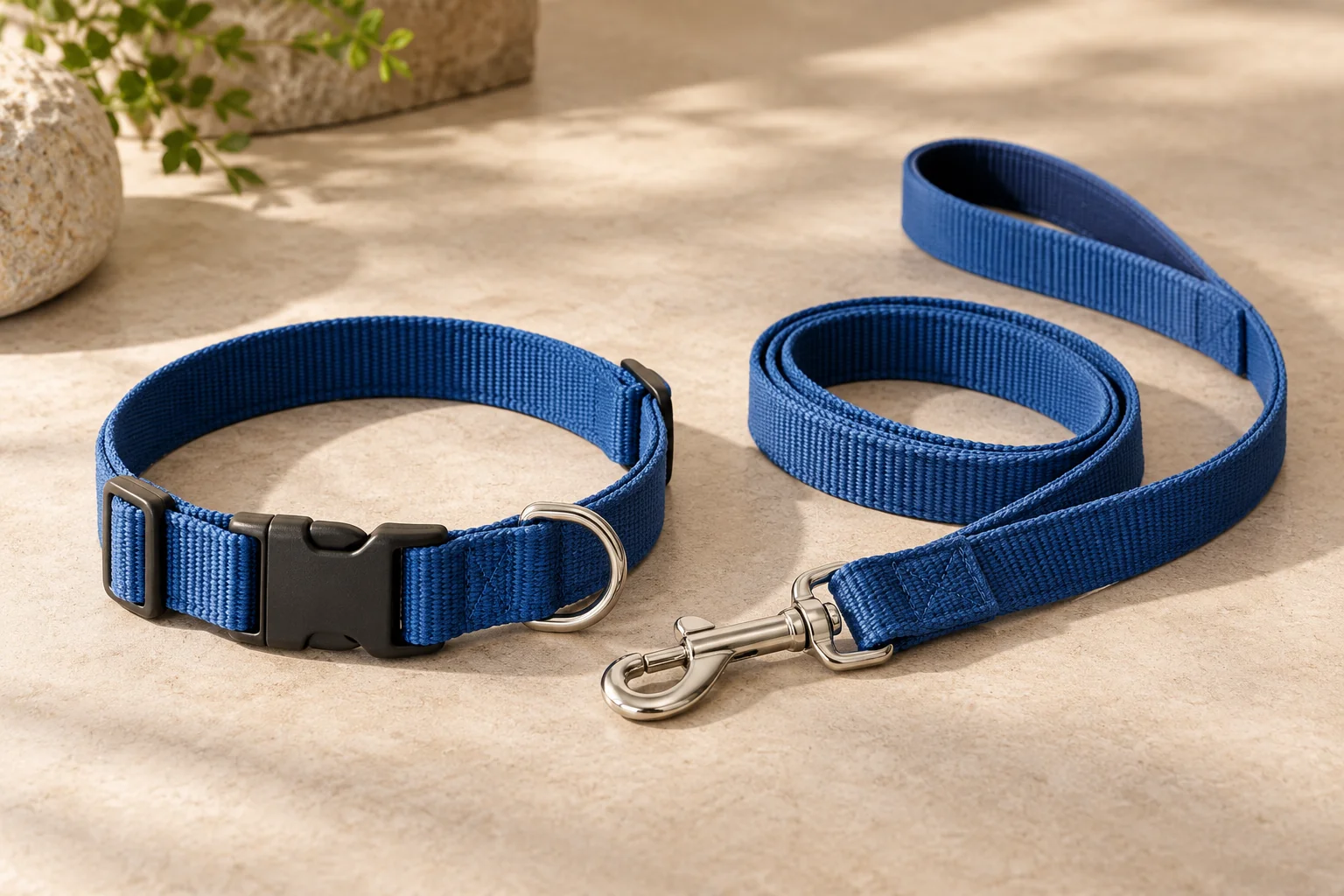
A matching collection name describes the range, but read the details for each item. Collars in different sizes can have different dimensions or hardware. The leash offered with a collection may also come in more than one construction. Our dog leash width guide covers width, thickness and rope diameter.
Look at the complete arrangement with the clip attached. Does the connector close normally? Is its operating part accessible? Do nearby components get in the way? If the pairing is unclear, ask the maker to identify the compatible attachment rather than forcing the parts together.
Fit starts with the collar’s own size guide
Measure where the collar maker directs and compare that measurement with the model’s size chart. The adjustable range, strap width and buckle arrangement are separate details to read. A size name such as small or large may mean something different in another range.
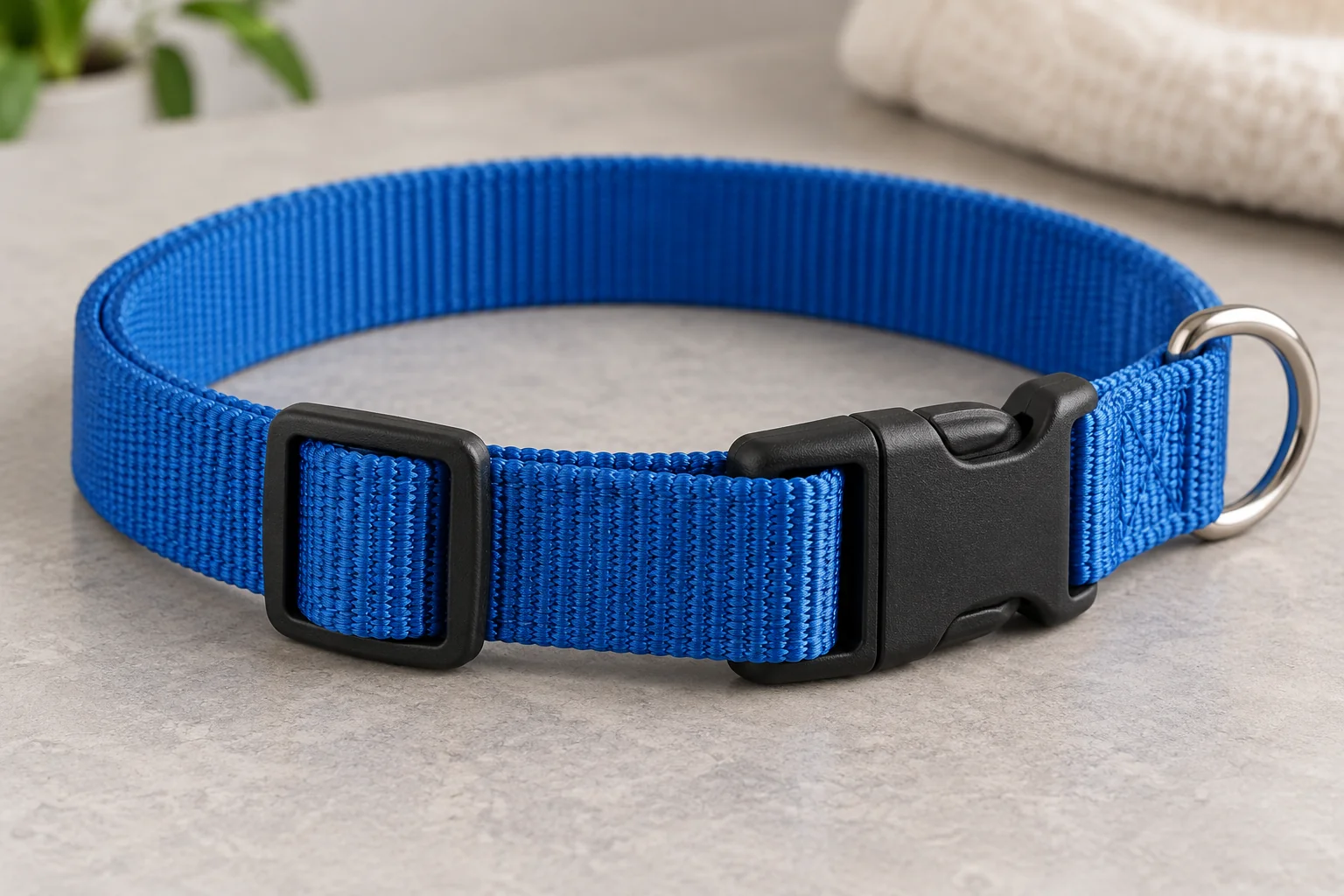
The size chart helps you choose a candidate; final adjustment follows the maker’s fitting method. If the available adjustment will not produce that fit, choose another suitable model or get fitting help.
Growth or a changed body condition can make an earlier setting inappropriate, so reassess the fit when either changes.
Padding is another feature to examine. It may change how the collar sits and which parts contact the dog. Its edges, buckle position and adjustment area belong in the fit assessment.
If the dog shows discomfort or has a health concern affecting equipment choice, ask a veterinarian about the appropriate setup.
Identify the walking attachment and operate the clip
Use the attachment point designated for a leash. Some collars provide a separate point for identification tags; that feature does not make the tag attachment a walking connection.
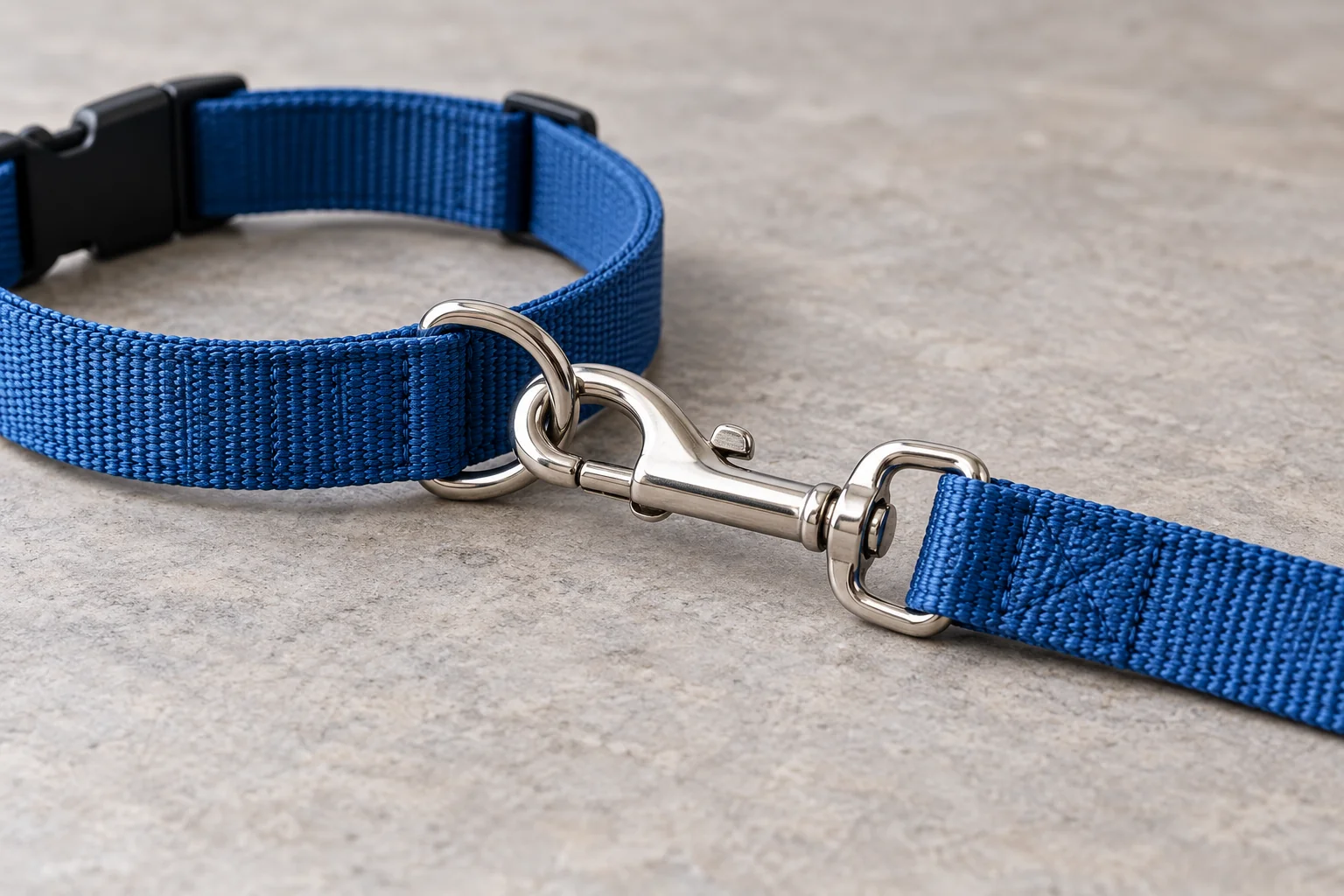
On a harness, identify the walking attachment for the configuration you use; some models offer more than one.
Bolt snaps, trigger-operated clips and locking connectors open in different ways. Try the actual mechanism with the intended ring, using its specified closure method.
Nearby tags, fabric or other hardware may get in the way of the clip. If they prevent its intended closure, seek help with the pairing before using the set.
If a component is damaged or the clip no longer operates as instructed, take the equipment out of use and follow replacement guidance.
Buckles, adjustment and visible construction
Operate the buckle at the setting you will use and inspect whether it has seated correctly.
The strap’s route through the adjuster needs to match the threading arrangement specified for the collar. Resolve incorrect threading before use.
At the leash handle and hardware return, look at the assembled construction. Note loose stitching, damaged material or an unexplained attachment detail.
Match the set to your everyday routine
A handle you can operate with your usual gloves and a closure you can reach are useful features for everyday use.
For wet or muddy outings, compare the cleaning and drying steps for the collar lining, line, handle and hardware. A wipe-clean line can still have an attached textile handle with different care requirements.
For a small dog, include the complete connector and leash bulk when examining a proposed pairing. A narrow strap can still be supplied with a substantial clip.
The leash length guide helps you compare slack and available space on the route.
If managing the dog remains difficult, seek qualified handling advice rather than expecting a heavy-duty label or different connection style to resolve pulling.
What to request before buying a set
Request enough information to assess both fit and compatibility. The following details help distinguish a complete proposed pair from a collection photograph.
| Part of the choice | Useful information | Question it resolves |
|---|---|---|
| Collar size | Measurement method, adjustable range and fitting guide | Can the actual model be fitted as instructed? |
| Walking attachment | Identified ring or loop and intended use | Where should the leash connect? |
| Leash clip | Model, operation and compatibility information | Does this connector suit that attachment? |
| Handle and line | Finished layout, dimensions and material description | Is the lead practical for the handler? |
| Care | Instructions for both items and their components | Can the routine be followed? |
| Claimed performance | Exact product, claim and supporting verification | What does the evidence actually cover? |
If you are preparing a range, keep collar and leash specifications individually identifiable within the pair. Record the actual sizes, materials and connector references offered together. When one item changes, review the pairing again rather than carrying over the old approval.
For the leash portion of a sourcing brief, the standard dog leash specification page provides a relevant starting point.
For a durability, load, dog-weight or “heavy-duty” claim, request its defined meaning and evidence for the proposed assembly. Identify the exact product and components covered by that evidence. Strap width, buckle finish and stitch pattern alone leave those claims unverified.
FAQ
What is the best dog collar and leash combo?
Choose a pair with clear fitting instructions, a compatible walking connection and a handle you can use comfortably. Compare the actual collar size and clip arrangement. A coordinated color or collection name alone does not establish the best combination.
What is the strongest dog collar available?
A strongest claim needs a defined comparison and evidence for the exact assembled collars. A photograph cannot establish that ranking.
What is the best heavy-duty dog leash?
Ask what heavy duty means for the model you are considering and what supports the claim. Assess its connector with the collar or harness, its handle and its stated intended use. The label does not establish fit or prove that it can resolve pulling behavior.
Conclusion
Before buying a coordinated set, identify the collar’s walking attachment and compare the proposed clip on that exact point. Then fit the collar under its instructions and assess the leash handle. If either fit or compatibility is unresolved, settle that detail before selecting the color or approving the pair.