The best tall cat tree for your home fits the room, offers usable resting platforms, and has installation requirements you can follow. Compare the complete footprint, access route, loading information, and replacement parts before choosing a finished model.
Choose a Format That Suits the Installation Space
A freestanding multi-tier cat tree and a floor-to-ceiling model have different installation requirements. Select a format the room can accommodate before comparing the extras fitted to it.
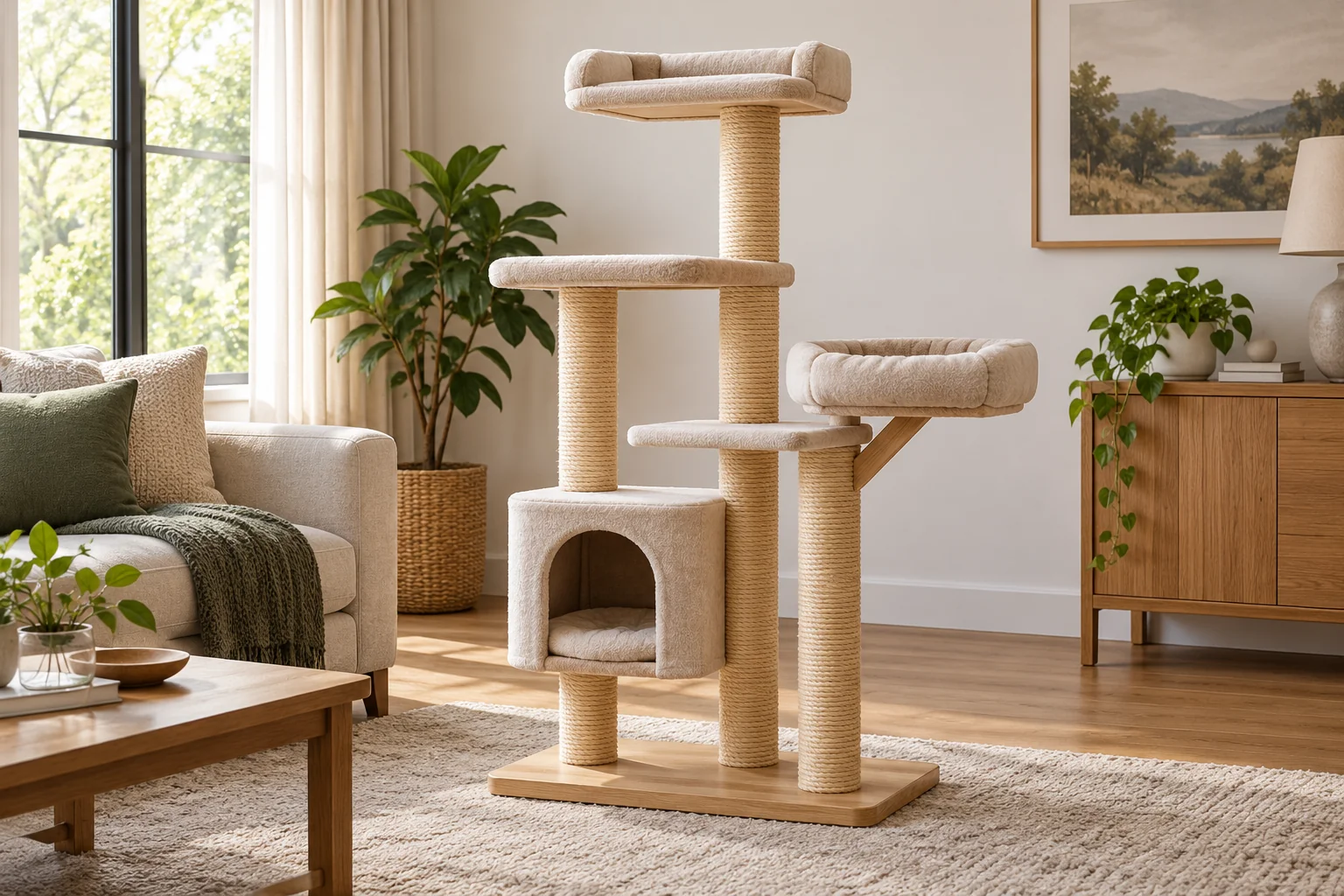
For a freestanding design, obtain the base dimensions and the outer dimensions of projecting shelves, hammocks, and other components. A compact base can sit beneath a much wider upper structure. The assembled outline is the useful measurement when placing the tree beside furniture or in a corner.
A floor-to-ceiling model needs an adjustment range that includes your room height. Its instructions must also allow the proposed floor and ceiling surfaces.
Read any wall-restraint requirement before purchase, including for a model sold as freestanding. If you rent or cannot use the intended mounting location, resolve that constraint before choosing the model.
| Format | Information to obtain | Decision it supports |
|---|---|---|
| Freestanding multi-tier tree | Full assembled outline and restraint instructions | Fit beside furniture and suitability of the mounting position |
| Floor-to-ceiling model | Permitted adjustment range and surface requirements | Suitability for the actual floor and ceiling |
| Broad tree with projecting beds | Outer width and depth, including accessories | Space around the complete product and its access points |
If two models fit equally well, compare access to their openings and removable parts in the proposed position. A lower opening facing a wall may need more room; use the assembled drawing to plan the tree’s orientation.
Assess the Complete Support and Base
Assess the base, columns, connections, and prescribed mounting as a complete support system. Use loading information and any evaluation supplied for the exact model. Base width, product weight, and column count describe the structure; taken alone, they do not establish its load limit or stability.
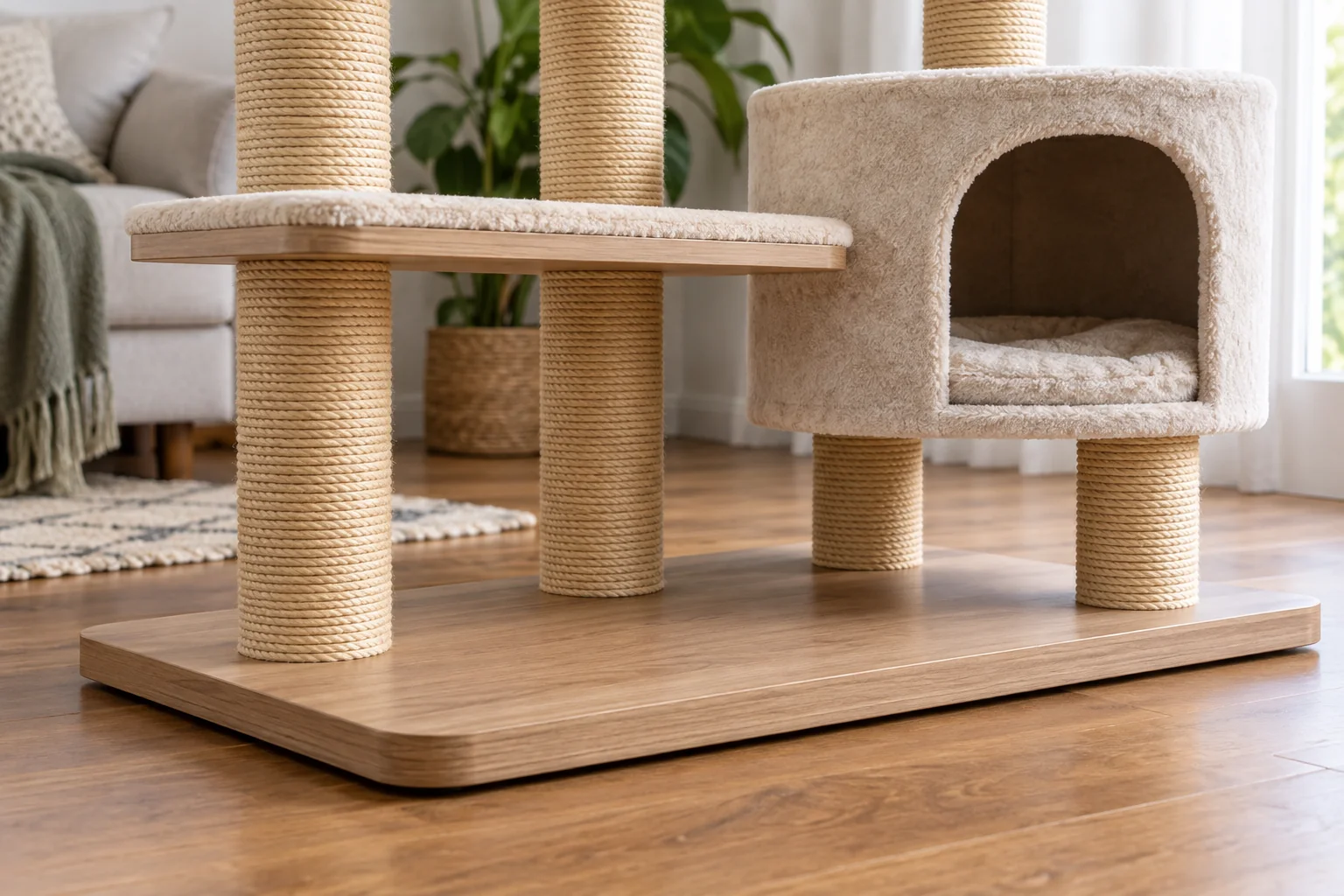
Product weight also affects handling and delivery. Read whether each loading figure applies to one platform, one hammock, or the complete tree, particularly when more than one cat is expected to use it.
Make Installation Information Part of the Shortlist
Read the required location, fixing method, and mounting surface for any strap or bracket. Where those details are uncertain, obtain clarification from the maker or a qualified installer before selecting the model.
Complete the prescribed installation before introducing the cats. If the tree rocks, shifts, or develops a loose connection, stop access until the cause is resolved. Keep the product’s care schedule with its instructions so future inspections refer to the same setup.
Compare Resting Space and Platform Access
Use clear platform dimensions to compare resting space. A padded rim, support post, or access opening can take up part of the outside measurement shown in a listing.
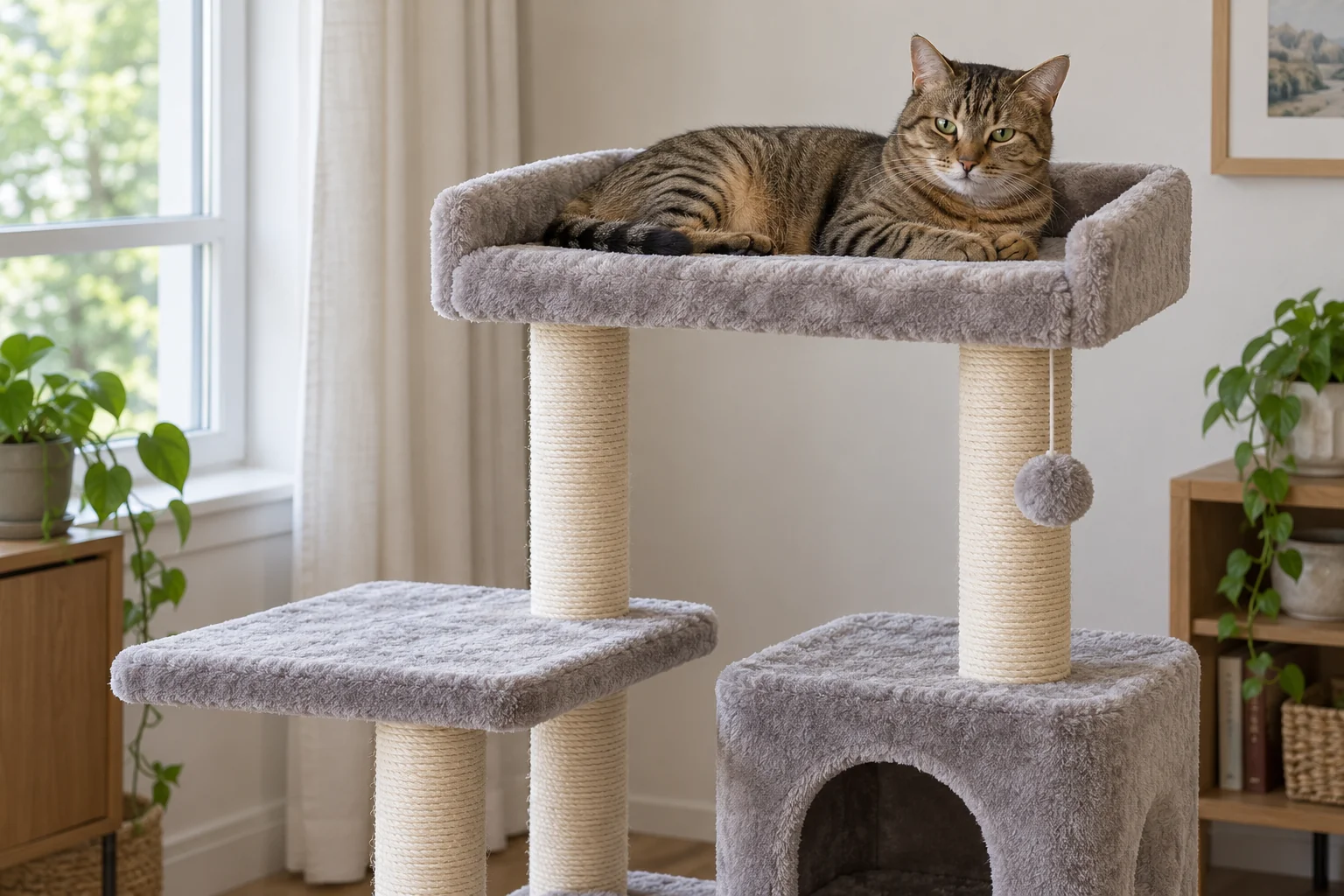
Relate that clear area to a place where your cat already rests. A photograph of its usual position can help you compare shapes: a curled posture uses a different outline from a stretched position.
Record the inside space and loading instructions for hammocks and enclosed beds separately from the platforms. For a hammock, look at the fabric in its hanging shape as well as the ring’s width.
Follow the Route Between the Features
A top-view drawing or additional photographs can reveal landings hidden in a front view. Trace access to the preferred bed and the route back down. Count only surfaces intended for that use; a decorative ledge or condo roof should not become an assumed step.
If your cat needs easier access, compare models with usable intermediate landings or a suitable ramp. Older cats may benefit from assistance reaching favored places. A change in movement or reluctance to reach familiar places deserves veterinary advice.
In a multi-cat home, consider separate resting and access options. Several beds served by one narrow route may not suit cats that choose to rest apart.
Look at the Scratching Sections Separately
A tall tree may have short covered posts between its shelves. Look at the exposed scratching sections and the space available to approach each one.
The covering and orientation should relate to surfaces your cat already uses. Photographs should show those details clearly, including interruptions from platforms or uncovered fittings. If scratching is the main gap you need to fill, a separate post or pad may be worth comparing alongside the tree.
Our guide to cat scratching post formats and coverings addresses that separate choice.
Read Material Claims Alongside the Construction Details
A listing may name wood, board, tubing, fabric, and rope while leaving their location unclear. An assembled drawing and parts description can show which components form the frame and which are coverings or removable accessories. Compare that arrangement with the supplied sample or product photographs.
Use the parts diagram to identify the fasteners at each connection and how the customer assembles or maintains them.
For commercial sourcing, compare the requested construction with the sample and record discrepancies. Use that record to describe the verified components in the listing. A different supplied covering or connector is a specific issue to resolve before approving the description.
Find Out What Can Be Cleaned or Replaced
Replacement parts and care instructions can decide between two otherwise suitable trees. Find out which cushions, covers, scratching sections, and fittings the maker supplies as replaceable parts.
Record the cleaning method stated for the cushion and any separate cover, including whether each is machine washable.
For replacement posts, keep the model reference, end-connection details, and parts list supplied by the maker. Use them when ordering a matching component.
Consider access for cleaning in the planned position, too. A removable lower cushion behind furniture is less convenient than the same cushion in an accessible opening.
Ask which parts are currently available and what the ordering terms are. Keep those details with the parts list.
Compare the Information Supplied with the Finished Model
Before committing to a tall tree, put the drawing, instructions, loading scope, and care information for your selected model together. Resolve any gaps while it is still on the shortlist.
For a retail purchase, include delivery dimensions, assembly access, and the seller’s return terms in the decision. A large carton may need a different route into the room from the assembled furniture. Clear terms matter if the delivered version differs from the specification you used to choose it.
For private-label or range development, review an assembled sample against the agreed drawing and parts list. Keep installation conditions and component limits with the final product description. Request any claimed evaluation with its sample, configuration, method, and result identified, and keep the transport-packaging record separate.
Supply the household requirements and shortlist drawing with the brief.
FAQ
What is the best cat tree for very large cats?
Compare the cat’s usual resting outline with the clear platform area, and read the loading scope for any hammock or projecting bed it will use. Include access to that resting place in the comparison.
Where can I buy a high quality cat tree?
Compare sellers that provide usable product drawings and instructions, explain delivery and return terms, and answer questions about care or replacement parts. Obtain any missing details for the model you intend to order.
Conclusion
Put the drawings and instructions for your two strongest candidates side by side. Start with the resting place your cat is most likely to use and follow its access route; then resolve any missing component limit or mounting detail with the seller.