Choosing the best rubber dog chew toys starts with the activity: chewing, retrieving or working food out of a toy. Shortlist products described for that activity, then compare the exact size, construction and care instructions. Shape alone cannot settle the choice, and a tough label supplies little detail about a particular model.
For an existing toy, the same information helps you identify whether its intended use matches the routine you have planned. Keep the model and size option with your notes so the decision concerns the product you own, rather than a similar-looking example.
Start With the Intended Activity
Decide what you want the toy to do before comparing shapes. A product intended for fetching, one intended for chewing and one intended for food filling may each be made with rubber-like materials. Read the activity stated for the particular model.
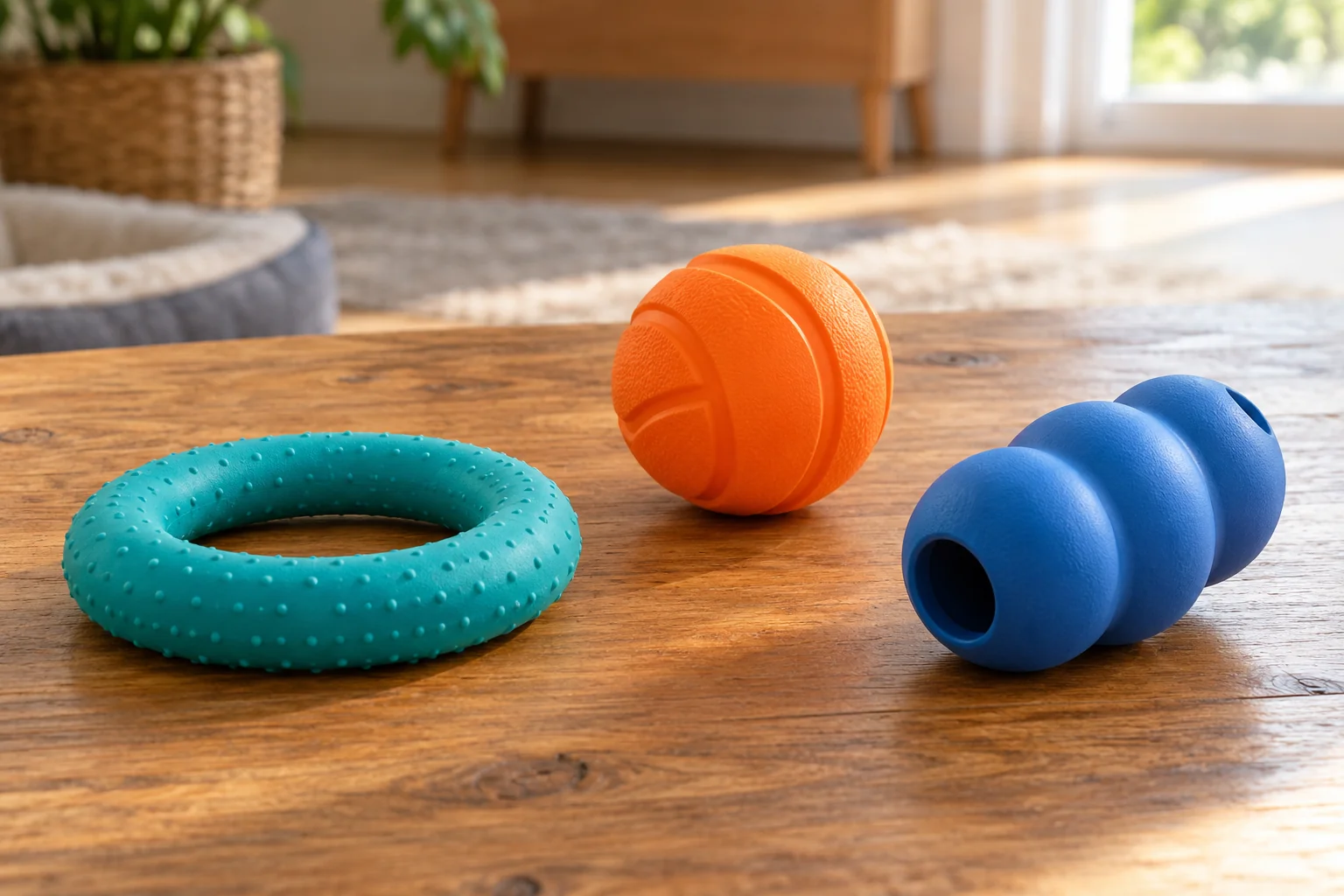
Be specific about the routine. Will you bring it out for an interactive game, use it as a food toy under its instructions, or offer a product intended for chewing? This gives you a clear reason to include or remove an item from the shortlist.
Keep observation separate from approval. A dog may carry a toy, target one end or begin pulling at an added rope. Those behaviors help identify what the dog is doing with it; enjoying an item does not establish that the item suits that use.
If retrieving changes into dismantling the toy, end that activity and remove the product from access. The next purchase needs to address the mismatch you observed. Ordering a larger multipack of the same model leaves that decision unresolved.
Choose a Shape You Can Use and Maintain
Rings, elongated bodies, hollow forms and balls give you different features to compare. Look at the whole design, including its openings and attached parts, rather than assigning one activity to every product with the same outline.
Rings and elongated shapes
For a ring, consider the overall dimensions and the opening as separate features. For a bone or stick shape, include the ends and any narrow section in your comparison. The maker’s intended-use information should explain the activity for that model; the shape does not prove that pieces cannot be removed.
Where a design includes a handle or a place for a person to hold it, read the directions for that feature. Keep interactive-use guidance with the product instead of assuming every ring or elongated toy can be used in the same way.
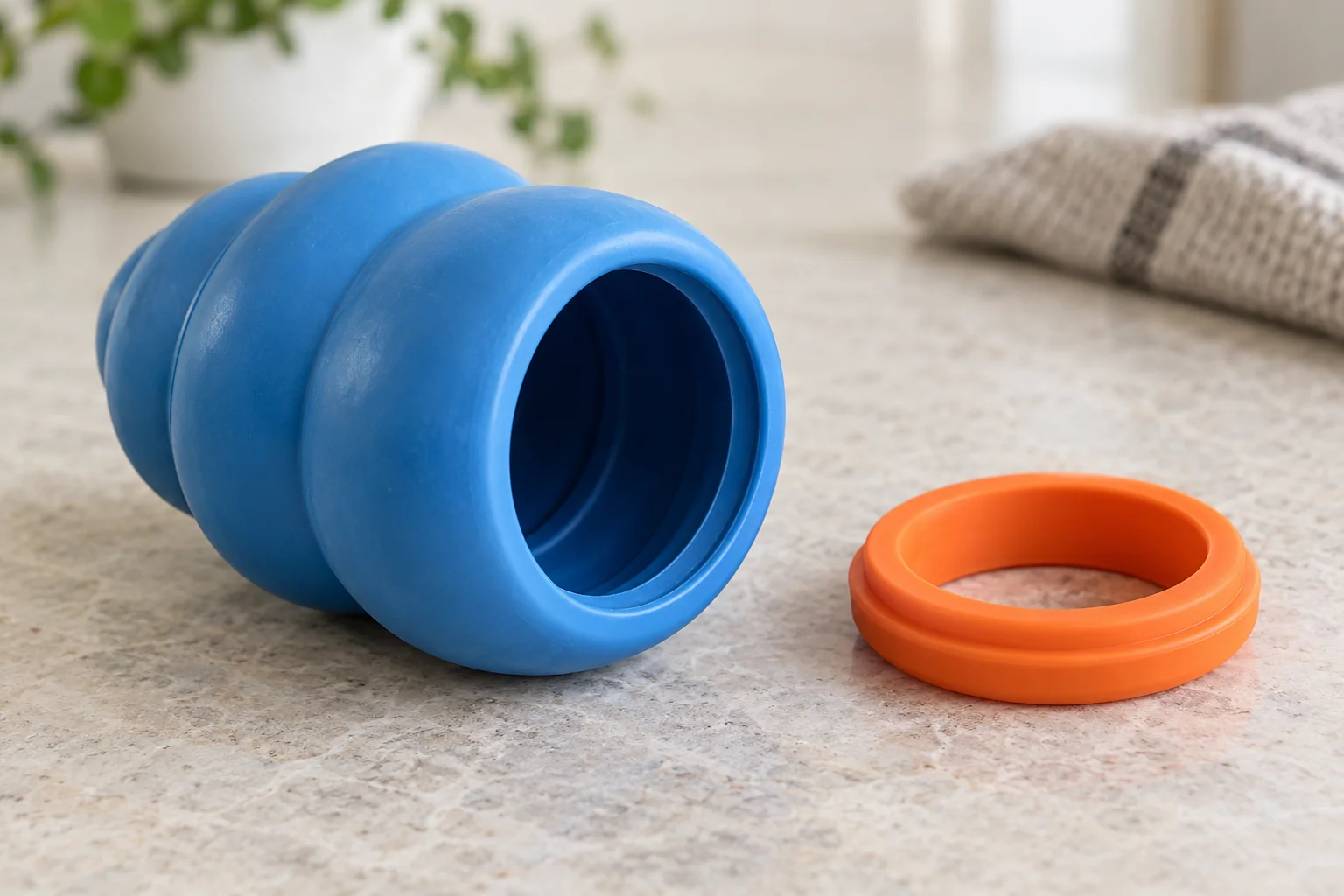
Hollow and food-filling designs
A hollow form adds an interior space, an opening and a cleaning question. Before buying it for food use, find out what the instructions allow and how the inside should be cleaned. Freezing or dishwasher use needs its own product guidance.
Opening size is one detail to compare. It does not by itself tell you how challenging the toy will be, how long it will occupy a dog or how well it will resist chewing. Keep those separate from the visible dimensions.
Balls and combined forms
For a ball, identify whether the product is intended for retrieving, chewing or another stated activity. Hollow and solid constructions need their own descriptions. Floating, bounce and launcher compatibility are additional claims to verify for the actual model.
The rubber chew toy formats and construction options page provides category context for a sourcing comparison. Use the relevant shapes to frame an inquiry about a proposed item, with its specific use and construction still to be established.
Read Size, Firmness and Construction Together
Use the actual model and size option when comparing dimensions. Small, medium and large belong to individual product ranges. A gallery showing several sizes can make two listings appear comparable even when the selected variations differ.
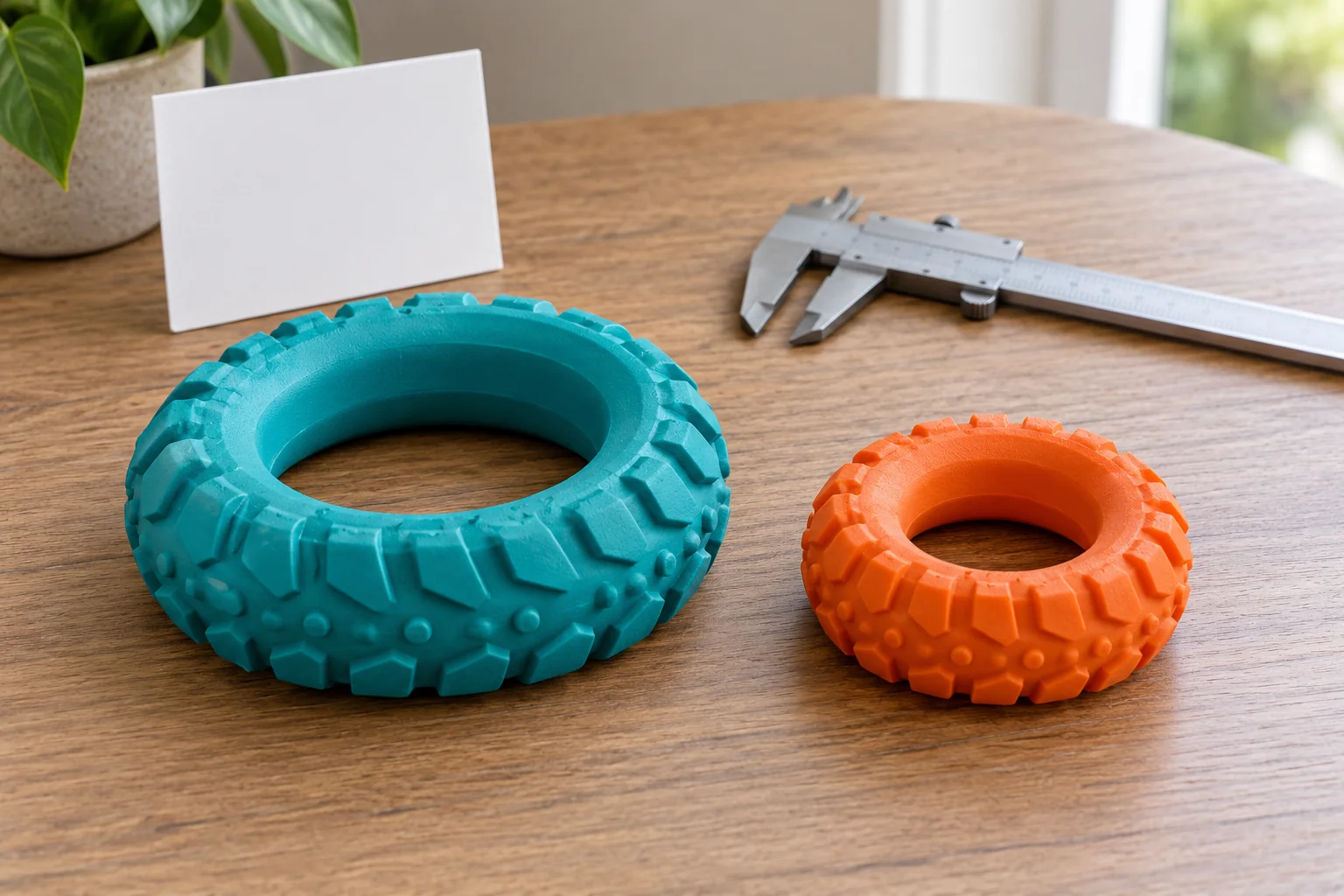
Size needs attention because a toy that fits entirely into a dog’s mouth can present a choking risk. If suitability is uncertain, keep the product out of use and seek guidance from the maker or your veterinarian. Do not test swallowing by placing the toy in the dog’s mouth.
Firmness is another piece of information. You can describe how a sample feels in your hand, but pressing a thumbnail into it or tapping it against a knee cannot approve the complete product. Toys that are too hard can damage teeth; the question belongs alongside the dog’s needs and the exact product’s guidance.
Material wording may also need clarification. The dog toy materials guide explains the distinction between a material family and a finished construction. That broader context is useful when two listings use different material terms for products you are trying to compare.
For a specification, keep dimensions, weight and any measured firmness information attached to the sample reference. Ask how a reported value was obtained when it matters to the purchase. Avoid transferring that value to a different shape or treating it as a universal suitability limit.
Account for Openings, Seams and Added Parts
Include each visible connection in the product description. A rope passing through a molded body, a squeaker inside a shell and a separate handle add components that need their own information. A photograph of the outer shape may leave those details unclear.
For a sample review, follow the connection from one part to the next. Note where the rope enters the body, where a joint is visible and whether a component sits inside another. These observations help you ask about the assembly without assuming how it was manufactured.
A one-piece description can simplify the component list, but it supplies no service-life guarantee. Likewise, a visible seam does not tell you how a product will perform compared with every seamless design. Keep performance claims tied to evidence for the specific item.
During use, loose or damaged components call for removal of the toy and a replacement decision. Keep an uncertain item apart from usable equipment. A damaged product should not return to the toy basket while you wait to decide what to do with it.
Compare a Shortlist on the Same Basis
Choose the fields that matter to the purchase and use them for every candidate. This makes the comparison useful even when the products use different descriptions. It also helps identify why one item remains on the list while another needs clarification.
The following fields work for a household purchase or a buying brief.
| Field | What to keep with each candidate |
|---|---|
| Identity | Model, selected size and product code |
| Activity | The maker’s stated use and restrictions |
| Shape | Overall form, openings and relevant dimensions |
| Construction | Main body, added components and connections |
| Material claim | Exact wording and any supporting information needed |
| Care | Instructions for the complete product |
| Replacement | Conditions that call for taking it out of use |
For home use, concentrate on the unresolved field that affects your decision. If you cannot find out whether a product is intended for chewing, that question comes before its color or pack quantity. Keep the answer with the model rather than relying on a review of a different version.
For a retail or wholesale order, use the same fields across the proposed assortment. Give each size or construction its own reference. If a sample changes, identify the component or dimension that changed before treating it as the same approved item.
Natural, durable and heavy-duty remain claims to interpret for that product. A material-origin description does not establish chemical suitability, and an endurance claim needs more than an adjective. Ask for support relevant to the wording you intend to use in a listing or specification.
Make Care and Replacement Part of the Routine
Store the product instructions where you can find them after purchase. Use the cleaning method given for the complete toy, including any rope, insert or enclosed component. A method suitable for one rubber-style product may differ from the instructions for another.
Before and during use, look for damage such as broken rubber, cracks, an opening joint or a loose added part. Follow the maker’s replacement guidance and remove the toy when your dog starts pulling pieces away. Use condition and instructions rather than a promised number of weeks as the basis for that decision.
Put the toy away when its planned activity ends, in a place the dog cannot access. Keep damaged items separate so they cannot accidentally return to use. If part of a toy may have been eaten, contact your veterinarian for advice instead of relying on a home treatment from a buying guide.
For replacement orders, retain the model, size and the reason you are changing it. That helps you distinguish buying another suitable item from repeating a product choice that did not work for the intended routine.
FAQ
Are natural rubber toys safe for dogs?
The word natural does not approve a finished toy for a particular dog. Identify the model’s intended use, dimensions, construction and instructions. If a chemical or material claim is central to your decision, ask what supports that claim for the item you are considering; color, smell and feel cannot settle it.
What is the most durable rubber dog toy?
There is no universal winner established by this guide. Compare evidence and replacement guidance for the actual models on your shortlist. Keep any reviewer’s experience tied to the product and conditions described, rather than turning one dog’s result into an expected lifetime for your own purchase.
What is a good rubber chew toy for a puppy?
Start with a product whose maker identifies it for the puppy’s stage and size, and follow its use instructions. If the choice is unclear, ask your veterinarian. A puppy label does not establish a single rubber formulation or a fixed age at which every dog should move to another firmness.
Can I use a rubber fetch ball as a chew toy?
Read the stated use for that exact ball. Retrieving and prolonged chewing are different activities, even when the same dog enjoys both. If chewing is outside the product’s instructions, select a product intended for that activity rather than using an uneventful fetch game as approval.
Conclusion
Choose the candidate you are closest to buying and resolve its most consequential information gap. If its use or size remains unclear, keep it out of play while you obtain an answer or select another product. If you are replacing a damaged toy, record why it failed your routine before ordering the same design again.