Dog chew toys can use molded rubber, nylon, rope, fabric or several materials in one assembly. Read the material label alongside the construction: a solid body, a hollow shape, a woven strand and a sewn cover describe different products. The complete toy’s intended use matters as much as its main material.
A useful comparison starts with the component your dog will actually chew. From there, identify what is attached to it and how the product is meant to be used. This guide focuses on chew-toy constructions, with practical ways to read a listing and compare a sample. Edible chews need their own ingredient and feeding information.
Separate Material Names From Toy Construction
Material describes what a component is made from. Construction describes its shape and assembly. A molded ring and a hollow treat toy may share a broad material label while having different dimensions, openings and instructions.
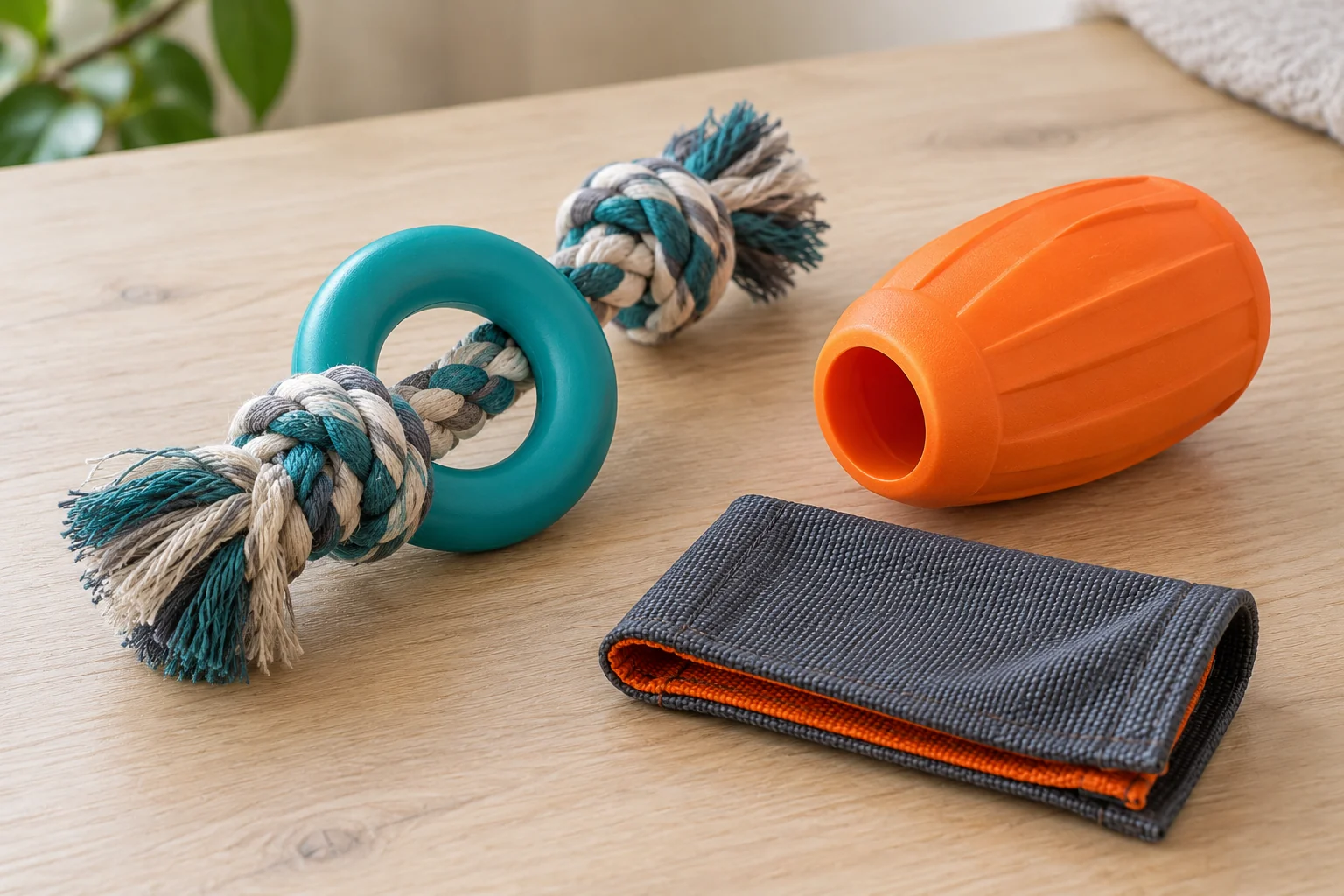
Start by breaking the product description into parts. Is the main body solid or hollow? Is a rope threaded through it? Does a fabric cover contain a separate insert? These details give you something specific to compare before deciding which product to investigate further.
Keep the use description beside that component list. A toy sold for retrieving or supervised tug has a different stated purpose from a product described for chewing. Round shapes and bone shapes appear across product ranges, so the outline alone gives an incomplete answer.
The wider dog toy materials guide covers components across plush, fetch, rope and other toy categories. Here, the question is narrower: which material forms the chewing surface, and what else is part of that chew toy?
For an online purchase, save the selected model and variation with the description. A gallery may show several constructions while the selected item contains only one. Keeping that record also helps identify the same product when it needs replacing.
Rubber and Other Flexible Molded Materials
Rubber-style chew toys include molded rings, elongated bodies and hollow forms. A listing may name natural rubber, synthetic rubber or a rubber-like material such as TPE, short for thermoplastic elastomer. Record the term the manufacturer actually uses for the model you are considering.
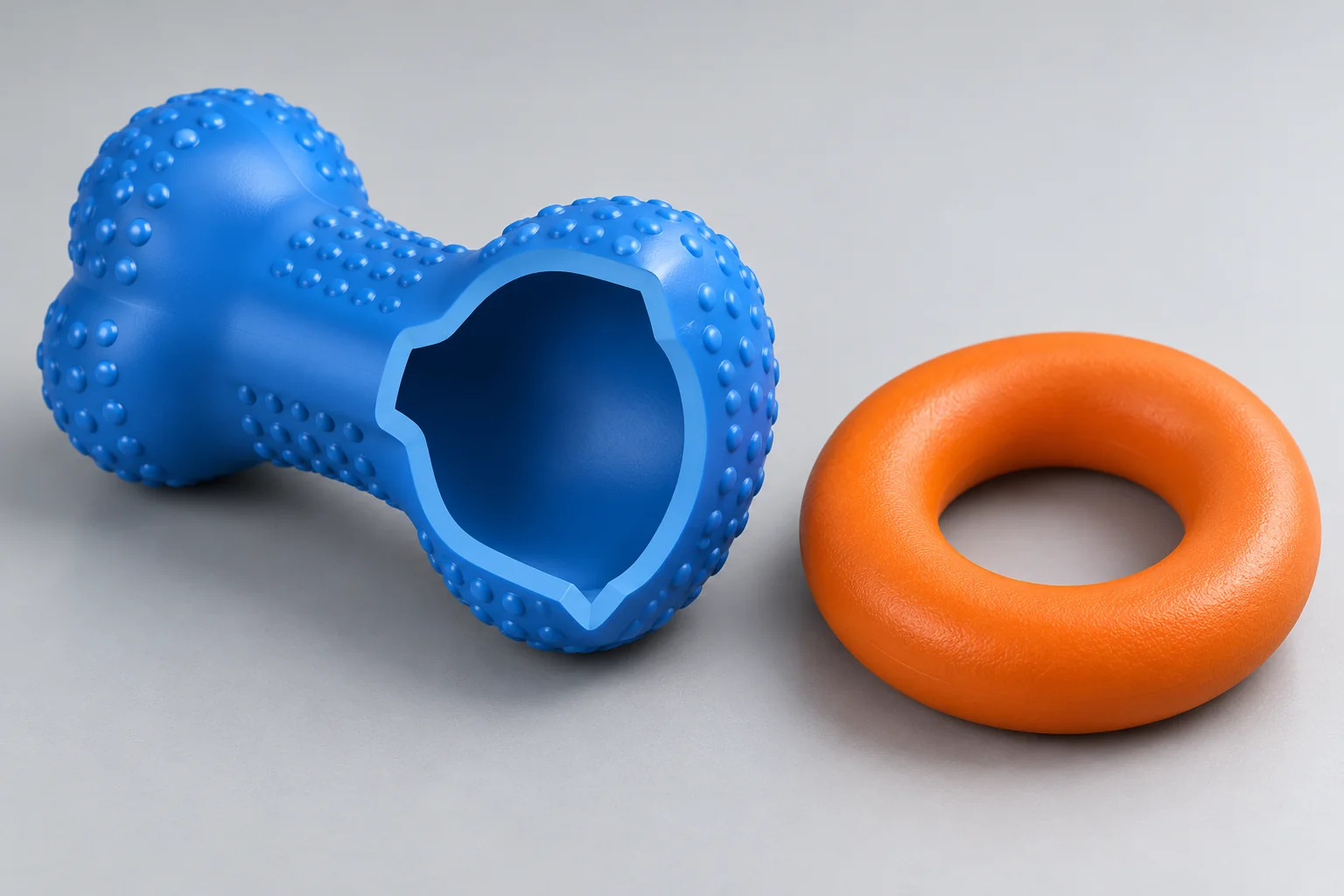
The construction then adds useful detail. A hollow body has an interior space and openings; a solid body has a different arrangement. Raised ribs, narrow sections and handles change the shape you can examine. These are separate fields in a product description, even when the main material name stays the same.
When comparing two samples, describe observable differences plainly. One might feel firmer in your hand, have a wider opening or weigh more. Keep those observations tied to the samples. Predicting which will last longer or suit a particular dog requires more than a material name or a hand-squeeze comparison.
For a sourcing project, the rubber chew toy formats page provides category and specification context. It helps frame questions about the proposed construction; exact material, size and use information still belongs to the item being discussed.
Treat additional features individually. Food filling, freezing, water play and dishwasher cleaning each need instructions for that finished product. A rubber-like feel does not identify all of those uses. If a feature is central to your purchase, make it part of the initial comparison rather than discovering its limitations afterward.
Nylon and Other Rigid Components
Solid nylon chew components are different from woven nylon fabric. A molded component has a three-dimensional shape, while a textile is made from fibers and may form a shell, strap or attachment. The word nylon should identify which part of the toy it describes.
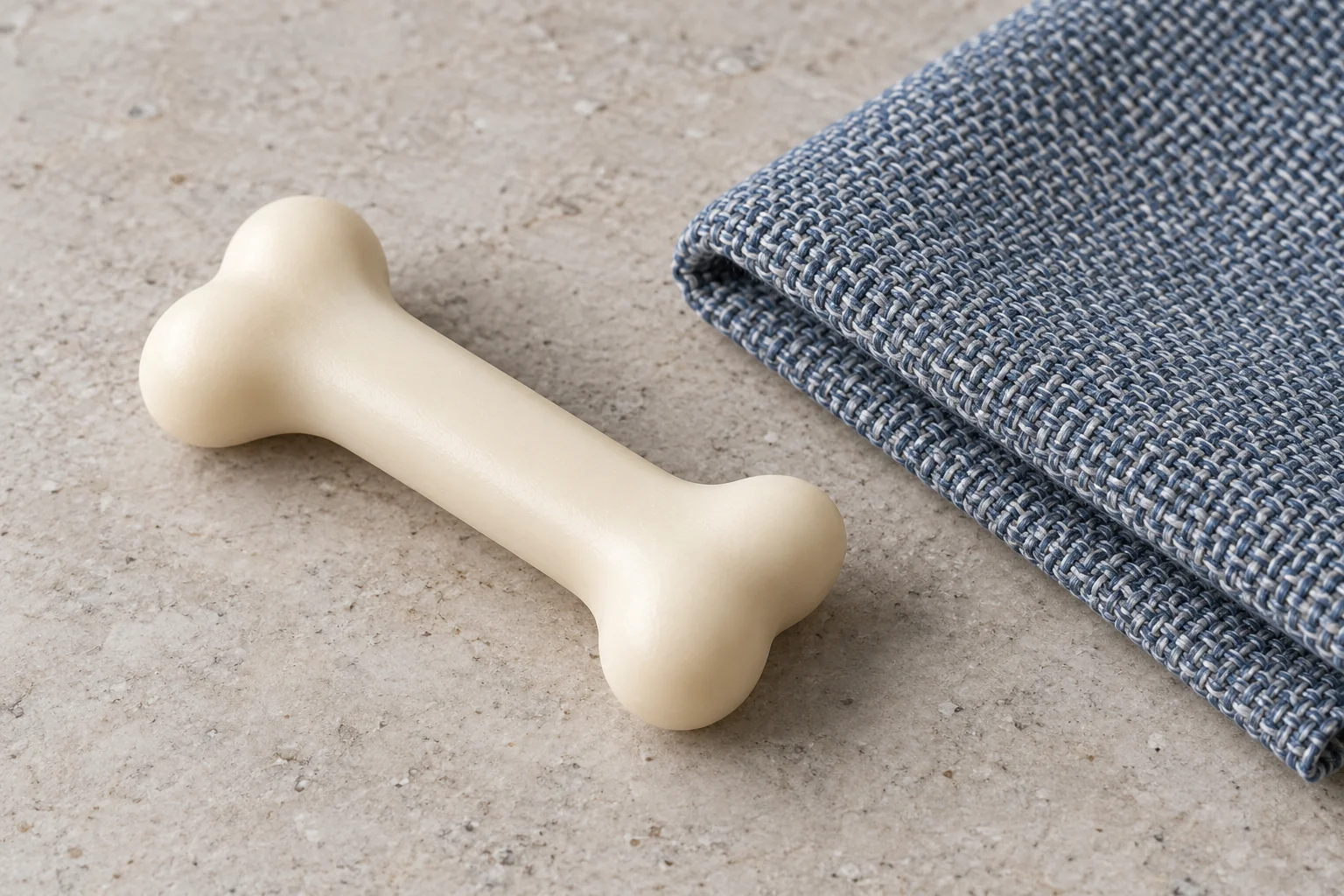
For a molded item, the useful description includes the overall dimensions, surface shape, openings and ends. For a textile component, the useful details include the fabric layers, seams and connection to the rest of the assembly. A photograph of one cannot stand in for information about the other.
Manufacturers may offer several constructions or use categories within a range. Follow the information for the selected model rather than transferring an instruction from another item with the same brand or material. Keep any stated size or use restrictions with that model’s record.
Hardness deserves attention because toys that are too hard can damage teeth. A material comparison cannot approve a rigid toy for a particular dog. Where suitability is uncertain, get appropriate guidance before use rather than choosing solely because a listing promises a longer-lasting chew.
Rubber and hard plastic toys are not food. If a dog starts removing pieces, take the product out of use. Worn edges and missing material need a replacement decision, rather than an assumption that small fragments are intended to be eaten.
Rope, Fabric and Mixed-Material Toys
Rope and fabric describe fiber constructions. For a rope toy, look for the stated fiber or blend as well as the rope’s diameter, strand arrangement, knots and end finish. Cotton and polyester are material descriptions; twisted, braided and knotted describe aspects of construction.
A rope may be the main body or one component in a larger toy. Follow its route through the product: a handle, a loop through a molded body and a sewn attachment present different places to examine. The connection matters alongside the exposed length of rope.
Fabric-covered toys need the same component-based reading. Identify the outer shell, seams and any fill or sound insert. A label describing a reinforced fabric does not explain how an opening, attached limb or internal part is contained.
For a composite toy, list each material against its location. A rubber body with a rope through it needs information about both parts and their connection. A fabric sleeve around another component needs information about the sleeve, the enclosed part and how they stay together.
Keep the intended activity in view when reading these descriptions. A rope-and-fabric toy offered for interactive play should be evaluated for that use. Adding it to a shelf of chew products does not change its instructions. Remove a toy with fraying rope, an opened shell or exposed internal parts from access.
Compare Products With the Same Questions
Put the same fields beside each candidate. This makes missing information visible without turning broad material names into a safety or durability ranking. It also keeps an attractive extra feature from overshadowing the product’s basic use and construction.
The table below gives a starting point for a side-by-side comparison.
| Construction | Information to identify | Detail to compare on the actual item |
|---|---|---|
| Molded rubber-style body | Stated material and intended activity | Solid or hollow form, openings and surface shape |
| Solid nylon component | Which component is nylon | Dimensions, ends and surface condition |
| Rope assembly | Fiber or blend and construction | Strands, knots, end finish and attachments |
| Sewn fabric body | Shell and internal components | Seams, attached parts and containment |
| Mixed-material toy | Each component and its location | Connections and care instructions for the assembly |
For a household purchase, a short note may be enough: model, size option, stated activity and the feature you are comparing. You can then ask a focused question if the listing leaves something unresolved.
For a retail or wholesale range, keep a separate line for each model and variation. Put dimensions, component descriptions and any required documentation alongside the sample reference. This gives a supplier a defined item to discuss instead of a request for the best material in general.
If a supplier proposes a substitution, identify exactly what changes. A new shell, rope fiber or molded component should be described against the original sample. Matching color or outline leaves the material question open.
Use product-specific evidence for product-specific claims. A statement about abrasion, chemical composition, measured hardness or service life needs information that supports that statement for the relevant item. A sample observation can help describe a product, but it does not replace that documentation.
Follow the Finished Toy Through Use and Care
The finished assembly determines which care instructions apply. A fabric shell, internal insert and attached rope may all belong to one product, so read the instructions for the complete toy before choosing a cleaning method.
Keep the instructions or product record available after purchase. That is especially useful for similar-looking toys stored together. Identify which item is approved for a particular cleaning method instead of applying the same treatment to the whole basket.
Inspect condition before and during use. Broken rubber, rough or damaged rigid parts, fraying rope and open fabric seams call for removing the affected toy and following replacement guidance. Keep damaged items apart from equipment that remains in use.
Supervision provides an opportunity to notice a change and intervene. It does not supply missing product information or make a damaged toy acceptable. If your dog consumes a chunk of toy material, contact your veterinarian for advice. This guide does not provide a home treatment procedure.
FAQ
What is the best material for dog chew toys?
Compare specific products described for the activity and dog you have in mind. Once their purpose is clear, use construction and component information to narrow the choice. If a listing supplies only a material name, the useful next step is to obtain the missing product details rather than declare a category winner.
Does nylon always mean a solid chew toy?
No. It may describe a molded component, woven shell or another part. For a replacement purchase, use the model and component description from the original product. Searching for the word nylon alone can return items with substantially different constructions and intended activities.
What fabric is safe for dogs to chew?
A fabric name cannot establish that a finished toy is appropriate. Look for the exact product’s intended use and inspect its assembly and condition. A loose fabric sample or household textile has no equivalent toy-use information, so it should not be treated as an interchangeable substitute.
Can I compare rubber and nylon toys by hardness alone?
Hardness leaves out size, shape, components and intended use. Ask what a stated hardness value describes and how it was measured if that value is part of a buying specification. A hand-feel comparison between two items does not provide a universal threshold for choosing a chew toy.
Conclusion
Take one product description and identify what forms its chewing surface. Then account for the attached or enclosed components. If the listing leaves one part unexplained, resolve that specific gap before comparing another material. You will have a clearer product to evaluate and a more precise question to ask.