Choose a tennis-style dog ball by its intended use, actual size and condition, with guidance for the dog that will use it. The phrase dog safe tennis balls describes a buying goal, not a guarantee attached to every product in the category. A suitable fetch routine also needs a way to recover the toy, remove damaged items and put the ball away after play.
Start with the exact product and your dog’s behavior around it. A dog that retrieves and releases a ball presents a different choice from one that settles down to strip off its covering. The following sections help you decide what to ask before buying and when to stop using a ball you already own.
What a Dog-Safe Label Tells You
Read a safety statement as a claim about a particular product. Find the model, intended activity and instructions that go with it. “Pet friendly,” “non-toxic” and “non-abrasive” describe different claims; none supplies the rest of the product information.
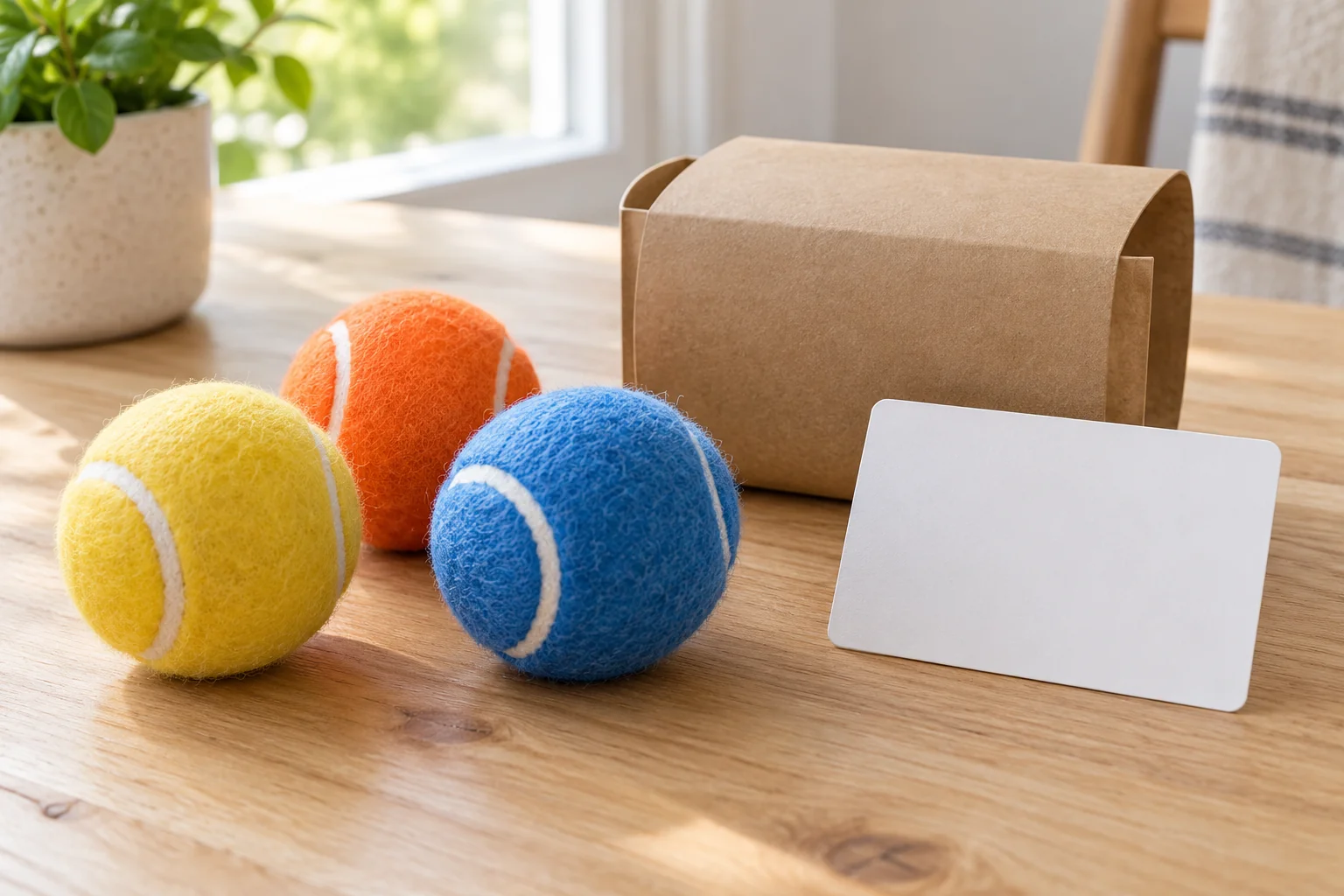
For example, a listing may describe a fetch toy while the package photograph shows a dog holding it. Keep the written use in view. Carrying a ball during a game and chewing it for an extended period are different activities, and the photograph does not resolve that distinction.
If a material claim influences your purchase, ask the maker what supports it for that model. Useful documentation identifies the product or component and what was assessed. A report for another ball or an unspecified material leaves a gap between the evidence and the item in your basket.
Color, odor and a soft feel are observations, rather than chemical tests. They cannot identify an adhesive or establish whether a dye is appropriate. Equally, lack of information does not prove that a ball contains a particular harmful substance. Keep the missing question specific instead of declaring the whole category toxic or non-toxic.
Match the Ball to Your Dog First
Use the maker’s size guidance for the particular ball, with its actual outside diameter. Small, medium and large are product-range labels, so keep the model and size option together. The dog ball size chart explains how to distinguish ball dimensions from package measurements and how to read the selected variation.
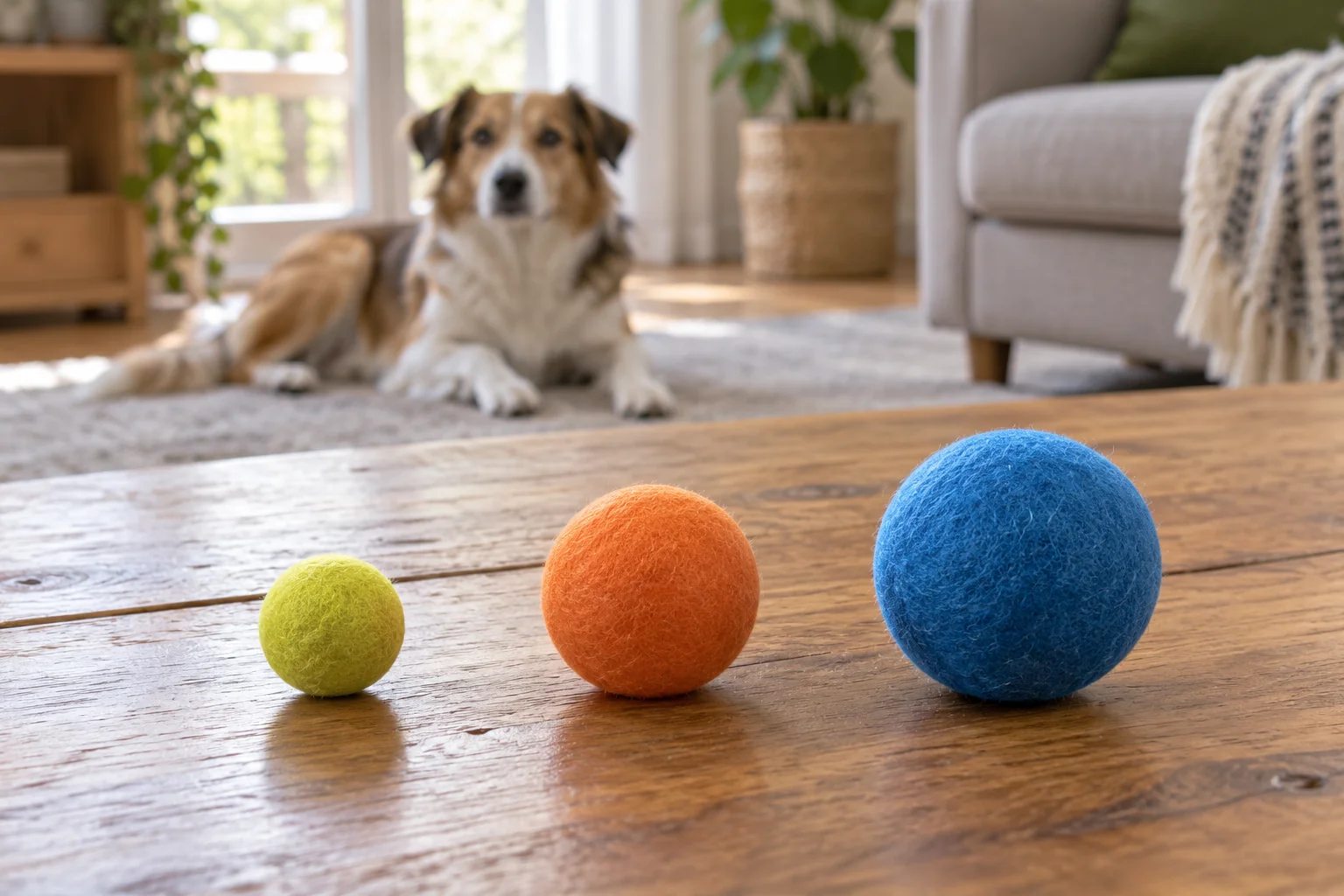
Size matters because a ball that can fit entirely into the dog’s mouth can present a choking risk. There is no universal breed-to-diameter recommendation in this guide. If fit is uncertain, keep that ball out of play and ask the manufacturer or your veterinarian for guidance.
Do not put a ball into the dog’s mouth to test swallowing or try to establish a safe compression limit by squeezing it. Those actions do not provide a sound fit assessment. Record the listed diameter and product details instead, so you can discuss the actual model when asking for help.
In a household with several dogs, plan for which dog can reach each toy. A ball bought for one animal may also be accessible to another. Separate storage or separate games can help you manage different size requirements without assuming one shared product will suit them all.
Launcher fit belongs on a separate line in your notes. Record the launcher model and the ball variation it supports. Equipment compatibility answers an equipment question; the dog still needs an appropriate toy.
Covering, Seams and Core: How Wear Shows Up
Look over the whole ball before use, including the covering, its edges and any visible seam. Loose felt, cracks, detached pieces and an opening joint are concrete reasons to take it out of play. Compare the condition with the maker’s replacement guidance rather than deciding how much more use the ball might survive.
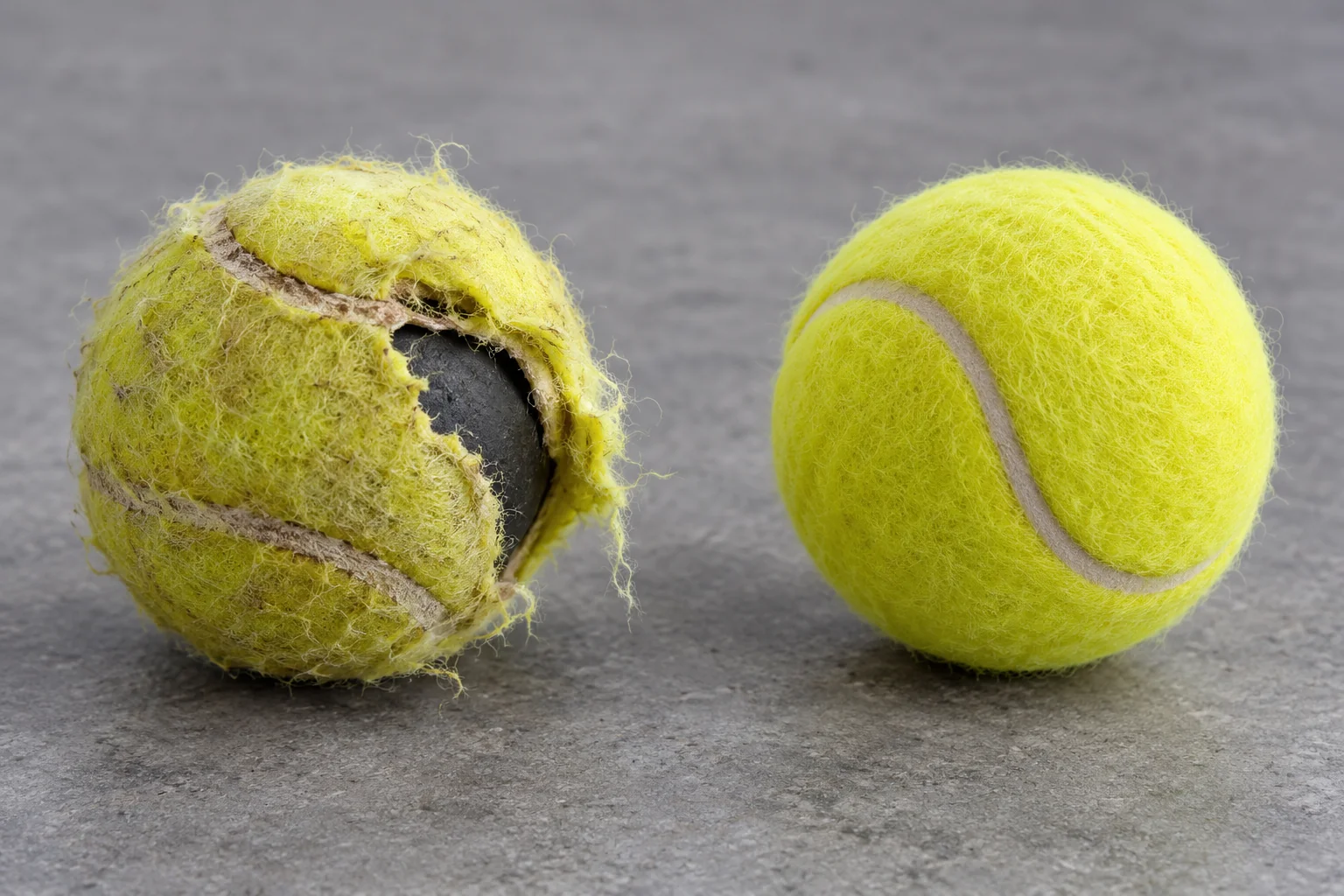
Repeated chewing on a tennis ball’s abrasive covering can wear teeth, and dirt or sand can add to the abrasive surface. A soft-looking cover is therefore a poor basis for assuming the toy is gentle on teeth. This guide does not assign an abrasion rating to a product from its appearance.
Use the following observations to decide the next action. They identify visible problems; they are not a way to certify a ball that looks intact.
| Observation | Action |
|---|---|
| Covering is peeling or coming away | Remove the ball from play and follow replacement guidance |
| Core is cracked or a seam is opening | Keep the damaged ball away from the dog |
| A piece is missing | Find out whether it was left behind or may have been swallowed; contact a veterinarian if ingestion is possible |
| Cleaning or care method is unclear | Obtain the instructions for that model before treating it |
Cleaning and repairing damage are separate tasks. Washing a ball does not close a split core or reattach a loose covering. Use the stated cleaning method for the model, including any drying or storage requirements. Avoid transferring dishwasher, soaking or disinfectant advice from another toy with a different construction.
Set Up Supervised Fetch and Storage
Bring out the ball for a planned game and put it away afterward. Stay close enough to follow what the dog is doing with it. If retrieving changes into pulling off the covering or chewing pieces away, end the ball game and remove that toy from access.
Keep spare balls under your control during play rather than letting the dog gather several in its mouth. A reliable release cue can help with recovering the toy. Where recovery is difficult, get suitable training advice before building the game around repeated ball returns; avoid turning removal into a chase or keep-away game.
Supervision helps you notice a change and act. It does not establish that an unsuitable size, a damaged ball or the wrong type of toy is acceptable. You can follow the dog’s behavior without using a successful short session as proof of future safety.
Storage finishes the routine. Choose a place where dogs cannot retrieve the ball after the game. Keep damaged or uncertain toys separate from usable equipment, with a clear decision about replacement or disposal. Leaving them together in the same accessible basket makes the earlier inspection difficult to act on.
There is no session length in this guide that makes a tennis ball safe. The model’s intended use and the dog’s behavior determine whether to continue the activity. Stop when the dog begins dismantling the toy rather than waiting for a preset time to expire.
If Part of a Ball May Have Been Swallowed
Contact your veterinarian or an emergency animal hospital promptly if your dog may have swallowed a ball or part of one. Ball material can cause an obstruction. Give the clinic the product details and what you know happened, and follow its advice.
Do not induce vomiting unless a veterinarian directs you to. This is a situation for individual veterinary assessment, rather than a home treatment or a wait-and-see schedule from a toy guide.
Choosing Another Ball or Fetch Format
If your dog repeatedly strips the felt or breaks a tennis-style toy, the next purchase needs to address that behavior. Compare other products by their stated use, size and construction. A different color or a larger multipack of the same problematic model leaves the original issue unresolved.
A ball without a fabric covering is one format to discuss, but rubber alone is not a safety or service-life specification. Look at the whole product, including openings and added components, and obtain the appropriate use and care information. Some dogs also tear rubber toys apart.
For a retail or wholesale assortment, the rubber-toy and pet tennis-ball range sets out construction and specification questions for those formats. Use it to prepare a brief for the actual item being considered. Its manufacturing scope does not establish a tested safety claim for an unspecified ball.
Keep the details that helped you choose the replacement: model, selected size, intended activity and instructions. If the new product introduces a squeaker, cover or another component, include that in the record. This gives the next inspection a reference tied to the toy you own.
FAQ
Are tennis balls safe for every dog?
No. The category name cannot establish suitability for every dog or activity. Consider the exact toy, fit and behavior, and obtain guidance where you are uncertain. Supervised fetch is a use arrangement, rather than a guarantee that any tennis-style ball will be appropriate.
What does a non-toxic claim tell me?
It tells you a claim is being made. Ask what evidence supports the wording for that particular product and its intended use. The term does not answer separate questions about size, damaged parts or whether the ball is intended for chewing.
Can dogs swallow tennis balls?
Some dogs can swallow a whole tennis ball, and pieces can also be swallowed. Keep an uncertain size out of use and seek guidance rather than testing it in the dog’s mouth. If ingestion may already have happened, contact a veterinarian promptly.
My dog ate part of a tennis ball. What should I do?
Contact your veterinarian or an emergency animal hospital and follow its instructions. Do not rely on the apparent size of the missing piece to decide that it will pass. Avoid inducing vomiting unless a veterinarian tells you to.
Is a dog tennis ball different from a sports tennis ball?
The stated purpose differs, but construction details belong to the actual models. Read the covering, core, size and use information. A dog label does not by itself establish a softer cover, a thicker core or a safer product.
Conclusion
Take a damaged or uncertain ball out of the accessible toy basket now. Decide whether it needs replacing or whether a specific size or use question needs an answer. Keep it out of play while that decision is unresolved, rather than letting the next game become another trial.