The dog tennis balls vs regular tennis balls comparison starts with intended use: one label describes a pet toy, while the other describes sports equipment. After that, compare the actual model. Neither name gives you a complete description of its covering, core, size or instructions, and a dog label does not establish that a ball suits every dog.
The categories overlap in appearance, so photographs can make the choice look simpler than it is. A useful comparison keeps the ball’s construction separate from claims about its performance. Start with the intended activity, then use the following differences to decide which product information you still need.
What Each Ball Is Designed For
A court ball is made for tennis; a dog tennis ball is sold as a pet toy. That distinction identifies the activity to investigate first. It does not make every sports ball identical or every pet ball appropriate for chewing.
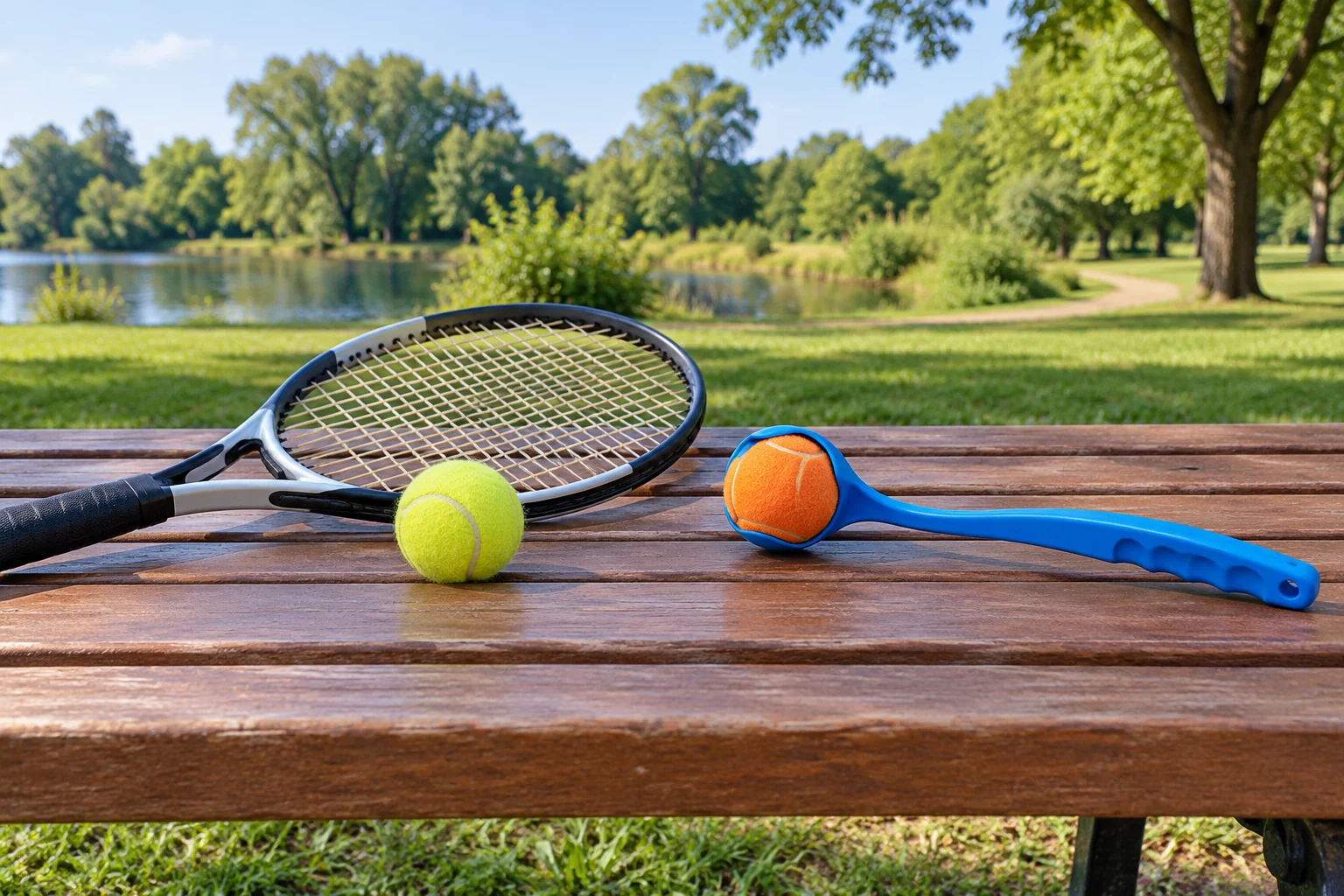
Approved tournament balls must meet the sport’s applicable requirements. Those requirements cover playing characteristics, with different ball types provided for in the rules. A claim about meeting a tennis specification therefore needs to identify the relevant type and approval. It is not evidence of suitability for a dog’s mouth.
For a pet toy, read the manufacturer’s intended-use description. Fetch, tug and chewing are different activities even when the product is round. If the instructions describe a fetch toy, plan around that use rather than treating the dog picture on the pack as permission to leave it available for prolonged chewing.
The comparison below identifies the information to look for. It is a way to read two listings side by side, rather than a ranking of the categories.
| Detail | Sports tennis ball | Dog tennis ball |
|---|---|---|
| Stated activity | Tennis practice or play | The pet activity specified for that model |
| Playing specification | Relevant ball type and approval, where claimed | Any stated performance claim needs its own supporting information |
| Covering | Fabric cover for the applicable court-ball type | The covering actually specified by the maker |
| Core and pressure | Pressurized and pressureless options exist | Read the model’s construction information |
| Size | Depends on the ball type and product | Depends on the product and selected size variation |
| Pack contents | The listed ball count and storage format | The listed ball count, sizes and any accessories |
Felt and Outer Covering
The fuzzy covering is an obvious place to compare two samples. Look at the stated material, the surface and how the covering meets at its edges. Similar color and texture in photographs give you little information about the underlying material or attachment.
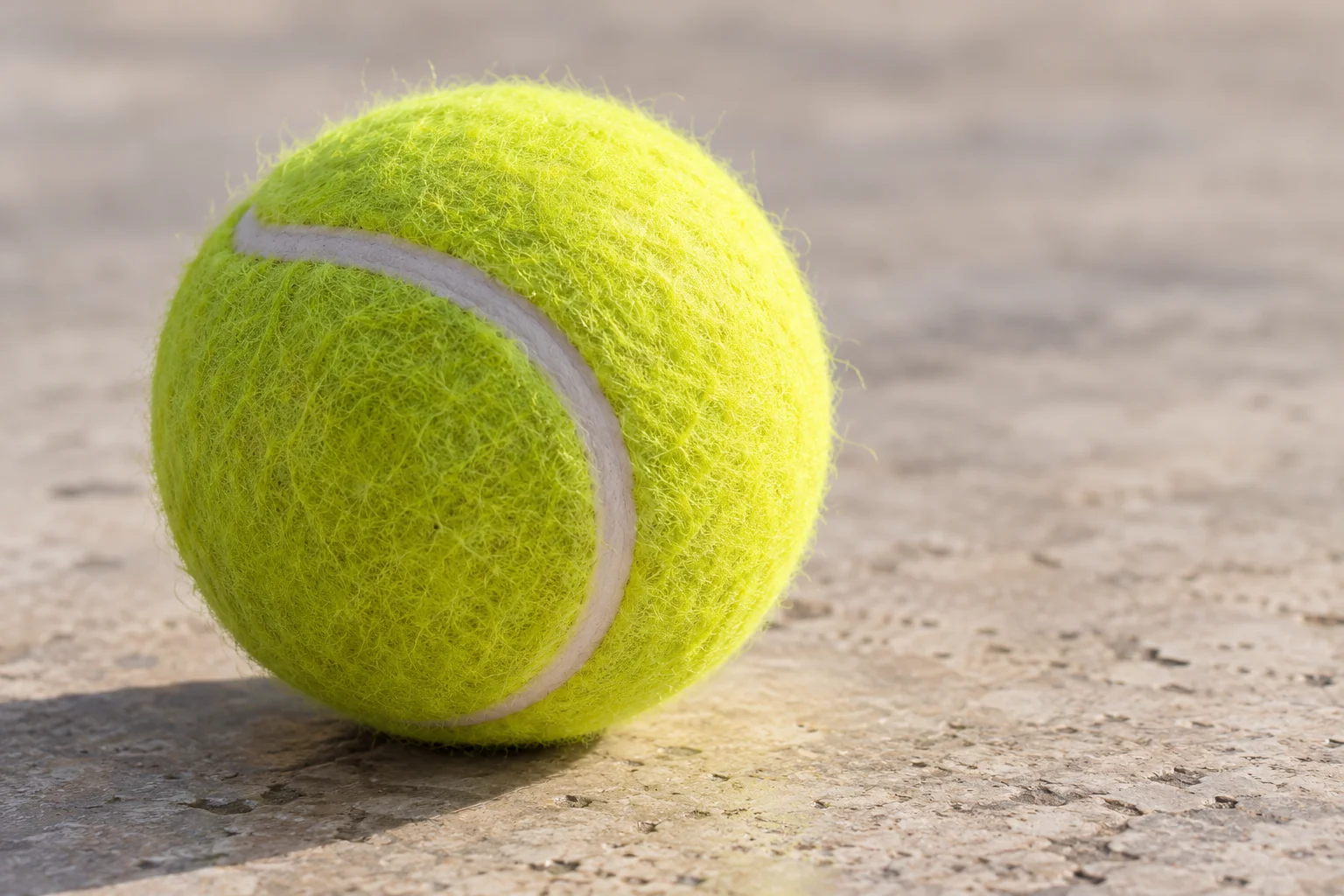
Pet-ball listings may use terms such as non-abrasive or gentle on teeth. Keep the actual wording beside the product it describes. A statement on one listing is not a shared specification for every dog tennis ball, and a soft feel is not a dental test.
For a retail comparison, separate a material description from an outcome claim. “Fabric-covered ball” describes construction. A claim about reduced tooth wear needs evidence for the specific product and use. Repeating the claim across several listings does not make those listings independent verification.
The same distinction applies to color and adhesive information. A bright cover does not reveal which dye was used, and an intact joint does not identify the adhesive. Ask for the missing component information if it is part of your buying decision. Appearance alone cannot resolve a chemical-safety question.
Keep the comparison within what you can establish. You can record whether the covering is present, loose or damaged. You cannot establish its abrasion rate, composition or expected life by stroking it or comparing photographs. This leaves a clear distinction between a sample observation and a documented product claim.
Core Construction and Bounce
Sports tennis balls include pressurized and pressureless constructions. Their core and playing characteristics need to be read in the context of the relevant ball type. The common claim that every regulation ball must come from a pressurized can is too broad.
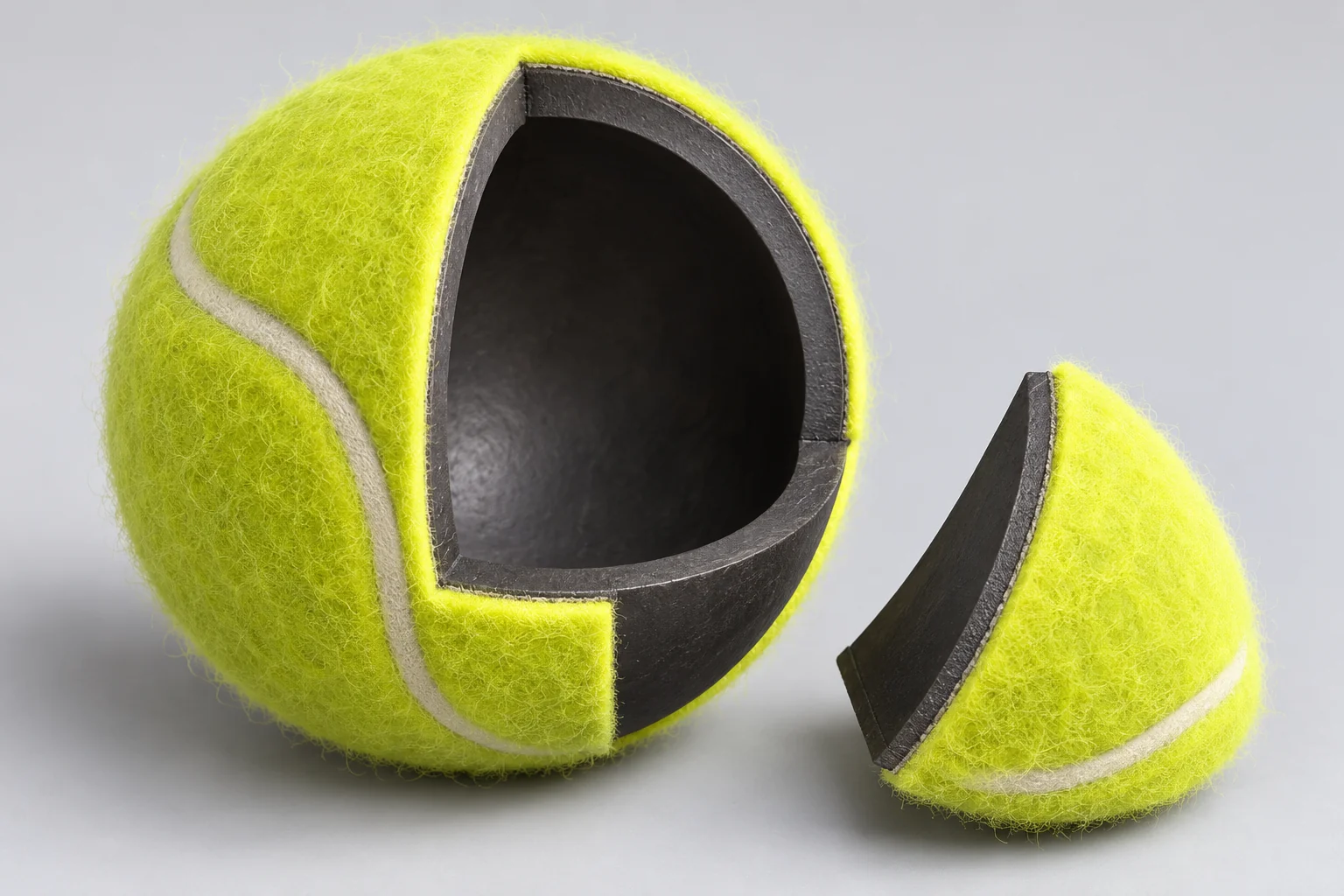
For a dog tennis ball, look for a description of the core and any additional components. If a seller calls it thicker, ask what model or specification provides the comparison. Without that reference, the word gives you no usable wall dimension and no basis for predicting how the ball will withstand a dog’s use.
Bounce is another separate property. A statement about court-ball rebound refers to defined playing requirements and test conditions. A pet ball’s bounce claim should describe that product. Neither the height of a casual bounce nor a sports approval establishes chewing resistance.
Buyers preparing an assortment can use the rubber-toy and pet tennis-ball range to review the available specification topics. The page includes confirmed pet tennis-ball production from the rubber core, while felt and adhesive details remain tied to the approved product specification. That scope helps frame an inquiry without promising a particular material variant or test result.
For a proposed sample, put the core description, covering, dimensions and intended activity together. If bounce is a buying requirement, identify how it will be assessed separately. This keeps a request for a particular construction from becoming an unsupported durability claim.
Size Range and What’s in the Package
Use the actual outside diameter when comparing size. Sports tennis includes more than one ball type and size provision, while pet products may offer several size variations on a single listing. A category-wide statement that one side has a fixed size and the other has a range misses those distinctions.
A label such as small or large belongs to its own product range. The dog ball size chart explains how to read the stated diameter, distinguish the ball measurement from package dimensions and keep launcher compatibility separate from fit for the dog. It does not assign a universally suitable ball to a breed or body weight.
When buying online, follow the selected variation through to the basket. A photograph may show several sizes while the order refers to only one. Keep the product code with the diameter so a later replacement can be identified without relying on the color of the ball in an old photo.
Pack size is a different measurement. Compare the number of balls, any mixed sizes and included accessories before working out the price per ball. A can, bag or multipack tells you how an item is supplied; it does not establish its safety, construction quality or value compared with every product in the other aisle.
For a mixed retail order, list each ball size and its unit-pack quantity separately. This gives the supplier an unambiguous packing request and gives you a reference for reviewing the sample. A total ball count alone leaves the assortment unclear.
Wear and the Limits of the Comparison
Wear belongs to the individual ball, whichever category it came from. Loose covering, an opening seam, cracks or detached pieces are reasons to stop using it and follow the replacement guidance. Keep a damaged sample out of play rather than using another game to see how much longer it lasts.
Repeated tennis-ball chewing can contribute to dental wear, and swallowed ball material can cause serious problems. Those risks are not settled by choosing the pet aisle. A dog that starts pulling a fetch toy apart needs a different decision from one that retrieves and releases it.
Supervise play and put the ball away afterward. Supervision gives you an opportunity to intervene; it does not make a ball that is unsuitable for the dog acceptable. If you are uncertain about the choice, ask the maker or your veterinarian before use.
This comparison helps you identify differences in purpose and product information. It cannot approve a ball for a particular dog. Keep that next decision tied to the exact model, its condition and appropriate guidance rather than transferring a conclusion from a similar-looking product.
FAQ
Can you use regular tennis balls for dogs?
A sports label alone is insufficient grounds to choose a ball for a dog. Consider its size, intended use and the dog’s behavior, and get guidance where suitability is unclear. Supervision does not turn an unsuitable sports ball into an appropriate pet toy.
Why do warnings about tennis balls mention dogs’ teeth?
Repeated chewing on a tennis ball’s abrasive covering can wear teeth. That is a reason to take chewing behavior seriously, rather than assuming every clean or dog-labeled ball avoids the problem. This comparison does not establish an abrasion rating for any product.
Which tennis balls are best for dogs?
Choose from information about the specific toy and dog, rather than a universal category winner. Start with intended use and size, then identify any missing construction or care information. A thicker-core or non-abrasive claim needs more than a category name to substantiate it.
Can you use dog tennis balls for actual tennis?
For regulated competition, use an approved ball that meets the applicable requirements. A pet-toy description does not show that approval. For practice, compare the actual model with the requirements of the activity instead of assuming that matching appearance means matching play.
Conclusion
Choose one ball you are considering and identify the first unresolved detail in its listing. If the intended activity is unclear, ask about that before debating core thickness or price. Once the use is established, you can compare the relevant specification with another model on the same basis.