Choose a dog bed by matching its usable sleeping area, shape, cushioning, cover, and care requirements to your dog’s resting habits and the place where it will sit. Start with the dog and the available space, then compare complete products. A bed suitable for an open room may need a different assessment for a crate or sheltered outdoor area.
For a household, the aim is a bed you can place, use, and maintain conveniently. For a brand or retailer, those same decisions help define what the product is for and which details a customer needs before buying it.
A Practical Framework for Choosing a Dog Bed
Compare the dog, the sleeping surface, the placement, and the care process together. This gives you a useful shortlist before considering colors or sales descriptions such as premium or orthopedic.
| Decision | What to check | What the label alone cannot establish |
|---|---|---|
| Fit | Dog’s resting footprint and usable sleeping area | That a size or breed label is an individual fit |
| Shape | Space to rest in the positions the dog uses | That every curler, leaner, or sprawler has the same preference |
| Cushioning and access | The complete bed and the dog’s ability to get on and off | A medical result or a universal foam recipe |
| Placement | Room, crate, or stated outdoor use | Compatibility with every environment |
| Care | Removable parts and component instructions | That the entire bed can be washed like its cover |
If a listing leaves one of these questions unanswered, ask about it before ordering. A detailed photograph may explain appearance, but it cannot replace dimensions, care instructions, or evidence for a performance claim.
Match the Bed to the Dog’s Resting Habits
Observe your dog at rest and compare the positions they naturally use. Leave room for more than one position rather than choosing a tight fit from a curled pose alone.
Curling, stretching, and leaning
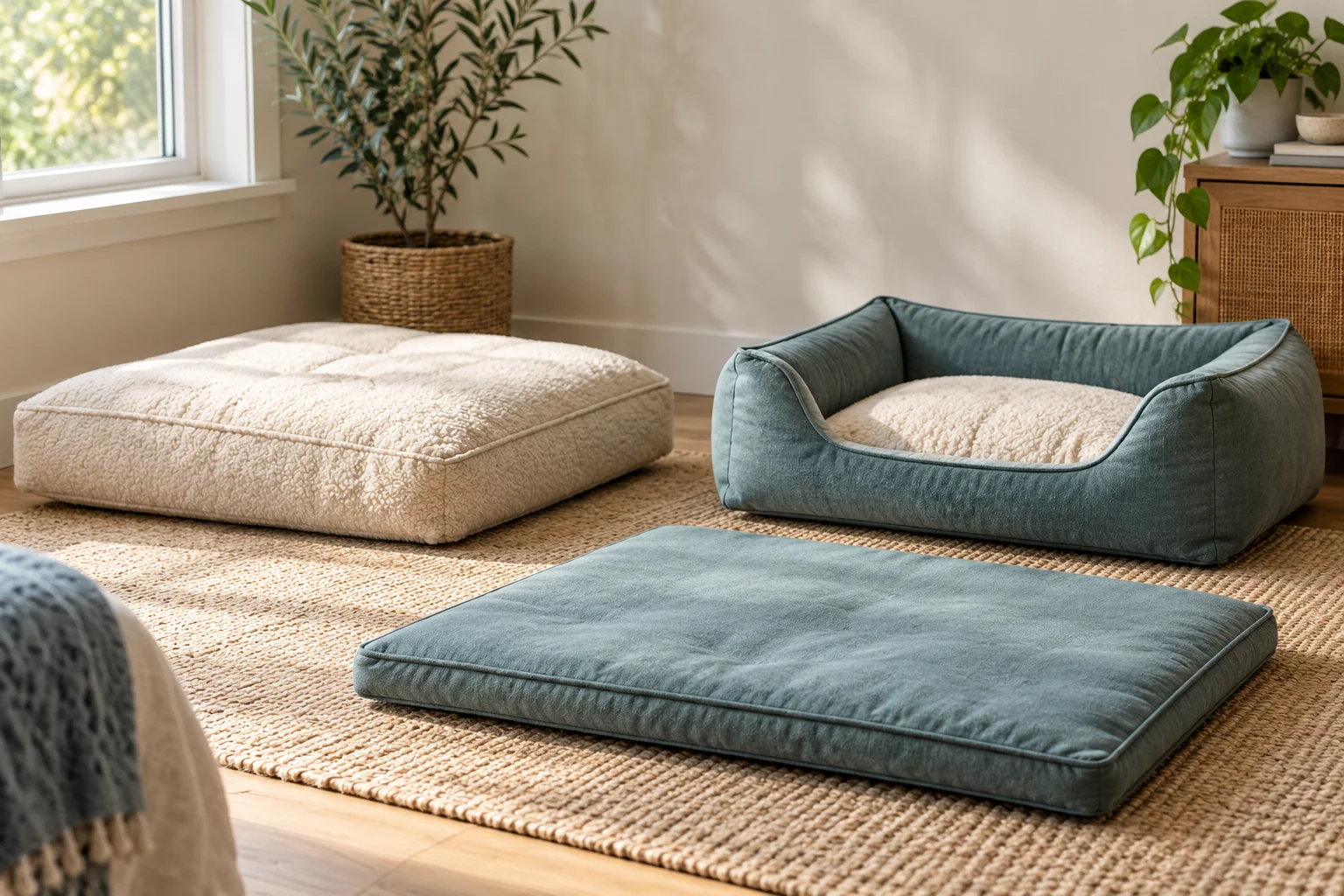
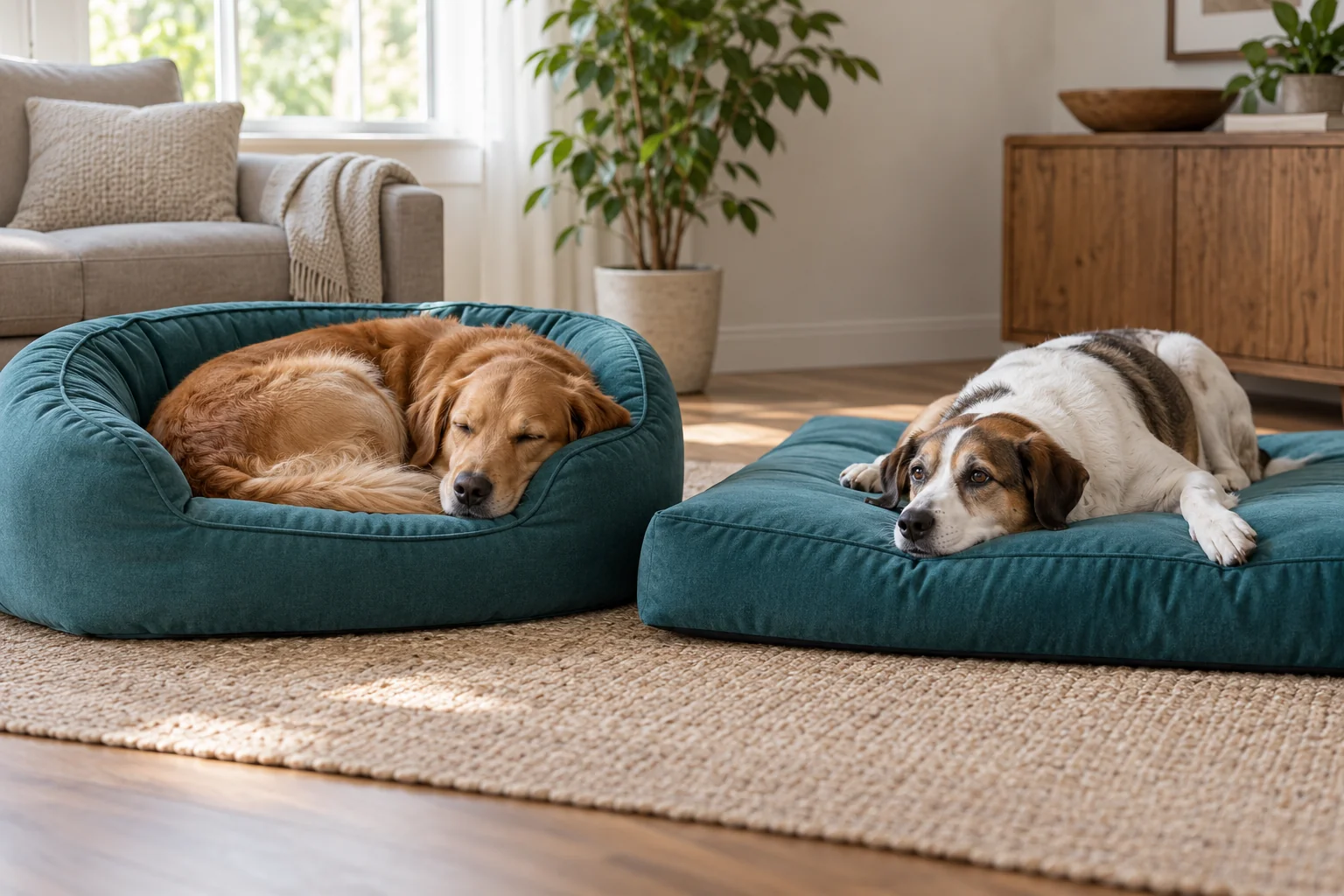
Round or oval beds with raised sides are options to compare for a dog that curls up. An open mattress or cushion is another option when the dog stretches out. A bed with a bolster may be worth considering if the dog regularly rests against an edge.
These are starting points for comparison, not rules that guarantee acceptance. Check the actual sleeping surface and entry. A dog that changes position may need a candidate with more clear space than the product photograph suggests.
The soft pet bed category provides examples of bed formats to discuss. Keep the format decision separate from claims about cushioning, durability, or any particular dog’s needs.
Puppies and changing needs
For a puppy, consider growth, care access, and how the bedding is used. Remeasure as the puppy grows and reconsider a product if it no longer works in the intended space.
Look at the actual condition of bedding during use. Damage, exposed filling, or a loose closure calls for attention regardless of whether the cover is sold as heavy-duty. A material label does not make supervision or inspection unnecessary.
Avoid treating a bed choice as a complete house-training method. In a crate, the enclosure, divider, and current available space all matter. Follow the specific products’ instructions when assessing the setup.
Dogs that find entry or movement difficult
Check whether your dog can get onto the bed, settle, change position, and leave comfortably. Entry height, raised sides, and the bed’s position can matter as much as its overall size.
For pain, an existing diagnosis, or mobility difficulties, ask your veterinarian about individual bedding needs. A general buying guide cannot prescribe a foam thickness or establish that a product described as orthopedic provides a particular medical benefit.
Check Fit and Cushioning Without Relying on Marketing Terms
Confirm the usable sleeping dimensions before selecting a size. The outer footprint includes the whole bed, while raised sides may occupy part of the area within it.
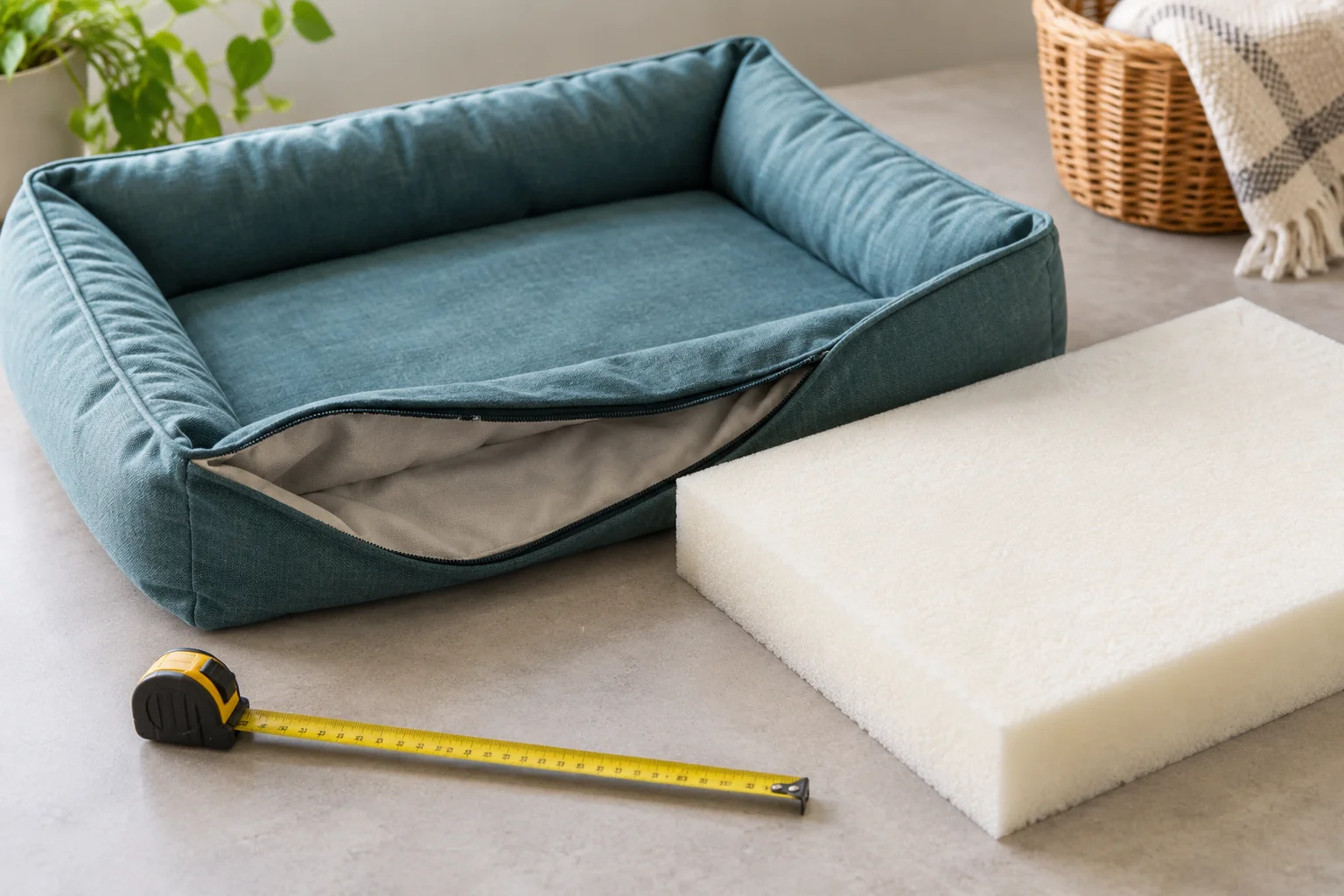
Keep the sizing check practical: compare the dog’s resting footprint with the proposed sleeping surface, then compare the outside bed with the placement area. If dimensions are missing, request them. Do not apply one retailer’s allowance or a universal breed chart to every construction.
Assess the complete cushion and entry as well. Foam, fiber-filled pillows, and removable inserts are different options, but their names do not tell you everything about the finished bed. For a commercial sample, ask which components are proposed and what information supports their description.
If you are comparing a soft-textile format, plush and fleece products are a category reference. Choose the actual surface and care process for the intended product rather than assuming that all plush beds have the same properties.
Bedding for a Dog Crate
Choose crate bedding using the available interior space and the instructions for the specific crate and bed. A nominal crate size is not enough to establish compatibility.
Measure the base area in the current setup, including any divider. Check how the bedding sits once installed, whether the door works normally, and whether the dog has appropriate room to stand, turn, and rest. Assess the combined setup, not just the pad lying outside the crate.
A flat pad can be an option to compare when space is limited. A thicker living-room cushion may need a different fit assessment. The pet mat category can help identify a format for discussion, without establishing a particular pad’s thickness or performance.
Avoid forcing an oversized cushion against the walls or assuming that every bedding product must fit with zero clearance. Confirm the intended fit with the supplier’s instructions. Different constructions may have different placement requirements.
If a dog damages its bedding, remove the damaged item and reconsider the setup. A hidden zipper, reinforced-looking seam, or particular fabric designation does not establish that the assembled product cannot be chewed apart. Persistent problems need an individual assessment rather than another absolute durability promise.
Choosing Bedding for Outdoor Use
Distinguish occasional supervised rest on a sheltered patio from bedding in an outdoor shelter. Exposure, storage, and the dog’s circumstances affect the decision; a bed’s appearance does not establish suitability for either setting.
Patios, covered decks, and portable resting places
For a covered outdoor space, check the product’s stated use and instructions for wet conditions, cleaning, drying, and storage. Consider where rain or dampness can reach the bed even when it is under cover.
Soft cushions and elevated beds are different categories you can compare. For either one, check the actual size, access, placement, and use limits. An elevated frame or a coated fabric does not, by itself, demonstrate a cooling result, weather resistance, or suitability for your dog.
Do not leave an indoor bed outside on the strength of a general material description. Confirm the scope of any outdoor claim and bring the bedding in or store it as directed. Provide an appropriate alternative when conditions do not suit the product or the dog.
Bedding in an outdoor shelter
Cold-weather shelter needs go beyond choosing a cushion. Bedding should not be presented as a way to make every outdoor condition acceptable; arrange suitable shelter and an indoor option, especially during cold weather.
For pets that must remain outdoors, straw may be used as shelter bedding under suitable care guidance. It needs regular checks for dampness and replacement when needed. This is a conditional bedding option, not a claim that a particular straw stays dry or makes extreme weather safe.
Check local animal-welfare guidance and the dog’s individual needs before planning outdoor accommodation. Keep that decision separate from buying a soft bed for short periods on a covered porch. An indoor foam insert, patio cushion, and shelter bedding serve different purposes.
Make Cleaning Part of the Purchase Decision
Choose a bed whose care process you can realistically follow. Confirm which parts are removable and what each component’s label permits before assuming the complete bed is machine washable.
Try removing and refitting the cover when assessing a sample. Check the opening, closure, and separate inserts. A convenient-looking zipper is less useful if you cannot put the cover back on without forcing it.
If spills or damp paws are regular concerns, look at the liner and any stated moisture protection. Ask which component or assembly is covered by the claim. The presence of a liner or a coating is not proof that the complete bed is impermeable.
For hair removal, compare the actual sleeping surfaces using your usual cleaning tool. This keeps the decision tied to your routine rather than a blanket claim that one fabric always releases hair and another always traps it.
Follow the product’s washing and drying instructions. Do not substitute a universal hot-wash temperature, a cover’s care label for the filling’s instructions, or an assumed hygiene result for a documented care process.
Placement and More Than One Dog
Choose a resting place that works with the room as well as the bed. Check access, doors, furniture, and frequently used routes. A quiet option can be useful alongside a resting place near the household’s usual activity.
Watch whether the dog uses the location you have chosen. Reconsider placement if resting is repeatedly interrupted. Avoid attributing a rejected bed to a single cause without observing the actual setting and product.
For multiple dogs, provide each dog with its own bed. An additional shared bed is an option if they enjoy resting together; it should not replace their individual resting spaces.
If you are considering dog bunk bed ideas, assess the specific furniture and its stated use before buying. A small dog, a guardrail, or a set of steps does not establish that every elevated arrangement is suitable. Ground-level beds in separate areas offer another layout to compare without making a general safety claim about either format.
A Selection Brief for B2B Buyers
For a brand, importer, or retailer, turn the intended use into an identifiable sample brief. A useful range is described by what each product is for and how its features are confirmed, rather than by unsupported good-better-best performance tiers.
Record the use environment, bed shape, outside dimensions, sleeping dimensions, cover, inserts, and care process. Keep proposed options distinct from the features of an approved sample. Specify which details customers need to see in the retail description.
When discussing pet product manufacturing, use a review list such as:
- Who the product is for and where it is intended to sit.
- Finished outer size, usable sleeping area, and entry.
- Actual cover, liner, filling, and removable-part descriptions.
- Component care and refitting instructions.
- Sample checks for fit, placement, closure, and permitted care.
- Evidence needed for any proposed performance or certification claim.
- Actual packed dimensions and the agreed unpacked-sample assessment.
Use the proposed packing measurements and the relevant carrier quote to compare shipping options. A material name does not establish a universal compression saving, container quantity, or recovery time.
If certificates or reports are supplied, check their issuer, subject, scope, and relevance to the proposed product. Do not transfer a foam-component document into a guarantee about the finished bed or its medical performance.
FAQ
What should you put in the bottom of a dog crate?
Compare bedding intended for the particular crate and available interior space. Check that it sits as instructed and leaves suitable room for the dog to stand, turn, and rest. Recheck the fit whenever you change the divider position.
What dog bed do veterinarians recommend?
Ask your veterinarian about individual needs when pain or mobility is a concern. Bring the current bed’s dimensions and entry information to that discussion so the recommendation can address the actual setup.
What is the best bedding for an outdoor dog shelter in winter?
The shelter and conditions need assessment first, with an indoor option especially important in cold weather. Straw can be a bedding option for pets that must stay outdoors under appropriate guidance, but it needs regular dampness checks and replacement. Bedding alone does not establish that an outdoor arrangement is suitable.
Can I use an indoor dog bed on a covered patio?
Only rely on the specific product’s use and care instructions. A roof does not rule out wetting, and a fabric description does not establish outdoor suitability. Check exposure, cleaning, drying, and storage requirements before using it there.
Can two dogs share one bed?
They may enjoy an additional shared resting place, but provide each dog with its own bed as well. Compare the shared bed’s actual usable area with how the dogs rest together instead of assuming an oversized label establishes the fit.
Conclusion
Choose a complete product you can check against the dog, the available space, and the care routine. Resolve missing dimensions or unclear use claims before ordering. For a sourcing project, prepare the intended setting, bed format, component preferences, and sample requirements, then contact us to discuss the specification.