Choosing material for dog bed construction starts with the cover, any protective liner, and the filling together. The right combination depends on how the dog rests, what happens to the bed during use, and how its separate parts can be cleaned. A fabric name alone cannot tell you whether the finished bed will suit your dog or your product range.
For a dog owner, the useful questions are practical: can you remove hair, deal with a spill, and put the cover back on? For a buyer developing a bedding collection, those same questions become specifications for the sample, care label, and component list.
What Are Dog Beds Made Of?
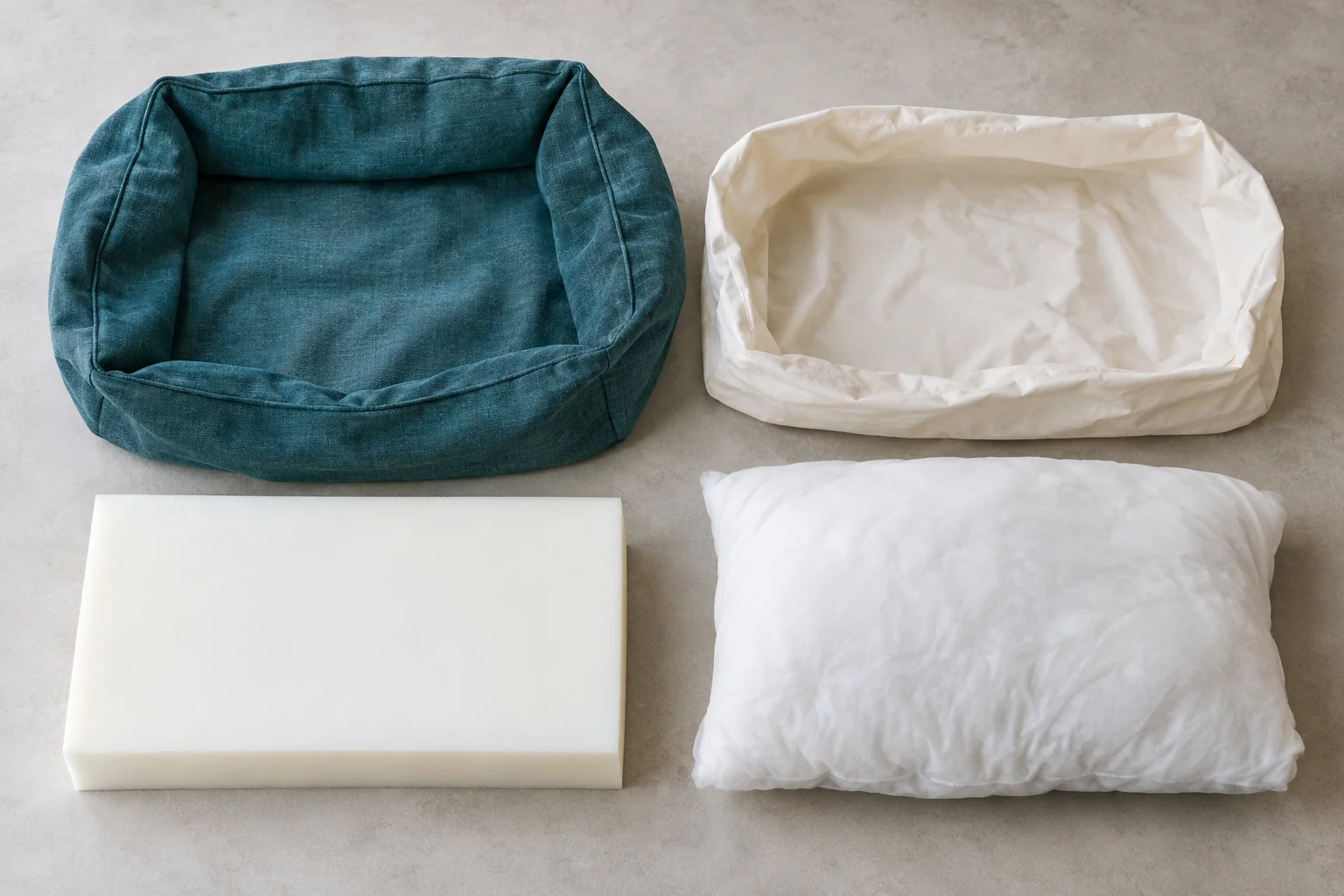
A dog bed usually combines a textile shell with cushioning. Some designs add a separate liner, removable inserts, bolsters, or a different base fabric. These are construction choices; every bed does not need the same three-layer assembly.
The outer cover
The cover is the surface your dog touches and the part you handle during routine cleaning. Look at the sleeping panel, sides, and base separately. They may use different materials and have different care requirements.
Check the label for fiber composition rather than relying on names such as canvas, fleece, or heavy-duty. Also inspect the finished surface, seams, and fastening. A promising fabric swatch does not show how the whole cover behaves once it is fitted around the filling.
A protective liner
A liner sits between the outer cover and the filling when the design includes one. It can be useful where moisture is a regular concern, but its presence does not establish a waterproof claim. Ask what protection the assembled liner provides and what evidence supports that description.
Look at its seams, closure, and removal instructions. A material description applies to that material; it does not automatically describe every opening in the finished bed. Keep the outer-cover and liner care instructions separate.
The filling and inserts
Foam, polyester fiberfill, and natural-fiber inserts are among the options used in pet bedding. The relevant comparison is the complete cushion: its shape, feel, fill distribution, and care instructions.
A flat cushion, a loose-fill pillow, and a bolstered nest can contain similar material names while offering different resting surfaces. Before choosing a filling, decide what bed format you want and how you will inspect the finished sample.
Choosing a Dog Bed Cover Fabric
Start with your dog’s habits and your cleaning routine, then compare actual covers. Avoid treating a fabric family, yarn designation, or sales adjective as a guarantee of durability.
Woven covers: canvas, denim, nylon, and polyester
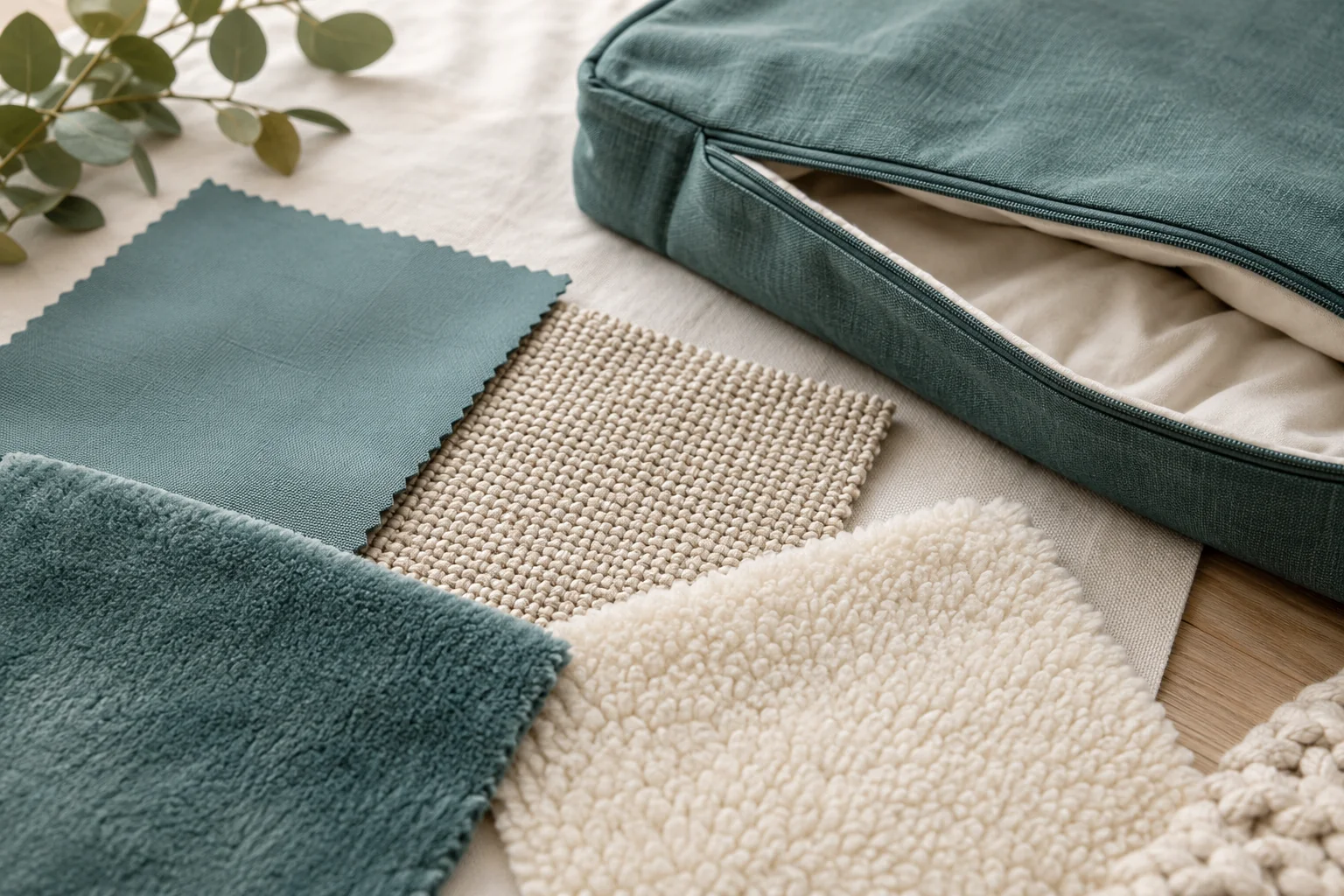
Canvas and denim are recognizable woven options, while nylon and polyester covers appear in many constructions. Within each category, the weight, surface, backing, and finish can differ. Two covers described with the same material name may therefore need quite different evaluation.
Handle the assembled cover as well as the swatch. Check whether you can reach the corners with your usual cleaning tool, whether the sleeping panel feels suitable, and whether seams or decorative edges interfere with the intended use.
For a sourcing project, record the proposed fiber composition and construction. If the supplier provides a fabric weight or yarn specification, keep that information with the sample reference. Use product-specific evidence for any performance claim rather than turning a specification number into a promise.
Soft surfaces: fleece, plush, and short-pile fabrics
Fleece and plush are options when a soft sleeping surface is a priority. Compare the actual texture and how you would clean it. A small swatch can help you assess the feel, but a full cover is needed to check fitting, seams, and care access.
For a dog that sheds, try removing hair with the tool you already use. This gives you a practical comparison between candidates without assuming that every fleece traps hair or every smooth fabric releases it easily.
Buyers considering a soft-textile collection can review plush and fleece pet products as a category reference. The finished bed still needs its own material and sample specification.
Comparing fabric candidates
Compare the questions each cover needs to answer. Use the table below to plan the sample inspection.
| Cover option | What to identify | What to check on the sample |
|---|---|---|
| Canvas or denim | Fiber composition, finish, and care label | Feel, hair removal, and fit after permitted cleaning |
| Nylon or polyester woven fabric | Construction, backing, and any claimed treatment | Seams, surface condition, and evidence for the stated use |
| Fleece or plush | Sleeping-panel texture and base material | Hair removal, cleaning access, and condition after care |
| Short-pile upholstery-style fabric | Actual composition and approved care | Surface feel, cover removal, and refitting |
If two candidates both meet your needs, compare the complete beds under the same conditions. A difference in zipper placement or cover access may matter more to your routine than the fabric name.
Water-Resistant Covers and Protective Liners
For a bed likely to get wet, investigate the exact moisture claim. A water-resistant outer cover and a separately protected insert are different design features, and either needs to be considered in the finished assembly.
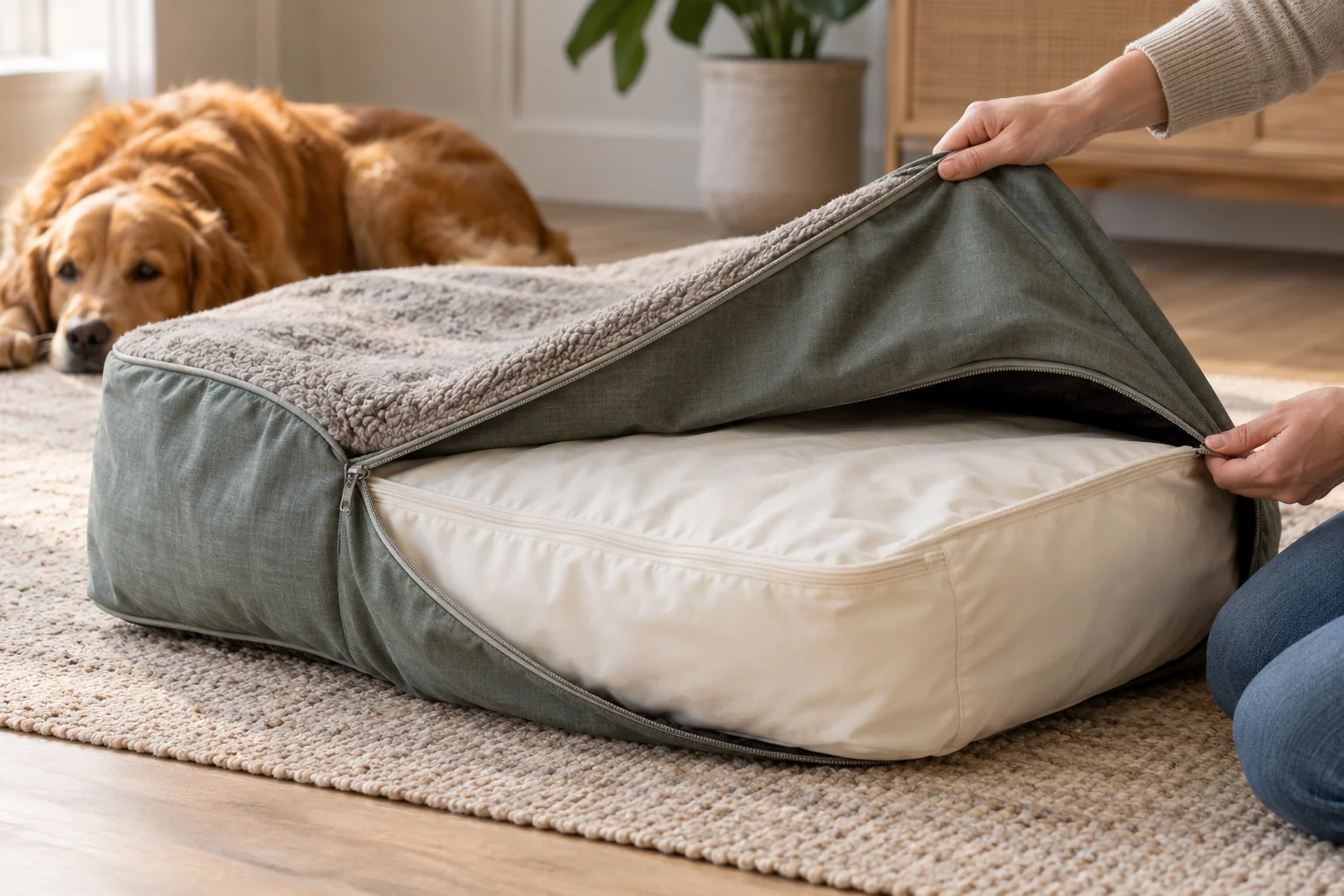
Ask which part is covered by the claim: the sleeping panel, base, liner, or complete product. Then ask about the conditions and care instructions associated with it. Do not assume that a coated fabric makes the seams and zipper equally protected.
If the bed has a removable liner, try taking it off and putting it back on. Check how the closure sits when the cushion is filled and whether the instructions explain cleaning and drying. A liner you cannot access conveniently may make routine care harder than expected.
For a commercial order, retain any relevant report alongside the approved sample. Confirm that it applies to the proposed component or assembly, not a different fabric or earlier construction. Avoid publishing absolute claims about liquids, odor, or hygiene from a material name alone.
Dog Bed Filling Materials: Foam, Fiberfill, and Wool
Choose a filling by comparing the finished cushion and its care requirements. There is no universal foam thickness or filling recipe that can be selected from a dog’s weight alone.
Solid foam and memory foam
A solid foam insert is a shaped cushion, while loose fiberfill is held inside the bed shell or a separate insert. Memory foam is another foam category used in bedding, but the label alone does not describe the complete bed’s support or suitability.
Density and firmness are different foam properties. If you are buying commercially, ask the supplier to state both clearly where relevant, explain how they are measured, and identify the proposed foam. Do not use “high-density” as a substitute for every other specification.
Compare the cushion within its fitted cover. Check its feel, the accessible entry, and how the bed sits on the intended floor. For a dog with pain or difficulty moving, ask a veterinarian about individual bedding needs rather than selecting a prescribed layer thickness from a general guide.
Polyester fiberfill
Polyester fiberfill is a filling option for cushions and bolsters. Loose filling, contained inserts, and divided compartments are different ways of assembling a bed; inspect the actual design rather than assuming that one always retains its shape better.
Check whether the filling can be redistributed according to the instructions, which parts are removable, and what the care label permits. For sample approval, note the fill distribution before and after the agreed handling or cleaning check.
Trade descriptions such as “PP cotton” need clarification. Request the actual fiber composition and component description so that a product name does not become an inaccurate material statement on the retail label.
Natural-fiber options, including wool
Wool-filled bedding may appeal to buyers seeking a natural-fiber option. Verify what the insert actually contains, how it is constructed, and how it can be cared for.
Compare foam and wool as finished cushions with their own construction and care requirements. A natural label does not establish allergy suitability, and a foam label does not establish a therapeutic result. Choose the construction that meets the intended use and has understandable care instructions.
The following comparison keeps the decision tied to identifiable components.
| Filling format | Useful purchasing questions | Sample checks |
|---|---|---|
| Solid foam insert | Which foam is proposed, and which properties are documented? | Dimensions, feel, entry access, and cover fit |
| Loose or contained foam pieces | How is the filling held and adjusted? | Distribution and the permitted care process |
| Polyester fiberfill | What is the composition and fill arrangement? | Cushion shape, accessible inserts, and redistribution instructions |
| Wool or other natural-fiber insert | What is the actual blend and approved care? | Insert construction, fit, and cleaning requirements |
Seams, Zippers, and Base Construction
Inspect the assembled bed’s closures and edges as carefully as the sleeping fabric. These details affect how you remove the cover, handle the cushion, and check the bed during use.
A covered zipper or tucked pull can be worth comparing, but it should not be described as a guarantee against chewing. Look for loose hardware, exposed filling, and damaged seams, and remove damaged bedding from use. A tougher-looking fabric does not resolve every problem elsewhere in the assembly.
Try the cover removal process without forcing it. Can the insert pass through the opening? Can you close the zipper without pulling the fabric excessively? If bolsters are removable, confirm how each component returns to its intended position.
Check the base in the actual placement area as well. If the bed moves when your dog steps onto it, reconsider the placement or product. Avoid assuming that any base described as non-slip works identically on every floor.
Matching Materials to the Intended Use
Use the dog’s behavior and placement to set your comparison priorities. The goal is a bed you can assess and maintain, rather than a list of supposedly best materials for every dog.
For a dog that regularly paws at bedding, examine the sleeping panel and perimeter after use. Ask for product-specific information behind durability claims. If chewing is a concern, consider the whole construction and your dog’s behavior rather than relying on a fabric designation.
For frequent hair removal, compare candidate covers using your normal brush or vacuum attachment. For repeated spills or damp paws, check the liner, closure, and care instructions. In both cases, a practical sample check is more useful than a generic fabric ranking.
For portable resting places or a lower-profile format, pet mats are another category to consider. Outdoor placement requires the specific product’s use and storage instructions; an indoor material comparison does not establish suitability for an exposed kennel.
Material Specifications for B2B Bedding Projects
Turn the preferred sample into a clear component specification. This allows a buyer and supplier to discuss the same construction without relying on terms such as premium, orthopedic, or heavy-duty.
Record the outer sleeping panel, side fabric, base, any liner, filling, closures, and removable parts. Identify the approved sample and specify which details must be confirmed before production. Keep proposed options separate from features already demonstrated by that sample.
A useful material review includes:
- Actual fiber composition and component names.
- Filling format and any relevant documented foam properties.
- Cover and liner removal instructions.
- Care instructions for each component.
- Seam and closure details to inspect.
- Evidence and limitations for intended performance claims.
- Packed condition and the agreed procedure for inspecting the unpacked sample.
If a certificate or report is requested, confirm the tested material, component, issuer, and scope. A document covering one foam does not establish the performance of the assembled bed. Agree inspection conditions and acceptance criteria for the actual product; do not borrow universal numbers from unrelated bedding.
You can use the existing soft pet bed category to discuss the proposed format. Before ordering, keep the sample reference, material list, care information, and any unresolved claims together so that purchasing and product copy use the same specification.
FAQ
What is the most durable material for a dog bed?
A material name alone cannot establish the most durable finished bed. Compare the proposed cover, seams, closure, and filling, and ask what product-specific evidence supports the intended use. For your own dog, inspect how the assembled bed behaves during normal use.
What is the best filling for a dog bed?
Choose a filling that works with the bed’s shape, your dog’s resting habits, and the permitted care process. Request the component list for the sleeping cushion and bolsters separately; they may use different filling formats even within the same bed.
What should I check when replacing a foam insert?
Confirm the replacement’s shape and dimensions, then check that it fits the original cover and liner without forcing the closure. Ask the bed supplier which replacement components are compatible, especially if the sleeping cushion and bolsters use separate inserts.
Can a dog bed be indestructible?
Treat that description as a claim requiring evidence, not a property established by a fabric label. Inspect the complete assembly and its stated limitations. Check bedding during use and remove it if damaged rather than relying on an absolute durability promise.
Is a waterproof liner enough to choose a bed?
No. You still need to assess the cover, filling, fit, and care access. Confirm what the liner’s claim covers, including its seams and closure, and follow the cleaning and drying instructions for each component.
Conclusion
Compare a complete sample before committing to a material combination. Remove and refit the cover, review each component’s care instructions, and resolve any performance claim that lacks matching evidence. For a sourcing project, share the proposed bed format, material preferences, and sample requirements when you contact us.