Dog leashes are made from materials such as nylon or polyester webbing, braided rope, leather, coated webbing and metal chain. The handle, walking line and clip can use different materials, so one label rarely describes the whole leash.
Separate the fiber from the shape of the line and any surface coating. Nylon can be a flat strap or a round rope. A smooth, leather-looking strap may be coated textile rather than leather. Those differences matter when you compare how a leash feels, how it is cleaned and what the product description actually tells you.
The parts behind a leash’s material label
A fixed walking leash usually has a handle, a length of line and a connector for the dog’s equipment. Some designs add handle lining, adjustment rings or a second grip.
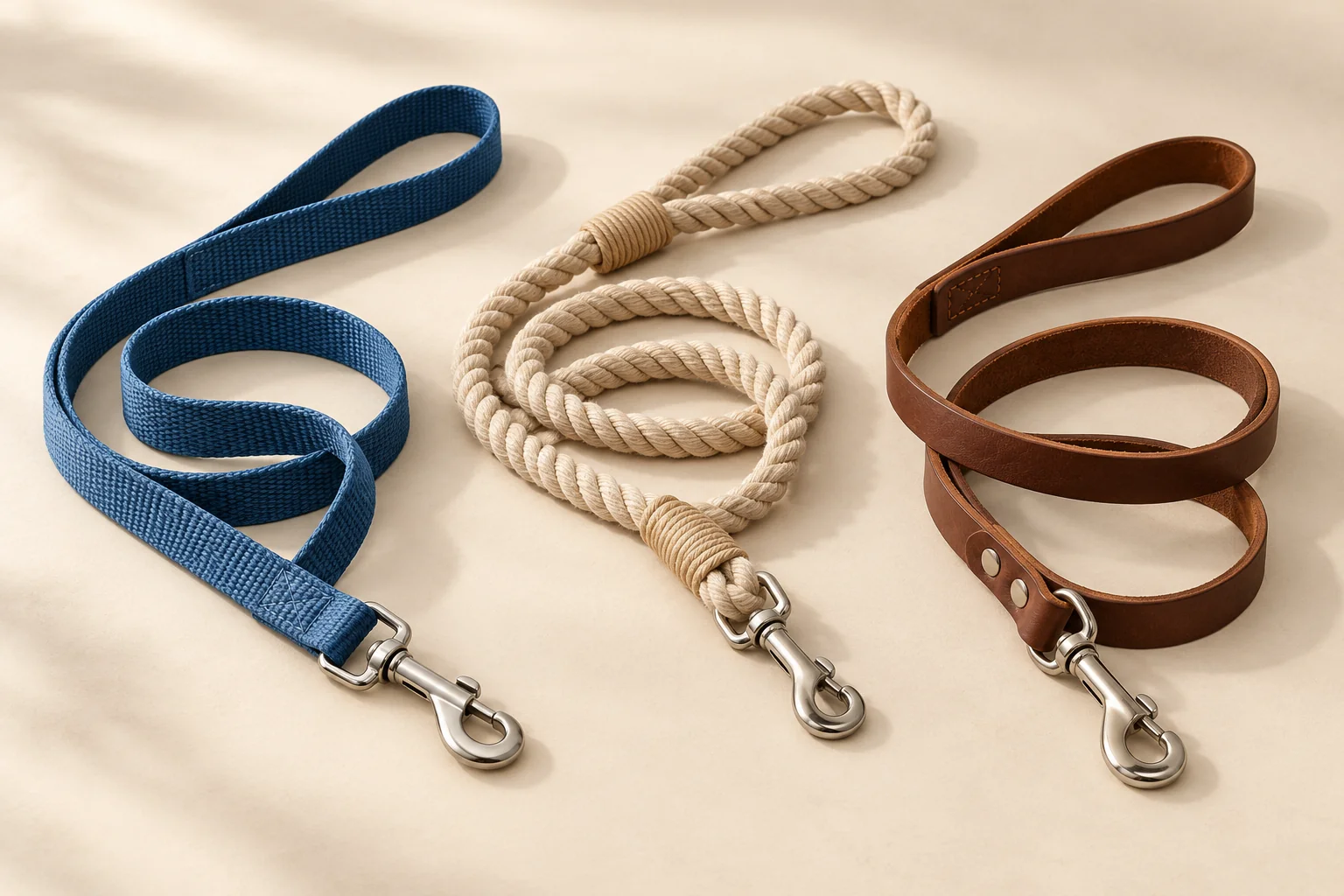
A listing headed “nylon leash” may identify only the main strap. It can still leave the handle lining, connector material and attachment method unspecified. Likewise, “leather leash” does not describe the metal clip or explain whether the handle is lined.
A broad photograph shows the layout; a close view of the line, handle and both ends shows where material folds or joins another component.
For an adjustable design, include the extra rings and the way the handle is formed in each configuration. The same material can be arranged differently, with different amounts of loose line and hardware to manage.
Nylon, polyester and the shape of the line
Nylon and polyester are fiber names. Webbing describes a woven strap, while rope describes a cord construction. Knowing both gives you a more useful description than either term alone.
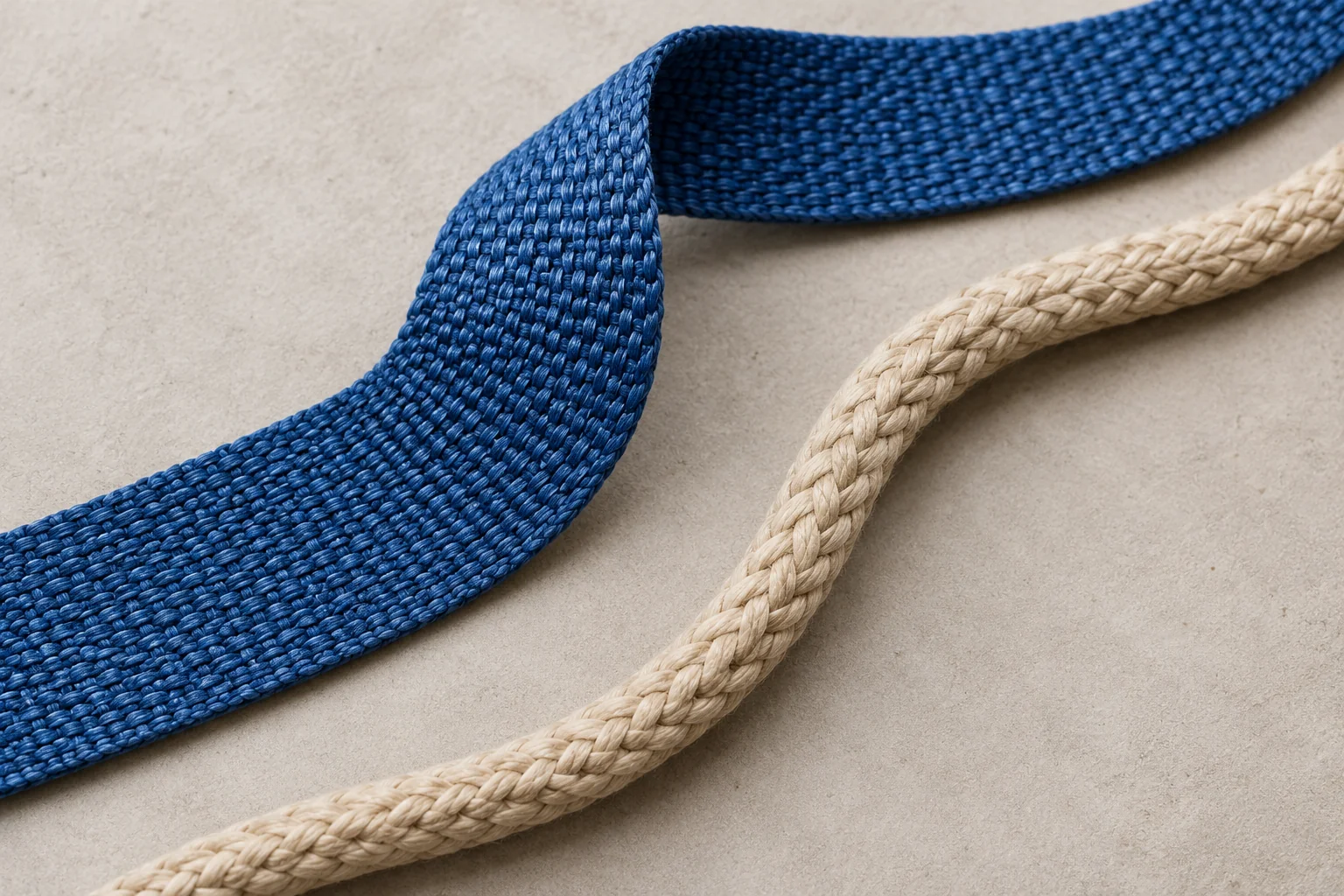
Flat nylon webbing appears in everyday walking leads, and nylon can also be used in rope designs. Polyester webbing is another textile option. A round line can contain nylon, polypropylene, cotton or another specified material, so listings such as “nylon webbing” or “polypropylene rope” identify more than the shape alone.
Handle feel varies with the weave, thickness, surface and handle arrangement. A flat strap may be easy to fold, while a round line may be convenient to gather in your hand. Trying the two handles side by side keeps their differences in view.
Dimensions need their own description. Flat strap width and rope diameter measure different shapes; they are not interchangeable size labels. Our guide to dog leash width and thickness covers that measurement question separately.
Coated webbing has an inner textile and an outer layer
Coated webbing combines a textile strap with an outer coating. Some constructions use polyester webbing with a thermoplastic polyurethane or PVC coating. The product specification should identify the inner webbing and the coating actually supplied.
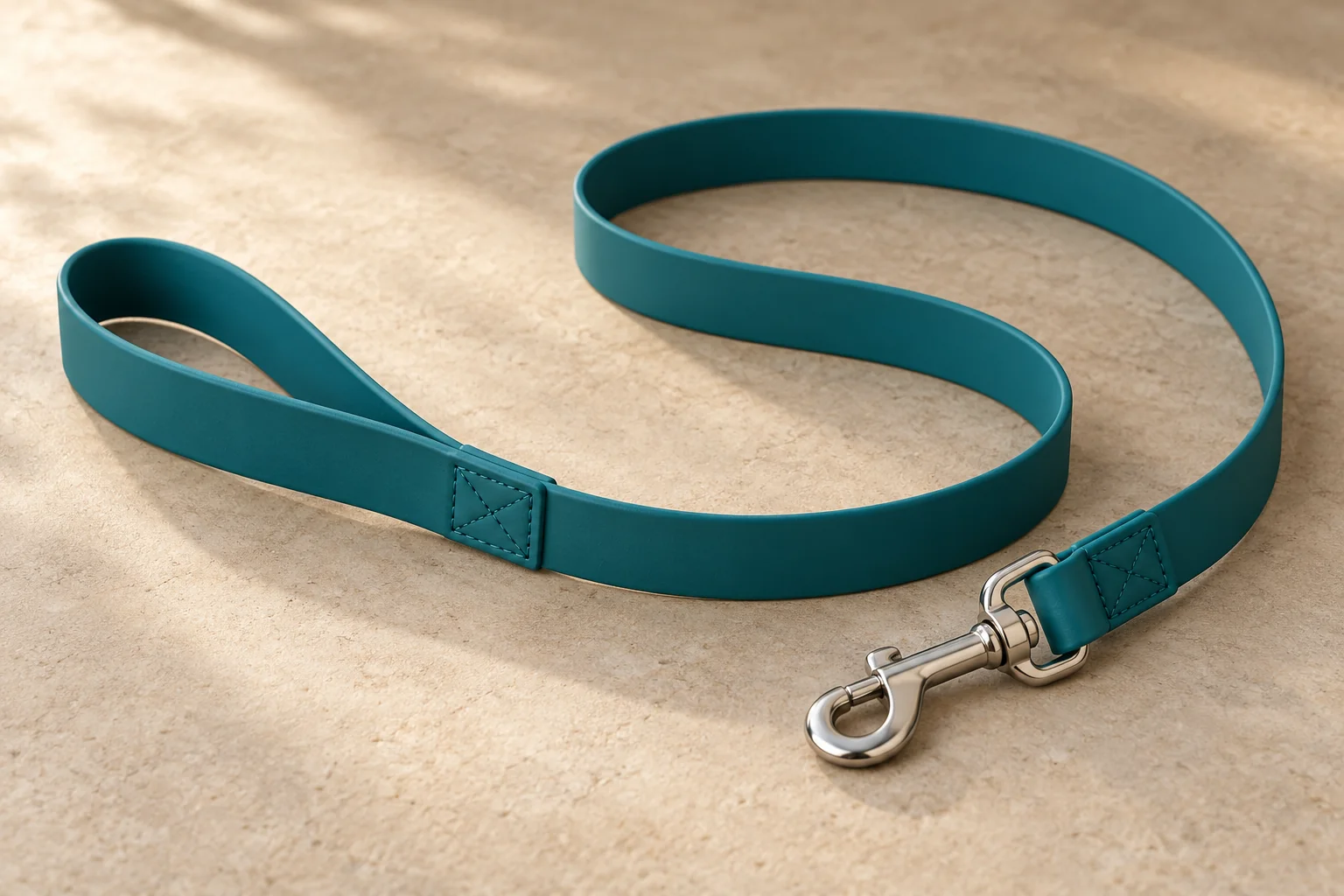
A smooth synthetic strap can look quite different from exposed woven webbing. “Coated,” “rubber” and “synthetic leather” are different descriptions and do not identify the same composition.
An intact sample lets you compare surface texture and flexibility. If wipe-down care draws you to coated webbing, include the handle lining and hardware as well as the coated strap in the cleaning decision. The care instructions need to cover those parts together.
For a collection brief, describe the coating and underlying textile separately. A change in either should be recorded with the proposed sample, especially when an appearance-led description would otherwise hide the substitution.
Leather and other rope options
Leather offers a distinct surface and handle feel. Its care requirements are part of the choice: read the maker’s cleaning and conditioning guidance before buying it for a routine that often leaves gear wet or muddy.
On a leather lead, the handle fold, edge finish and hardware attachment are useful details to examine alongside the material description.
For cotton, polypropylene and nylon rope options, compare the care routine with the leather lead you are considering. Where will you store it after a walk? How will you clean the handle? Can you follow the product’s drying instructions?
Metal chain and connector details
Some leashes use a metal chain as the walking line, often with a separate textile or leather handle. Textile and leather leads also commonly have metal connectors. Identify which part a metal description refers to before comparing products.
For a metal clip, the material, finish and operation are separate details to identify. If you plan to use it around saltwater, request information addressing that exposure; a shiny surface leaves the alloy and corrosion-resistance claim unresolved.
Clip design also affects everyday handling. A bolt snap, trigger-operated clip or locking connector opens differently. Try the stated operation and compare the connector with the attachment point on the dog’s equipment.
Follow the product’s replacement guidance if the line, handle or connector is damaged or does not operate as intended.
A practical material comparison
The table separates each material description from the product details you will compare.
| Material or format | Information to look for | What to compare on the actual product |
|---|---|---|
| Nylon webbing | Fiber, strap dimensions and handle construction | Handle feel, folding and care instructions |
| Polyester webbing | Fiber, weave and any added lining | Surface feel, flexibility and finished layout |
| Rope | Named fiber and cord construction | Grip, loose-line bulk and attachment details |
| Coated webbing | Inner textile and coating identity | Surface texture, flexibility and permitted cleaning |
| Leather | Material description and care guidance | Handle fold, edge finish and upkeep |
| Metal chain | Chain, handle and connector information | Complete weight, handling and intended use |
Use the table to shortlist a format, then compare its handle, line and connector as a complete lead.
For a sourcing request, record the chosen fiber or leather, format, coating where relevant, handle arrangement and connector reference. The standard dog leash specification page is a relevant starting point for that discussion.
Any strength, durability, weather-resistance or dog-weight claim needs evidence covering the exact assembled leash. A fiber name, leather grade or connector photograph can identify a component without establishing that performance.
FAQ
What material is best for a dog leash?
The most useful choice fits your handling and care routine. Compare the actual handle, line, connector and instructions across the materials you are considering. A material name alone cannot establish a best option for every dog or walk.
Can I make my own dog leash at home?
A homemade leash needs a suitable complete design and reliable attachments, not just a length of rope or webbing. This material overview is not an assembly or testing guide. For everyday walking, choose equipment with clear product instructions rather than relying on a knot or seam copied from a photograph.
What is the safest leash for a dog?
Safety cannot be determined from the fiber alone. Use equipment intended for the dog and activity, follow its instructions and assess the complete connection. Seek qualified guidance if you cannot manage the chosen setup; a change of material does not replace that help.
Conclusion
Read a leash description in three parts: what the line contains, how it is constructed and what completes the handle and connection. If a listing leaves one part unclear, ask for that detail before choosing between materials. For a sample brief, name those components so the supplied leash can be compared with the proposal.