A nylon rope vs nylon tape dog leash comparison starts with the shape of the walking line: rope is round, while tape is a flat woven strap. With the fiber held constant, compare the actual grip, folding, handle and hardware attachment.
The two formats can feel quite different in use, but the details matter. A padded handle changes the comparison, as do the rope construction, strap thickness and connector. Compare complete examples so you can see which of those details shapes your preference.
What “nylon tape” means in this comparison
Here, nylon tape means the flat webbing used in a fixed walking lead. It is the visible strap running between the handle and connector. The word can also appear in retractable-leash descriptions, where it identifies a line that feeds into a housing.
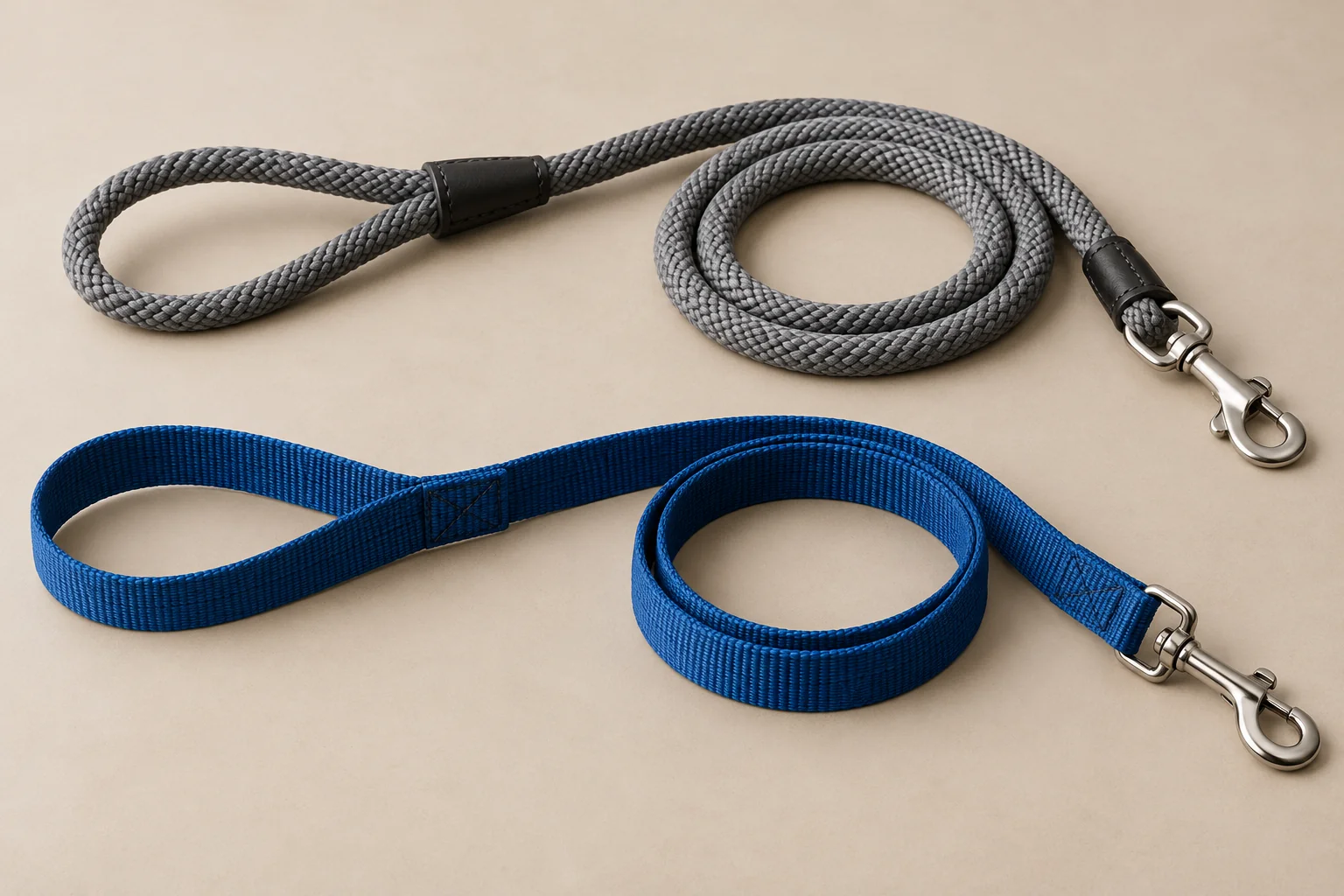
Separate those product types when shopping. A fixed flat lead and a retractable tape lead have different layouts and operating instructions, even if a search result calls both “tape leashes.” The comparison here concerns fixed nylon rope and fixed flat nylon webbing.
Rope also names a construction; its fiber might be nylon, polypropylene or cotton. For the comparison here, both listings need to identify nylon.
Round line and flat strap construction
Round rope has a curved outer surface. Flat webbing has a broad face and two edges. Those shapes give you different surfaces to hold, fold and gather.
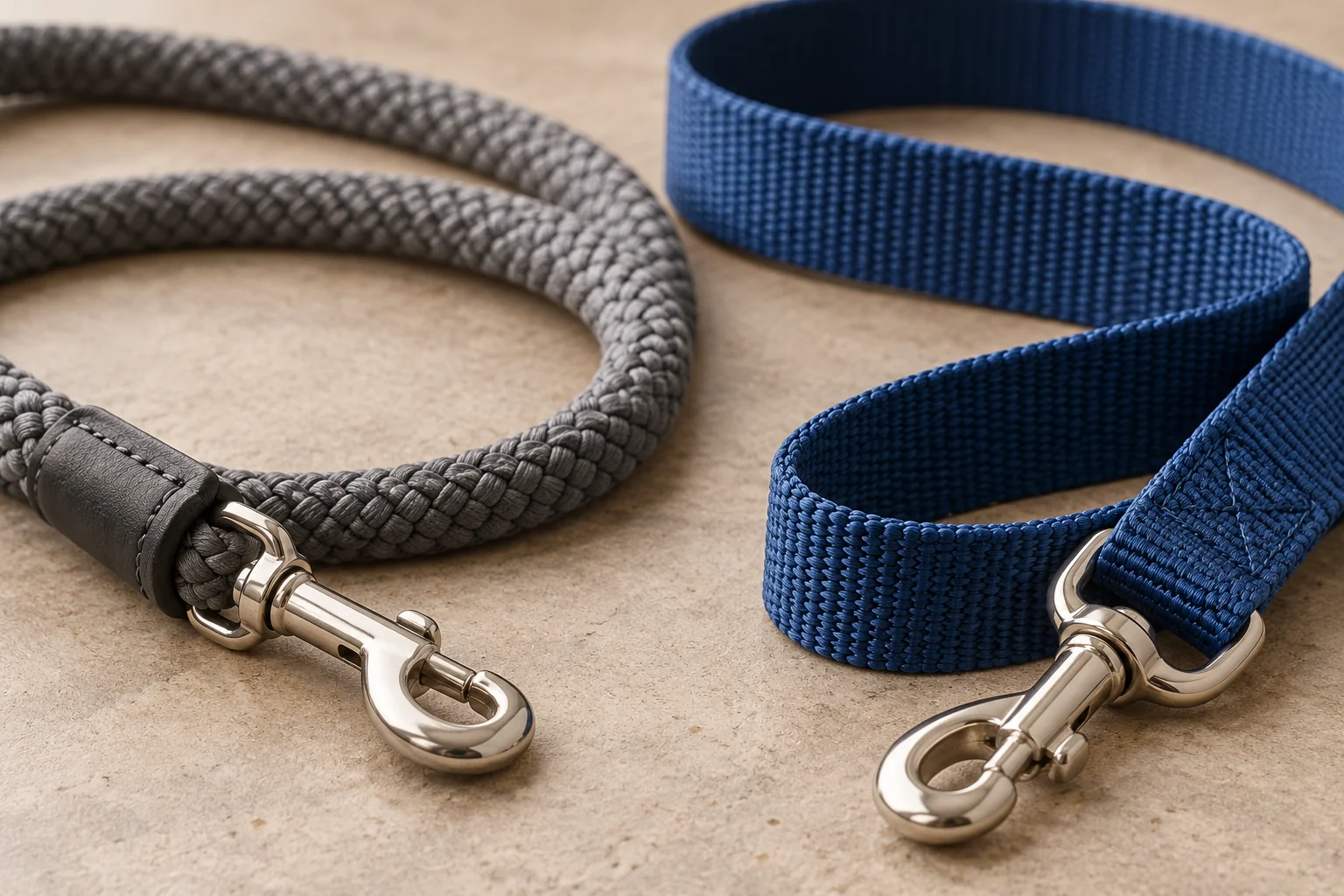
Some ropes use a core and an outer cover; others have a different braided construction. A climbing-style description does not identify the internal layout or establish a climbing certification for the finished dog leash.
For flat webbing, width and thickness are separate dimensions. For round rope, the listed dimension is normally a diameter. Comparing those numbers as if they measured the same thing will obscure the difference you are trying to assess.
The guide to leash width, thickness and rope diameter explains how to record those dimensions. In this comparison, use them to identify each sample and keep the focus on the shape and handling of the line.
A rope sleeve or decorative wrap can hide part of an attachment. A folded strap can also conceal its inner surface. Close photographs help you identify the arrangement, while a supplier drawing can clarify details the photograph leaves out.
Grip and handle feel
The handle is the first part to try. Hold it as intended, let the loose body rest naturally and notice what sits against your palm. A rounded line and a flat strap offer different contact shapes; your preference depends on the actual examples.
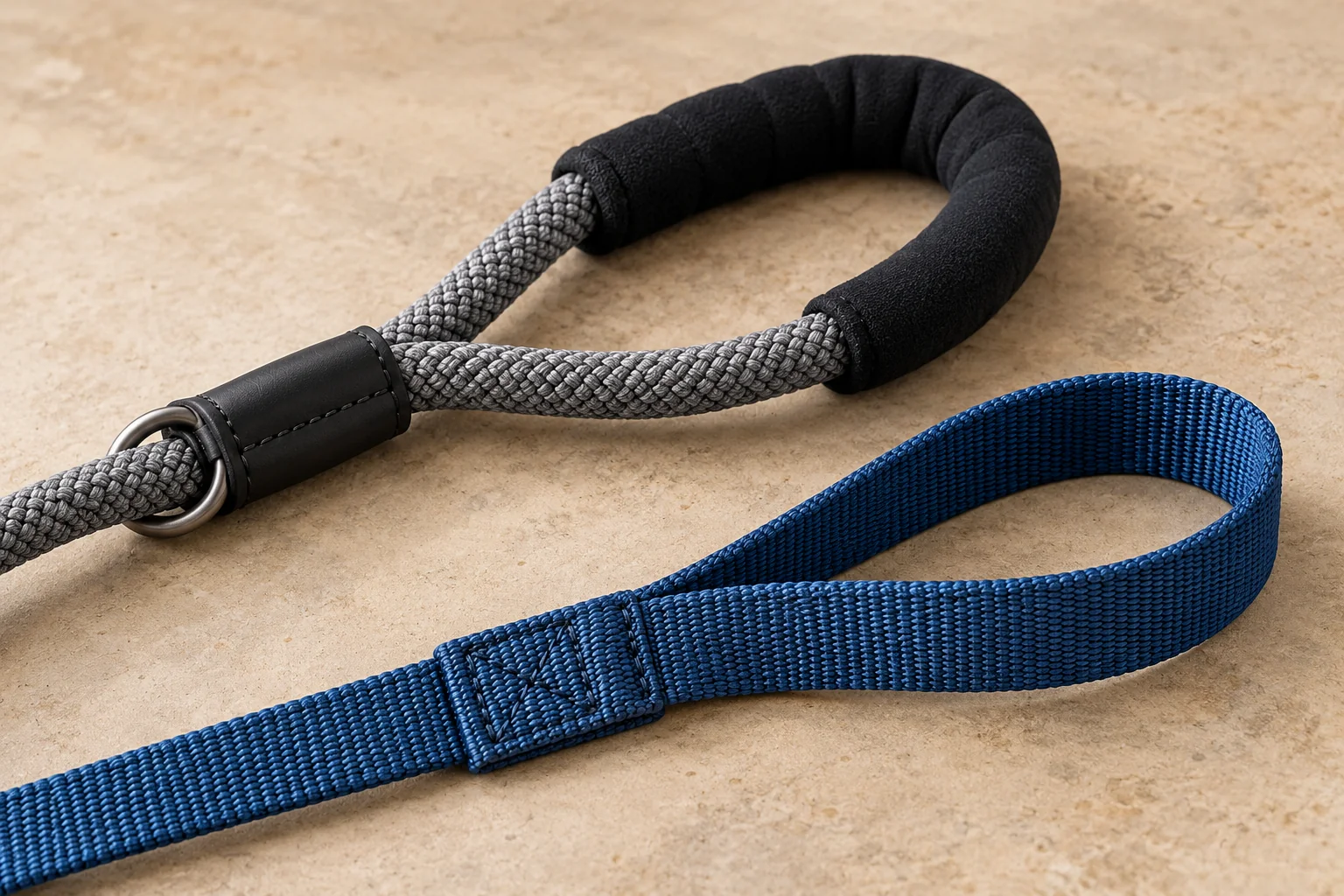
Handle lining deserves its own comparison. If the rope lead has a padded handle and the flat lead has an unlined loop, you are assessing both the line format and the handle design. That can be useful for choosing a product, but it does not isolate a rope-versus-tape advantage.
Pay attention to seams, the handle opening and any stiff section near the fold. A line that looks soft in a listing may have a handle that feels awkward in your normal grip. Gloves can change that experience too, so include the ones you ordinarily use when examining a sample.
Keep this a handling assessment. Do not stage a lunge, wrap the line around your fingers or use a pet as a pulling test.
Folding and carrying the loose line
A flat strap can lie against itself when folded. A round line retains its round profile, so the bundle will have a different shape. How convenient either is to carry depends on the length, stiffness and handle arrangement as well as the format.
Gather each sample the way you normally manage unused line. Does the bundle fit where you want to carry it? Does the connector sit awkwardly against the handle? An adjustable design adds rings and configurations that should be included in the comparison.
Use similar finished lengths when comparing storage. Otherwise, a longer sample may seem bulky simply because it contains more line. If length is the unresolved question, the dog leash length guide helps you assess available slack and route requirements separately.
Cleaning, wear and care
The care routine includes the line, handle lining and connector. Compare the prescribed washing, drying and cleaning methods for each candidate.
If you often return from muddy walks, compare where dirt can collect on the actual designs. Look at exposed textile, handle folds, sleeves and hardware joints. Those areas show which parts you will need to clean after the walk.
Include the line, handle and hardware attachments in a wear inspection. Note frayed strap edges or a fuzzy rope surface when using the maker’s inspection guidance.
For damaged or uncertain equipment, stop using it and consult the maker’s replacement guidance. Avoid a home rule that a rope remains sound until an inner core becomes visible, or that a flat strap is acceptable until a set number of threads break. Those thresholds require evidence for the particular product.
How the line meets the connector
The joint is part of the leash you are comparing. Flat webbing may be folded around a connector and secured with stitching. A rope design may use a sewn return, a splice, a sleeve or another specified attachment.
Match the joint shown in photographs with the attachment named in the description. A supplier drawing can fill a gap in the listing’s photographs.
Operate the connector according to its instructions and compare it with the intended ring. The same clip type can appear on either rope or tape. Its opening, operation and fit remain separate questions from the shape of the line.
In a sample request, identify the connector and joint together with the line. The standard dog leash specification page provides a relevant place to begin that discussion. A stated load rating needs evidence for the complete assembled leash, including its line, joints and connector. A rating for the rope or webbing alone leaves the attachments unverified.
Compare the two actual candidates
The following comparison keeps the line format, handle and attachment details visible when you choose between the two samples.
| Decision | Round nylon rope | Flat nylon tape |
|---|---|---|
| Material identity | Named nylon fiber and rope construction | Named nylon fiber and webbing construction |
| Dimensions | Record rope diameter and finished length | Record strap width, thickness and finished length |
| Handle | Try the loop, lining and nearby joint | Try the loop, lining and folded section |
| Carrying | Assess the gathered round-line bundle | Assess the folded strap bundle |
| Care | Read instructions for rope, handle and hardware | Read instructions for strap, handle and hardware |
| Attachment | Identify the actual rope termination | Identify the actual folded or joined termination |
For a retail range, keep each reference sample with its written description. If a handle, clip or line construction changes, compare the changed version again. A choice made from one sample should not silently be applied to a different assembly.
FAQ
Is a cord or tape leash better?
First establish whether the question concerns a fixed lead or a retractable product. For fixed walking leads, compare the actual cord and flat strap by handle feel, loose-line management, care and connection. The format alone does not decide which complete leash fits your routine.
What type of rope is best for a dog leash?
Look for a named fiber, a described construction and clear instructions for the assembled leash. Rope products differ in handles, attachments and care as well as fiber. A climbing-style name does not supply the missing product details.
Are rope leashes better for dogs?
A rope lead may suit your handling preference, but its shape does not establish a benefit for every dog. Match the complete equipment to its intended use and the dog’s attachment. If the setup is difficult to manage, seek handling guidance rather than expecting the line shape to fix it.
What is the strongest material for a dog leash?
A strength comparison needs evidence for the complete leashes, including their joints and connectors. A separate rope or webbing rating does not establish which assembled lead is strongest.
Conclusion
Put a round nylon sample and a flat nylon sample beside each other at a comparable finished length. Try their handles, gather the loose line and identify the two attachment arrangements. Keep the one that fits your routine, with its care instructions and exact construction recorded alongside it.