The best dog crate beds fit the usable interior, leave your dog room to stand and turn, clear the door, and are practical to clean. Measure the crate with its tray and divider in place before ordering. Then compare the bed’s finished dimensions and thickness, including any raised sides.
A bed that works beside the sofa may not work inside the crate. The walls limit where it can spread, and adding a mattress raises the surface your dog stands on. The installed combination is what needs to fit.
Nominal Crate Sizes and Usable Floor Dimensions
The bed needs to fit the available floor, which may differ from the crate’s advertised size. Tray shapes, raised lips, dividers and door frames can all affect that space. Two crates sold under the same size label may have different usable interiors.
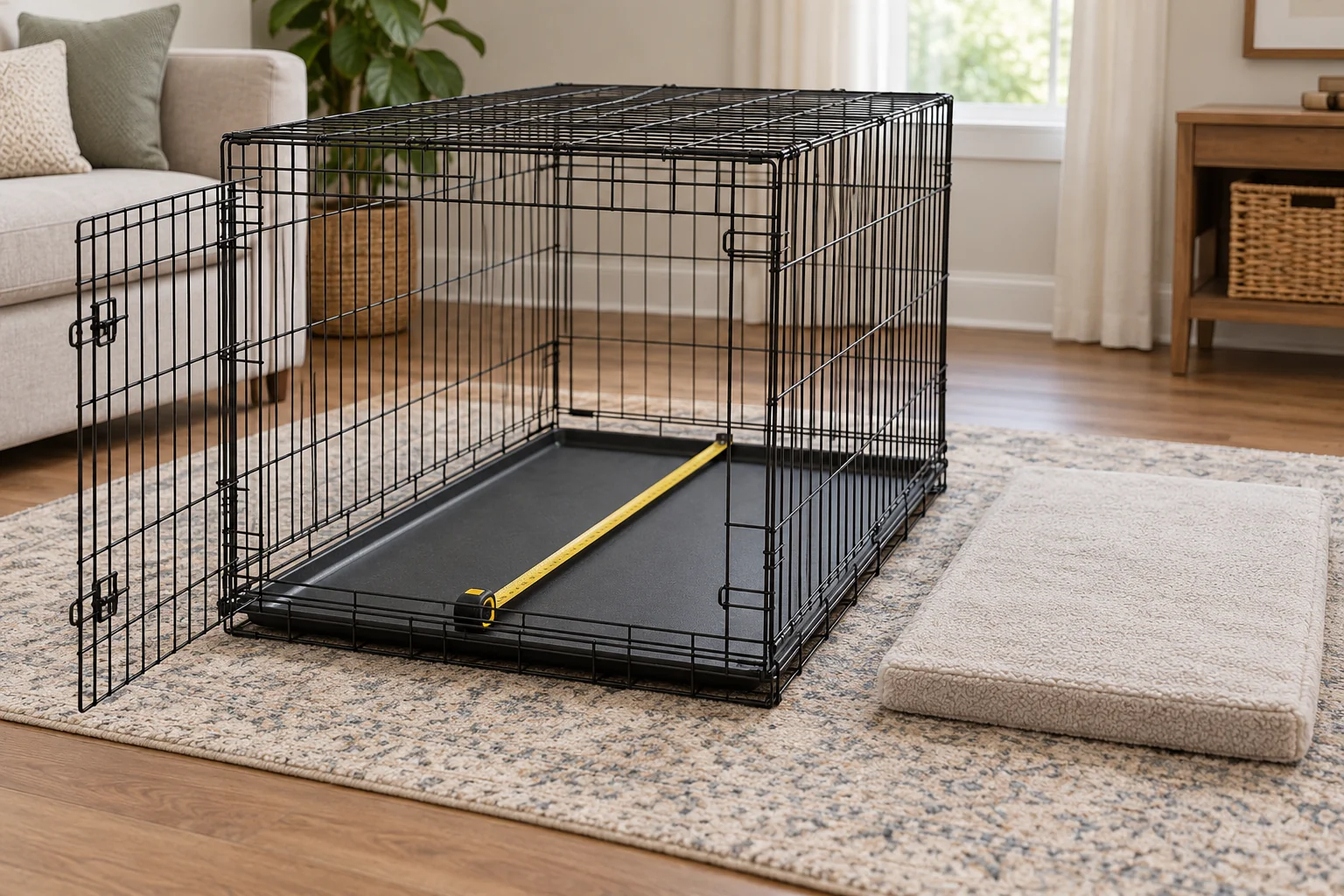
Measure length and width where the bed will sit, with the divider in its intended position. Note sloping tray edges or corners that narrow the floor. Those details help explain why a rectangular pad with apparently matching dimensions may fold at the sides.
The dog bed size chart and measuring guide covers the measurements shared across bed shapes. For crate use, add the entrance and the vertical space above the proposed mattress to your notes.
Fit includes the floor, the dog’s room above it and access through the door.
| Check | Measurement or trial | A suitable result |
|---|---|---|
| Usable floor | Interior length and width with tray and divider installed | Bed sits flat in the available space |
| Bed footprint | Finished outside dimensions, including bolsters | Edges fit without folding or pushing against the frame |
| Standing clearance | Dog’s space above the installed mattress | Dog can stand naturally and turn comfortably |
| Door operation | Open and close the door with bedding in place | Bedding leaves the door and latch unobstructed |
| Cleaning access | Remove and refit the bed and cover | Parts can be handled without forcing them through the opening |
Pad Thickness and Standing Clearance
Thickness affects the resting surface and the space overhead. A deep mattress takes up more of the crate’s height, while a thin pad still needs to suit the dog’s resting needs. The useful choice depends on both the dog and the enclosure.
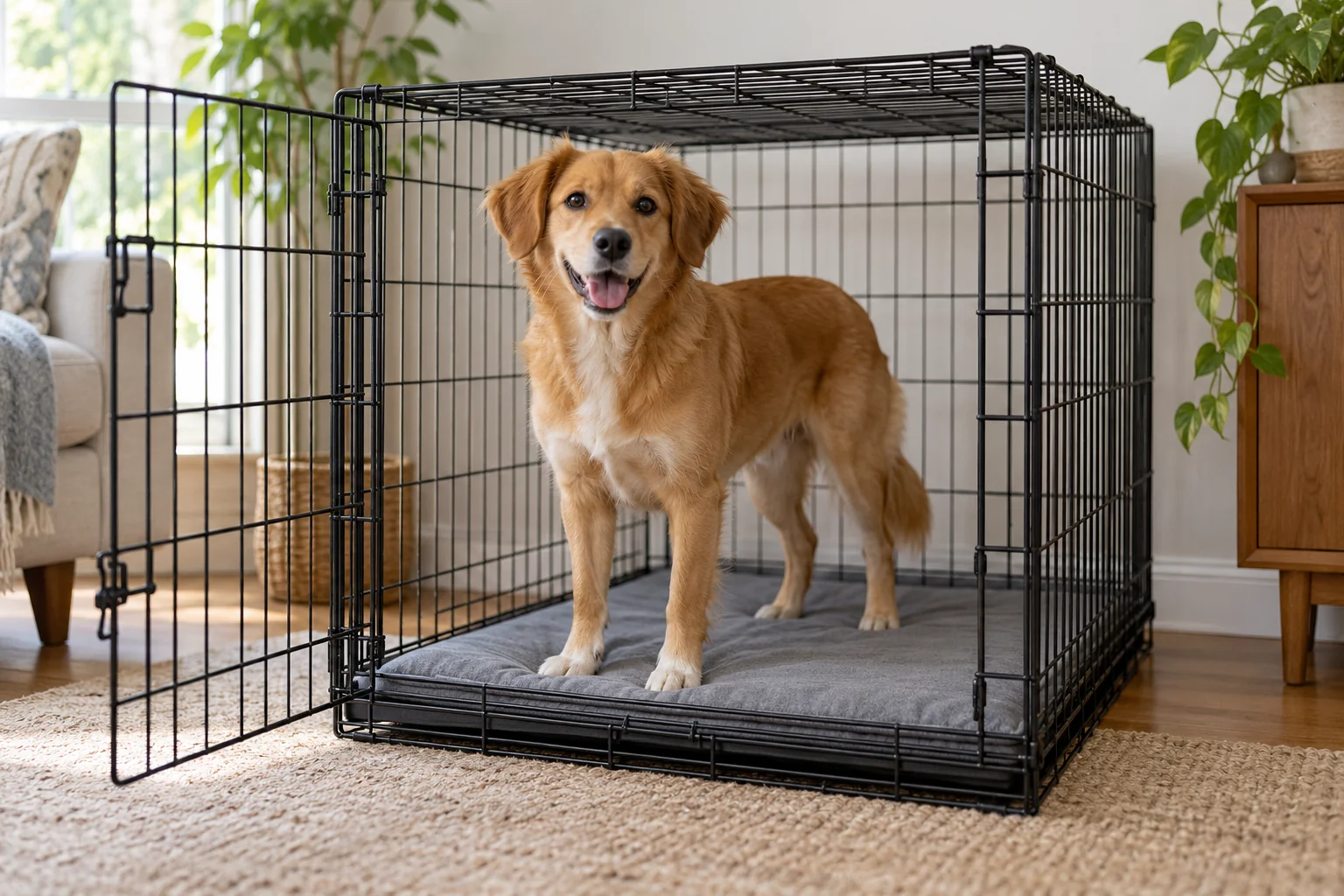
Checking room with the bed installed
The dog should be able to stand naturally, turn and lie comfortably with the bedding in place. If the mattress leaves too little room, choose a different bed or crate instead of relying on the dog to crouch.
A growing puppy can outgrow a previously suitable combination. Repeat the fit trial as their size changes, including the divider’s position and the room available above the pad.
Support without a universal thickness rule
Crate pads vary in filling, thickness and firmness. Compare the complete insert and how it sits under the dog’s weight. A density label alone cannot tell you how a particular pad will feel.
For a dog with pain or mobility difficulties, ask your veterinarian about their resting needs. That advice can help you choose a suitable surface without treating a retail orthopedic claim as a treatment recommendation.
Door and latch clearance
Open and close the door normally with the bedding installed and the dog clear of the opening. Include the lower edge, hinges, latch path and loose cover fabric in the trial. The bed should leave the door free to operate without being pushed aside.
A shifting pad or bunched cover may reach the opening after use, even when the initial fit was acceptable. If that keeps happening, the combination needs to change; repeatedly moving the fabric out of the way leaves the same problem in place.
Flat Crate Mats and Bolstered Beds
A flat mat leaves its resting surface open. A bolstered bed adds raised sides within the footprint, so its outside dimensions include space the dog cannot use as flat mattress area.
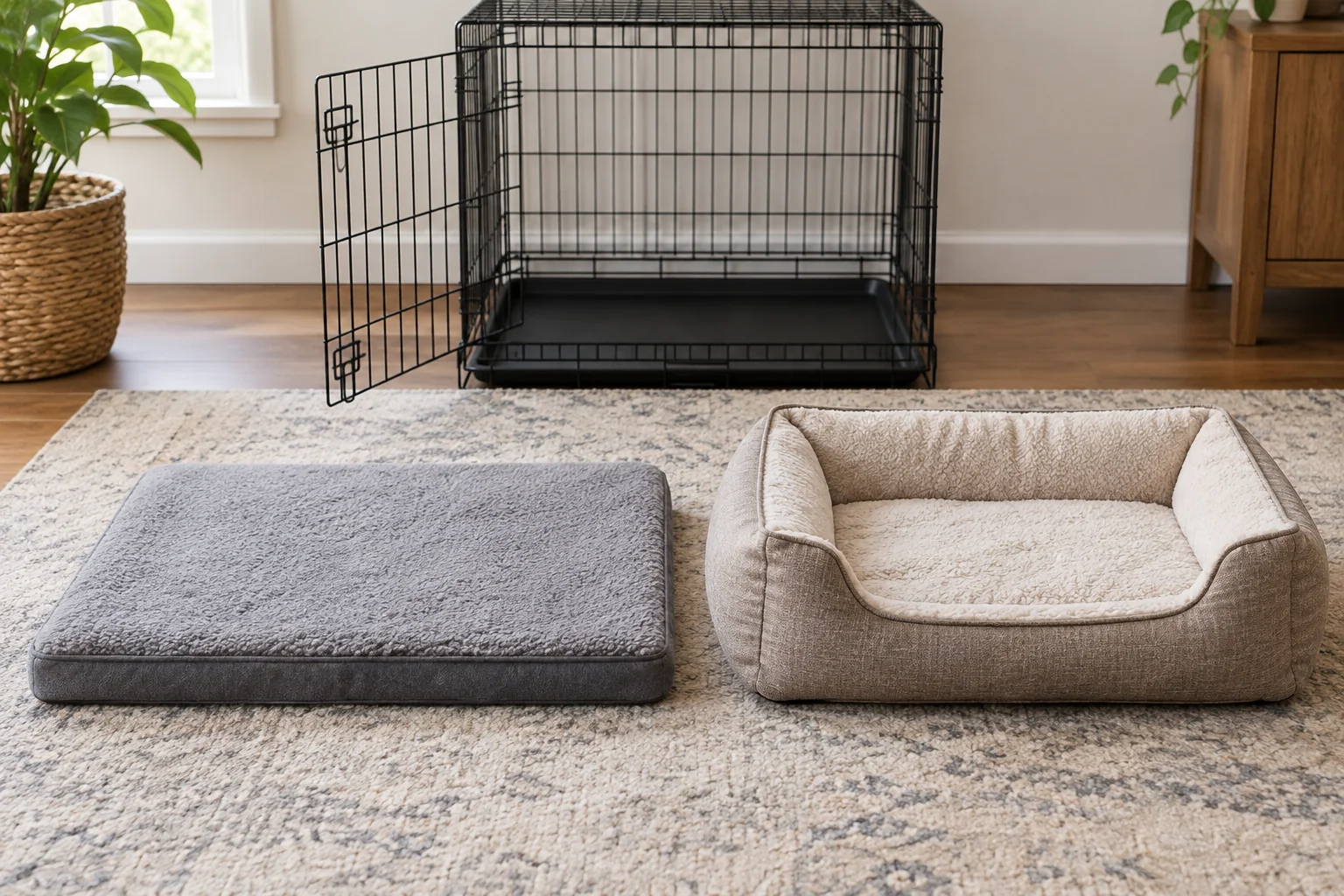
Our guide to choosing a dog bed covers sleeping positions and wider placement choices. Inside a crate, those preferences also need to work with the walls and door.
Flat mats and pads
Flat rectangular pads are straightforward to compare with a tray. They need to sit flat through its corners, with enough surface for the dog’s usual resting position.
A dog that stretches out may use most of that surface. Even among pads with the same outline, filling and cover arrangements can differ. Those details affect the resting and cleaning choice after the footprint has been settled.
Beds with raised sides
For a dog that already rests against a raised edge, a bolstered design may be worth considering. Request the clear sleeping dimensions between the sides and match the bed’s entrance to the crate door.
Bolster width and layout determine how much mattress area remains. The listed outer size can hide a smaller resting space between those sides. Moving up one nominal size still leaves the actual dimensions and door position to resolve.
Flat mats mainly need a footprint and thickness comparison; raised sides add sleeping-area and entrance requirements.
| Feature | Flat mat | Bolstered bed |
|---|---|---|
| Sleeping area | Pad dimensions and the dog’s resting position | Clear area inside the raised sides |
| Wall contact | Corners and any folded fabric | Mattress edges and bolsters |
| Entrance | Pad height and loose cover fabric | Also the position and height of the opening |
| Removal | Pad passing through the door | Complete bulk of the raised sides |
Waterproof Layers, Covers and Cleaning
A removable cover, a waterproof liner and a washable whole pad give you different cleaning arrangements. Establish which parts can be washed, how they come apart and how the insert is cared for.
Waterproof wording needs a defined layer and coverage. A coated bottom may address moisture from underneath, while a separate liner may enclose the insert. Seams and closures are part of that coverage, so the outer fabric description alone leaves the complete arrangement unclear.
On a sample, remove and refit the cover. Its opening needs to accommodate the insert without forcing the zipper or corners. With bolsters, find out whether the side cushions come out and whether their care differs from the base.
Use the washing, drying and cleaning instructions for each component. Clean soiled bedding and allow it to dry before reuse. Removing the pad also gives you access to the tray underneath; refit both in their usual positions afterward.
For frequent accidents, spare bedding and easy removal may be more practical than a thick upholstery finish. Replacement covers need to match the insert you own. Include their size and availability in the purchase decision if you expect to use them regularly.
Puppies, Chewing and Bedding Condition
Introduce a pad when you can observe how a puppy or known chewer uses it. Corners, closures, separate liners and raised edges remain accessible, even inside the crate.
Remove damaged bedding when it exposes filling, loose threads or detachable parts. Swallowed non-food objects can cause obstruction; contact your veterinarian promptly if you suspect material has been swallowed.
For a dog that dismantles bedding, discuss a suitable resting arrangement with your veterinarian or a qualified professional. Persistent distress or destruction also needs attention beyond the pad itself. A chew-resistant label does not resolve those concerns.
Indoor, Travel and Outdoor Use
An indoor crate, a transport carrier and an exposed kennel place different demands on bedding. The product’s stated use environment helps narrow where it belongs.
For travel, follow the carrier’s fit and permitted-bedding instructions. Non-slip backing does not secure the crate or replace the required transport arrangements. Any pad still needs to leave the carrier’s door and closures unobstructed.
Outdoor use also depends on the shelter and bedding condition. A waterproof layer addresses one product feature; it does not establish that the enclosure provides an appropriate environment in wet, cold or hot weather.
Sourcing Crate Bedding: Fit and Sample Approval
For a retail range, define the crate models or interior measurements the bedding is intended to fit. Include the tray, divider position and door arrangement, so a size label is not the only basis for sample approval.
An inspection sheet can record finished length and width, unpacked thickness, raised-edge dimensions, cover opening and care requirements. Tie tolerances to the proposed construction rather than assigning one value to every size.
Trial the sample with the intended setup. Record whether it sits flat, leaves the latch clear and can be removed for cleaning. Photographs of those positions make the result easier to compare with a later sample or production proposal.
For compressed samples, agree an unpacking and measurement procedure before approval. Any claimed recovery time or freight saving needs its own evidence. Certification also needs to identify the material or finished product it covers.
Include the required dimensions and sample-review points in a category inquiry to PetsourcingPro. They provide a concrete starting point for discussing the proposed bedding.
FAQ
Is it good to put a dog bed in a crate?
Suitable bedding can provide a resting surface when it fits the interior, leaves adequate room and suits the dog’s behavior. Assess the setup with the bed installed. A dog that damages or swallows it needs a different resting arrangement and appropriate advice.
Can I use a crate mat as a dog bed outside the crate?
It may suit another indoor location if its size, resting surface and stated use instructions fit. Outdoor use needs a separate suitability decision. The crate-mat label describes a use category, not permission for every environment.
Should a puppy have a bed in their crate?
Choose around the puppy’s size, behavior and cleaning needs, then observe their use. Age alone does not establish suitability. Remove damaged bedding and seek guidance if the puppy destroys or swallows it.
What should I look for in a waterproof crate pad?
The relevant details are the protected layer, seam and closure coverage, and care instructions. A water-resistant outer fabric and a liner around the insert are different arrangements. Choose according to where moisture reaches the pad and how you will clean it.
Is there an indestructible dog crate bed?
Indestructible wording cannot guarantee suitability for unattended use. The dog’s behavior and the actual construction still matter. Remove a damaged pad even when a replacement warranty applies.
Conclusion
Put the tray and divider in their normal positions, measure the usable floor, and compare that with the finished bed. Before committing to the setup, trial the installed thickness and operate the door. If the dog loses standing room or the latch catches fabric, change the combination rather than forcing the pad to fit.