The best dog bed for chewers depends on what your dog grabs, how they damage bedding, and whether they swallow pieces. Start with the last bed they damaged: a torn corner, an exposed zipper and a pulled-out cushion point to different problems. The replacement’s cover, edges and closures need to be considered alongside how your dog will use it.
A fabric upgrade may leave the same loose flap or reachable zipper in place. Before buying another bed, identify the part your dog worked on and whether the new design changes access to it.
Can a Dog Bed Truly Be Indestructible?
Indestructible or chew-proof wording is not a guarantee of safe unattended use. A chew warranty describes what the seller will replace after damage, including any time limits and exclusions. The bed’s construction tells you which parts remain accessible to your dog.

The five points below connect a candidate’s features with the way your dog has damaged bedding before.
| Check | What to examine | What would rule the bed out |
|---|---|---|
| Cover | Surface, loose threads and any existing damage | A fabric feature your dog already picks or pulls |
| Edges and seams | Corners, piping, tabs and seam openings | An accessible loose edge or opening |
| Closures | Zipper pull, closure flap and removable parts | Hardware your dog can reach and mouth |
| Filling | Core access and condition | Exposed filling or material that can be pulled out |
| Use and maintenance | Supervision, care and replacement arrangements | A plan that depends on an unsupported unattended-use promise |
These observations help narrow the choice. They cannot predict how long a bed will last with a particular dog.
Cover Fabrics: Ballistic Nylon, Canvas and Ripstop
Ballistic nylon, canvas and ripstop describe fabric choices, with differences in composition, finish and construction. For a known chewer, the finished surface and reachable details matter more than a fabric label alone.
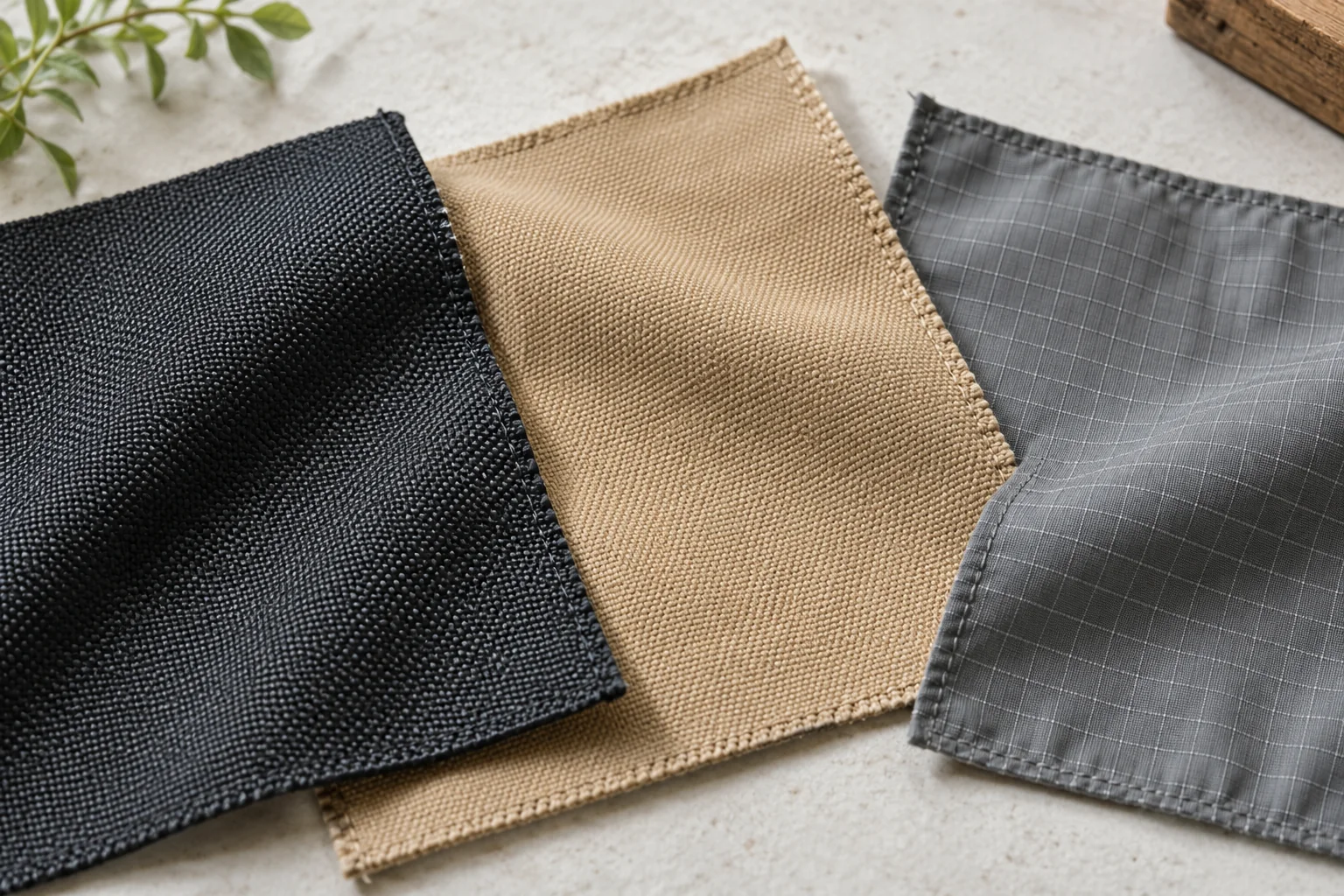
The dog bed materials and fillings guide covers the wider material choices. Here, the cover needs to be considered with the seams and closure that hold it around the insert.
Ballistic nylon and other woven synthetics
A ballistic label may be accompanied by a fiber composition, weave description or denier value. Denier describes yarn linear density; it is not a dog-bite rating. A larger number alone cannot establish how the finished cover will respond to chewing.
Photographs should show the underside as well as the top. Loose threads, lifted fabric and open stitching are useful details to spot before purchase. On a sample, look at how the shell lies around the insert: a plain top can still have loose folds underneath.
Canvas and ripstop
Canvas can provide a relatively plain woven surface. Ripstop describes a reinforcement pattern. Both still need a finished-bed comparison, because the same fabric can be paired with different seams, liners and closures.
A close-up image helps with texture, while a wider view shows where the fabric joins other parts. For a removable cushion, include its underside and closure in that view. Those details are easy to miss in a photograph showing only the assembled bed from above.
Raised textures and decorative details
A dog that pulls at loops, fringe or plush trim gives you a specific reason to avoid that feature on the replacement. Another dog may target a label or zipper instead. Match the choice to the damage you have seen rather than ruling out every soft cover.
Seams, Edge Binding and Zipper Placement
Corners, piping, labels and zipper pulls give you distinct access points to compare. A concealed closure may reduce direct access while covered, but a dog can also lift the flap or turn the bed over.
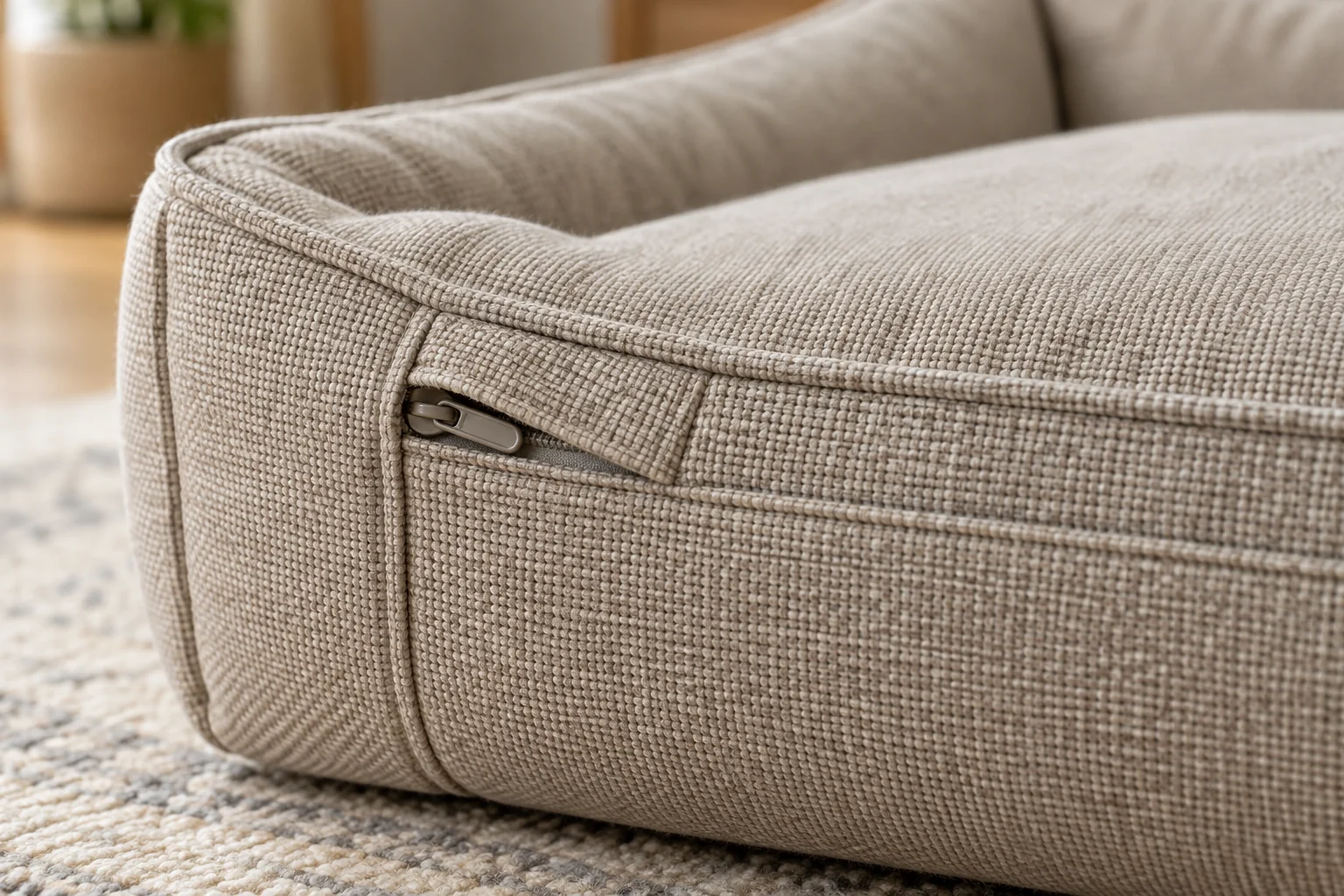
Edges and corners
Follow the perimeter across the top and underside. Projecting tabs, decorative piping and loose folds may be reachable even when the resting surface looks plain. Stitching should be intact, without open sections or hanging threads.
On a sample, lay the bed in its normal shape before judging a corner. A photograph with the cover pulled tight can hide fabric that hangs loose around the insert. The relevant comparison is the assembled bed your dog will have access to.
Closure access
With the cover fully closed, find where the zipper pull rests. A flap or slider pocket may hide it from view; ordinary movement of the cover can uncover it. The flap’s position matters as much as its presence in a listing.
Hook-and-loop closures add a different edge for a dog to mouth. Bottom-mounted hardware also remains reachable to a dog that flips or drags the bed. Include these parts in the same inspection rather than considering only the top surface.
Filling, Damage and Swallowing Risks
Foam and loose filling both need to remain enclosed. Once a dog opens the shell, either can become accessible. A solid insert is not an ingestion-safe alternative if pieces can be torn from it.
Remove the bed from use when a seam or closure opens, hardware loosens, or filling becomes exposed. Swallowed non-food objects can cause gastrointestinal obstruction. If you suspect your dog has swallowed bedding or a detached part, contact your veterinarian promptly.
A replacement cover is an option only after assessing the rest of the bed. The insert, liner and closures need to be intact, and the new cover needs to fit that model. Trimming a loose thread or covering a damaged core does not resolve the remaining damage.
Separate liners and removable cushions add their own edges and openings. Include them when deciding whether the cover keeps all internal material enclosed, especially if the dog has previously pulled a cushion out of its shell.
Supervised Use and the Dog’s Chewing Pattern
Introduce replacement bedding when you can watch the dog settle on it. Note whether they rest, drag the bed, mouth a corner or work on a closure. If they begin dismantling it, prevent further access and provide an appropriate alternative under supervision.
Chewing may involve exploration, teething, boredom or distress. Persistent destruction, especially when associated with being left alone, calls for guidance from your veterinarian or a qualified behavior professional. A new cover cannot address every cause.
For a dog that chews or swallows bedding, that discussion should include what can be left accessible when you are absent. The resting arrangement needs to meet the dog’s welfare and medical needs as well as account for the items they destroy.
Our guide to choosing a dog bed covers resting habits and placement. Use it for the wider fit decision once the damage-prone parts and conditions of use are understood.
Sourcing a Bed for Chewers: Sample Requirements
For brands and retail buyers, turn the access points into a sample specification. Record the cover composition, perimeter design, closure location and insert arrangement, with photographs of the underside and any slider pocket or flap.
The sample needs to match the proposed retail construction. A fabric swatch leaves seams, closure access and the insert arrangement unanswered. Include cover removal and refitting after the agreed care process in the sample review.
If laboratory results are supplied, identify the test, sample and conditions. An abrasion or tear report describes performance in that test, not how the finished bed will withstand a determined dog. Keep any proposed retail claim within the evidence’s scope.
Replacement covers need their own dimensions and size matches. Agree how buyers will obtain them, which parts a warranty covers, and how a damage claim will be handled.
Use the pet bed manufacturing page for a category inquiry and include the proposed access-point photographs in your request.
FAQ
Is there a dog bed that dogs cannot destroy?
An indestructible claim or replacement warranty cannot establish that your dog will leave the bed intact. Choose around the actual construction and conditions of use. A destructive chewer still needs supervised introduction to replacement bedding.
What fabric is best for a dog bed for chewers?
The choice depends on the parts your dog targets, including seams and closures. A material name or denier value does not establish a universal winner. For example, changing the fabric leaves the problem unresolved if the same reachable zipper remains.
Why does my dog keep destroying their bed?
Exploration, teething, boredom and distress are possible causes. Note when the damage happens and what the dog targets. Persistent destruction or suspected distress needs professional guidance rather than another fabric purchase alone.
What should I do if my dog chews through the cover?
Remove the bed and prevent access to exposed material. If anything may have been swallowed, contact your veterinarian promptly. A new cover is only worth considering once the remaining bed is intact and the replacement fits.
Can a puppy have a bed in a crate?
Suitability depends on the puppy’s behavior, the bedding and the space available. Introduce it under supervision and remove damaged bedding. A puppy that destroys or swallows it needs advice on a suitable resting arrangement.
Conclusion
Use the damage on the previous bed to decide which access points the replacement needs to address. During supervised introduction, watch whether your dog returns to those same parts. If the listing leaves a seam or closure hidden, ask for construction details before choosing it.