The best orthopedic dog beds give your dog enough usable room, a resting surface that suits their weight, and an entrance they can manage comfortably. Start with the foam construction and finished bed dimensions, then compare the cover and liner. An orthopedic label alone does not tell you how a bed will feel or hold up in use.
A soft surface can feel inviting while a dog is settling down, yet leave them sinking too deeply once they rest. A thick mattress can also be awkward to step onto. The useful comparison is how the complete bed fits your dog’s sleeping position and everyday movements.
What Makes a Dog Bed Orthopedic?
Treat orthopedic as a description to investigate. Look for information about the core, firmness, sleeping area and entry height rather than assuming the label proves clinical testing or a particular level of support.
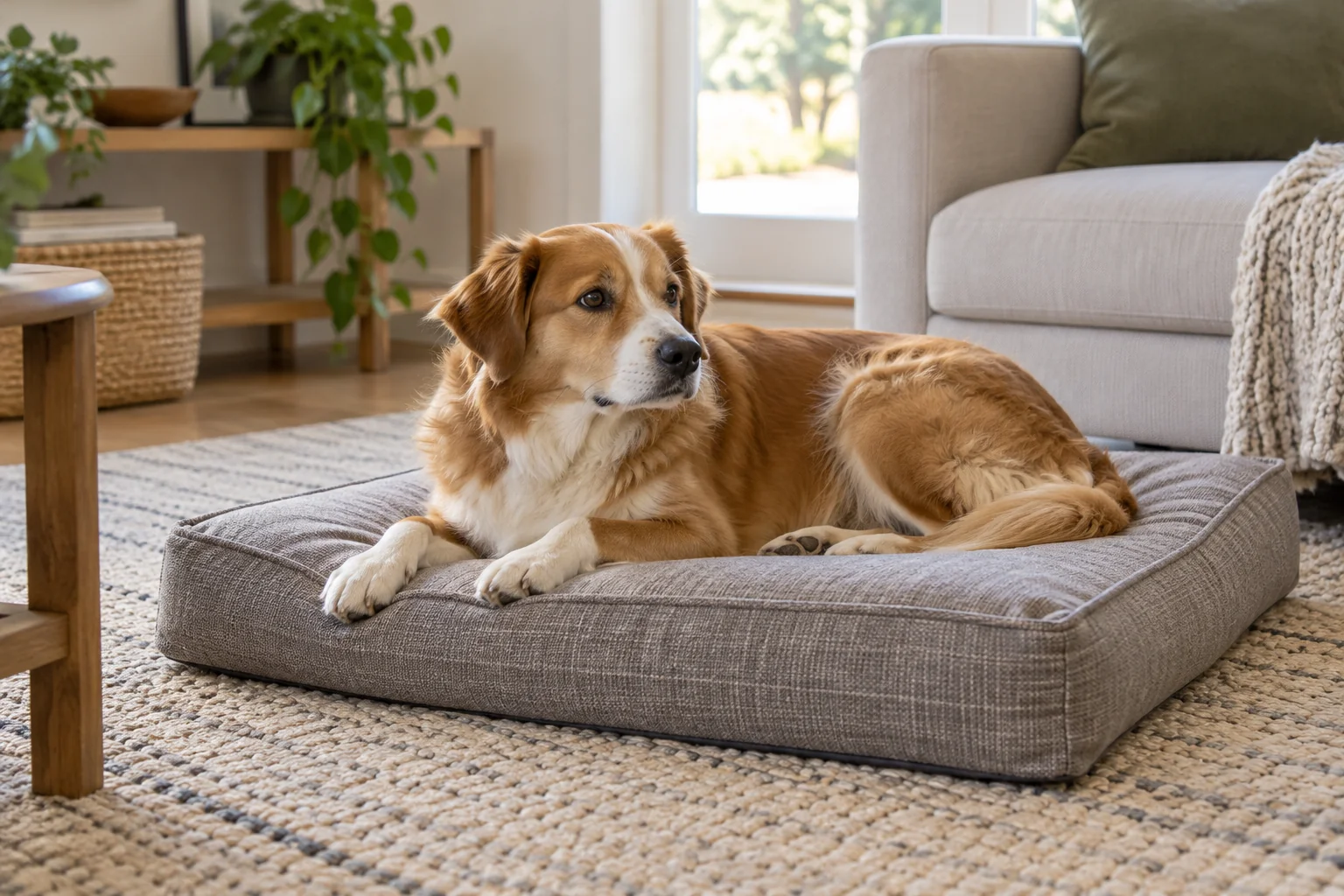
Some beds use a solid foam slab. Others combine a comfort layer with a separate base, or use loose filling. These constructions differ, but the category name cannot establish which finished bed suits an individual dog. A solid core may simplify inspection; it does not guarantee comfort, recovery or a long service life.
Before comparing colors or upholstery, work through these five details.
| Detail | Information to compare | What to look for in the finished bed |
|---|---|---|
| Core construction | Foam types, layers and whether the insert is solid or loose fill | A surface that remains usable when your dog rests on it |
| Firmness | How the surface feels and responds under weight | Comfortable settling without an awkwardly deep hollow |
| Sleeping area | Clear mattress dimensions inside any bolsters | Room for the dog’s usual resting position |
| Entry | Mattress height and any raised front edge | An entrance your dog can use comfortably |
| Cover system | Removable cover, liner and care instructions | A cleaning routine you can carry out regularly |
For a dog with pain or changing mobility, discuss their needs with your veterinarian. Bedding is one part of their home setup; a product description should not be treated as a diagnosis or treatment plan.
Foam Construction: Memory Foam and Support Foam
Memory foam names a material, while orthopedic describes how a bed is presented. A bed can contain memory foam and be sold as orthopedic. The comparison should focus on the complete insert rather than treating those labels as opposing choices.
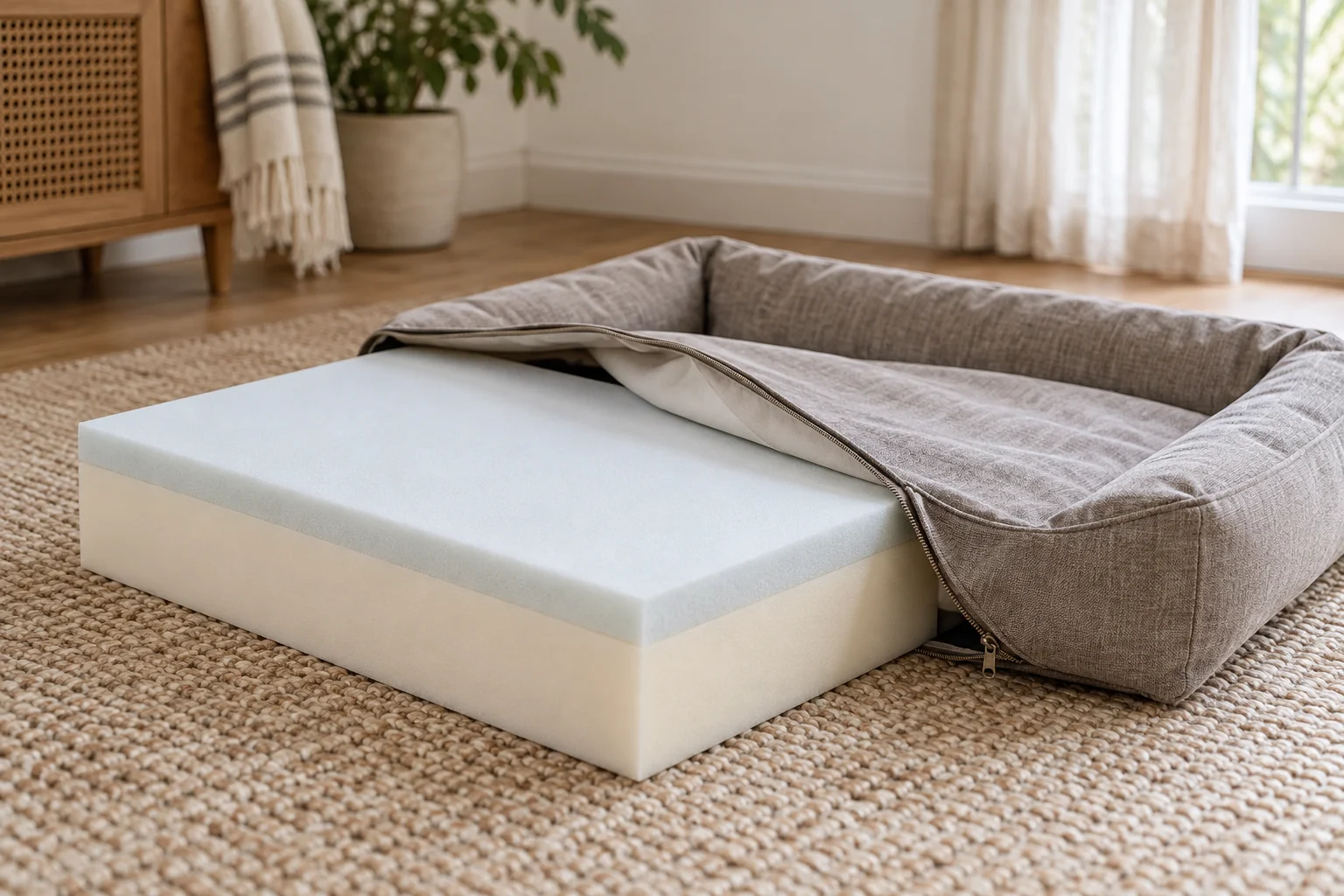
For an overview of the other filling options, our dog bed materials and fillings guide explains the wider selection. Here, the question is how the proposed core works as a resting surface.
Solid cores and layered inserts
Ask whether the insert is one foam slab, several attached layers, shredded foam or a mixture of fillings. Product photos sometimes show a memory foam layer without explaining the base underneath it. Layer thicknesses and total mattress thickness are separate specifications.
A layered insert can combine different surface and base characteristics. That does not make every layered bed better than every single-layer bed. The foam grades, dimensions and finished construction still need to suit the intended dog.
If you can inspect a sample, examine it on the type of floor where it will be used. Look for uneven sections, shifting layers, poorly fitted covers and a core that has not reached its stated unpacked dimensions. Follow the seller’s unpacking instructions before judging a compressed insert.
Density and firmness
Density measures mass per unit volume. Firmness describes the foam’s resistance to indentation. A high-density foam can be soft, and a lower-density foam can feel firm; squeezing a corner does not establish either a density value or the bed’s suitability.
For everyday buying, a clear construction description and an appropriate return policy may be more useful than an unexplained foam code. Commercial buyers can request density and firmness specifications with units and the test conditions, then compare those records with the actual sample. A density number alone should not become a promise about joint comfort or years of use.
Bed Shapes and Entry Access: Flat Mattresses and Bolsters
Flat mattresses provide an open resting surface. Bolstered beds add raised sides that some dogs use for leaning or resting their heads, but those sides take up part of the footprint.
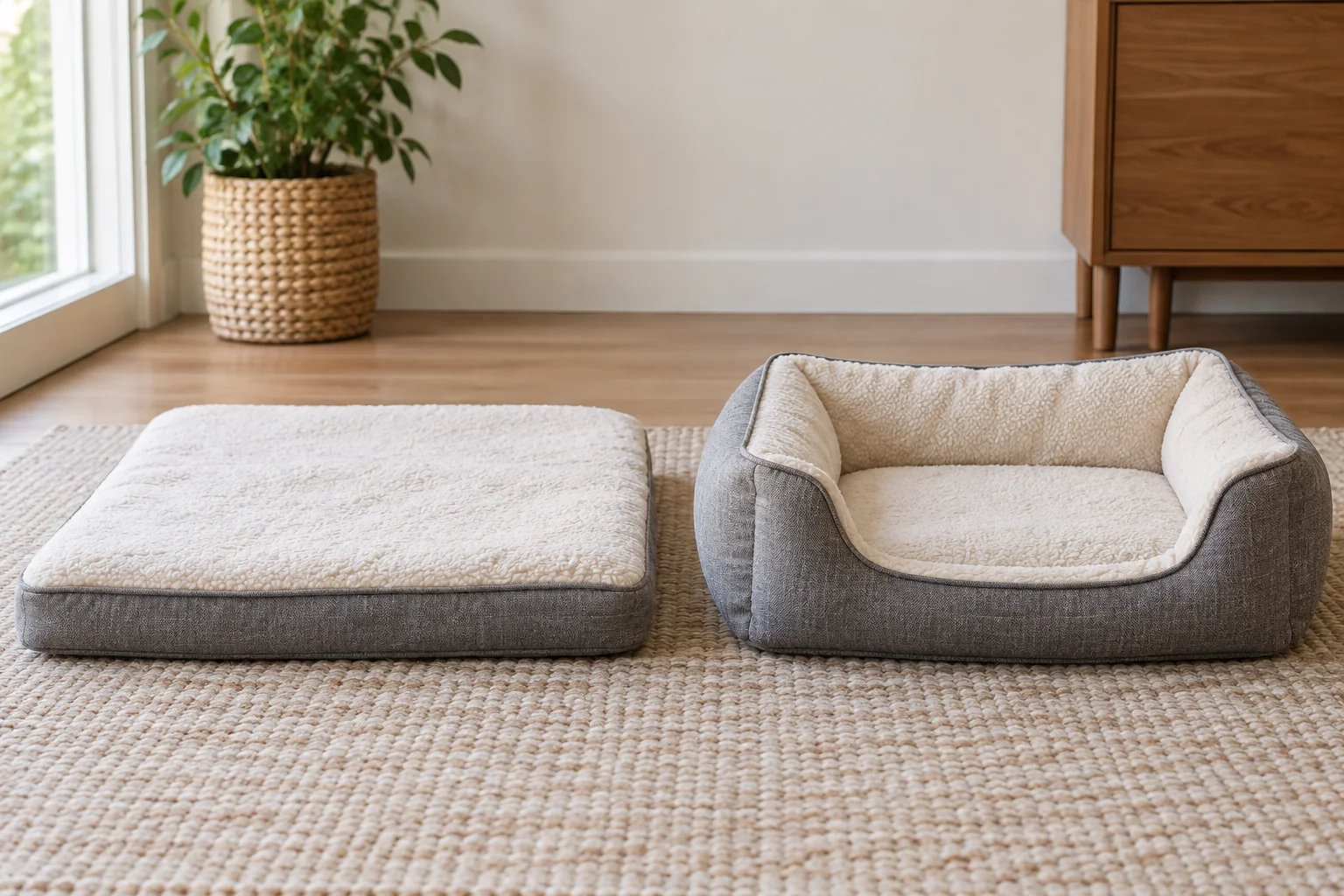
Watch where your dog actually sleeps. A dog that stretches across a cushion needs a different clear area from one that curls tightly in a corner. Choose around that observed position rather than around a breed label on a size chart.
Open mattresses
A flat mattress offers access from several sides and does not reserve part of its surface for padded walls. It can suit a dog that likes to stretch out or change position frequently.
Open access does not necessarily mean a low step. The thickness of the mattress still matters. Compare the finished height with the entrance your dog currently finds comfortable, and make sure the bed will sit securely in its intended location.
Bolstered beds
For a bolstered bed, compare both outside dimensions and the clear sleeping area between the sides. Two beds with the same footprint can offer different amounts of mattress space.
Raised sides may be useful for a dog that already likes leaning against cushions. Look at the front opening as well: a dropped or open entry gives a different route onto the bed from a fully enclosed padded rim. Avoid assuming that a headrest or bolster provides a particular medical benefit.
Making the entrance practical
Place the bed where your dog can approach and leave without squeezing around furniture. A suitable mattress can still be awkward if its opening faces a wall or the cover slides across the floor.
If your dog hesitates, struggles to settle, or has difficulty getting up, review the setup and seek veterinary advice about any underlying discomfort. Buying a taller or firmer bed without understanding the difficulty may not solve it.
Covers, Waterproof Liners and Cleaning
Separate the outer cover’s care instructions from those for the insert and liner. A washable cover does not mean the entire bed can go into a washing machine, and water-resistant upholstery does not establish that the core stays dry.
Check which layer carries the waterproof claim, whether that claim covers seams and closures, and how the liner should be cleaned. A product described as having a waterproof bottom may offer a different arrangement from one with a liner around the core.
Cover removal deserves a trial before purchase where possible. A small zipper opening can make a bulky insert awkward to remove. The cover should refit without forcing the zipper or stretching the seams. Replacement covers are useful only if they remain available in the correct dimensions.
Follow the instructions for each component’s washing, drying and cleaning products. Do not apply a universal wash temperature or disinfectant recommendation to every foam and coated fabric. Keep bedding dry, and deal with dampness before putting the assembled bed back into use.
Sizing and Support for Large Dogs
Compare the dog’s resting footprint with the usable mattress area. The full resting position, including extended paws where relevant, gives you a more useful starting point than body weight alone. Our guide to choosing a dog bed covers the broader decisions about shape and placement.
For a large dog, check that the core and cover stay usable under their weight. A published weight recommendation is worth reading alongside the construction details, but it is not a substitute for the finished fit.
There is no universal thickness table that proves every dog in a weight band needs the same foam depth. Thickness, firmness, construction and sleeping position all affect the comparison. More height can also make entry less convenient, so do not choose the deepest mattress automatically.
When ordering online, request the clear sleeping dimensions and unpacked height if they are missing. Read the return conditions before opening the package, particularly where a compressed insert needs time to regain its intended shape. A suitable return arrangement helps you assess the real fit without relying entirely on a photograph.
A Sample Checklist for Commercial Buyers
For a supportive bed range, start with an agreed sample and a specification that describes it accurately. These are purchasing requirements to discuss with a supplier, rather than claims that every manufacturer already meets them.
- Record the foam type, layer arrangement and finished thickness for each size.
- State density and firmness separately, with units and any supporting test records.
- Include outside dimensions, clear sleeping dimensions and the entrance profile.
- Describe the cover, liner, closure location and instructions for each removable part.
- Compare packaged and unpacked samples using an agreed inspection process.
Ask which measurements apply to the finished bed and which apply only to a material sample. Keep tolerances and acceptance criteria tied to the actual size and construction. A compact shipping package should not be used to infer a recovery percentage or a guaranteed recovery time.
If a certification is offered, check the issuer, current document and covered component. A certificate for foam does not automatically cover the assembled bed or establish clinical suitability. The pet bed manufacturing page is a relevant starting point for discussing the product category; request confirmation for the specific construction you need.
FAQ
Is orthopedic foam better than memory foam?
The terms describe different things. Memory foam identifies a material, while orthopedic is a bed description. Compare the insert, sleeping area and finished feel; neither label on its own establishes the better choice for your dog.
What should I look for in an orthopedic bed for a large dog?
Start with enough clear room for the dog’s resting position, then compare core construction and entry height. Ask about the intended weight range and assess the actual fit. Avoid choosing from a universal thickness rule based only on weight.
What makes a dog bed comfortable for an older dog?
An accessible entrance, room to settle and a suitable resting surface are practical features to compare. If your dog has pain or difficulty moving, ask your veterinarian about their individual needs rather than relying on a bed’s label.
What should I check on a waterproof orthopedic dog bed?
Identify the protective layer and its stated coverage, including seams and closures. Read separate care instructions for the cover, liner and foam. A water-resistant cover and a liner protecting the core are different product arrangements.
Are orthopedic dog beds worth it?
They may be worth considering when the finished construction suits your dog better than their current bed. Judge the usable area, entry and resting surface, and compare the care and return arrangements. The word orthopedic alone is not a reason to pay more.
Conclusion
Before ordering, get the clear sleeping dimensions and unpacked entrance height, then compare them with the space and access your dog uses comfortably now. For a commercial range, carry those same measurements into the sample specification. If the listing leaves the core or fit unclear, ask about the proposed bed construction before approving it.