The best cooling mat for dogs is one that fits their resting space and your daily routine. A pad that needs freezer time may suit planned use at home; a ready-to-use mat may be easier to keep beside a favorite sleeping spot. Neither is a reason to leave a dog in a hot room or car.
Start with where the mat will go, how your dog lies down, and whether you can manage its preparation and cleaning. This guide compares formats and practical buying questions rather than naming a universal winner or claiming that we tested products.
Compare Cooling Mat Formats
Cooling mats differ most usefully by what you have to do before using them. Some arrive sealed and ready to use, some need water, and others need chilling. Terms such as “gel” and “pressure-activated” can describe the same product, so they are not necessarily separate categories.
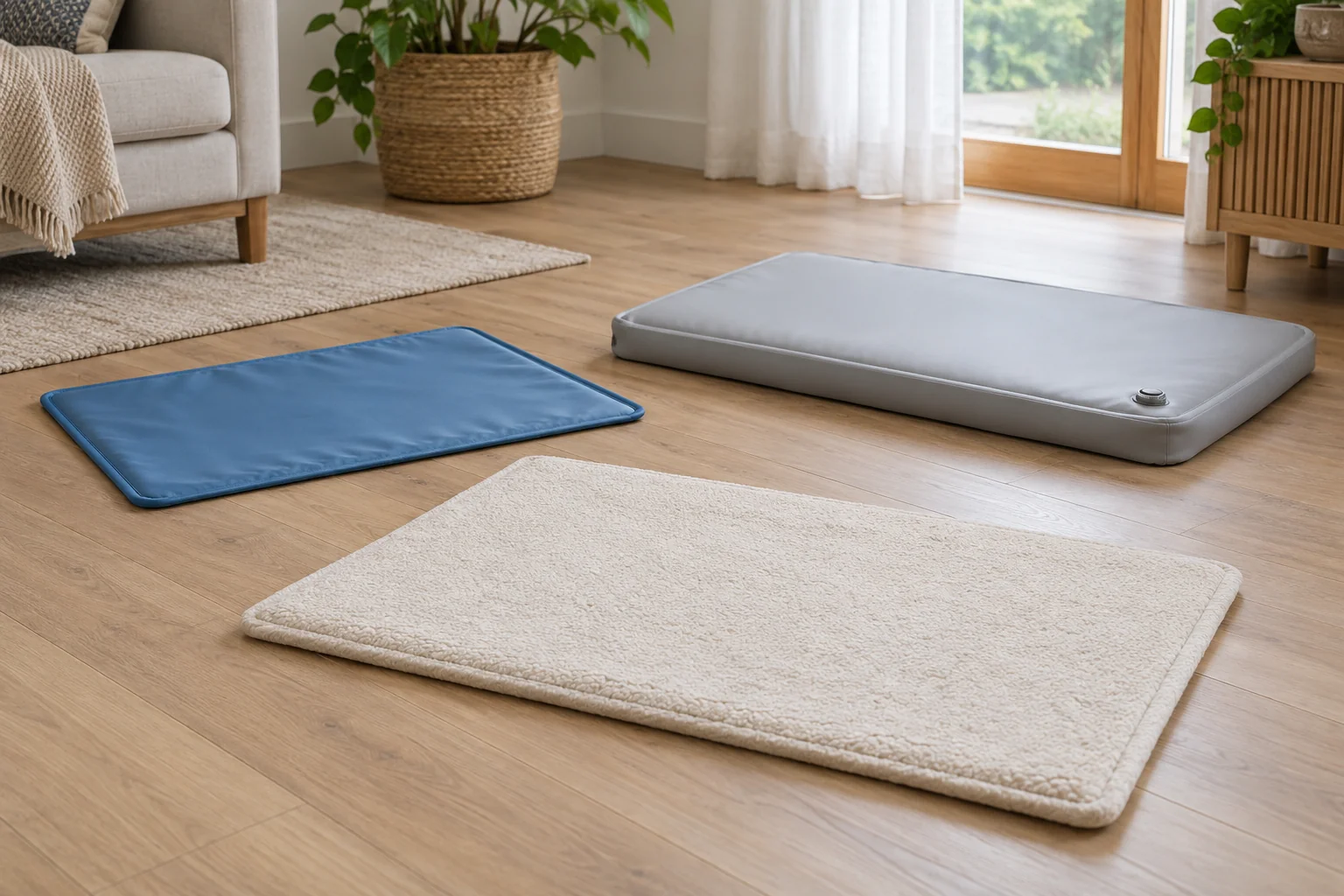
| Format | What to establish before buying | Practical trade-off |
|---|---|---|
| Sealed gel or pressure-activated pad | Whether it needs preparation, a break between uses, or a particular room setting | Convenient setup, but the sealed pad still needs suitable placement and protection from damage |
| Water-filled mat or bed | Fill quantity, valve operation, handling when filled, and storage procedure | You supply the water and need somewhere suitable to fill and empty it |
| Chilled mat or removable frozen insert | Which part goes in the fridge or freezer, preparation time, and required covering | Preparation and available cold-storage space become part of the routine |
| Fabric mat marketed for cooling | Whether it contains an insert or is simply a textile, plus its use and wash instructions | Often a different handling and cleaning proposition from a sealed filled pad |
A listing can combine these features. A fabric cover may surround an insert, while a water-based system may also use a frozen component. Compare the complete construction rather than treating a short product label as a full explanation.
For a nongel option, narrow the search to a water-filled design, a suitable insert system, or a fabric-only mat. That choice changes the preparation and care questions; it does not establish that every alternative performs better or is safe to chew.
The custom pet mat category is a relevant starting point for buyers exploring mat formats. The exact construction and intended use belong in the individual product specification.
Choose the Usable Size and Placement
Compare the mat’s usable area with the space your dog occupies while resting. A curled-up dog and the same dog stretched on its side can need quite different amounts of room. A weight-based size label is a starting point, not a substitute for dimensions.
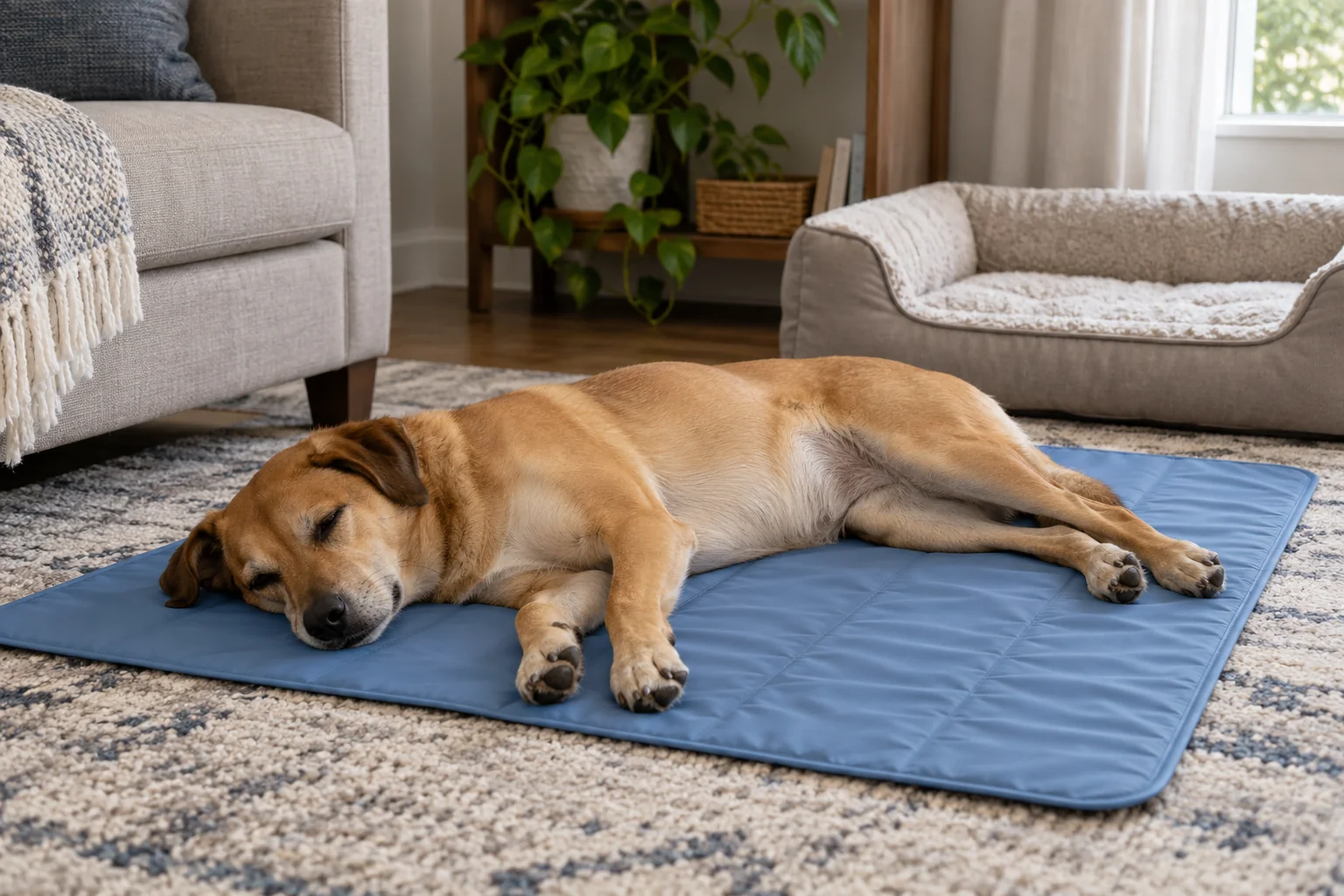
Measure a familiar resting position, then compare the candidate mat’s length and width. If the published dimensions include a border, cover, or surrounding frame, find out how much of that area is available to lie on. Photos can help show the layout, but the listed measurements should decide whether it fits.
For a large dog, this also means considering the route from storage to the resting spot. A filled mat that fits the dog may be awkward to lift or reposition. Keeping the mat in its intended place can be more practical than moving it through the house each day.
In a crate, measure the interior floor and doorway rather than relying on the crate’s outside dimensions. The mat should sit as intended without forced folding, a bunched-up corner, or interference with the door. The arrangement must also suit the dog’s access to its normal resting space. There is no useful universal rule that a cooling mat should cover a fixed fraction of every crate.
If the larger question is whether a thin mat suits your dog’s sleeping habits at all, the guide to choosing a dog bed covers usable space, support, covers, and placement together. A cooling accessory and a primary bed can have different jobs.
Plan the Setup Before Each Use
Put preparation, placement, and any reset period into one workable routine. The product’s instructions should tell you what to fill or chill, where to use it, and how to make it ready again. Keep those instructions with the mat so that another person can follow the same routine.
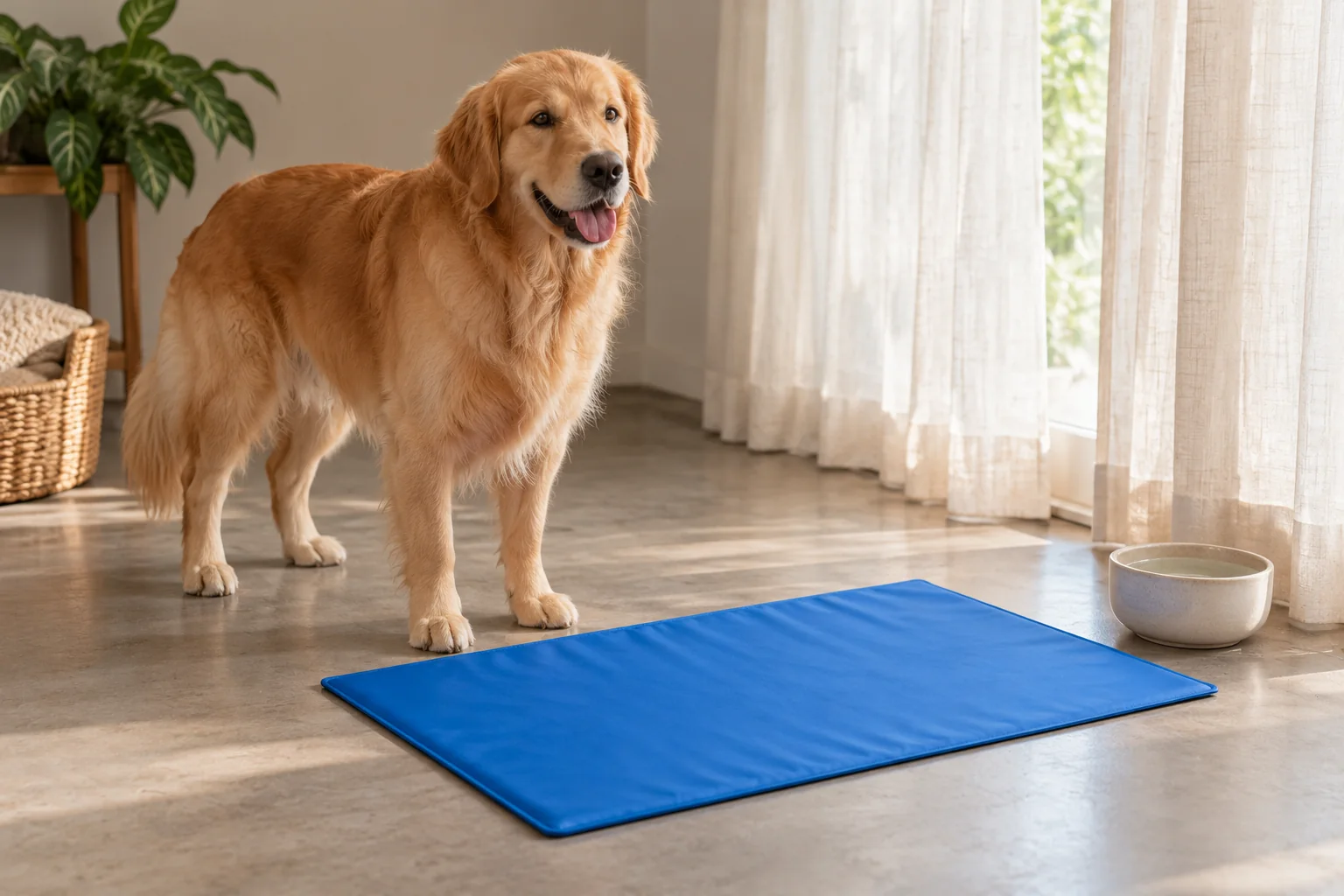
For a water-filled design, prepare it where you can handle a spill and follow its filling procedure. A removable insert needs enough refrigerator or freezer space for the actual component, along with any covering specified for use. A sealed pad may need no initial preparation yet still have limits on where it works and how it rests between uses.
A shaded, comfortable resting area is a better starting point than a sunny patio or a car that has heated up while parked. The absence of a power cord does not make a mat suitable for every environment. Fresh water and appropriate shelter remain part of the dog’s care, regardless of the accessory.
Stay nearby for the first use. You are looking for a straightforward resting option: does the dog approach, lie down, change position, or leave? A dog that keeps avoiding the surface may prefer another texture or location. Holding it on the mat will not tell you whether the purchase suits it.
Cooling duration is model-specific. A quoted number of hours may describe one product under stated conditions, while another design requires a different preparation or reset. Use that information to plan access to the mat; it is not a countdown for how long a dog can remain in heat. If you suspect overheating or illness, seek veterinary help rather than waiting for a mat to work.
Make Cleaning and Storage Part of the Choice
The easiest mat to own is one you can clean in the space and time you actually have. Separate the care of a cover from the care of a filled pad or insert. A washable outer cover does not necessarily mean that the complete assembly belongs in a washing machine.
Before buying, locate the instructions for each component. Useful details include whether a cover comes off, what cleaning method is allowed for the pad, how a filled design is emptied, and what needs to dry before storage. If those details are missing from a listing, they are worth resolving before choosing the product.
Think through an ordinary dirty-use scenario. If the mat will be used near a garden door, is there somewhere to wipe or clean it without carrying it across clean floors? If it folds for storage, can you put it away as directed without forcing the valve, insert, or filled sections into an unsuitable shape?
For seasonal use, keep the care instructions and product identification with the stored mat. That makes it easier to prepare it correctly next summer and to obtain advice about a damaged component. A universal replacement interval is less useful than the manufacturer’s care guidance and the condition of the actual item.
Consider Chewing and Damage Separately
A cooling mat is a resting accessory, not a chew toy. A cover described as durable or a filling described as nontoxic does not make ingestion acceptable. Dogs that bite, dig at, or tear bedding need a different level of supervision from dogs that simply settle on it.
Keep the response to damage simple. Remove a leaking or torn mat from use, keep the dog away from exposed contents, and follow the product’s handling instructions. If any part has been swallowed, retain the product and packaging and contact a veterinarian or animal poison service for product-specific guidance. Do not decide that it is harmless from the word “gel” or a general marketing claim.
The outside fabric is only one part of the construction. Edges, closures, inserts, and accessible filling also matter to how the dog interacts with it. For a broader comparison of covers and fillings, the dog bed material guide separates those components and their care requirements. A material name alone does not establish the safety or durability of a complete mat.
Prepare a Clear Brief for a Cooling Mat Range
For a retail or private-label range, describe the intended routine before choosing finishes or packaging. “Cooling mat for a crate” and “cooling mat for a shaded resting area” leave different sizing, placement, and preparation questions to resolve.
A useful brief records:
- The intended format and each component included in the pack.
- Usable dimensions, outer dimensions, and any available size variants.
- Preparation, permitted placement, cleaning, drying, and storage instructions.
- The proposed customer-facing claims and the evidence needed for each one.
- Sample requirements, packaging information, and replacement-component questions.
Keep performance claims separate from appearance approval. A finished sample can show color, layout, seams, and packaging, but those observations do not substantiate a cooling duration, a chemical-safety claim, or a medical benefit. Such claims need their own appropriate evidence for the exact product.
The pet product manufacturing overview provides context for discussing specifications and production stages. Use the brief to establish which construction is being considered and what still requires confirmation, rather than assigning a formula or manufacturing process from a generic mat description.
Once the format and intended use are clear, the product inquiry form is a place to send dimensions, component details, and the questions that remain. Those details make the inquiry more useful than a request for the “best” mat without a defined setting.
FAQ
Do cooling mats for dogs really work?
They can provide a cooling resting surface when prepared and used in their intended setting. The result depends on the product and conditions, so compare its instructions and stated use rather than expecting every mat to behave alike. A mat does not replace shade, water, or veterinary care.
What are dog cooling mats made of?
The construction varies. A mat may have a sealed filling, a water-filled interior, removable inserts, or a fabric-only surface. The cover and inside components can be different materials. Obtain the specification for the individual item instead of assuming that all gel mats share one formula.
How long do dog cooling mats last?
“Last” can mean the cooling period during a session or the life of the product. For session duration and any reset, use the model’s instructions. For continued use, follow its care guidance and remove a damaged item. There is no single time or service-life figure that applies to every format.
Can you wash a dog cooling mat in a washing machine?
Only if the instructions permit washing that component. A removable fabric cover and the pad inside may need different care. For a sealed or filled mat, use the specified cleaning method rather than applying the cover’s wash label to the entire product.
Conclusion
Choose the resting spot first, then compare a mat that fits the space with the preparation you can reliably manage. Before ordering, settle the remaining practical question: will you keep this pad ready beside the bed, fill it in place, or prepare an insert ahead of use? That answer makes the shortlist much more useful than a universal “best” label.